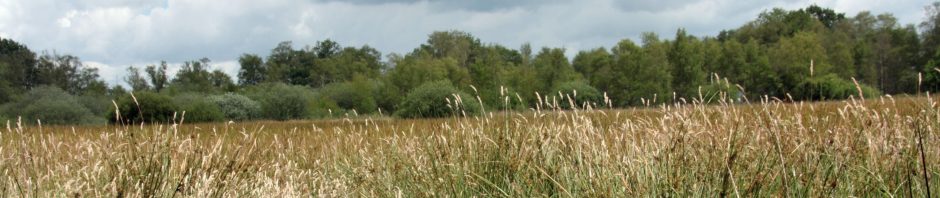
The Bactrini are a tribe within the subfamily Olethreutinae, which is part of the family Leafrollers (Tortricidae). This tribe contains over 150 species worldwide, and two genera are known within it: Bactra and Syntozyga. The larvae are stem borers in the rush family (e.g., Field Woodrush, Toad Rush, Soft Rush, Hairy Woodrush), sedge family (e.g., Wood Bulrush, Pale Sedge, Common Spike-rush, Hare’s-tail Cottongrass), and grass family (e.g., Broad-leaved Meadow-grass, Wavy Hairgrass, Mat-grass, Wood Millet). Common characteristics of the group include a modified sac-shaped portion of the vestibular system in the inner ear and a forward-inverted, spiny projection on the posterior aspect of the female reproductive organ.
Tribe: Bactrini
Genus: Bactra
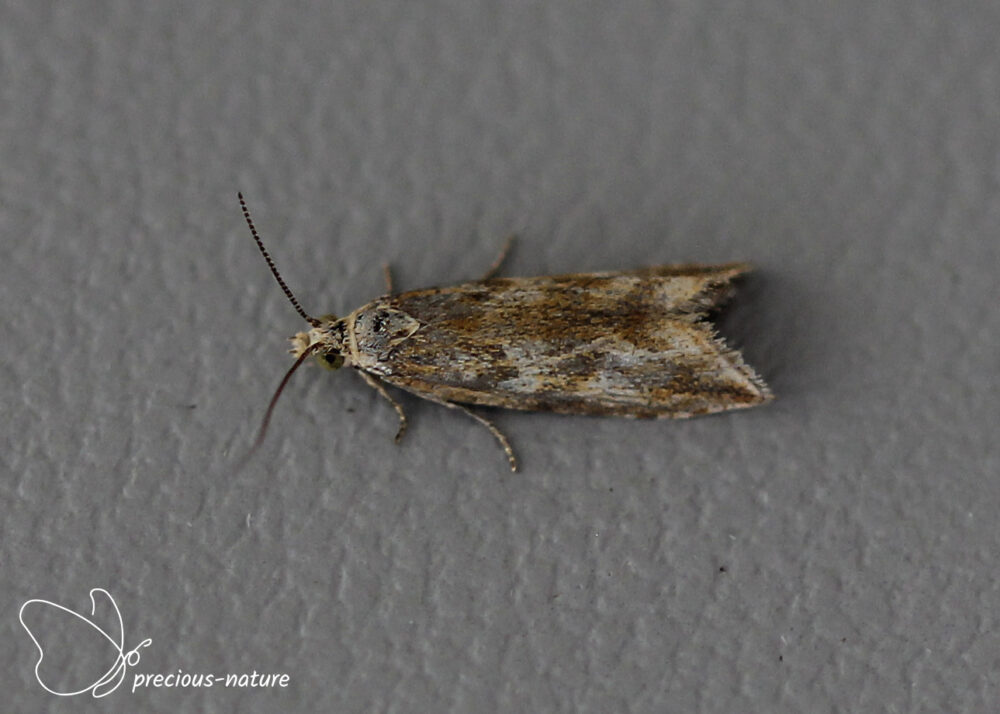
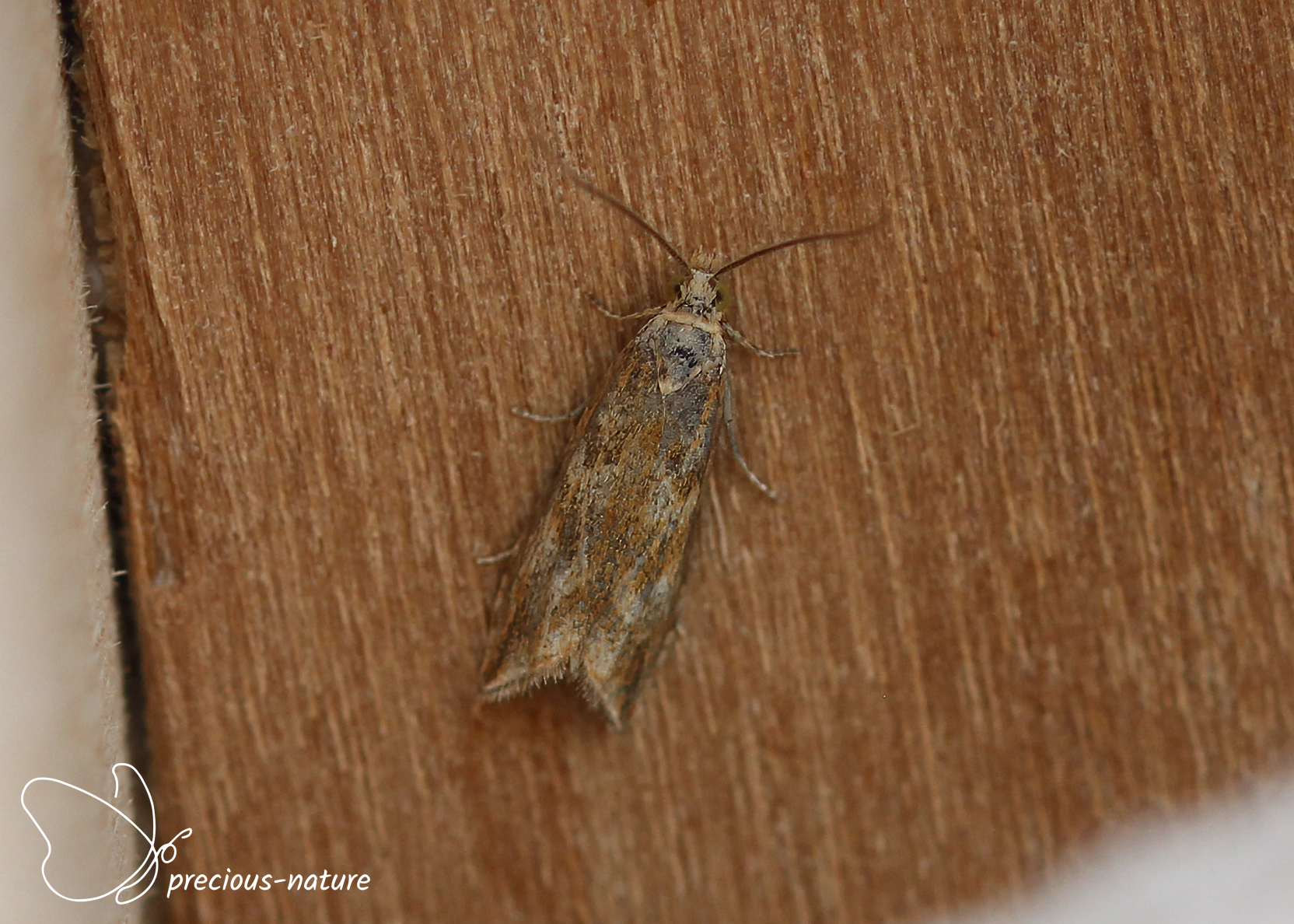
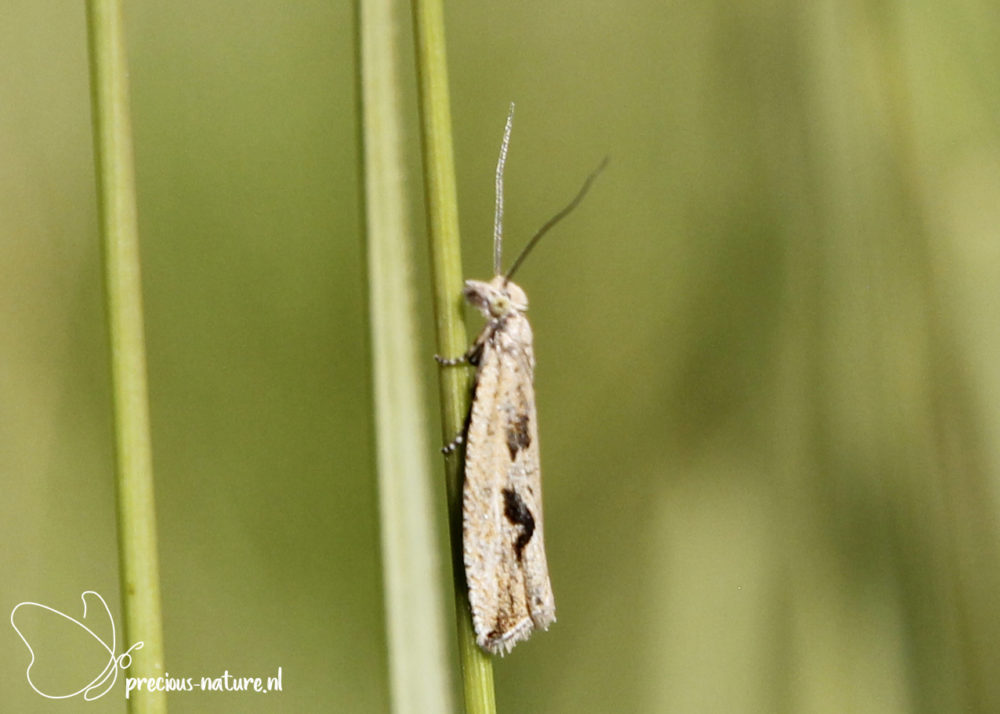
Rush Marble – 2020 (NL)
(NCBI-index: 753158)
The Rush Marble (Bactra lancealana) is often found in humid environments such as swamps, wet heather, and forests. The forewing is grey to light brown with a net-like structure ranging from very light to almost dark brown. The dark crescent-shaped mark can often be seen at 2/3 of the wing in the middle. Near the apex, a short brown streak can be seen that sometimes extends to the crescent-shaped mark. The flying period spans two generations, from May to October, and the wingspan ranges from 11 to 20 mm. The larvae feed on stems. Host plant: Rushes. Dutch name: Gewone biesbladroller. Frisian name: –
Flying period:

Tribe: Bactrini
Genus: Bactra
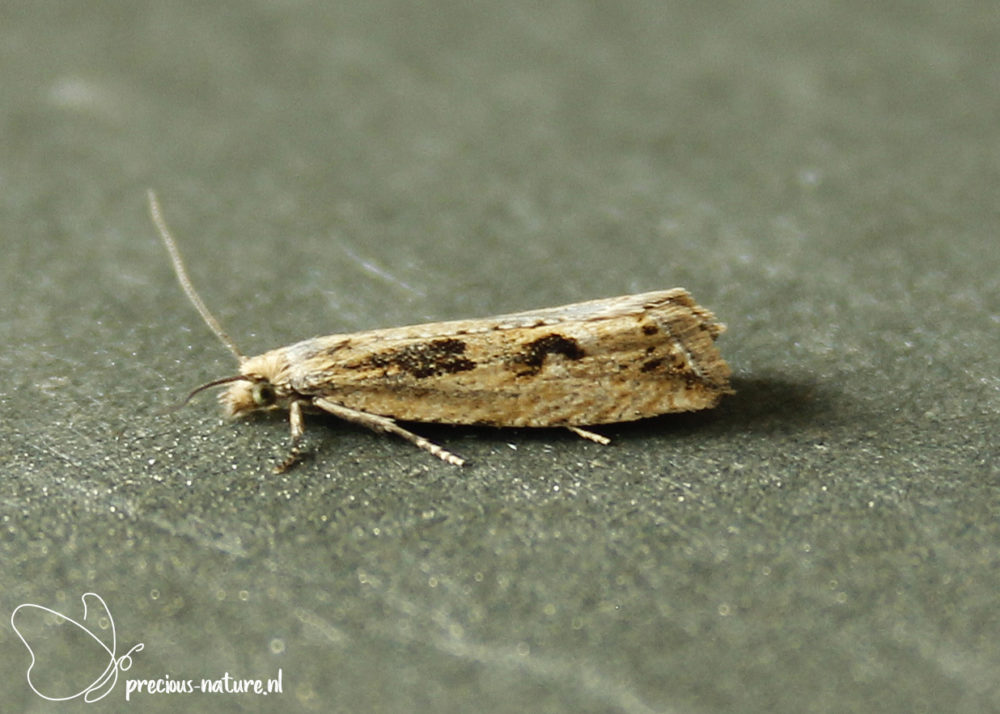
Mottled Marble – 2020 (NL)
(NCBI-index: 1.030477)
A species with elongated wings is the Mottled Marble (Bactra furfurana). The forewing is yellowish-brown or orange-brown, with small dark spots scattered across the wing. On 1/3 is a curved transverse band connected to a curved line running down the wing’s centre towards a dark spot at 2/3 near the costa. The flying period in one generation is from June to mid-August, and the wingspan is 13-19 mm. The larvae feed on stems. Host plant: Compact Rush. Dutch name: Getekende biesbladroller. Frisian name: –
Flying period: