The Enarmoniini are a tribe within the subfamily Olethreutinae, which is part of the family Leafrollers (Tortricidae). This tribe comprises approximately 300 species, including, in Europe, Ancylis, Enarmonia, Eucosmomorpha, and Tetramoera. The Enarmoniini are distributed worldwide, with the greatest diversity in Australia and Asia. The larvae roll leaves or bore into stems and roots. No fixed set of characteristics defines the entire tribe. Possible shared characteristics include the shape of the forewings, fused paired appendages on the male genital organ (socii), and broken needle-shaped chitin particles in the penis (cornuti).
Tribe: Enarmoniini
Genus: Ancylis
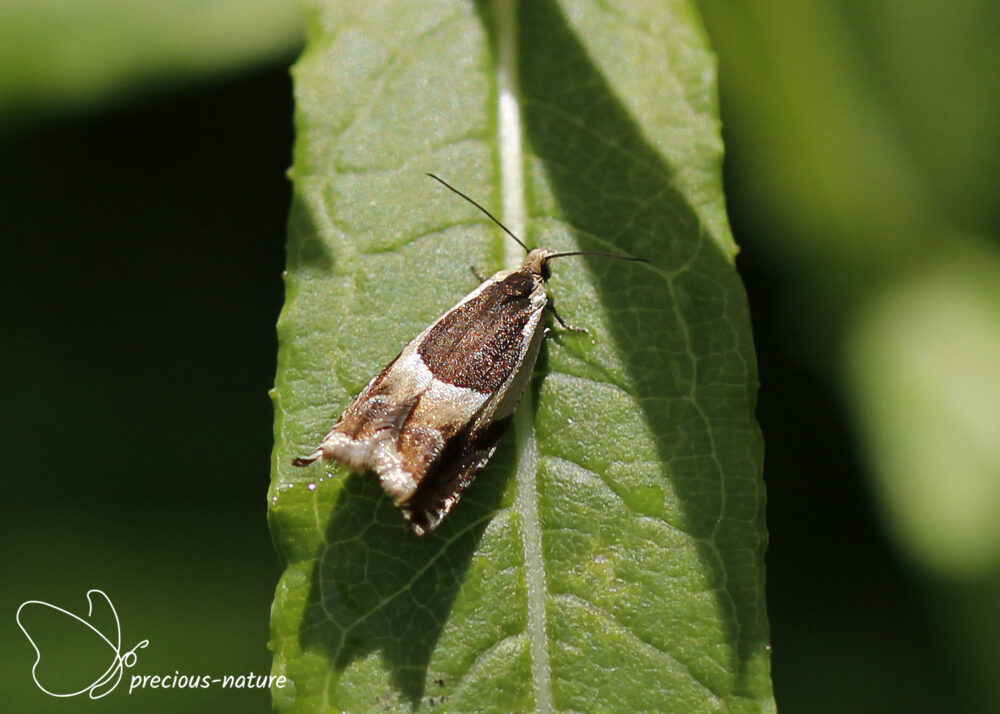
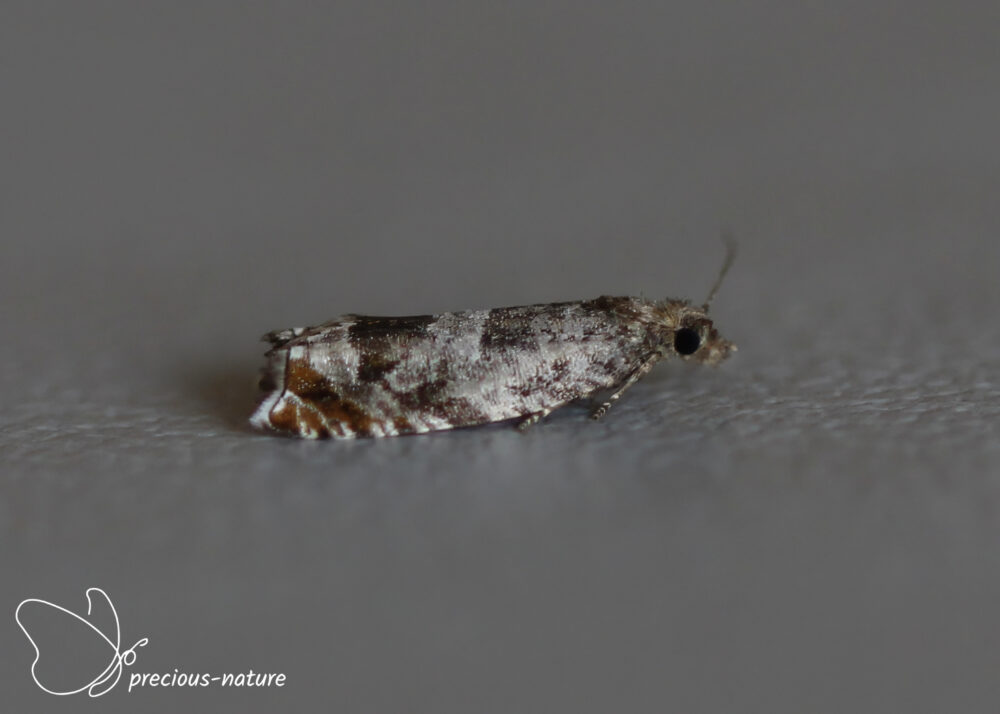
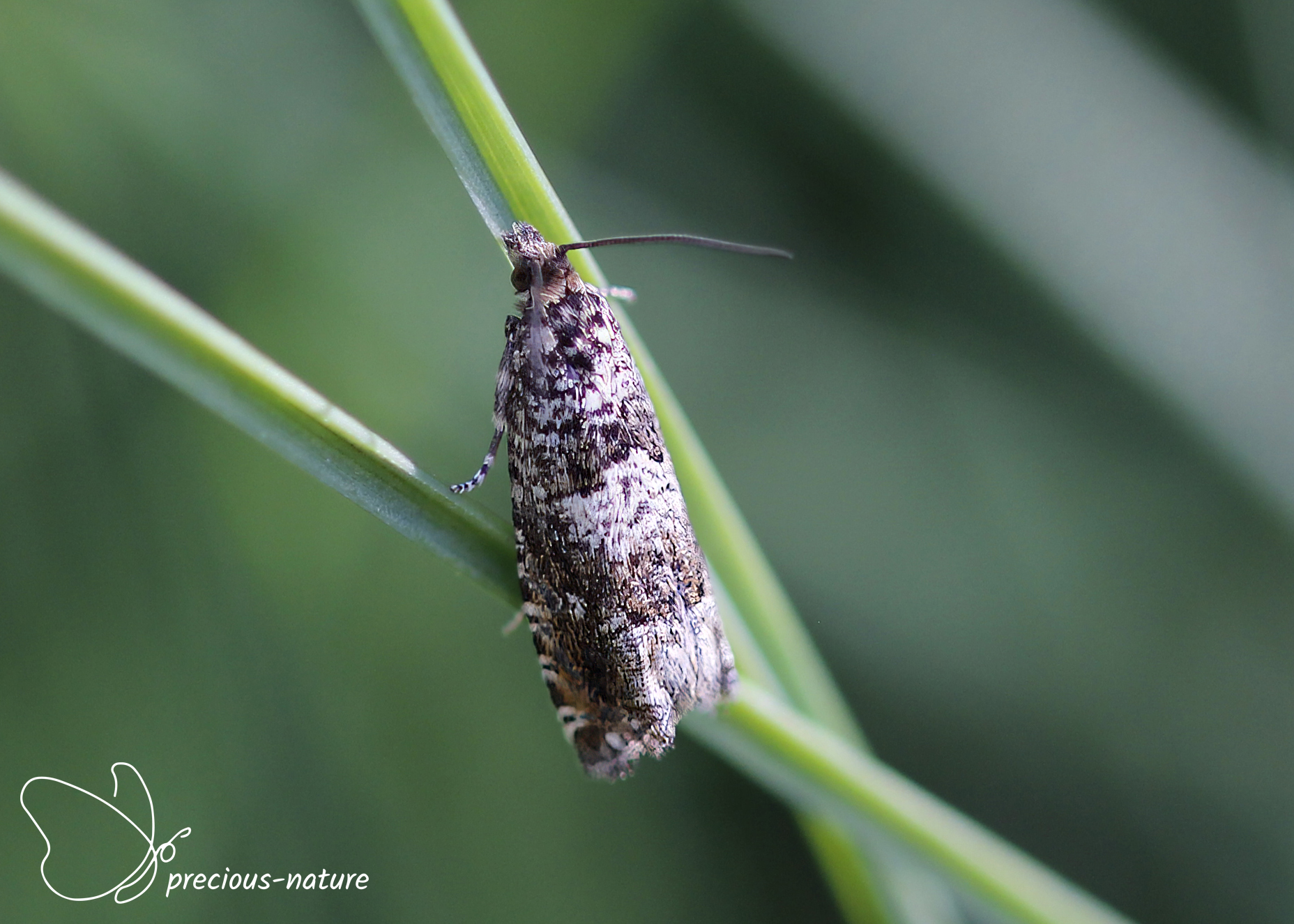
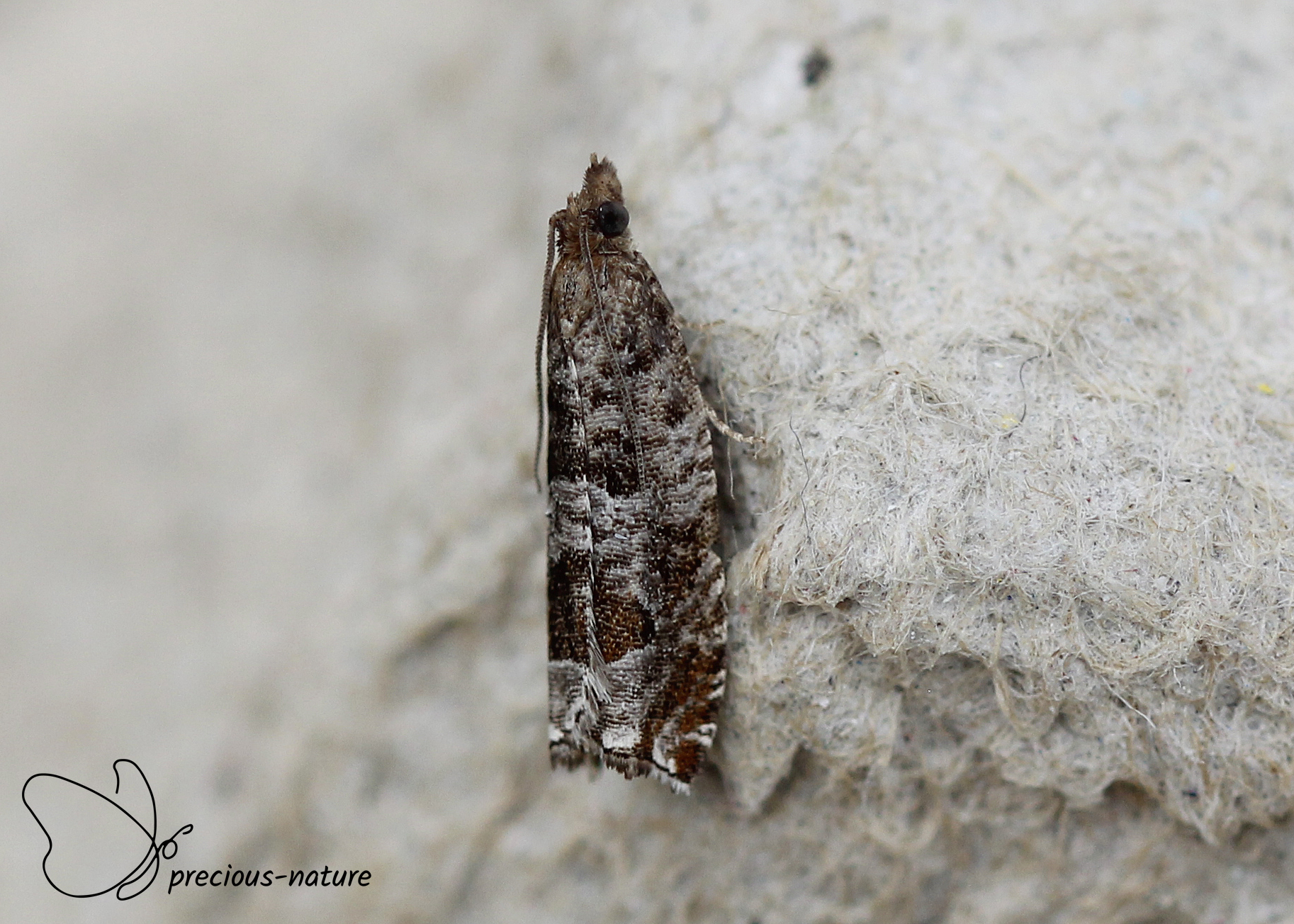
Triangle-marked Tortrix – 2018 (NL)
(NCBI-index: 1.869464)
A very common leafroller in Europe and a minor pest for apple trees, among others, is the Triangle-marked Tortrix (Ancylis achatana). The forewing is reddish-brown to dark brown with two greyish-white to silvery-grey transverse bands. A thin line connects these two bands. A large, dark brown, triangular spot can be seen on the dorsum of the forewing. The flying period spans from the end of May to September in one generation, and the wingspan ranges from 14 to 18 mm. The larvae spin or roll together leaves and feed within or nearby. Host plant: Hawthorn, Blackthorn, Apple, Blackberry. Dutch name: Dwarsstreephaakbladroller. Frisian name: –
Flying period:

Tribe: Enarmoniini
Genus: Ancylis
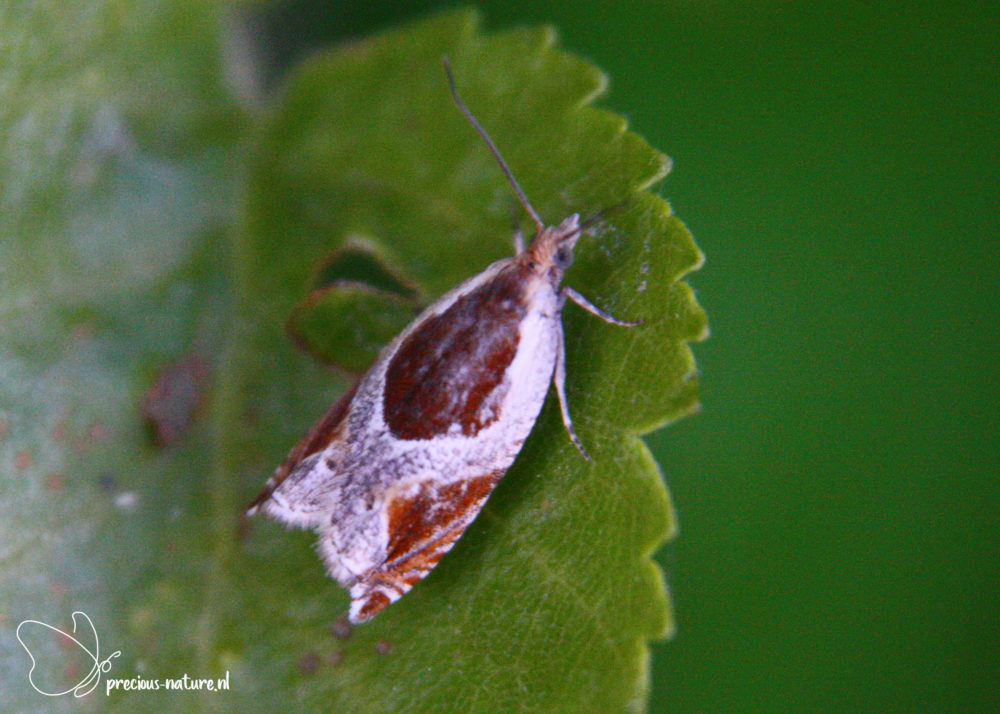
Buckthorn Roller – 2019 (NL)
(NCBI-index: 1.391524)
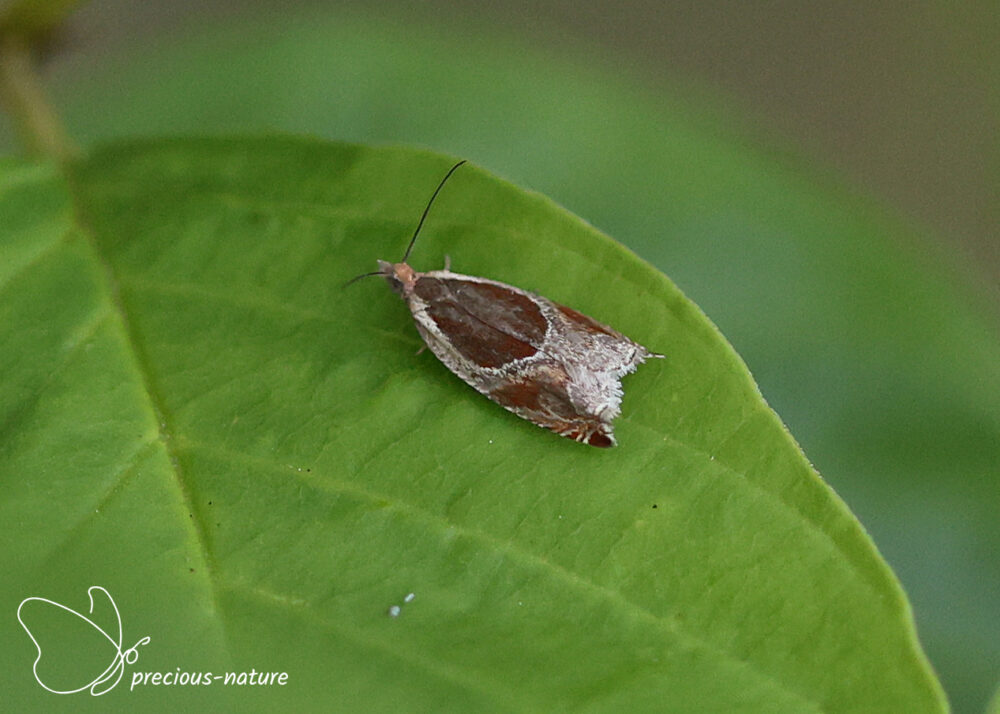
The forewing of the Buckthorn Roller (Ancylis unculana) ends in a small lobe near the apex. The apex appears to be curved. The wing is dark brown and slightly more orange near the apex. Furthermore, a broad off-white or greyish-white transverse band can be seen running from the base at the costa along the edge, bending halfway down the wing over the wing, and then further back along the dorsum. The flying period spans from May to August in one generation, and the wingspan ranges from 12 to 16 mm. The larvae spin a folded leaf together at the edges and feed within. Host plant: Buckthorn, Alder Buckthorn. Dutch name: Purperrode haakbladroller. Frisian name: –
Flying period:

Tribe: Enarmoniini
Genus: Ancylis
Hook-tipped Roller – 2019 (NL)
(NCBI-index: 1.100910)
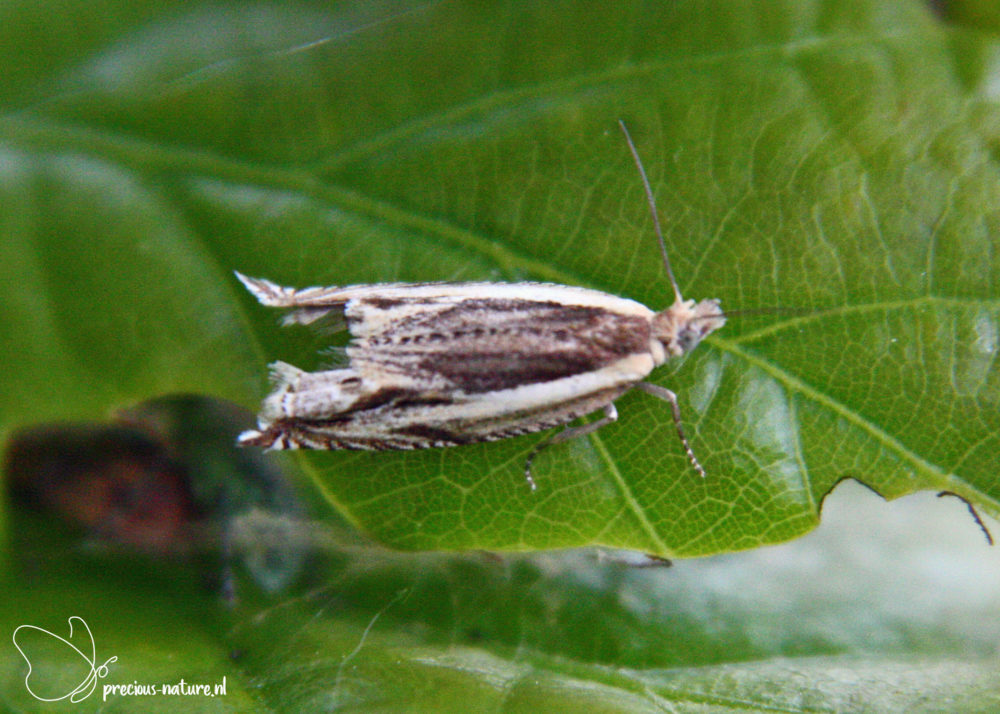
The Hook-tipped Roller (Ancylis apicella) gets its name from the curvature at the apex. The forewing is pale yellow-brown along the costa and dark brown or mixed dark brown/pale yellow-brown or grey-brown along the dorsum. There is a cream-coloured with a pale brown longitudinal stripe from the base to 3/4 of the wing and then at a narrow angle towards the costa. At least one dark spot is visible in the light part. The flying period spans two generations, from May to September, and the wingspan ranges from 12 to 17mm. The larvae are folding and spinning leaves together. Host plant: Buckthorn, Alder Buckthorn. Dutch name: Fijngestreepte haakbladroller. Frisian name: –
Flying period:
Tribe: Enarmoniini
Genus: Ancylis
Red Roller – 2023 (NL)
(NCBI-index: 909812)
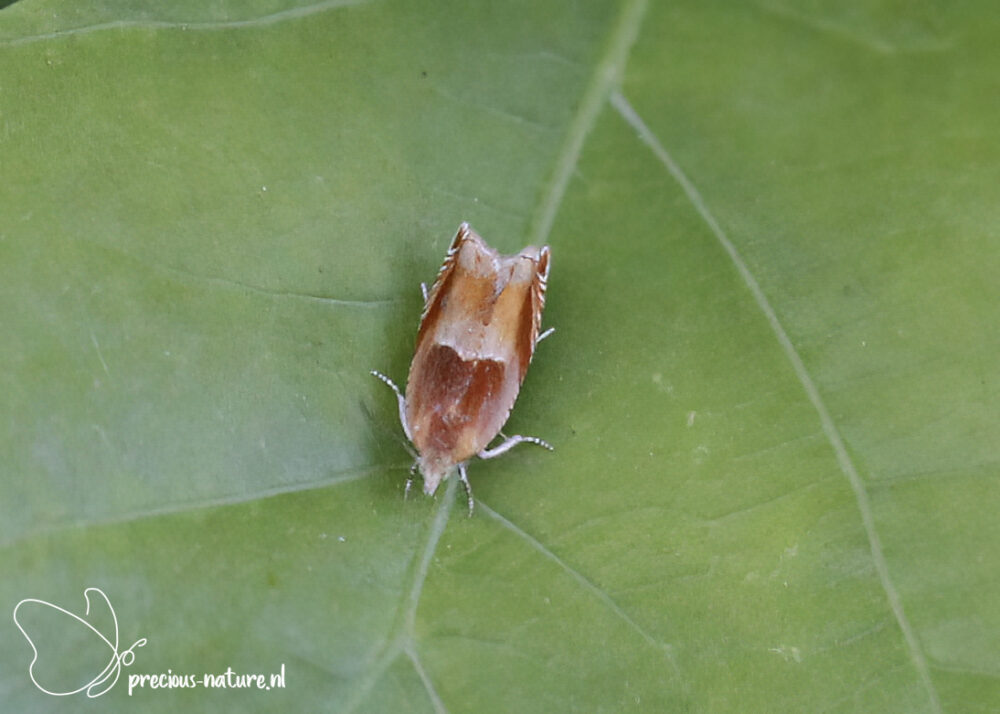
Like its congeners, the Red Roller (Ancylis mitterbacheriana) has a curve near the wing tip that creates a hooked appearance. The forewing is up to one-third dark reddish brown from the base along the inner edge. Then, a thin white line and a lighter zone can be seen as a transition to a light brown zone. Along the leading edge, the white stripes in the dark brown zone are particularly striking at the wing tip. The flight period spans one generation, from late April to mid-July. Adults can sometimes rest on the upper side of a leaf during the day. The wingspan is about 14 mm. Host plant: Oak, Beech. Dutch name: Oranje haakbladroller. Frisian name: –
Flying period:

Tribe: Enaroniini
Genus: Ancylis
Meadow Hook-wing – 2024 (CH)
(NCBI-index: 1.594232)
You must pay close attention to the forewing pattern to identify the Meadow Hook-wing (Ancylis badiana). It looks very similar to the Fen Roller (Ancylis paludana). The Meadow Hook-wing is darker and has a narrower cream-coloured band along the leading edge. A striking difference is the number of black dots at the base of the fringe line near the wing tip. This is never more than 1 in the Meadow Hook-wing, while in the Fen Roller, this is 3 or 4. The forewing ends in a broad lobe, which makes it look like a hook. From above, you can see the dark brown triangle with the point close to the head and the base halfway along the wing. The flight period is two generations from April to October, and the wingspan is 12-16 mm. Host plant: Vetch, Clover. Dutch name: Bonte haakbladroller. Frisian name: –
Flying period: