The Grapholitini is a tribe within the subfamily Olethreutinae, which is part of the family Leafrollers (Tortricidae). The tribe comprises approximately 900 species with a worldwide distribution, distributed across 42 genera, including those in Europe such as Cydia, Dichrorampha, Grapholita, and Pammene. The larvae bore into fruits, roots, and shoots, making this group a significant pest. Characteristic features of the tribe include a hindwing with widely spaced veins a4 and a3 at the base and a reduced dorsal complex in the male genitalia.
Genus: Cydia
Codling Moth – 2017 (NL)
(NCBI-index: 82600)
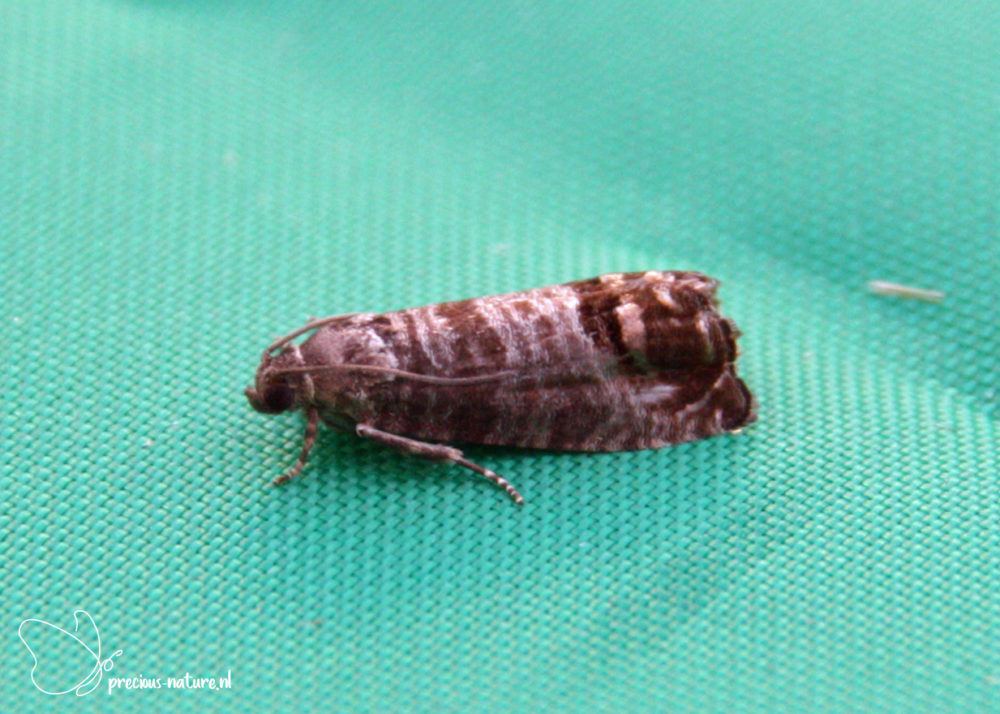
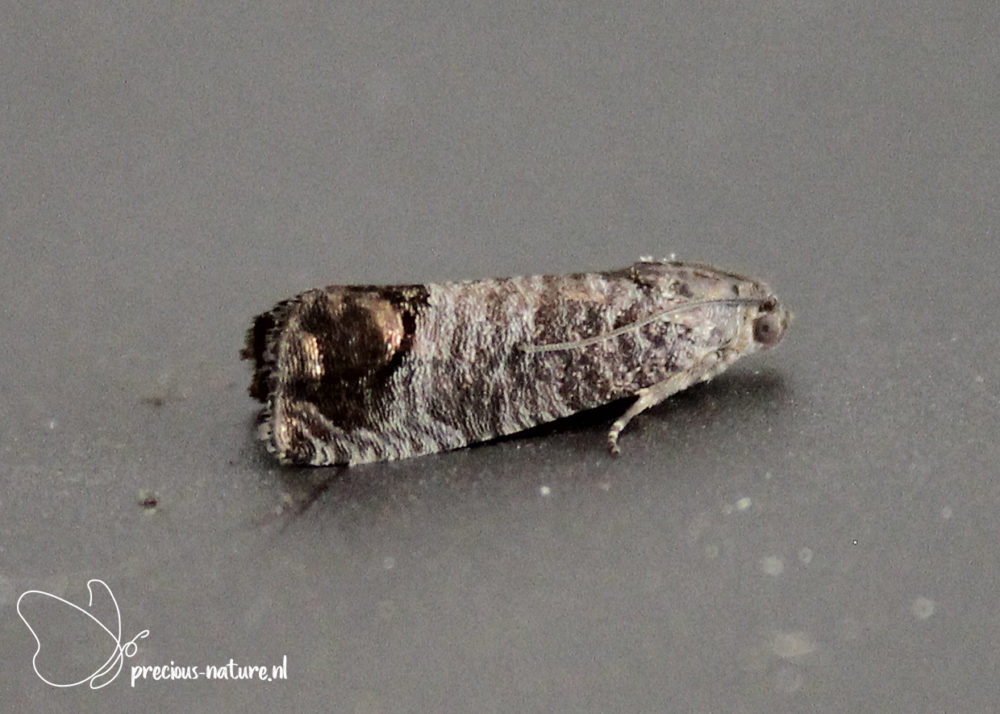
The Codling Moth (Cydia pomonella), also called Apple Leafroller, has a grey forewing with thin brownish transverse lines. On the outside, this leafroller has a coppery or gold-coloured eye with a triangular black stripe in the centre. The Codling Moth is responsible for the worm-eaten apples and pears. That is why the apples on the fruit tree in my garden often have these weird spots. The flying time is sometimes two generations from May to October, and the wingspan is 14-22 mm. The caterpillars feed on the fruits of apple, quince, pear, and other wild and cultivated fruits. Host plant(s): Apple, Pear. Dutch name: Fruitmot. Frisian name: –
Flying period:

Genus: Cydia
Pea Moth – 2020 (NL)
(NCBI-index: 753170)
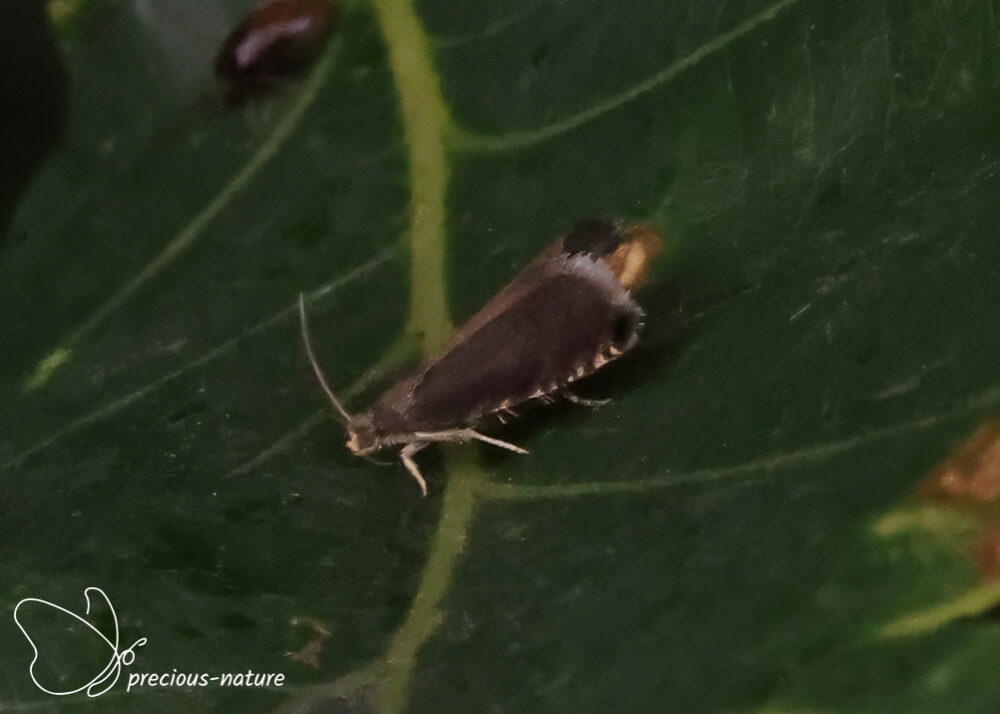
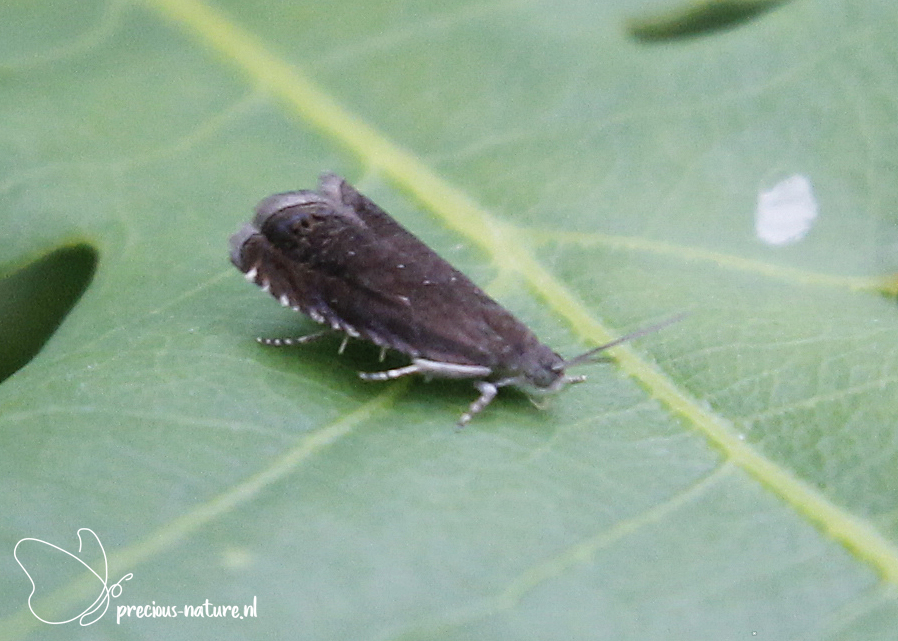
One species to be aware of, to avoid confusing it with another genus, is the Pea Moth (Cydia nigricana). It is very similar to the Deep-brown Piercer (Grapholita tenebrosana). Both have a uniform forewing that is grey-brown to dark brown and sometimes yellow-grey. Near the costa, close to the apex, you see a few short white stripes alternating with black patches. The hindwing of the Pea Moth is dark brown with contrasting white fringes. The Deep-brown Piercer has a pale grey-brown hindwing, and the white stripes at the costa are less pronounced. The palps of the Pea Moth are mottled pale brown or dark grey on top and white on the underside. The Deep-brown Piercer they are entirely white. The flying period spans May to August in a single generation, and the wingspan ranges from 12 to 16 mm. The larvae feed in the pods. Host plant(s): Pea. Dutch name: Erwtenbladroller. Frisian name: –
Flying period:

Genus: Cydia
Rusty Oak Moth – 2020 (NL)
(NCBI-index: 1.869771)
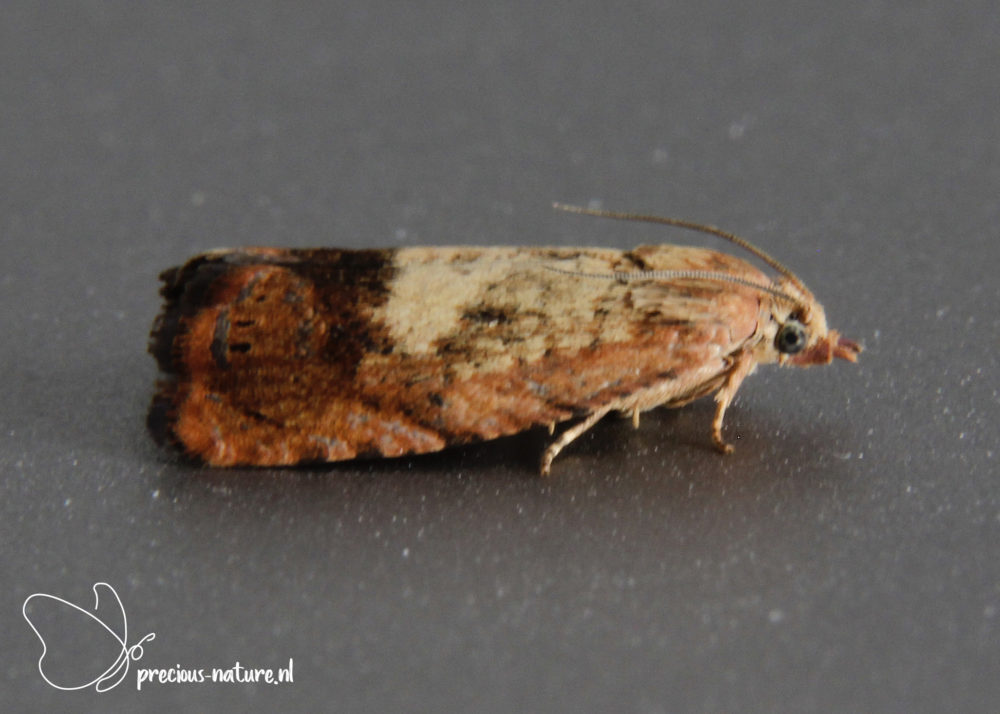
The forewing of the Rusty Oak Moth (Cydia amplana) is orange-brown, dark brown at the apex on the dorsum, and a cream-coloured dorsal spot halfway. Alternating light and dark short stripes can be seen along the costa. The flying period spans July to early October in a single generation, and the wingspan ranges from 16 to 20 mm. The larvae feed on nuts. Host plant(s): Oak, Walnut, Beech, Hazel. Dutch name: Oranje eikenbladroller. Frisian name: –
Flying period:

Genus: Cydia
Marbled Piercer – 2024 (NL)
(NCBI-index: 1.100963)
The chestnut tree offers enormous economic, social, cultural, and ecological benefits in some countries, such as Portugal, and also contributes to the characteristic landscape. The Marbled Piercer (Cydia splendana) is considered a serious agricultural pest and affects the quality and quantity of chestnut fruits. The wing root of the forewing is speckled with greyish. Halfway along the wing runs a greyish-white transverse band that narrows slightly in the middle. The eye cell is large, flanked by a metallic lead spot, and contains four or five black stripes. From the inner edge corner, a black spot in the shape of a triangle runs along the inside of the eye cell. The flight period spans one generation, from July to early October, and the wingspan ranges from 12 to 16 mm. Host plant(s): Oak, Sweet Chestnut, Walnut. Dutch name: Gewone spiegelmot. Frisian name: –
Flying period:
Genus: Dichrorampha
Sharp-winged Drill – 2019 (NL)
(NCBI-index: 1.869808)
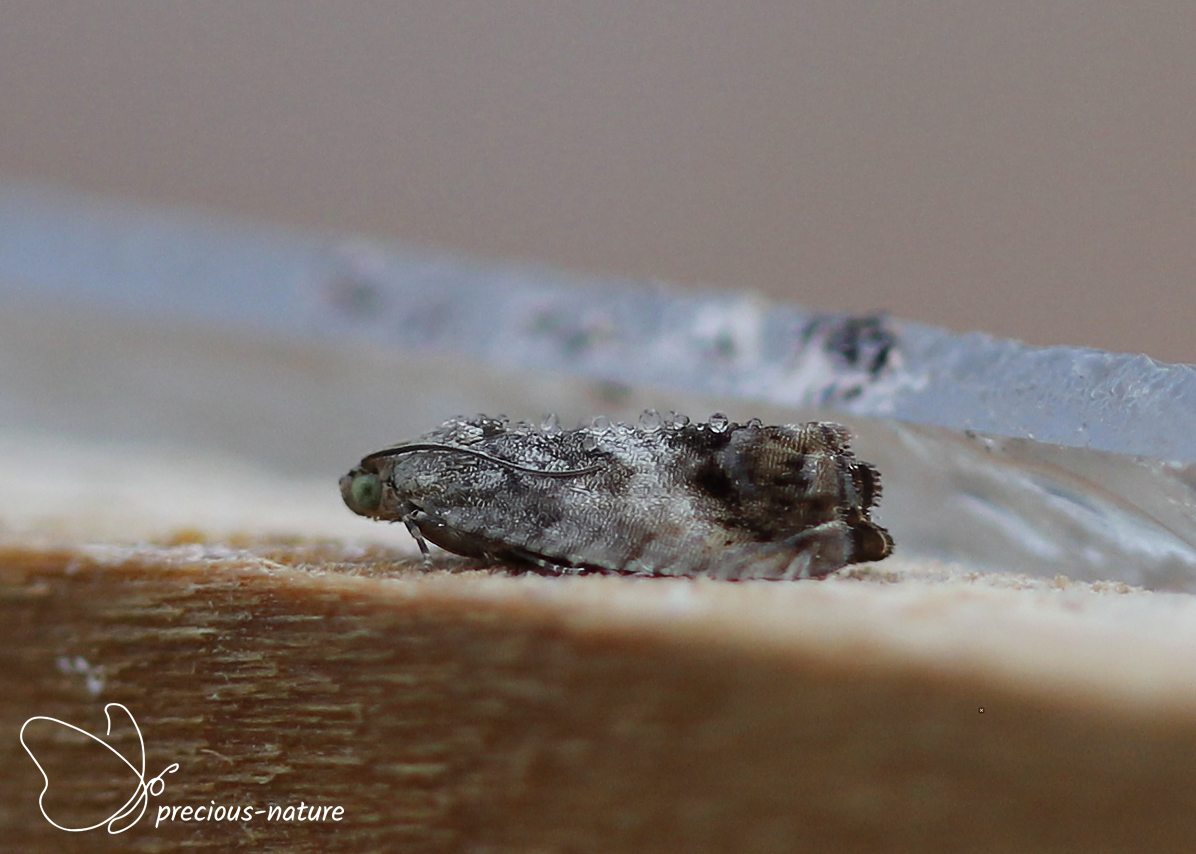
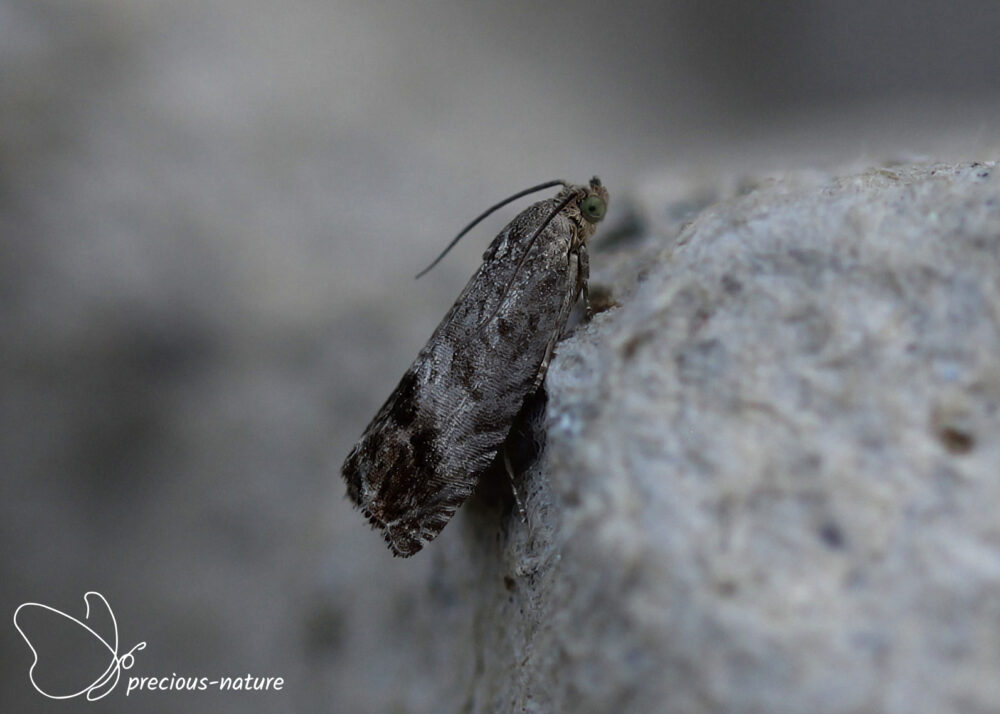
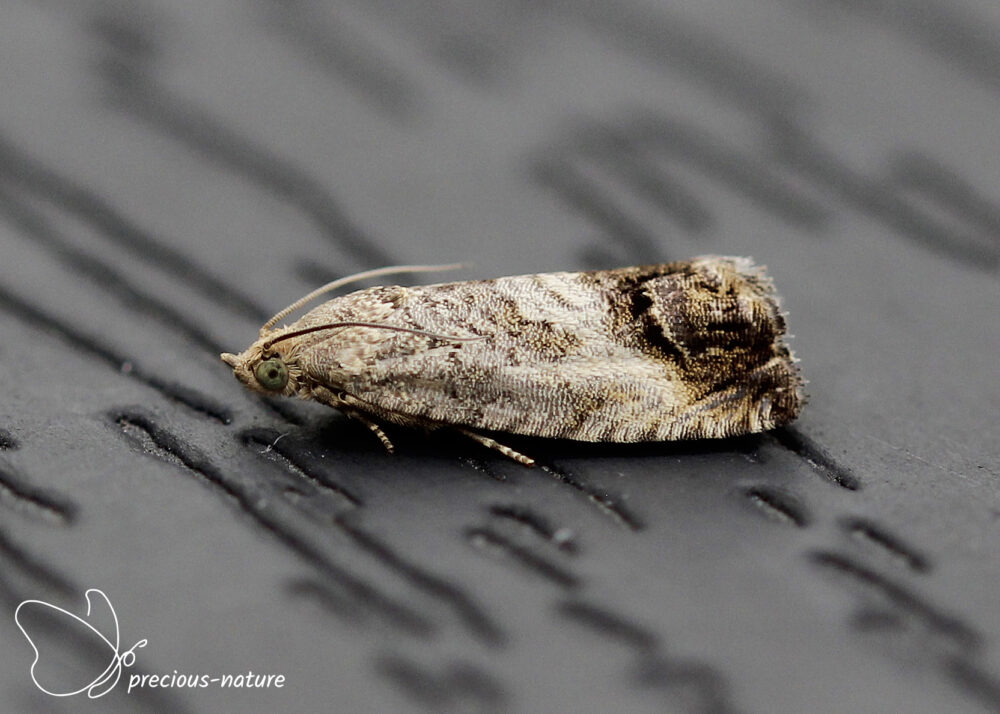
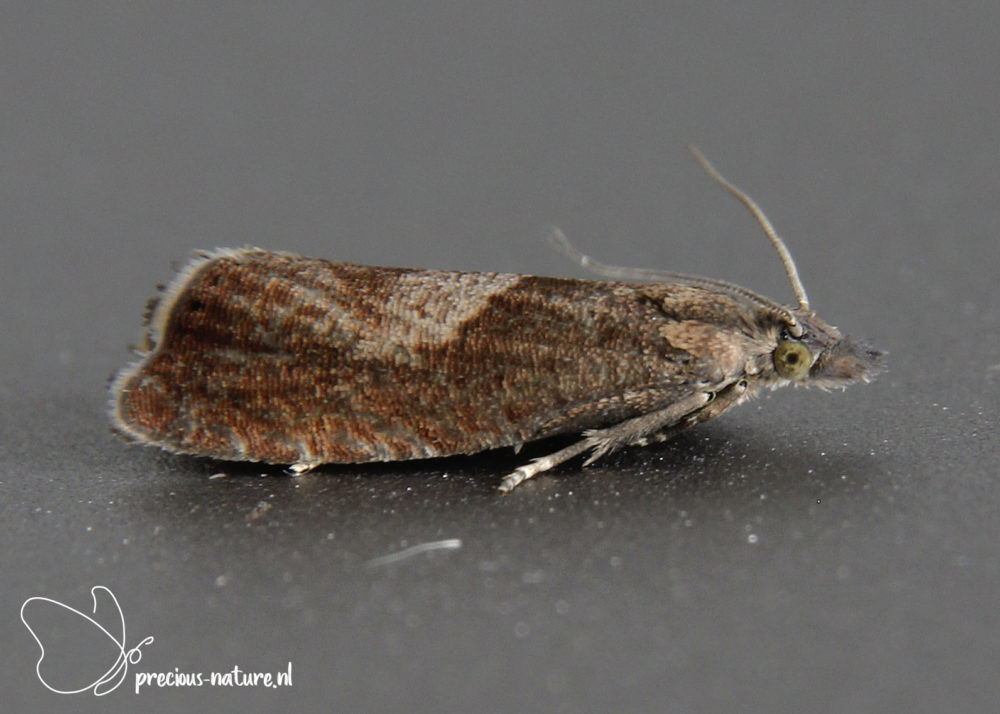
A leafroller that, at first glance, has a bit of a grey appearance but, on closer inspection, still has a variety of stripes and colours. The Sharp-winged Drill (Dichrorampha acuminatana) has a forewing that is dark brown, sometimes with a light purple or pink glow. Furthermore, the wing is dotted with a faint yellow-brown, broad brown-white, almost triangular spot. There are three to six black dots on the termen, and the fringes are glossy dark grey with a central white band. The caterpillar feeds on the root of its host plant and is, therefore, not a leafroller in its name. The flying period spans two generations, from April to September, and the wingspan ranges from 10 to 15 mm. The larvae burrow into the rootstock and feed within. Host plant(s): Daisy. Dutch name: Margrietwortelmot. Frisian name: –
Flying period:

Genus: Dichrorampha
White-spot Yarrow Moth – 2024 (CH)
(NCBI-index: 1.211811)
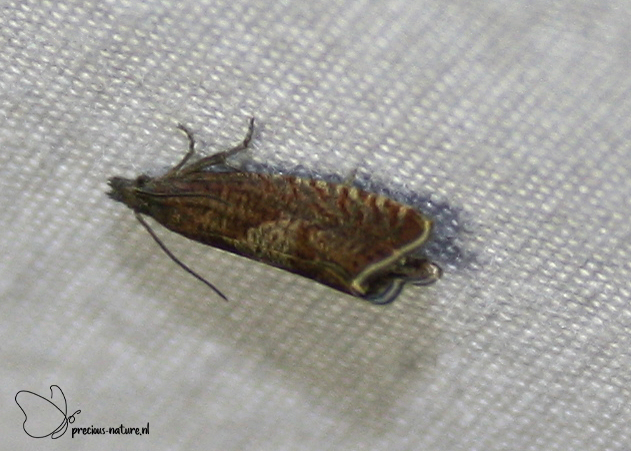
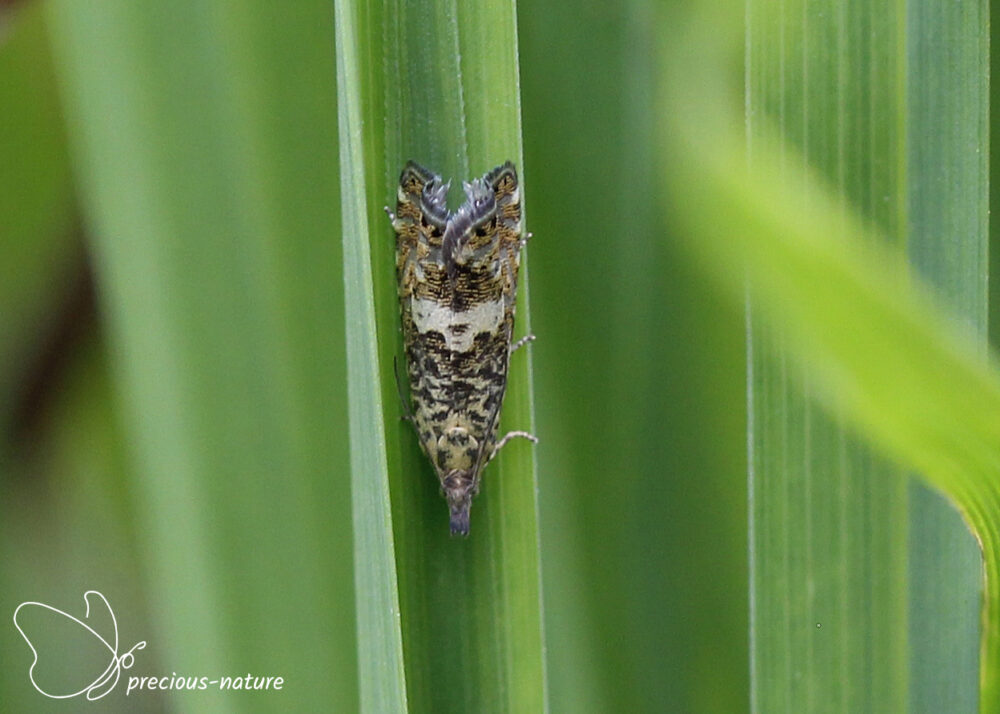
With much effort and patience, it was finally possible to get a good picture of the White-spot Yarrow Moth (Dichrorampha ligulana). The base colour of the forewing is olive green to clay yellow. From the root tip, the number of dark-coloured spots becomes closer. Lead-grey shiny spots can be seen in the zoom field. Striking features are the black dots along the rear edge, the white spots along the front edge, and the irregular white spot halfway along the wing, running from the inner edge to halfway along the wing. The hindwings are plain brown. The flight period is from April to September, and the wingspan is 13-16 mm. Host plant(s): Wormwood, Yarrow. Dutch name: Witvlekwortelmot. Frisian name: –
Flying period:
Genus: Grapholita
Meadow Tortrix – 2025 (NL)
(NCBI-index: 1.660645)
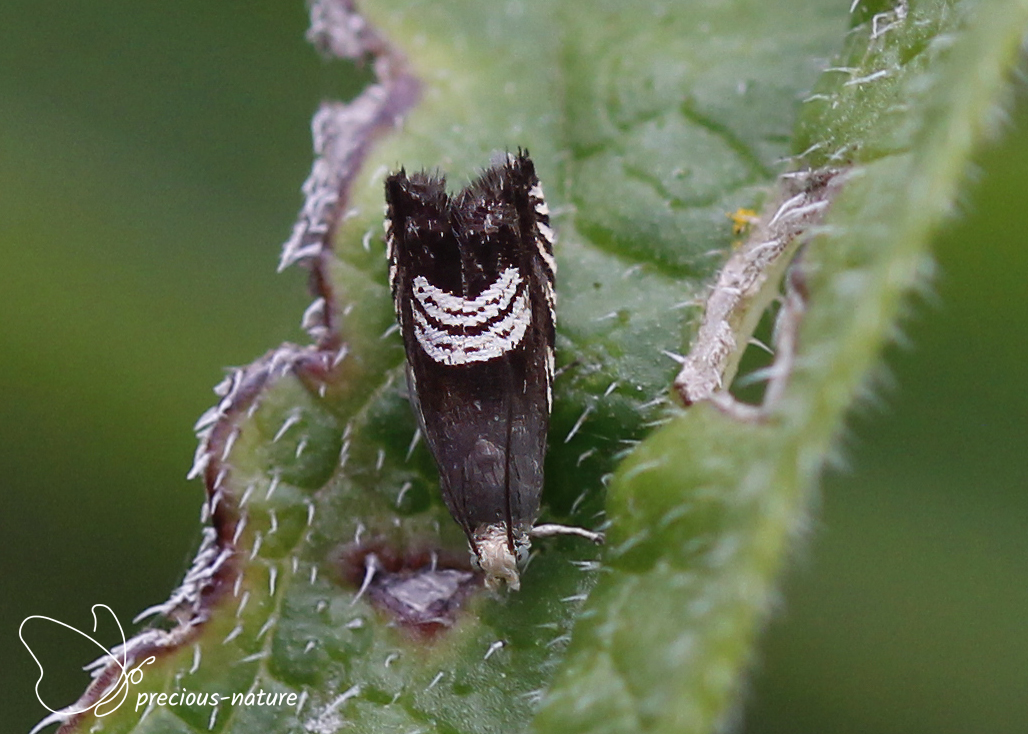
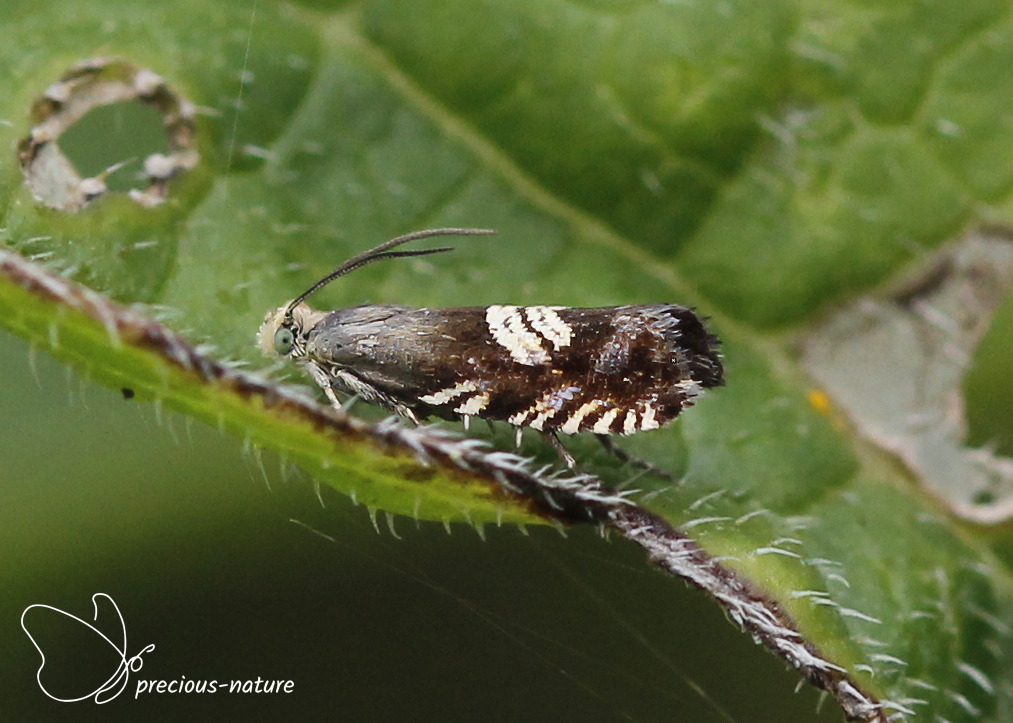
A very easy-to-identify species. The Meadow Tortrix (Grapholita compositella) has an entirely black-brown forewing with a large white spot halfway along the inner edge, extending to the centre of the wing. Within this spot, three thin black-brown lines are visible. Several white spots are present along the leading edge. The male’s hindwing is white, with the wingtip and trailing edge being darker. The flight period is two generations, from May to August, and the wingspan is 8-10 mm. Host plant(s): Clover, Common Bird’s-foot Trefoil. Dutch name: Sergeant-majoortje. Frisian name: –
Flying period:
Genus: Pammene
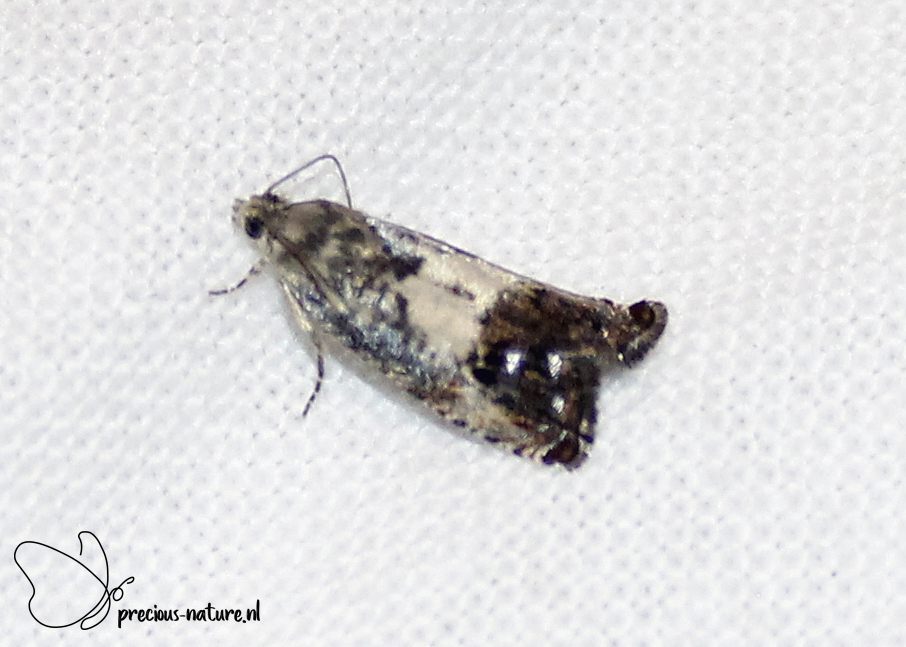
Acorn Piercer – 2017 (NL)
(NCBI-index: 1.101027)
The Acorn Piercer (Pammene fasciana) has a white ground colour with a transverse band of small silver-grey stripes on the inside of the wing and a brown colour on the outside. The flight time is from June to August, and the wingspan is 13-17 mm. The larvae feed internally on the oak acorns and sweet chestnut nuts. Host plant(s): Oak, Sweet Chestnut. Dutch name: Gewone dwergbladroller. Frisian name: –
Flying period:

Genus: Pammene
Sycamore Piercer – 2020 (NL)
(NCBI-index: 1.870148)
In the summer, I regularly walk past the plants in my garden to spot micro-moths. Sometimes, you are lucky, and you suddenly see a new species. This was also the case with the Sycamore Piercer (Pammene aurita). This leafroller is predominantly brown to orange-brown with a large pale yellow spot at the dorsum halfway up the forewing. The tornus is darker in colour, and short white spots are visible along the costa. The flying period spans one generation, from July to September, and the wingspan measures 14-15 mm. The larvae feed on silk in buds. Host plant(s): Sycamore. Dutch name: Morgenroodbladroller. Frisian name: –
Flying period:


Genus: Pammene
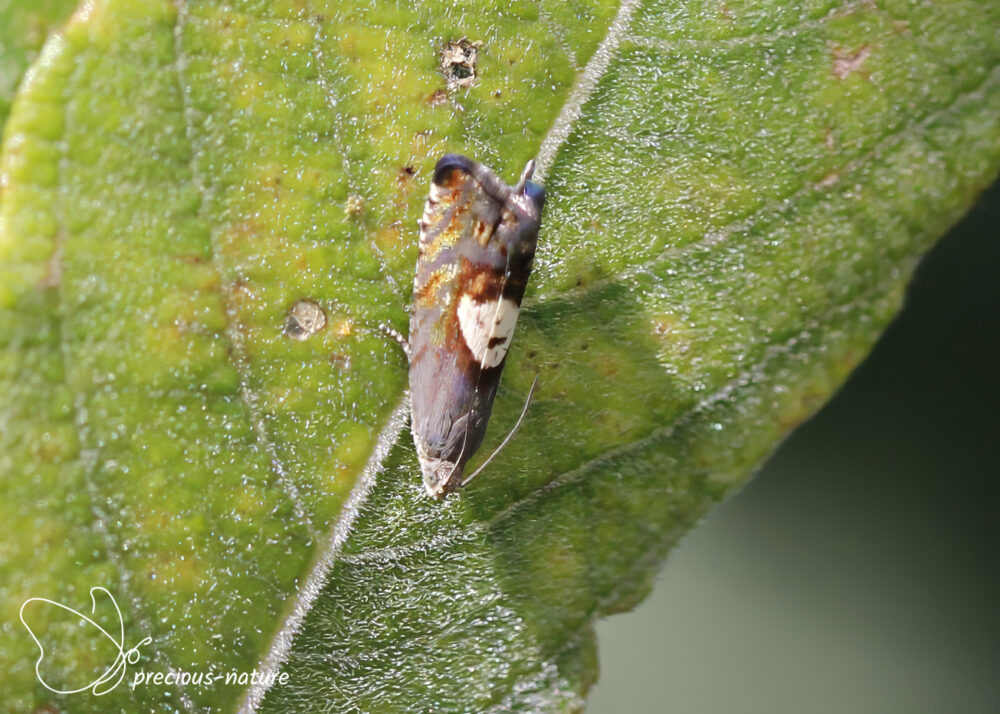
Pigmy Y Piercer – 2023 (NL)
(NCBI-index: 1.858052)
In the summer, I often walk in a nature reserve after dinner. If you pay close attention, you will usually come across micro butterflies that emerge from their hiding place at dusk. A striking appearance is the poplar dwarf leafroller (Pammene populana) because of its large white spot on the otherwise predominantly dark brown forewing. The white spot at the inner edge is edged with a dark band. A pair of short cream-coloured bands can be seen along the leading edge. The flight period spans one generation, from July to mid-September, and the wingspan ranges from 10 to 13 mm. Host plant(s): Willow. Dutch name: Populierendwergbladroller. Frisian name: –
Flying period:
Genus: Pammene
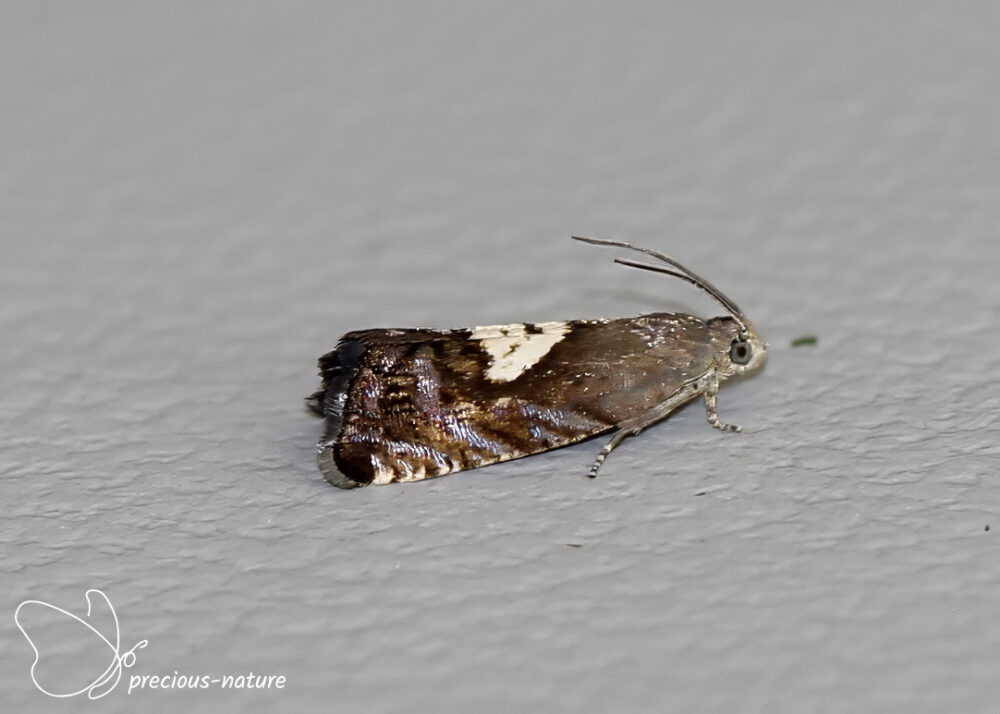
Dark Oak Tortrix – 2026 (NL)
(NCBI-index: 1.870149)
The head of the Dark Oak Tortrix (Pammene germmana) is pale yellowish-brown, and the thorax is greyish-brown. The forewings are blackish with many white leading-margin hooks running along the entire leading edge of the wing. The two curved, glossy blue transverse lines are barely noticeable. A conspicuous black eyespot is present at the wingtip. The Dark Oak Tortrix resembles the Little Beech Tortrix (Strophedra weirana), but the latter has fewer white leading-margin hooks and no distinct eyespot. The flight period is in a single generation from May to June, and the wingspan is 11-13 mm. Host plant: Oak, Hawthorn. Dutch name: Dark Oak Tortrix. Frisian name: –
Flying period: