The Olethreutini are a tribe within the subfamily Olethreutinae of the family Leafrollers (Tortricidae). This is a large group with over 1,100 described species. Members are found worldwide, although the greatest diversity is found in Southeast Asia and the colder parts of the Northern Hemisphere. Among the 68 genera found in Europe are Apotomis, Celypha, Eudemis, Hedya, and Olethreutes. The larvae are primarily leafrollers. There are no distinguishing characteristics that define the entire tribe, although a hindwing with distinct veins a3 and a2 and a vestibular organ (sacculus) with two clusters of spines unite some species.
Tribe: Olethreutini
Genus: Apotomis
Birch Marble – 2018 (NL)
(NCBI-index: 1.100915)
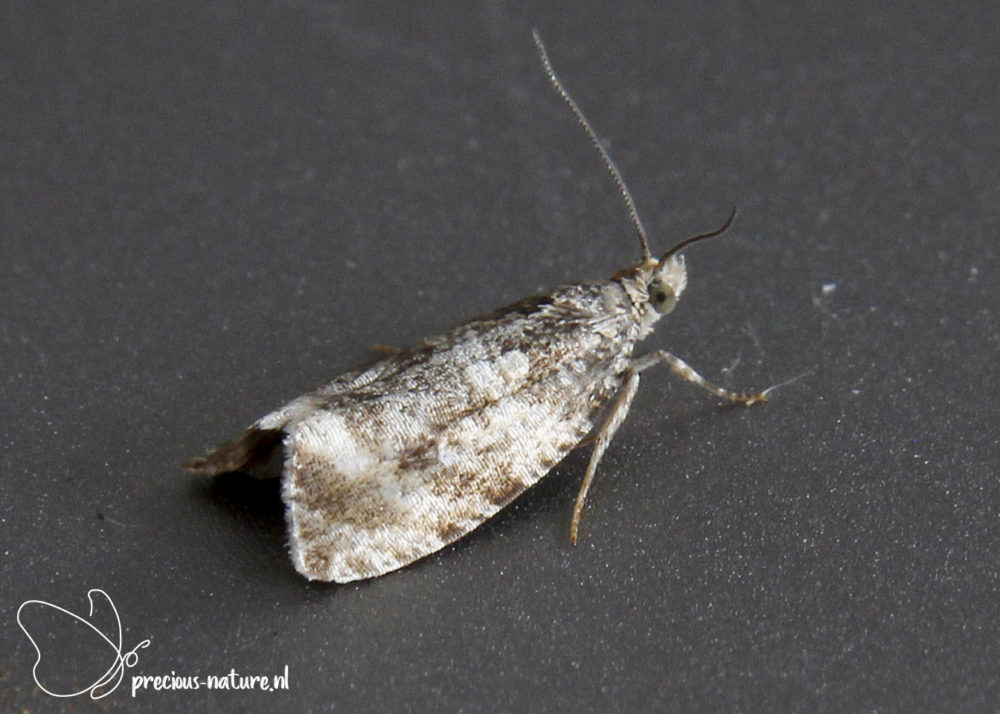
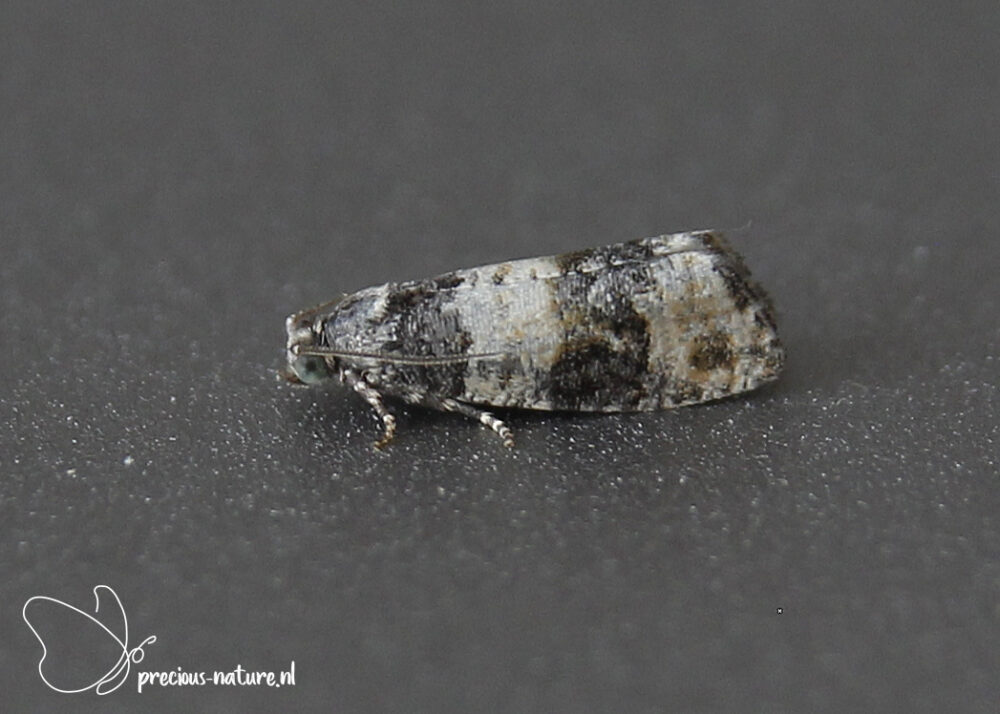
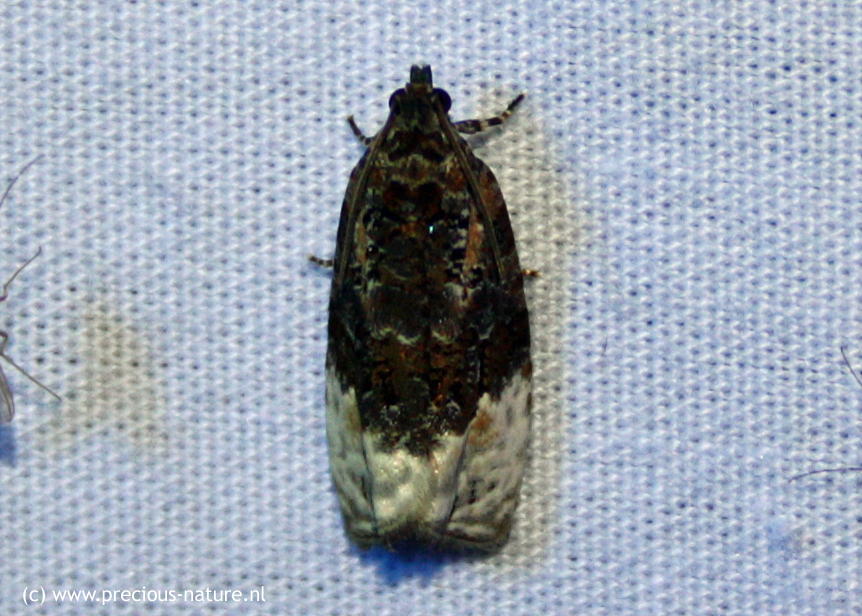
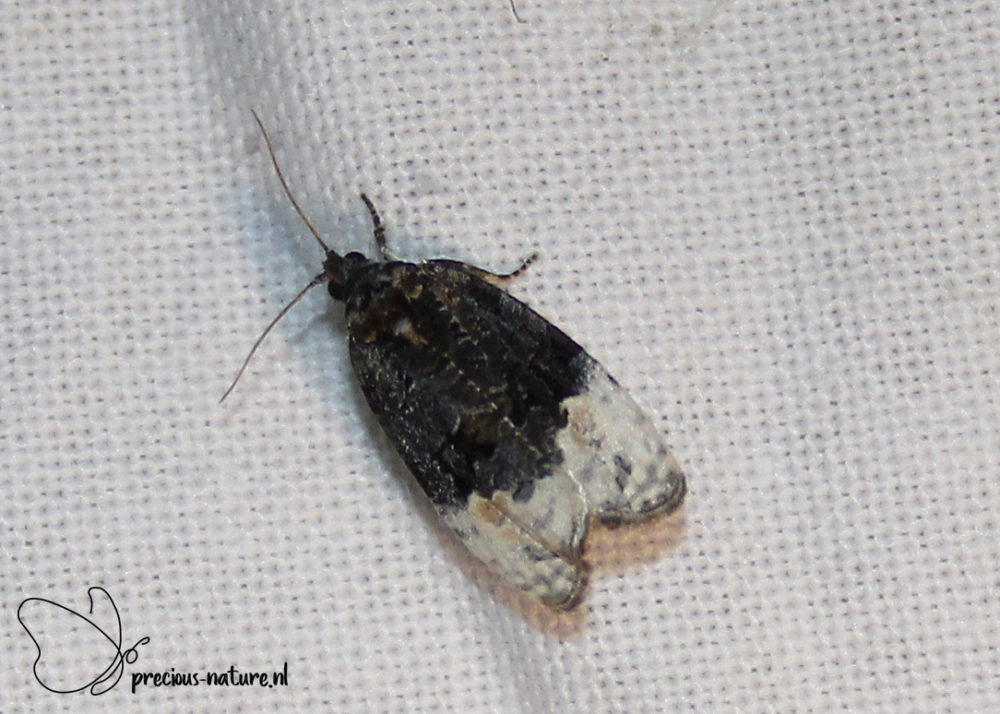
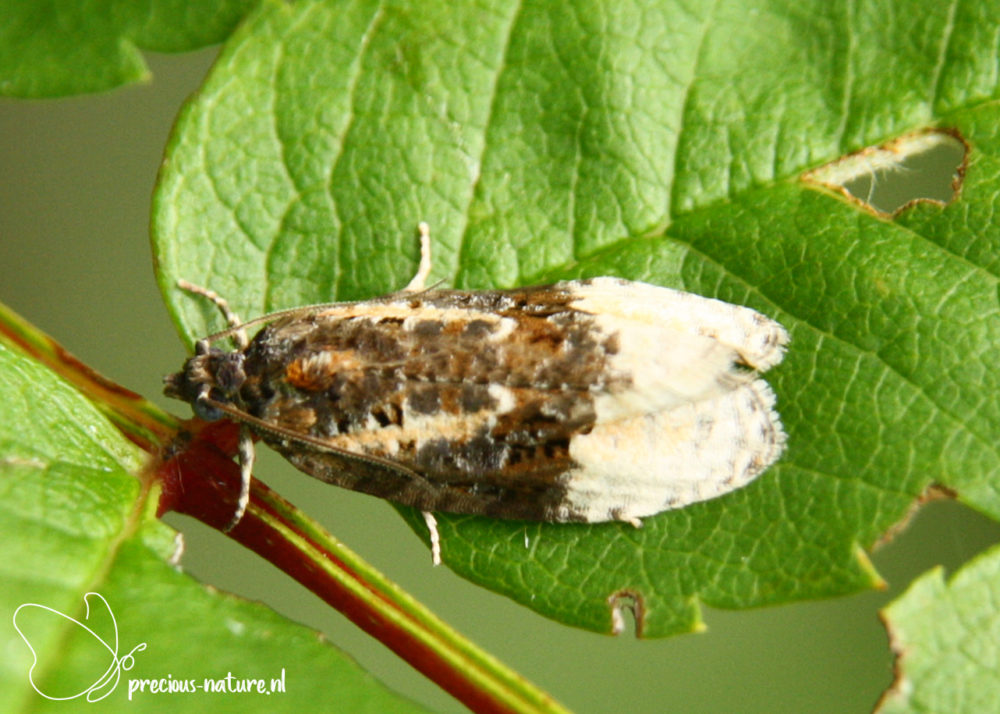
The Birch Marble (Apotomis betuletana) is similar to the Willow Marble (Apotomis capreana). From the wing base, the front wing is 2/3 black-brown mixed with lead-coloured and black spots. The other part of the forewing is white with a yellow-brown spot. The difference between the Birch Marble and the Willow Marble is best seen from above. The Birch Marble shows a light grey line shaped like a fishhook in the dark part. Furthermore, the two black spots on the border of the dark and white part of the Birch Marble are much darker than those on the Willow Marble. The flying period spans from June to September in one generation, and the wingspan ranges from 16 to 20 mm. The larvae are spinning and rolling leaves together. Host plant: Birch. Dutch name: Berkenmarmerbladroller. Frisian name: –
Flying period:

Tribe: Olethreutini
Genus: Celypha
Barred Marble – 2015 (NL)
(NCBI-index: 1.030481)
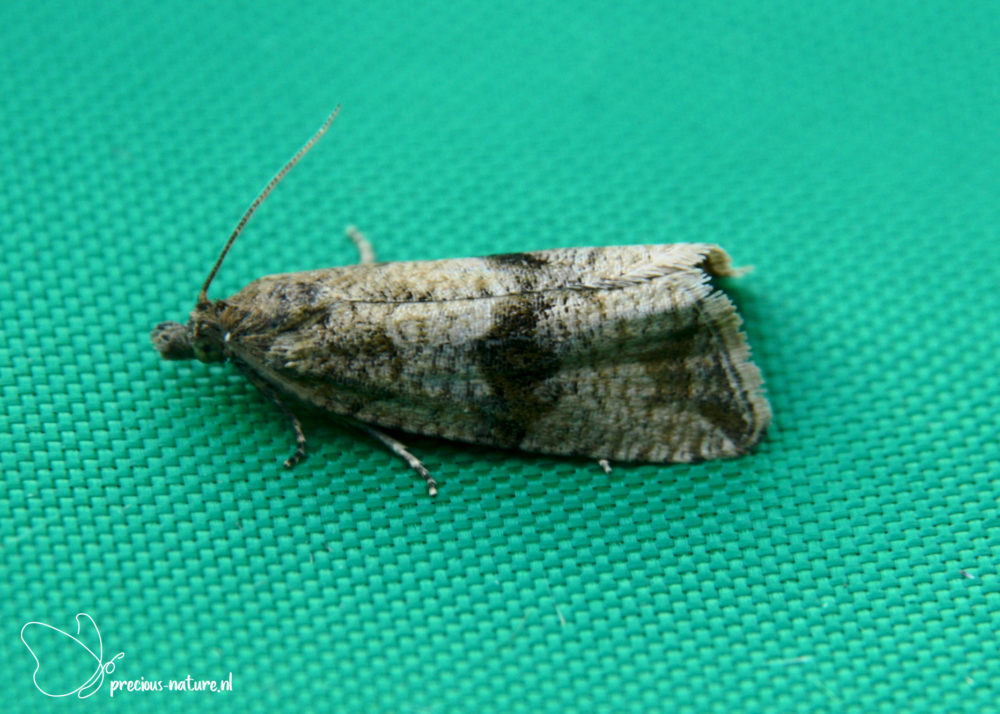
The Barred Marble (Celypha striana) has a light grey-brown ground colour, and its dark median band distinguishes it from the other Celypha spp. There is also a second, dark, angled band close to the apex. This leafroller flies from dusk from June to August, and its wingspan is 16-22 mm. In the first instance, the larvae are under a silken web on the surface of the taproot, and later in the roots. Host plant: Dandelion. Dutch name: Paardenbloembladroller. Frisian name: –
Flying period:

Tribe: Olethreutini
Genus: Celypha
Common Marble – 2017 (NL)
(NCBI-index: 1.594247)
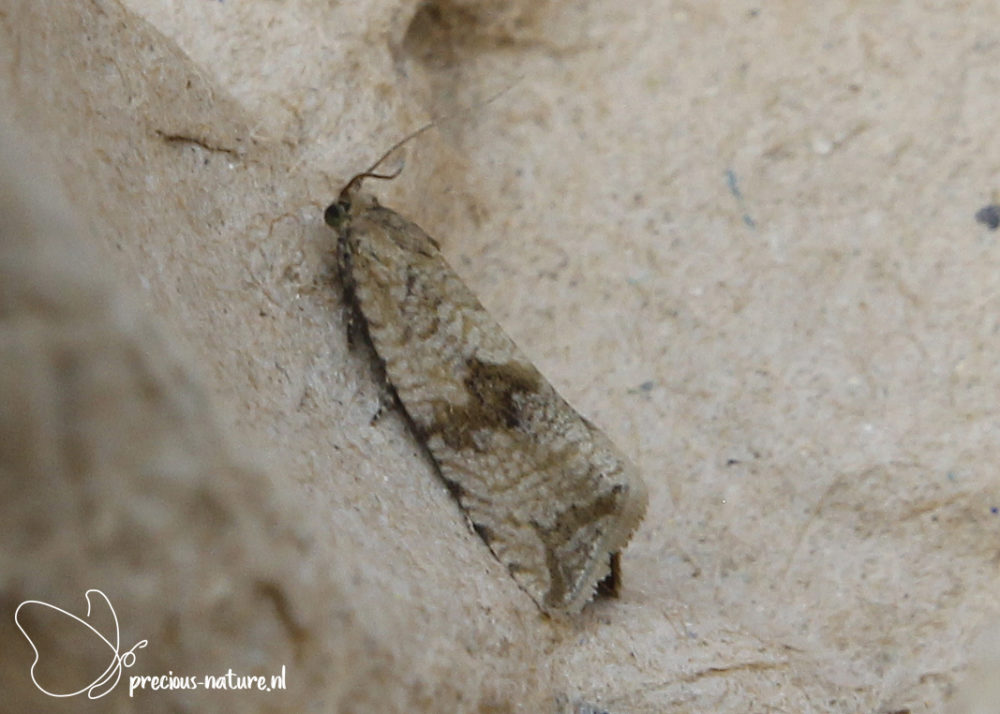
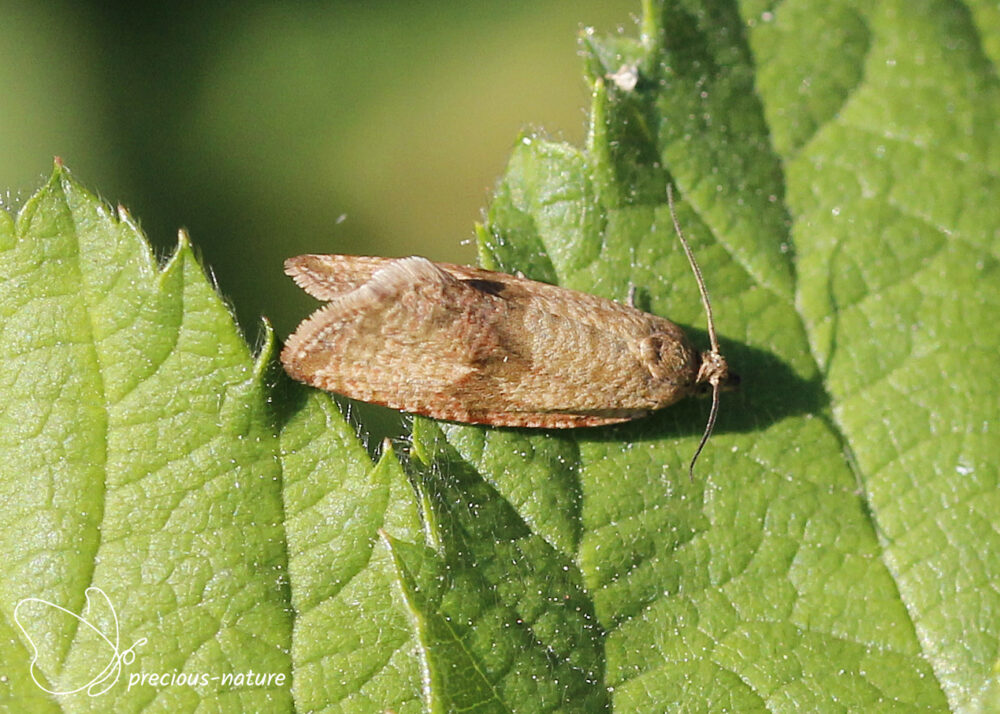
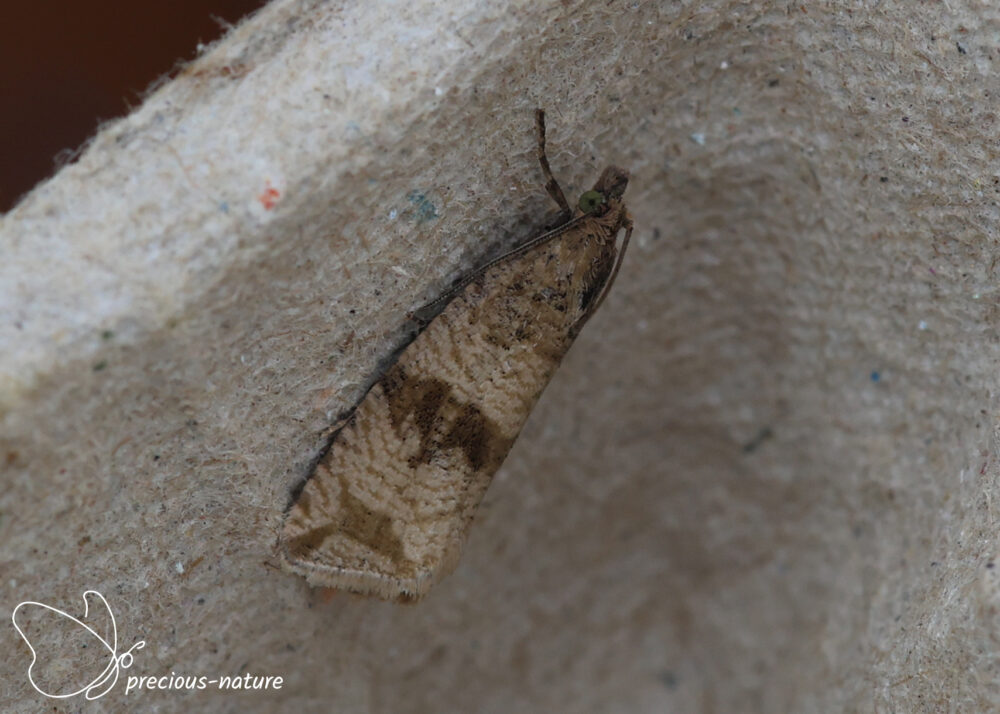
The Common Marble (Celypha lacunana) is very variable in colour shade but can often be recognised by the indentation or fading of the dark transverse band. This leafroller flies at night and is attracted to light. Flight time is in two generations, from May to August, and the wingspan is 16-18 mm. The larvae feed on various plants in spun leaves, shoots, and flowers. Host plant: Beech, Birch, Willow, Nettle. Dutch name: Brandnetelbladroller. Frisian name: –
Flying period:

Tribe: Olethreutini
Genus: Celypha
Sprout Marble – 2022 (NL)
(NCBI-index: 2.561072)
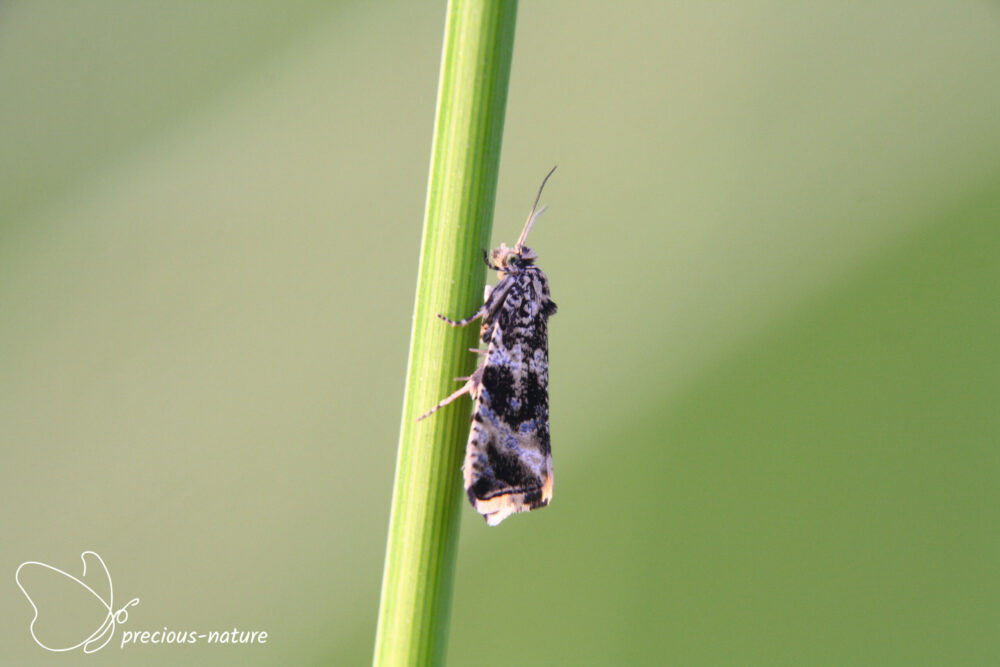
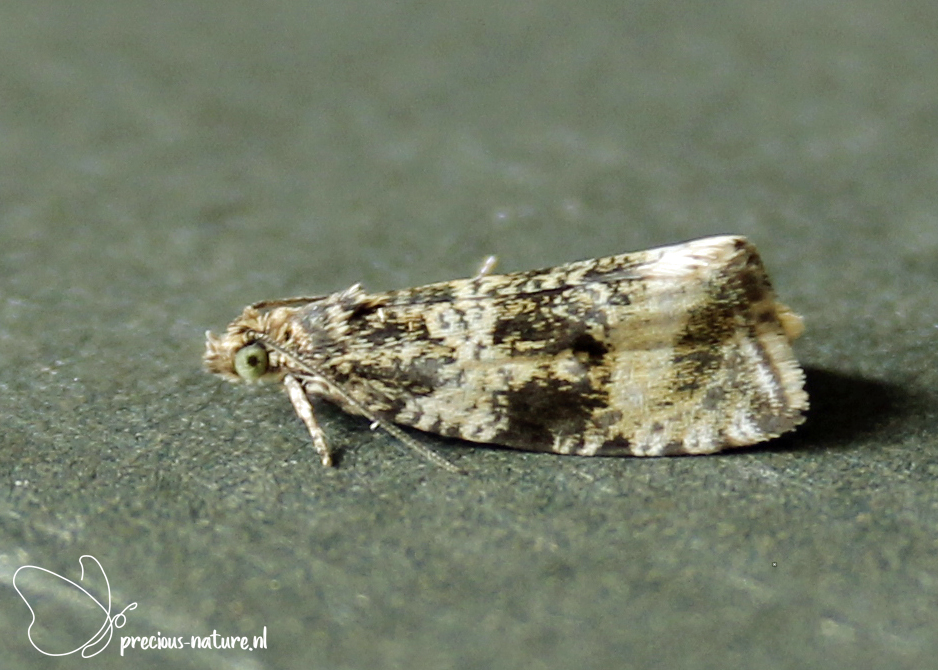
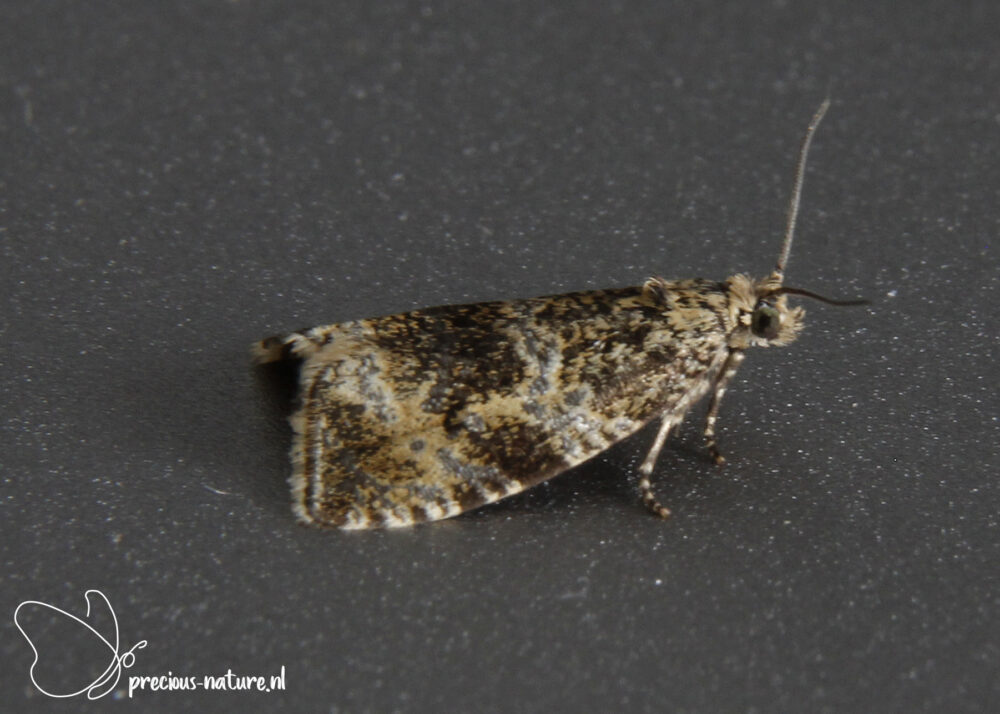
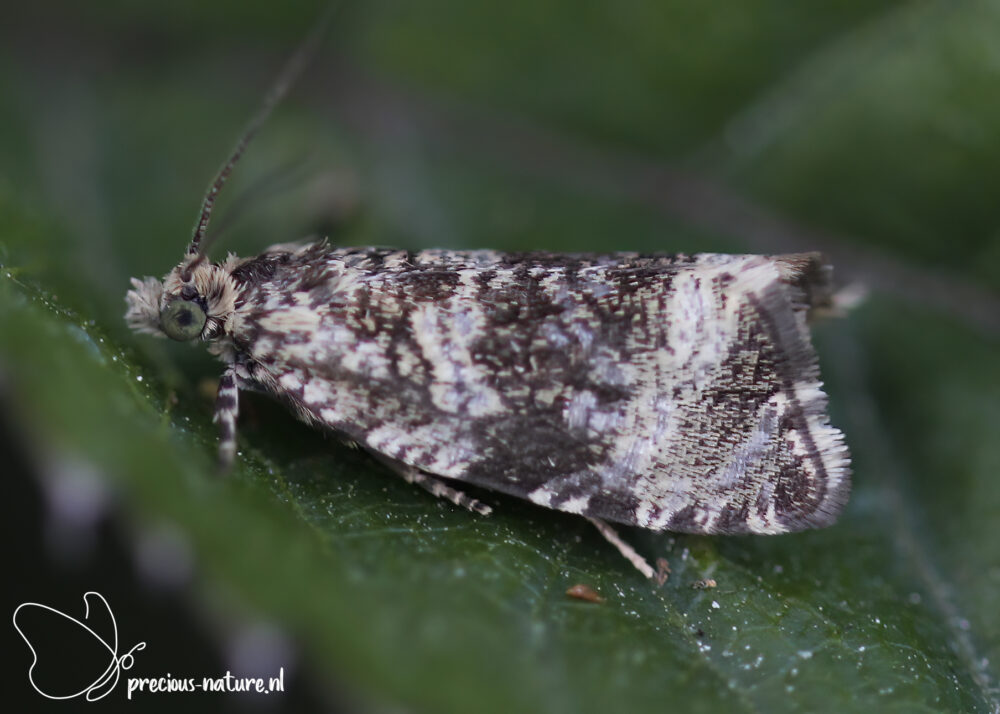
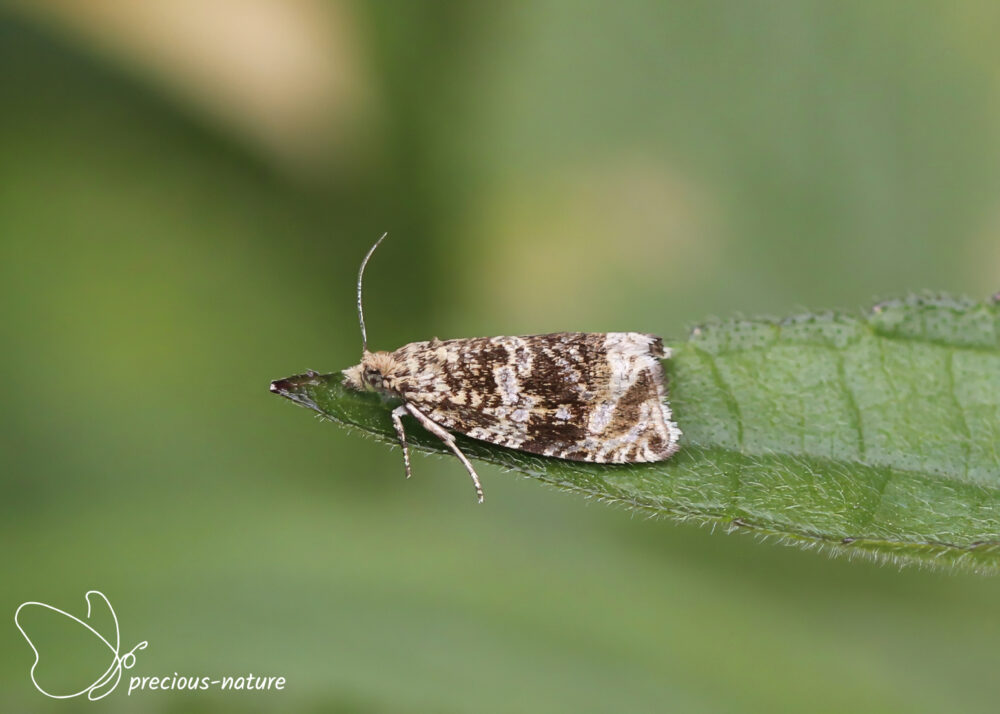
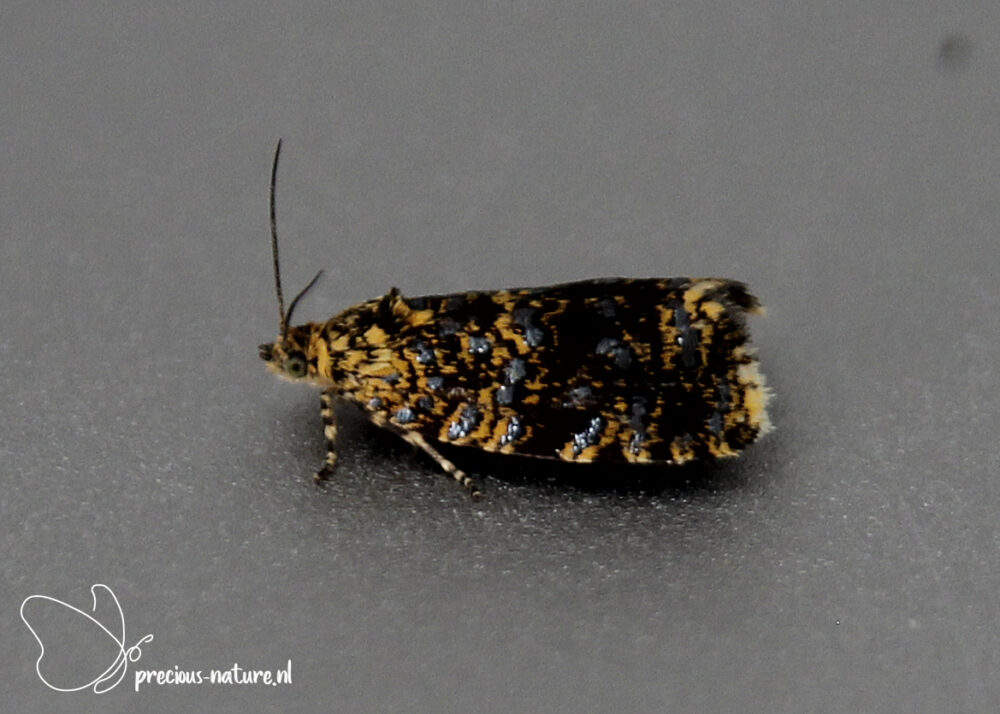
Even though the drawing of the Sprout Marble (Celypha siderana) is quite striking, I still had to search hard to identify this leaf roller. Silver-grey spots spread over the forewing can be mainly used as an essential characteristic. The forewing is also yellow-brown, with many narrow, black transverse lines and large, varying-sized black spots. The legs are ringed alternately yellow and brown. The flight period is one generation, from the beginning of June to the end of July, and the wingspan is 14-18 mm. Host plant: Meadowsweet. Dutch name: Kristalbladroller. Frisian name: –
Flying period:

Tribe: Olethreutini
Genus: Celypha
Lakes Marble – 2023 (NL)
(NCBI-index: 1.030480)
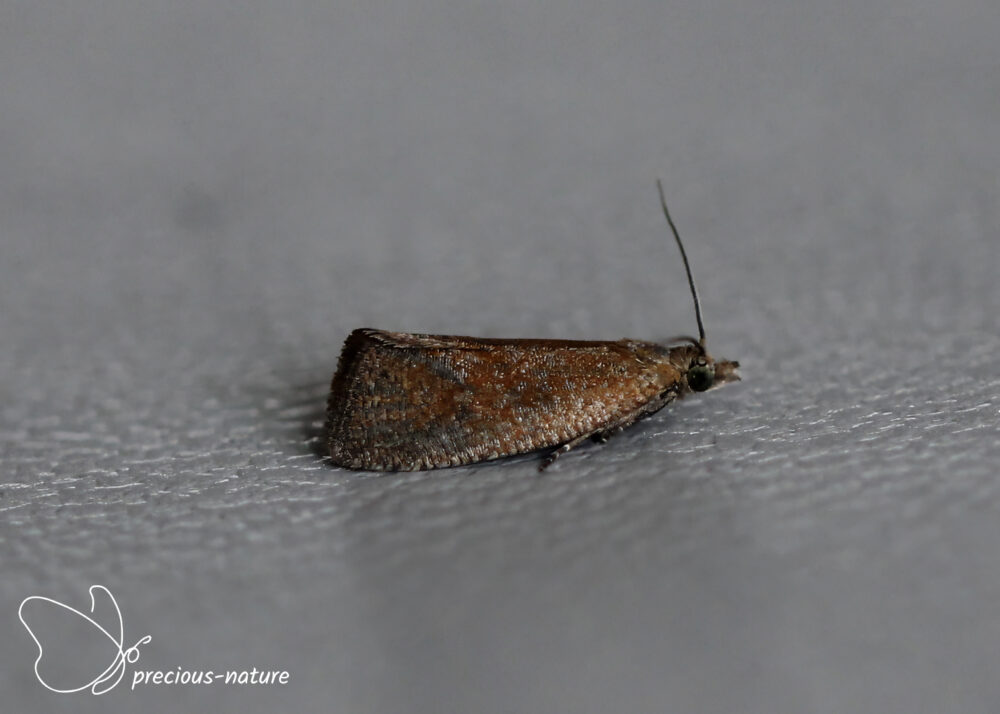
The Lakes Marble (Celypha rufana) can be recognised by a network of thin red-brown lines on the forewing, which can be yellow-brown to dark grey-brown. This pattern of lines is most noticeable in the outer half of the wing. There is a dark spot near the inner edge corner. The flight period spans one generation, from May to early August, and the wingspan ranges from 16 to 19 mm. Host plant: Tansy, Mugwort. Dutch name: Smallijnbladroller. Frisian name: –
Flying period:
Tribe: Olethreutini
Genus: Eudemis
Diamond-back Marble – 2022 (NL)
(NCBI-index: 1.100989)
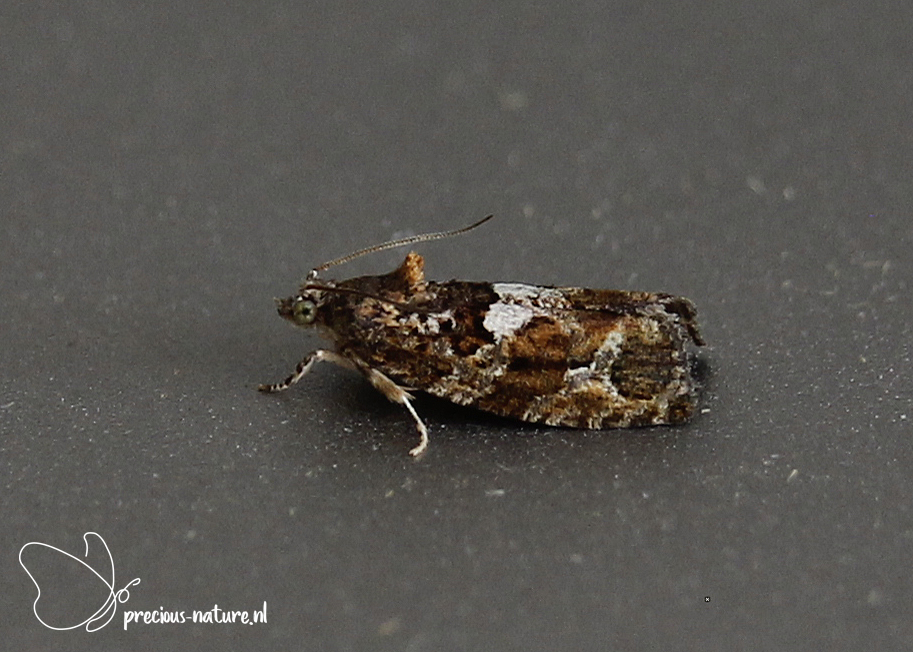
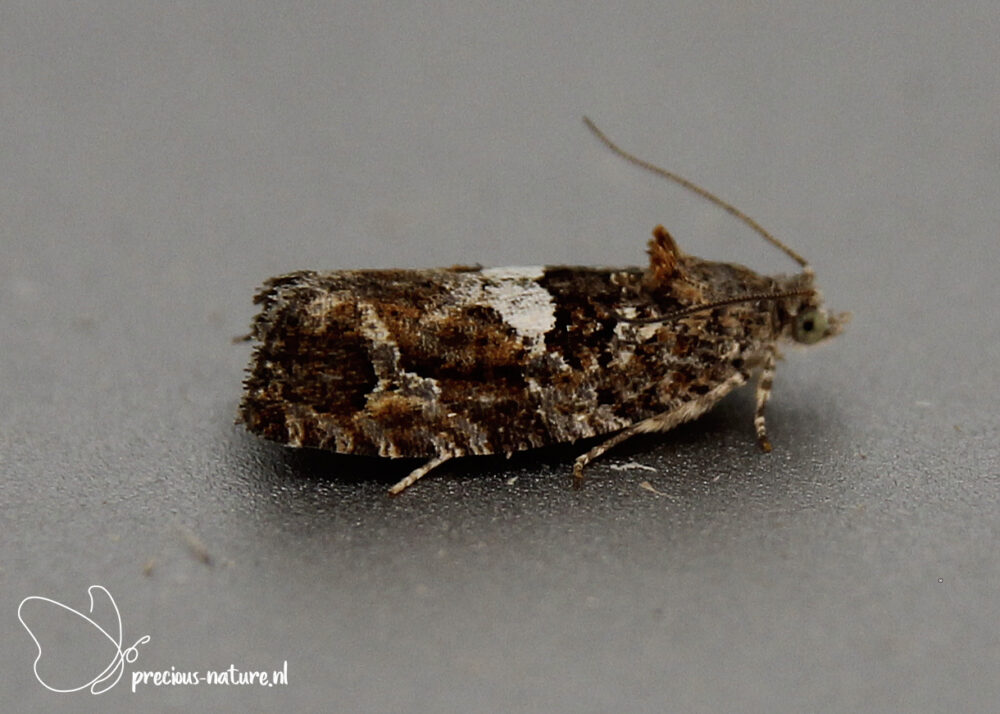
The forewing of the Diamond-back Marble (Eudemis profundana) is white ground with various brown to black-brown spots. Halfway along the wing, a lighter brown, broad transverse band extends from the leading edge to the trailing edge, where a bright white spot appears. This geometer moth owes its English name to this. The similar Apple Marble (Eudemis porphyrana) has a greyer ground colour with uniform brown spots and lead-grey markings. The flight period spans one generation, from July to early September, and the wingspan ranges from 14 to 20 mm. Host plant: Oak. Dutch name: Bonte fruitbladroller. Frisian name: –
Flying period:

Tribe: Olethreutini
Genus: Hedya
Buff-tipped Marble – 2018 (NL)
(NCBI-index: 989781)
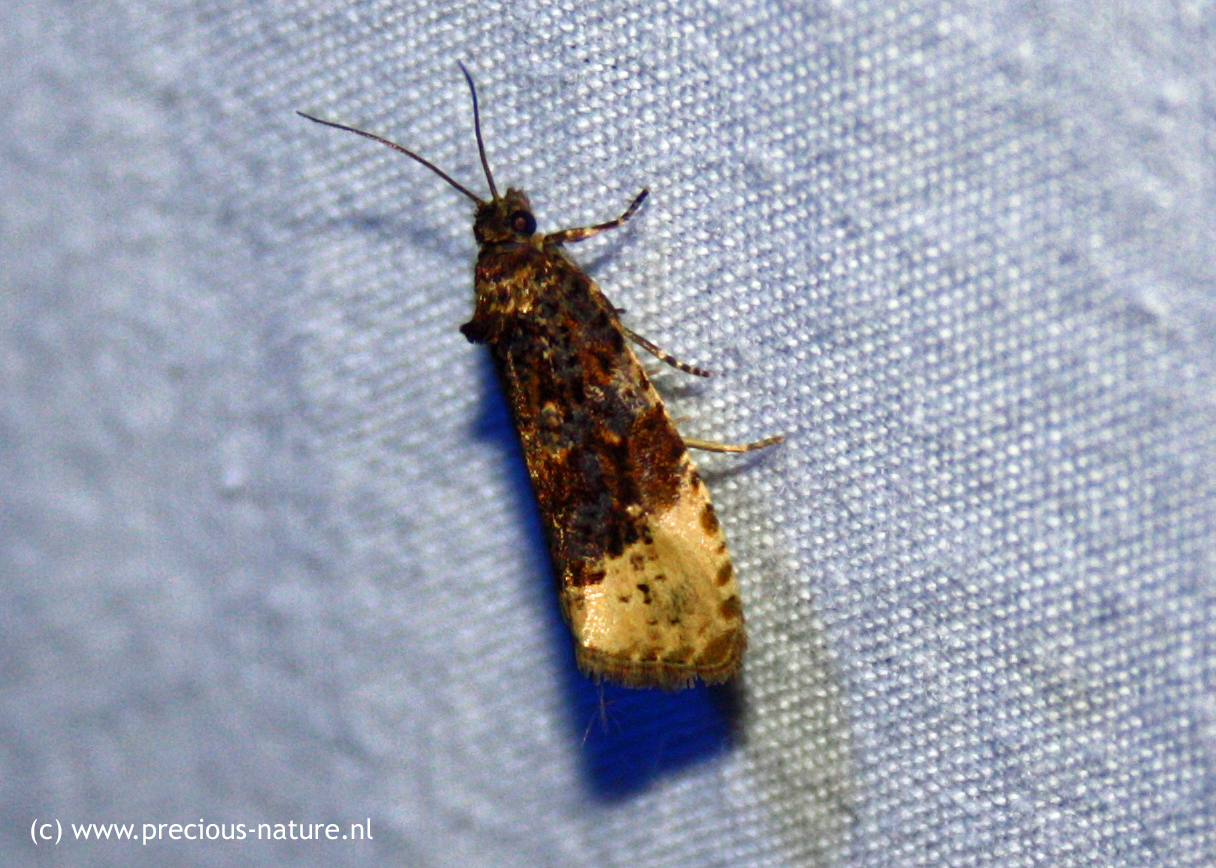
It can sometimes be challenging to distinguish particular leafroller species. At first, I was convinced that the spotted leafroller belonged to the Apotomis family. Still, after careful study and with the help of the literature, I identified the Hedya species as Buff-tipped Marble (Hedya ochroleucana). This leafroller has a striking cream-coloured outer forewing with a few light brown spots along the edge and a few small black dots in the centre. These light brown spots fade in colour over time, but this leafroller can still be recognised by the two dark stripes on the outermost spots. Two-thirds of the forewing is dark brown, mixed with blue-grey and black surfaces. The flying period spans from June to September in one generation, and the wingspan ranges from 16 to 21 mm. Larvae are spinning leaves together. Host plant: Rose, Apple. Dutch name: Grote witvlakbladroller. Frisian name: –
Flying period:
Tribe: Olethreutini
Genus: Hedya
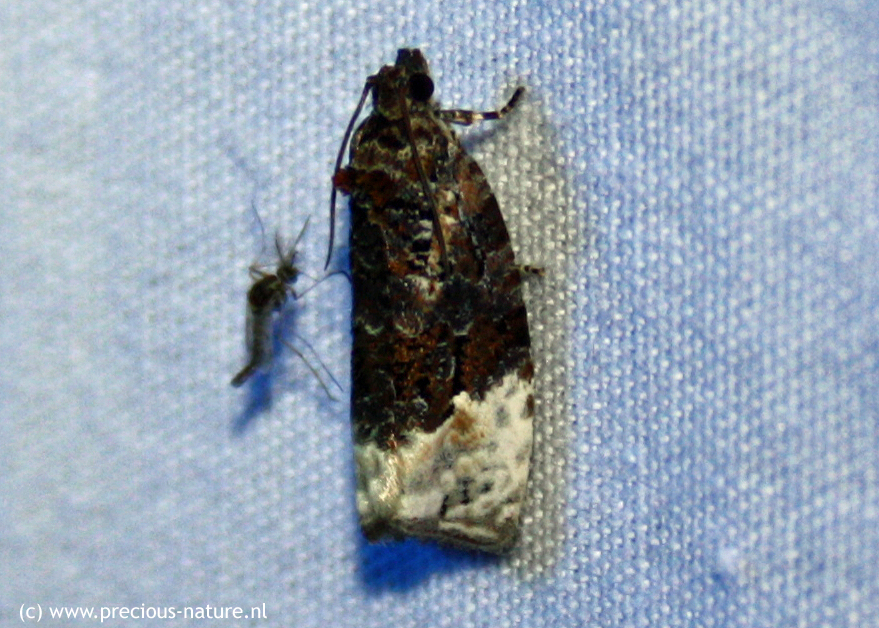
Marbled Orchard Tortrix – 2018 (NL)
(NCBI-index: 572853)
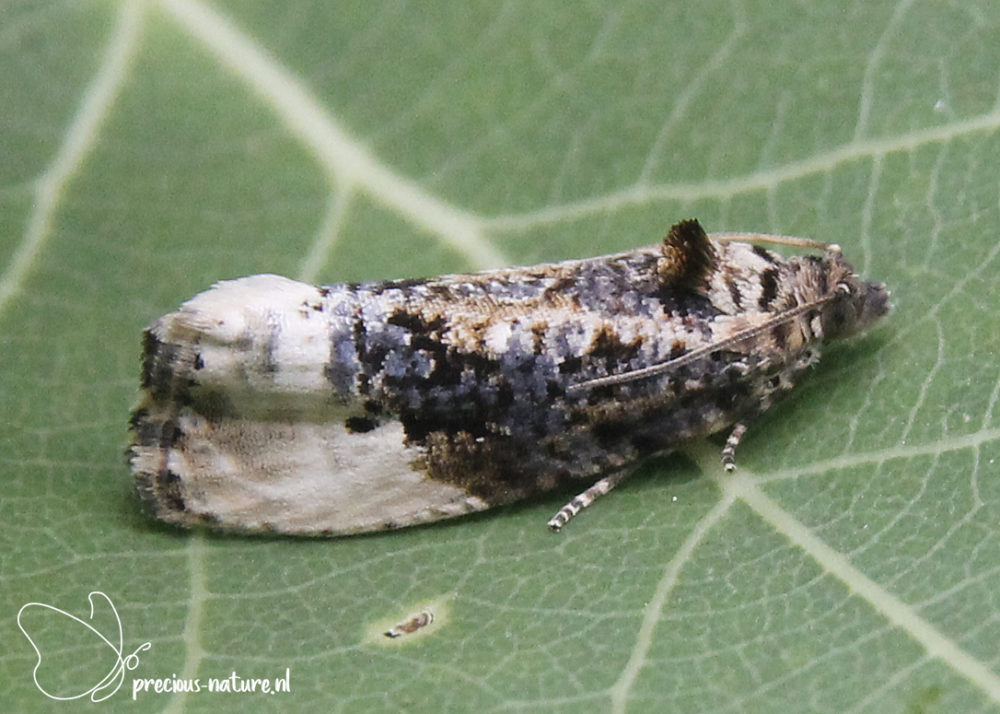
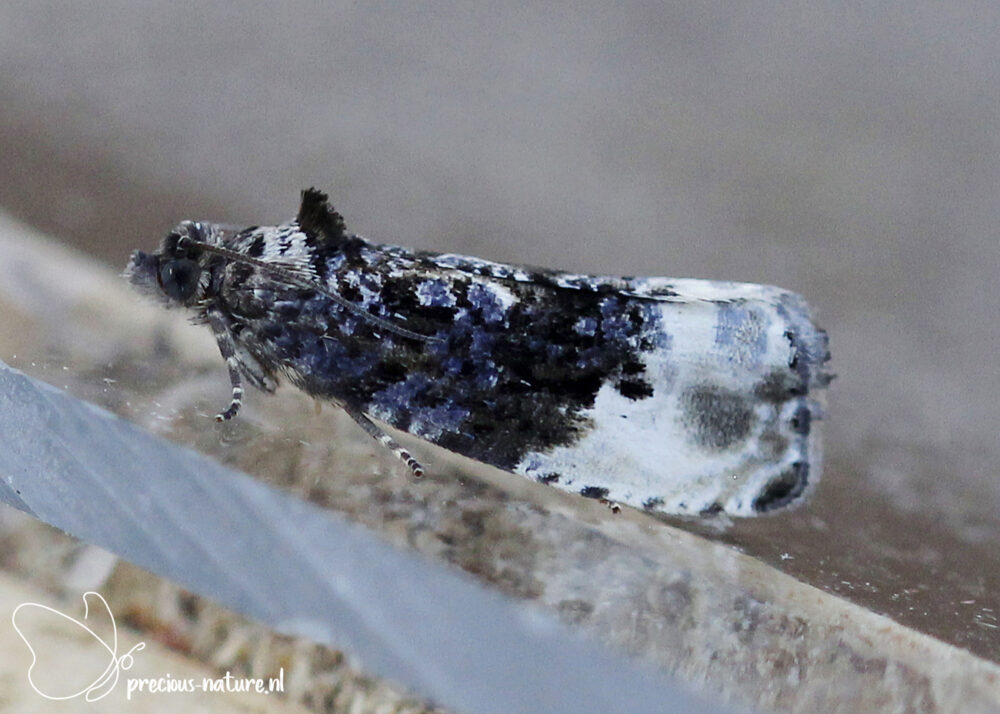
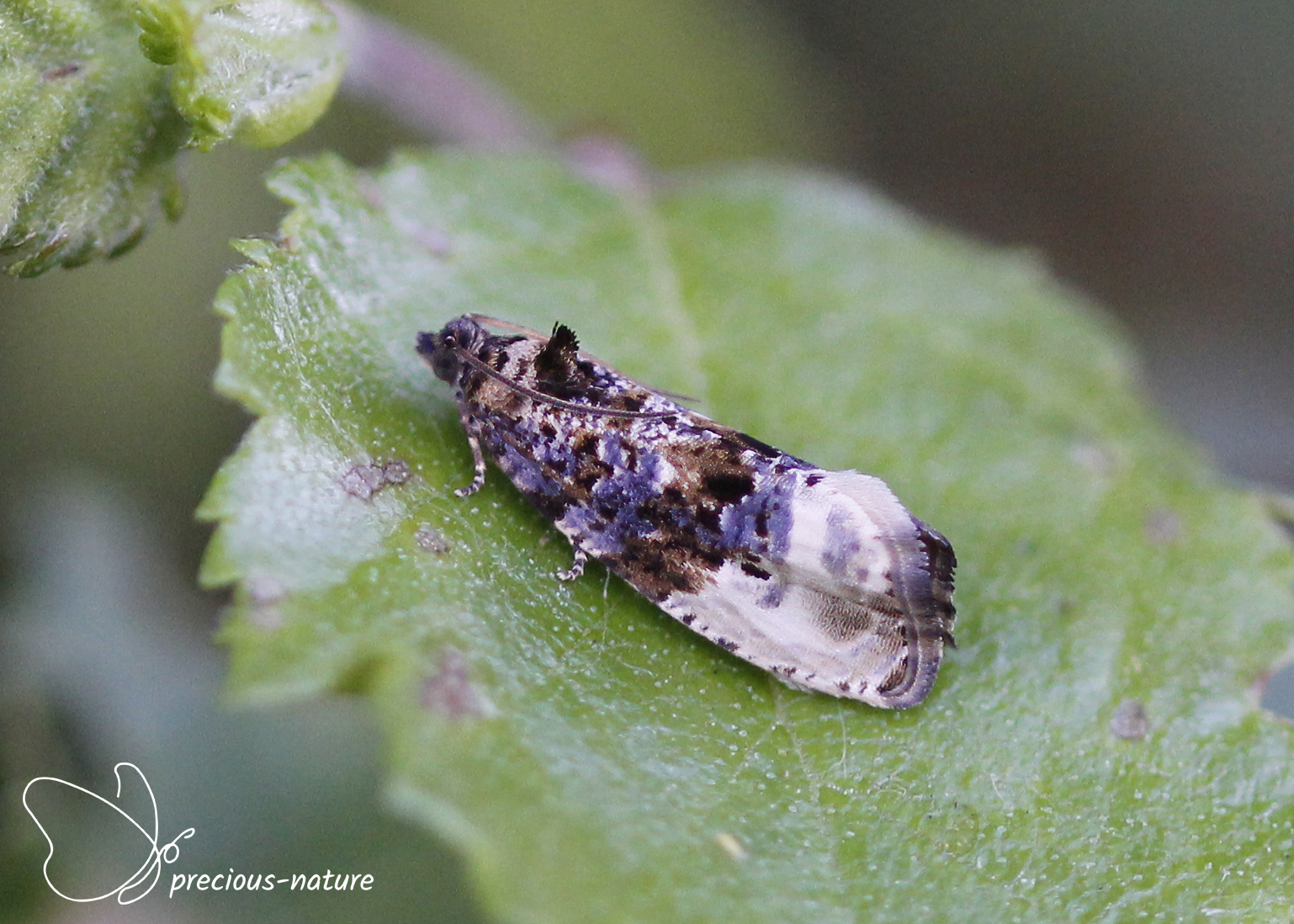
A leafroller that belongs to the white surface leafrollers is the ordinary Marbled Orchard Tortrix (Hedya nubiferana). The forewing is about 2/3 dark brown or dark yellow-brown mixed with blue-grey and black spots from the base. The other 1/3 towards the apex is white with pale grey or grey-brown streaks. The flying period in one generation is from May to August, and the wingspan is 15-21 mm. Larvae feed on spun flowers, leaves, and shoots. Host plant: Oak, Hawthorn, Blackthorn. Dutch name: Gewone witvlakbladroller. Frisian name: –
Flying period:
Tribe: Olethreutini
Genus: Olethreutes
Arched Marble – 2018 (NL)
(NCBI-index: 1.109078)
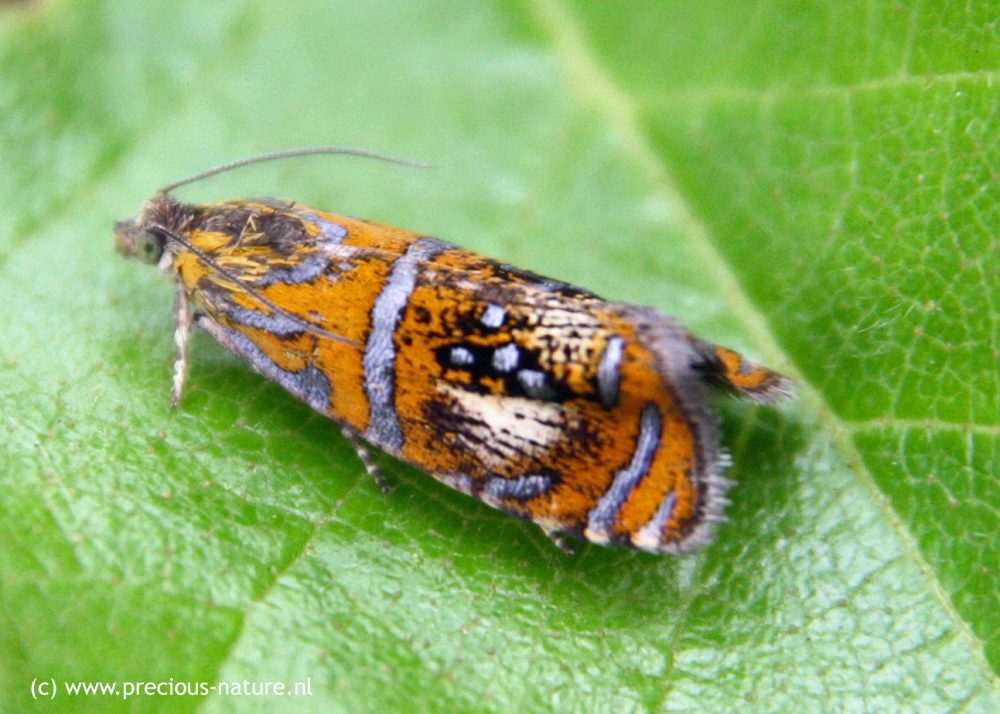
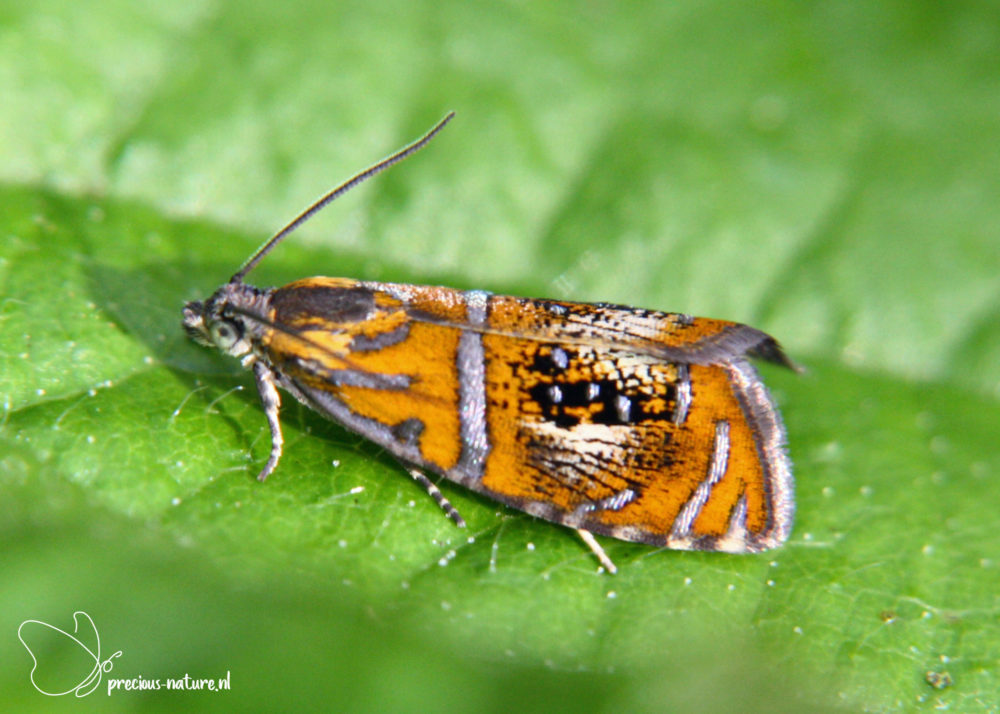
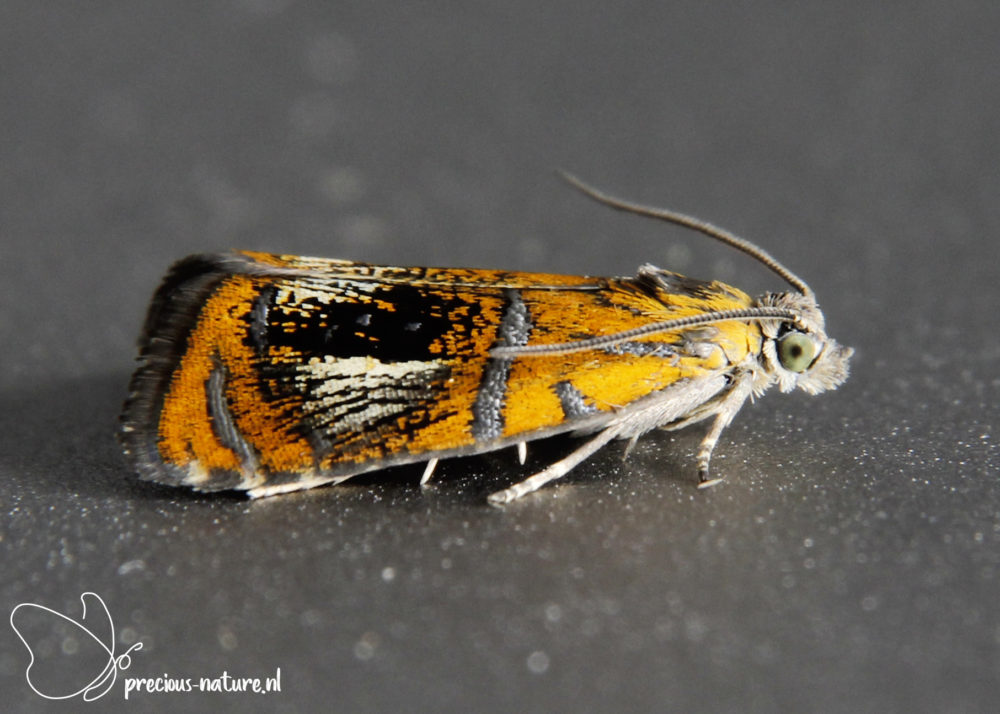
A very striking appearance is evident when you later enlarge the photos on your laptop, particularly the Arched Marble (Olethreutes arcuella). The orange base colour of the wings with the silver-blue transverse lines is particularly striking when you encounter this leafroller in the field resting on a green leaf. Immediately after the front transverse band, a light yellow spot with black shading and some silver-blue spots appear. The orange colour can be seen as the dress colour of a Japanese geisha, and the silver-blue stripes are the spokes of the parasol she spins. The Arched Marble flies in one generation from May to August, and the wingspan is 14-18 mm. Host plant: Fallen leaves and plant remains. Dutch name: Geisha. Frisian name: –
Flying period:
Tribe: Olethreutini
Genus: Orthotaenia
Woodland Marble – 2020 (NL)
(NCBI-index: 1.594318)
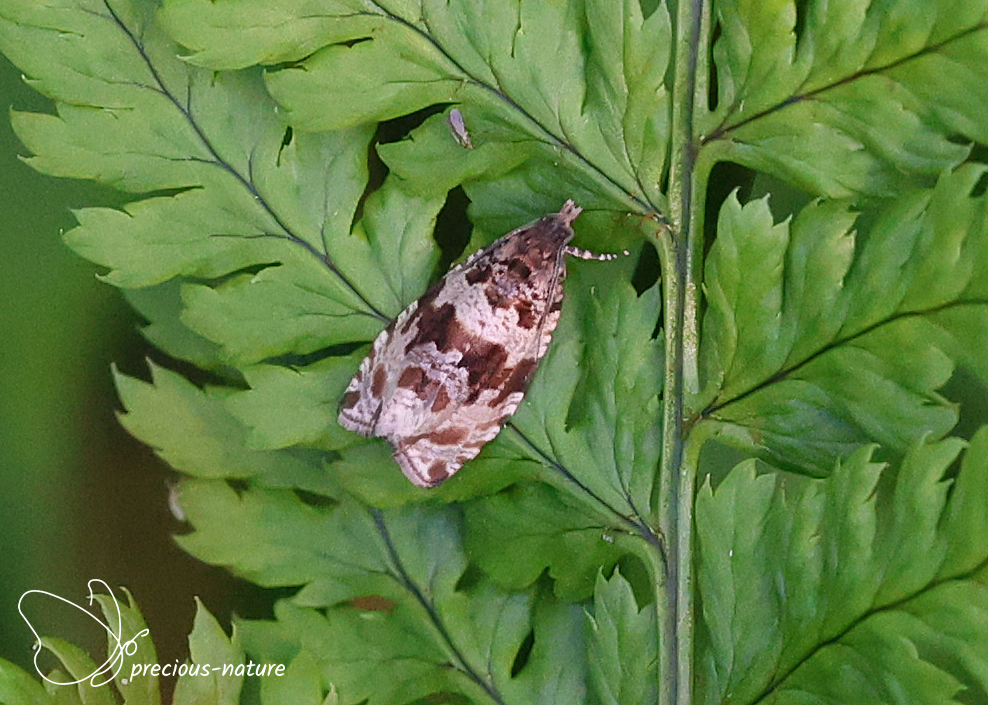
The Woodland Marble (Orthotaenia undulana) is similar to the Common Marble (Celypha lacunana). The big difference is in the dark median band halfway up the forewing. With the Woodland Marble, the entire band is dark, but with the Common Marble, the pre-median cream-white band runs through the dark cross band in the middle, like a finger. Furthermore, the apical zone of the Woodland Marble is lighter in colour, and the dark markings are more prominent. The larvae feed on leaves that are spun together. The flying period spans one generation, from May to August, and the wingspan ranges from 15 to 20 mm. Host plant: Birch, Honeysuckle, Billberry. Dutch name: Woudbladroller. Frisian name: –
Flying period:
Tribe: Olethreutini
Genus: Phiaris
Large Marble – 2023 (NL)
(NCBI-index: 1.594330)
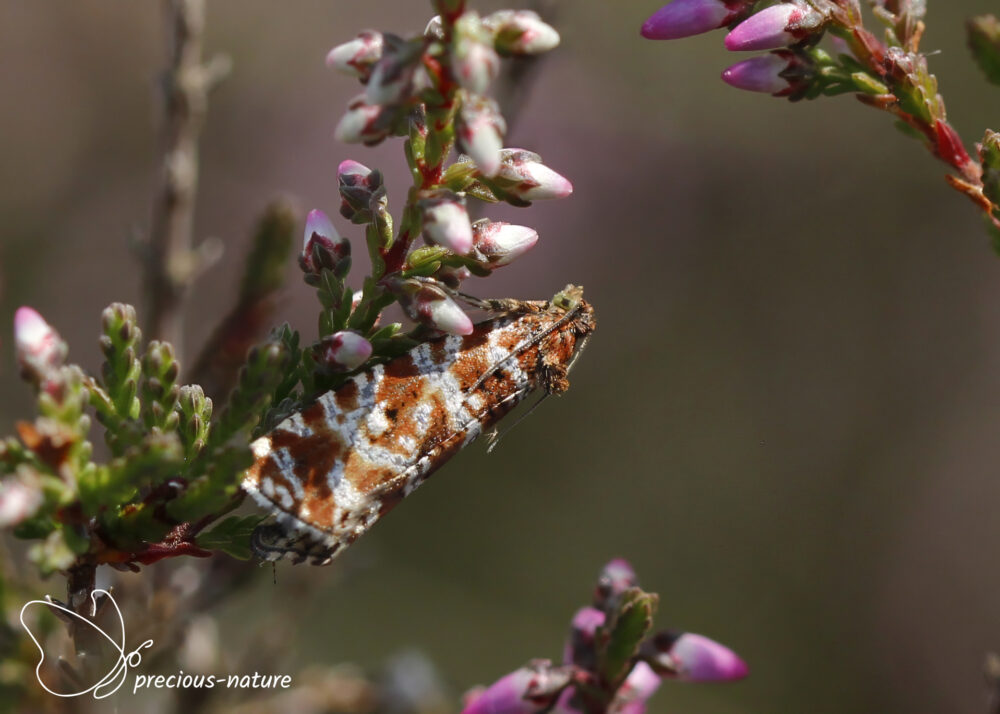
Because of the clouds, staying in the heathland of a beautiful nature reserve was still pleasant, but as soon as the clouds disappeared, the temperature rose quickly. The disadvantage is that insects are more active and are harder to photograph. This also applies to the granite leaf roller (Phiaris schulziana), but with a lot of patience, I eventually succeeded. With its reddish-brown forewings with black speckles, thin white transverse bands, and small dots, this micromoth is almost unnoticeable. The flight period spans one generation, from June to August, and the wingspan ranges from 17 to 25 mm. Host plant: Heather, Crowberry. Dutch name: Granietbladroller. Frisian name: –
Flying period:

Tribe: Olethreutini
Genus: Phiaris
Blueberry Tortrix – 2024 (CH)
(NCBI-index: 1.101140)
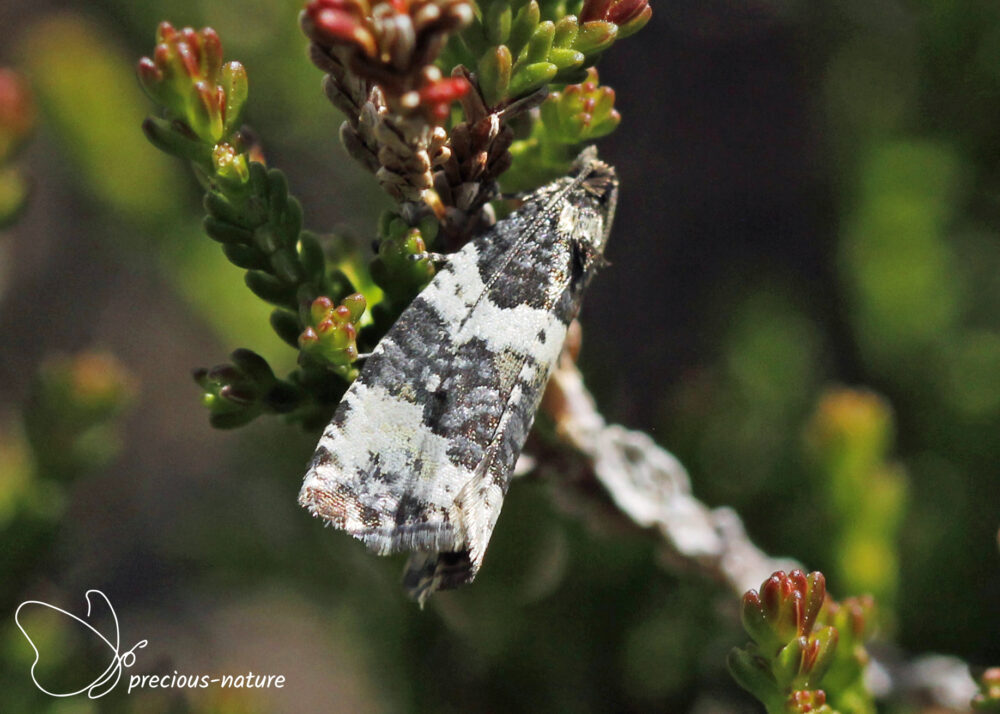
In the Netherlands, the Blueberry Tortrix (Phiaris bipunctana) is almost non-existent. It could be found on sandy soils in Gelderland and Overijssel. I have found this species in the Swiss Alps. The white forewing, with sometimes somewhat yellowish irregular spots, is black with grey spots at the wing root. The black runs diagonally from the leading edge across the wing inwards, bending towards the trailing edge to the inner edge corner. Halfway along the wing is a broad black transverse band with grey lead spots. The hind wings are dark grey but dull. The flight period is from May to July, and the wingspan is 14-21 mm. Host plant: Blueberry, Red Blueberry, Rhododendron, Wintergreen. Dutch name: Tweepuntige lijnbladroller. Frisian name: –
Flying period:

Tribe: Olethreutini
Genus: Piniphila
Pine Marble – 2019 (NL)
(NCBI-index: 1.101145)
The first spot of the Pine Marble (Piniphila bifasciana) was at night when it was attracted to light. This leafroller has a brownish-grey forewing with two broad white crossbands. One band is 1/3 of the wing, and one is close to the apex. The bands are usually grey-white or yellow-brown, and sometimes orange to pink, especially the band near the wingtip. The flying period in one generation is from June to August, and the wingspan is 12-16 mm. The larvae feed in a silken gallery among the young shoots and male flowers. Host plant: Scotch Pine. Dutch name: Tweebandbladroller. Frisian name: –
Flying period: