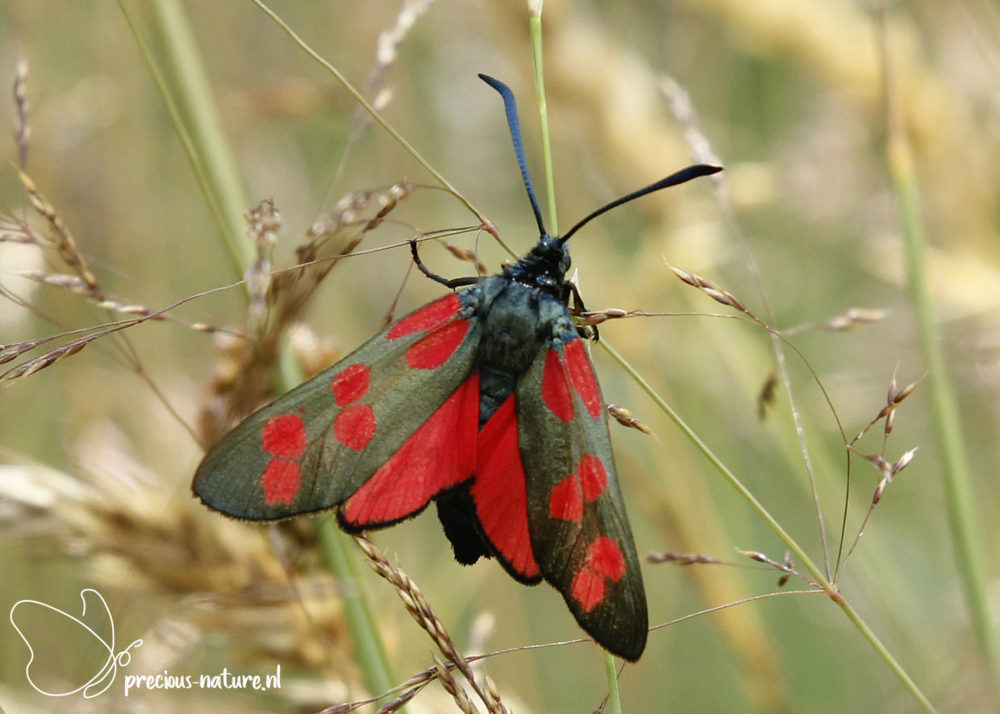
The Archipini are a tribe within the subfamily Tortricinae, which is part of the family Leafrollers (Tortricidae). It is the largest tribe within the Tortricinae, with over 1,600 described species in 150 genera. Its members occur in all regions, but are rare in the Neotropics. In Europe, genera such as Aphelia, Archips, Clepsis, and Pandemis occur. Most are polyphagous leafrollers, and this tribe includes many species that can be pests in agriculture and horticulture. A defining characteristic of the group is the dagger-shaped, complex structure (signum) in a sac-like part of the female reproductive tract where sperm are stored (bursa corpora).
Tribe: Archipini
Genus: Adoxophyes
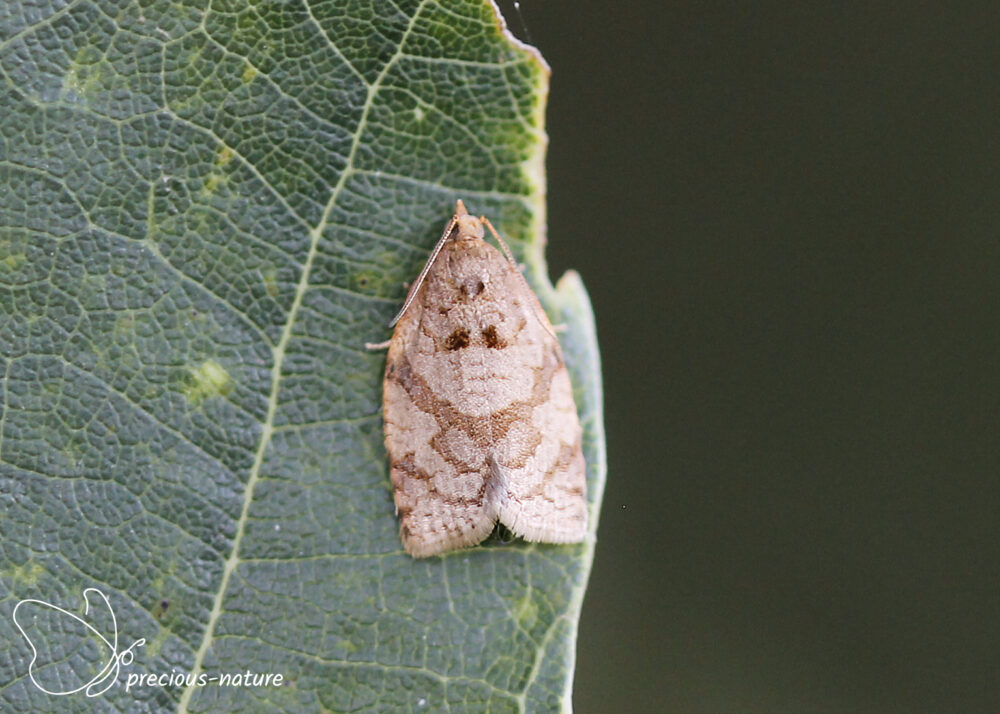
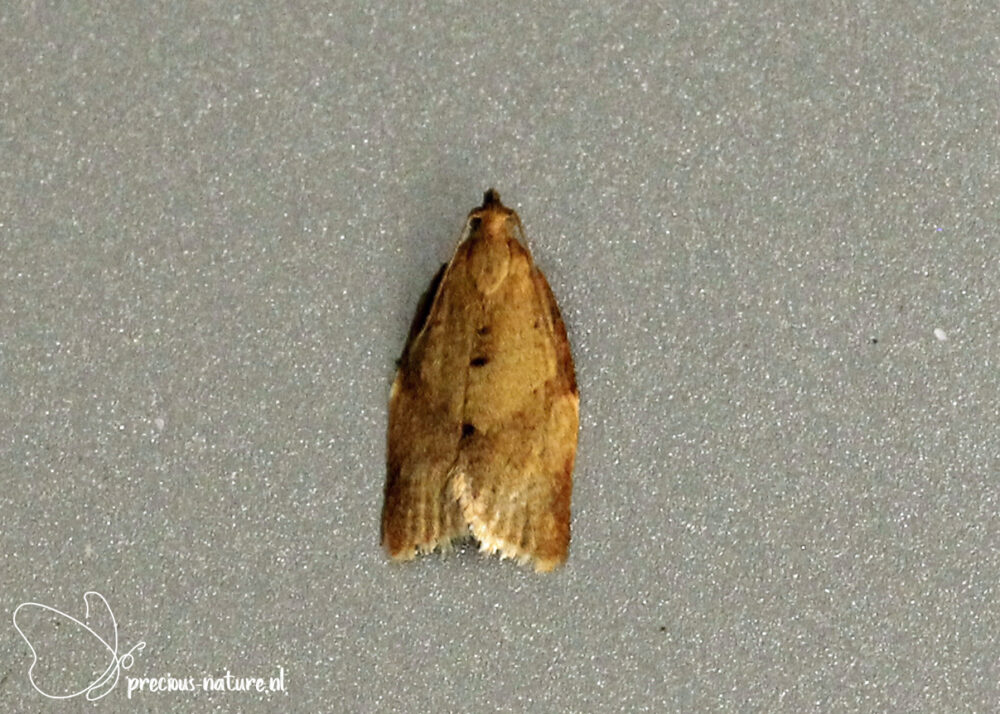
Summer Fruit Tortrix – 2023 (NL)
(NCBI-index: 480707)
The male of the Summer Fruit Tortrix (Adoxophyes orana) is usually smaller than the female. The forewing of the male is tan with dark brown markings. The wing root is dark coloured, and a brown spot can be seen along the leading edge near the wing tip. Starting at 1/3, a dark band runs from the leading edge towards the centre of the inner edge. The flight period spans two generations, from May to October, and the wingspan ranges from 15 to 22 mm. Host plant: Apple, Pear, Plum, Willow, Rose, Honeysuckle. Dutch name: Vruchtbladroller. Frisian name: –
Flying period:

Tribe: Archipini
Genus: Aphelia
Timothy Tortrix – 2021 (NL)
(NCBI-index: 753154)
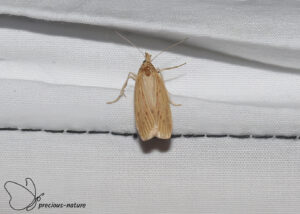
A fairly easy-to-describe leaf roller is the Timothy Tortrix (Aphelia paleana). The forewing is white-grey to pale yellow-brown without further markings. In males, the base of the wing, thorax, and head is mainly orange-yellow. The underside of the forewing is pale grey-brown. The flight period spans one generation, from June to September, and the wingspan ranges from 18 to 22 mm. The larvae feed on a spun leaf. Host plant: Common Couch, Knapweed, Plantain, Meadowsweet. Dutch name: Gele bladroller. Frisian name: –
Flying period:


Tribe: Archipini
Genus: Archips
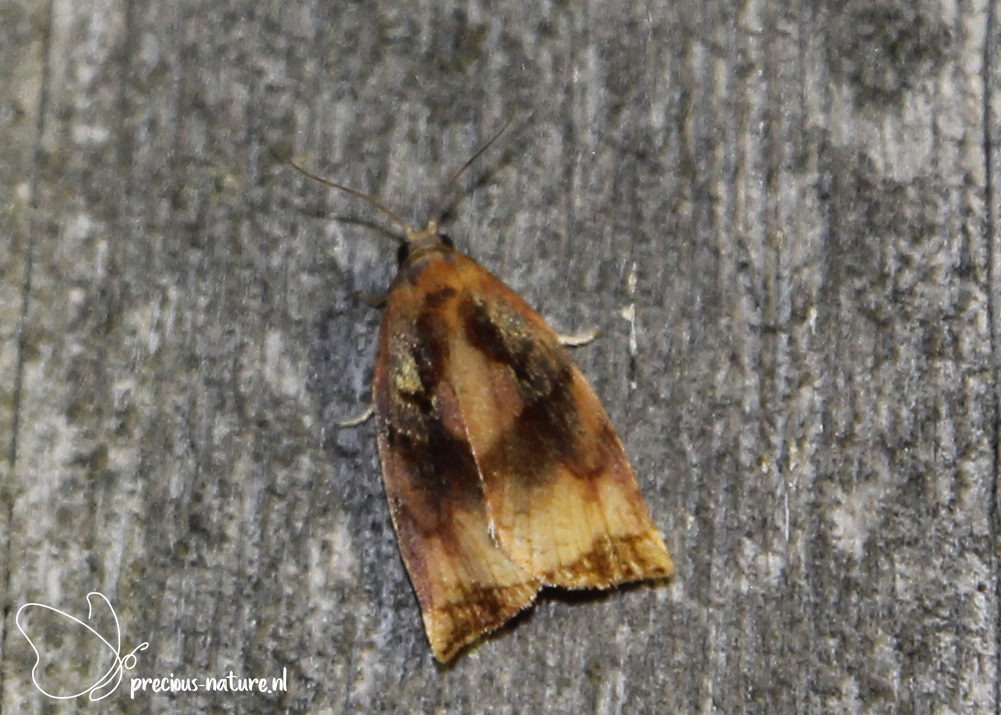
Large Fruit-tree Tortrix – 2017 (NL)
(NCBI-index: 2.655036)
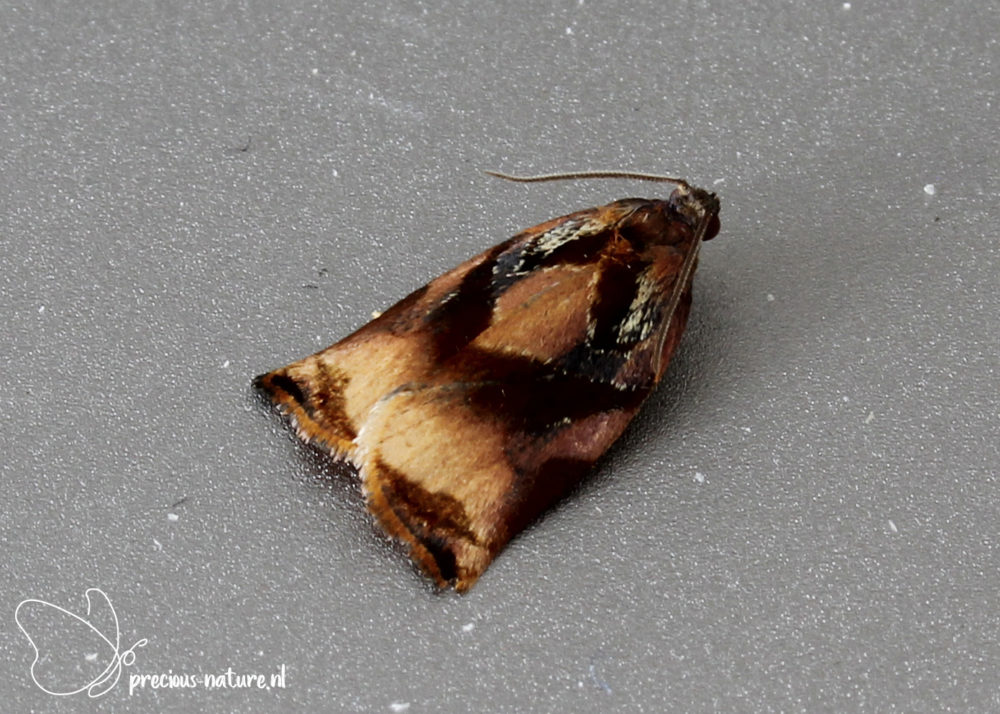
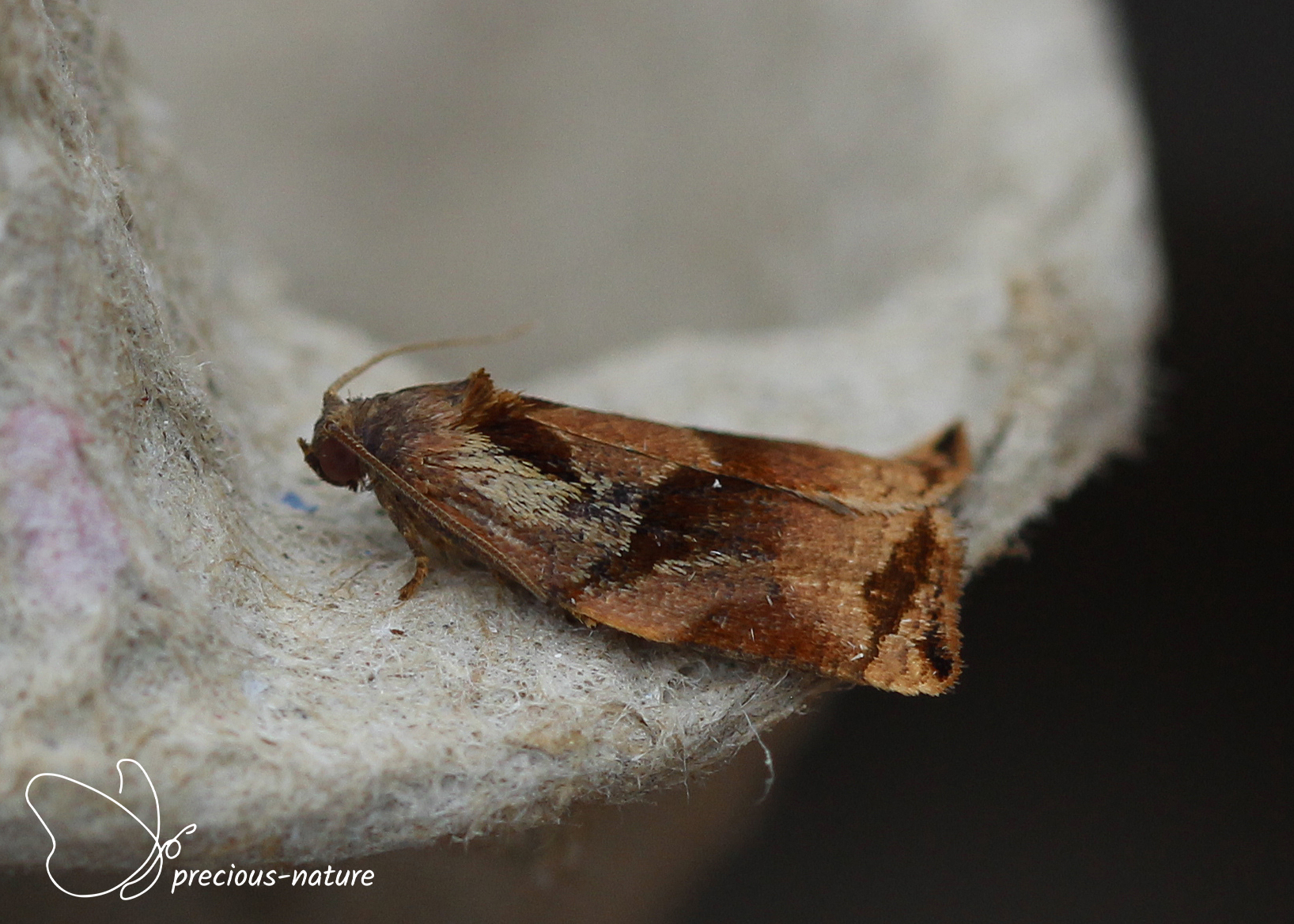
The Large Fruit-tree Tortrix (Archips podana) is a fairly easy-to-recognise leafroller because of its “bell” shape, which is visible when it rests. The males and females are different in colour. The female is brown with only a dark, elongated spot along the costa. The male has a dark median band in the middle of the wing and a dark mark at the base. Furthermore, the male has a white zone on the wing. This leafroller flies in two generations from May to September, with a wingspan of 18-26mm. The larvae feed on the foliage, flowers, and fruit of various deciduous trees. Host plant: Hazel, Beech, Apple, Pear, Rose, Blueberry. Dutch name: Grote appelbladroller. Frisian name: –
Flying period:


Tribe: Archipini
Genus: Archips
Variegated Golden Tortrix – 2018 (NL)
(NCBI-index: 1.100919)
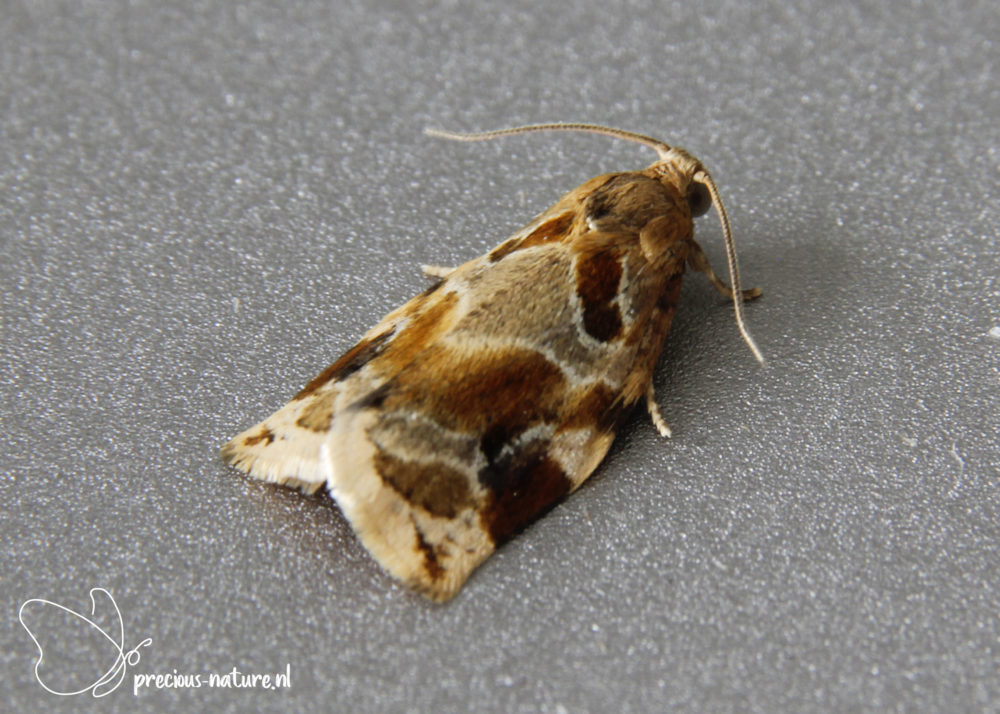
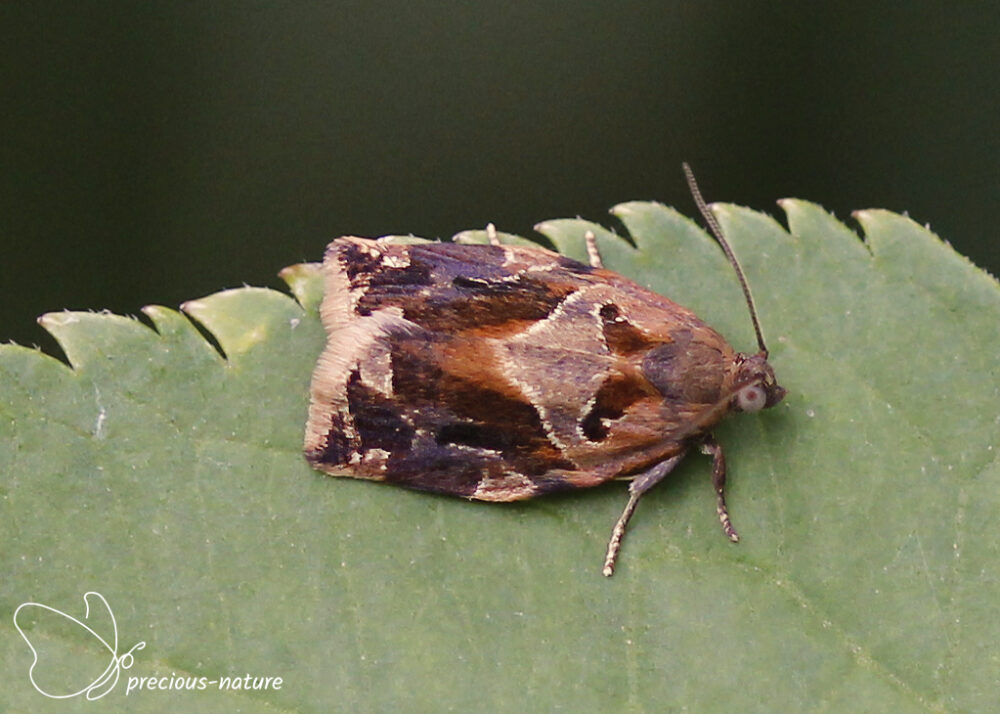
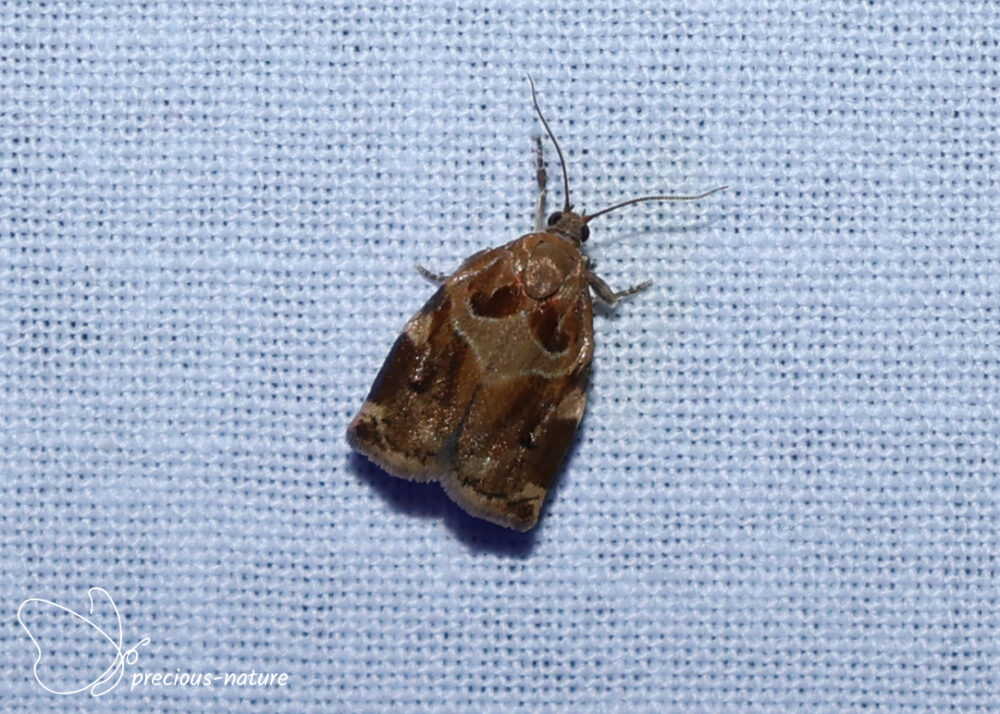
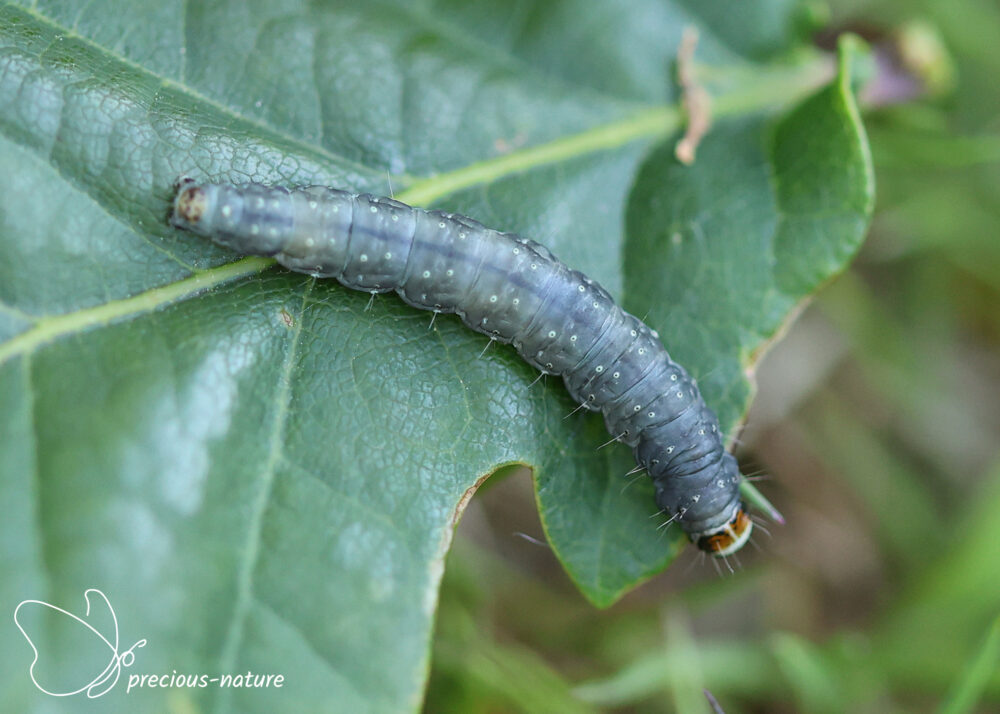
A leafroller that is certainly not the mother’s prettiest and took me a bit more time to identify is the Variegated Golden Tortrix (Archips xylosteana). The very dark, almost black specimens make identification very difficult. Typically, the forewings are pale yellow-brown, sometimes dark, and predominantly grey-brown with reddish-brown markings. The base field forms an oblique, slender spot with a rounded top. The median band is very sloping, especially in males. The lower half is significantly widened, the costa slightly concave, and the dorsum clear everywhere with a crooked tooth above and an obtuse angle below the middle. The spot at the costa is wider and rectangular. The flying period spans from the end of May to mid-August in one generation, and the wingspan ranges from 15 to 23 mm. Larvae can be found in a rolled leaf. Host plant: Maple, Hawthorn, Poplar, Birch, Honeysuckle, fruit trees. Dutch name: Gevlamde bladroller. Frisian name: –
Flying period:


Tribe: Archipini
Genus: Archips
Pine Tortrix – 2018 (NL)
(NCBI-index: 1.100917)
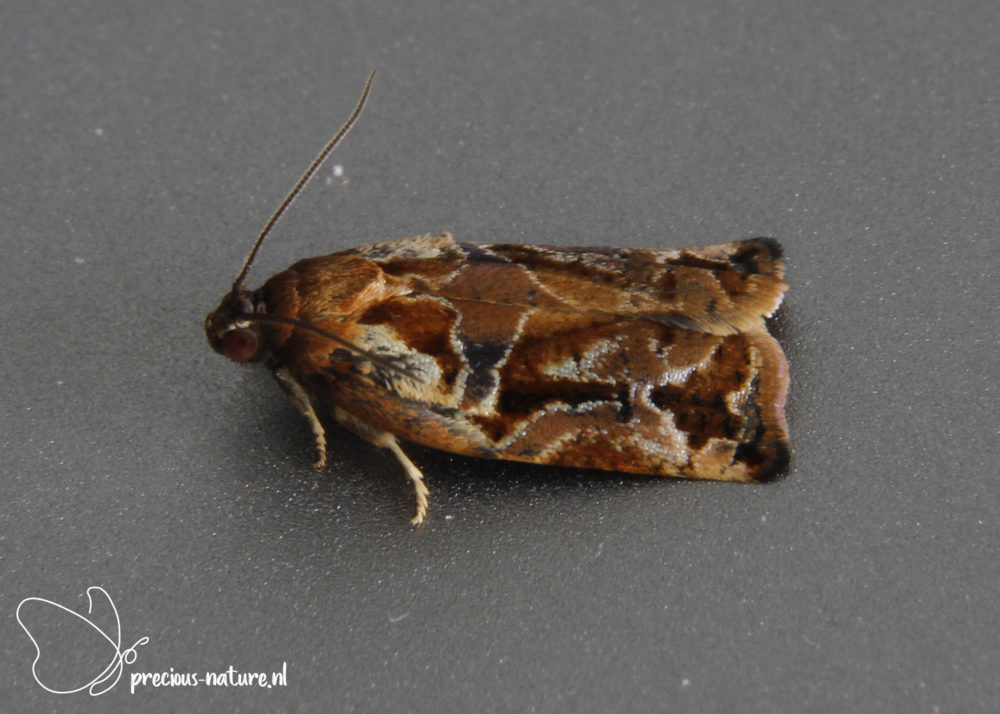
As with several leafrollers of the Archips spp., the beautiful Pine Tortrix (Archips oporana) male is also smaller and more marked than the female. The male’s forewing is purplish-brown with reddish-brown markings surrounded by a thin white line. The females are pale purplish-brown with reddish-brown markings and a net-like pattern over the wings. The hindwing is grey-brown with a coppery glow in the male, while it is more orange in the female. The flying period is from June to July in one generation, and the wingspan is 19-28mm. The larvae feed amongst the needles. Host plant: Scots Pine, Silver Fir. Dutch name: Fraaie dennenbladroller. Frisian name: –
Flying period:

Tribe: Archipini
Genus: Archips
Brown Oak Tortrix – 2021 (NL)
(NCBI-index: 1.857967)
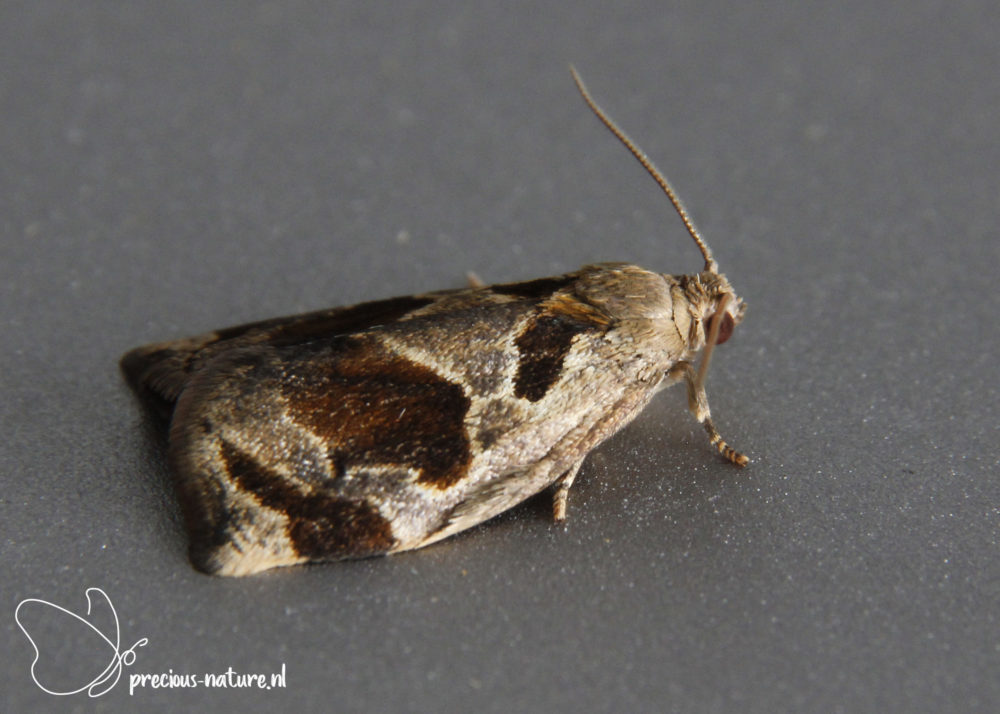
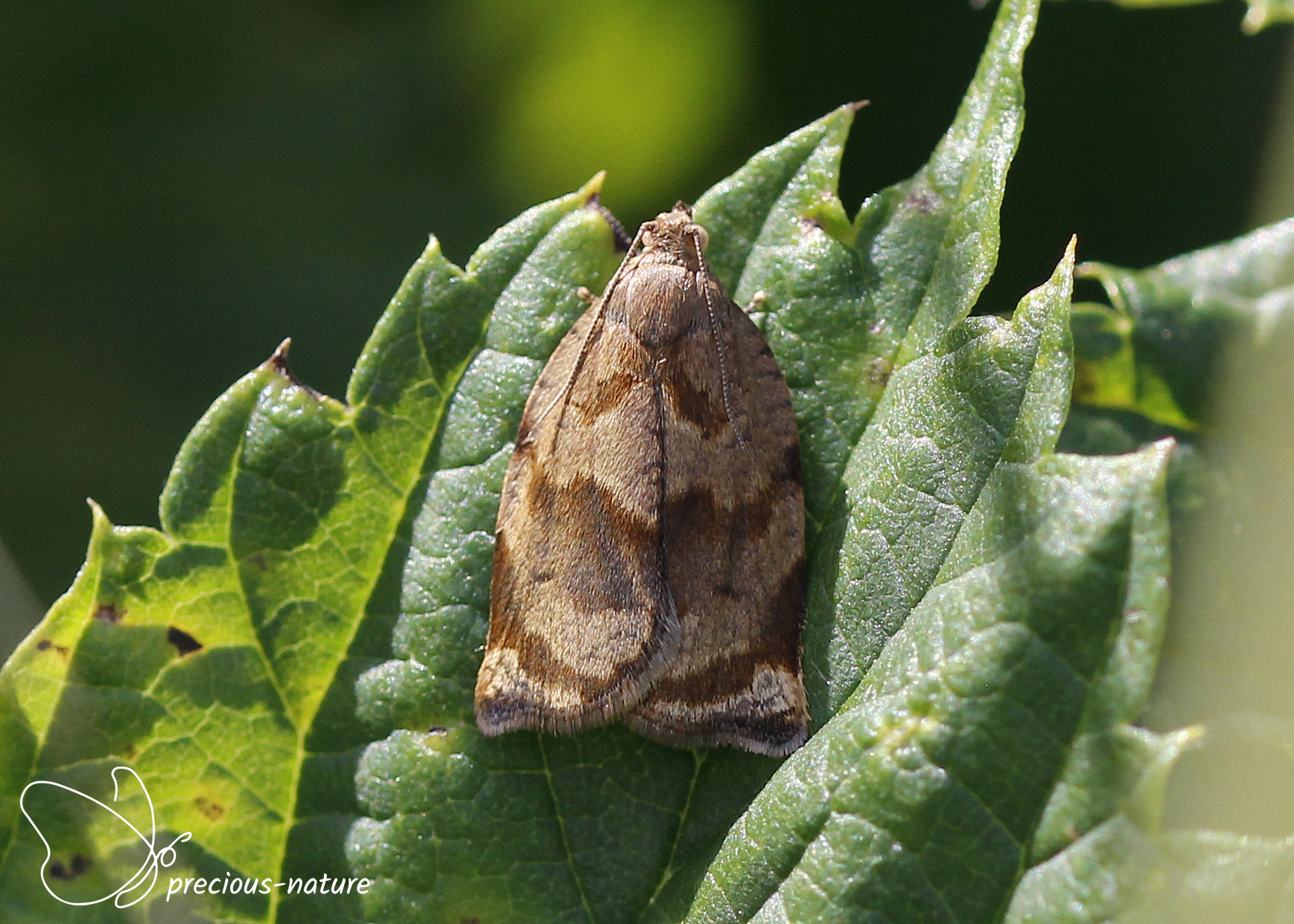
The ground colour of the male Brown Oak Tortrix (Archips crataegana) is usually lighter than that of the female. Dark brown markings are visible on the light grey-brown wing. From the base of the wing, a short bar runs obliquely from the dorsum to the centre of the wing. On 2/3, a large stain is visible that does not extend to the costa. Near the apex, a stain runs obliquely from the costa to the dorsum. All spots are lightly outlined, and the apex is pointed. The flight period is from June to September in one generation, and the wingspan is 19-22 mm for the male and 23-28 mm for the female. The larvae roll in the leaves of the host plant. Host plant: Oak, Ash, Elm, Sallow. Dutch name: Meidoornbladroller. Frisian name: –
Flying period:
Tribe: Archipini
Genus: Caoecimorpha
Carnation Tortrix – 2018 (NL)
(NCBI-index: 287198)
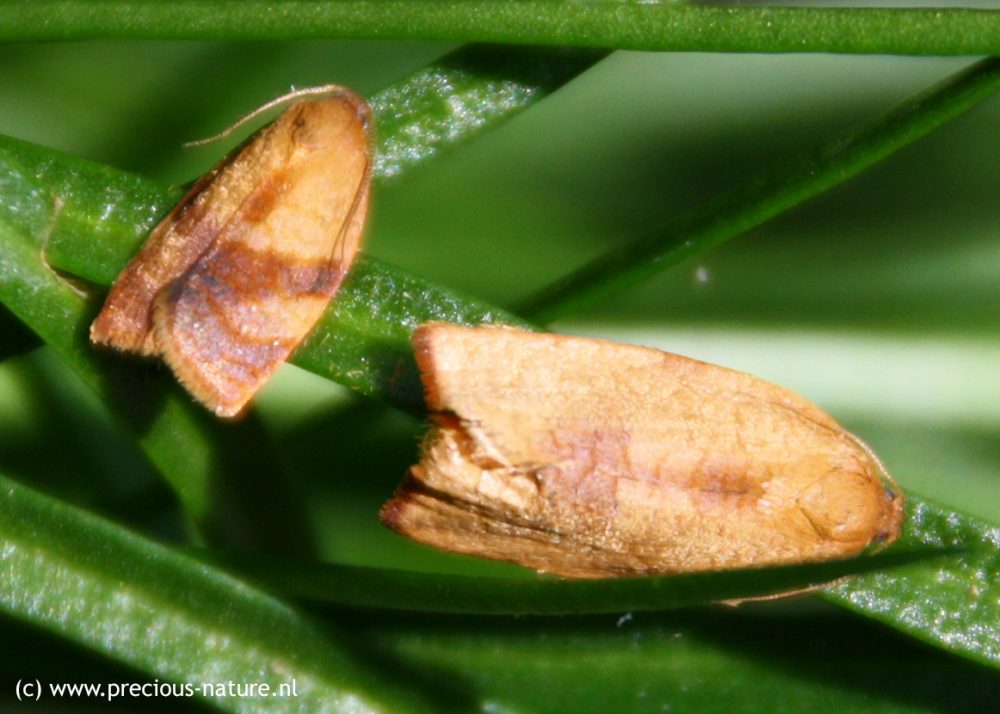
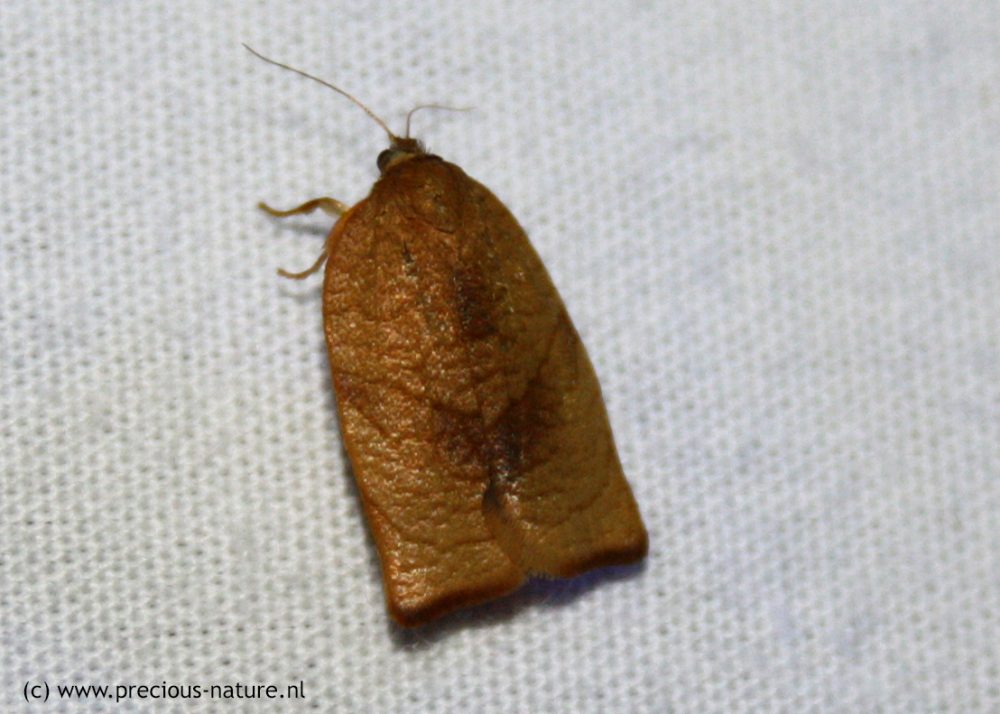
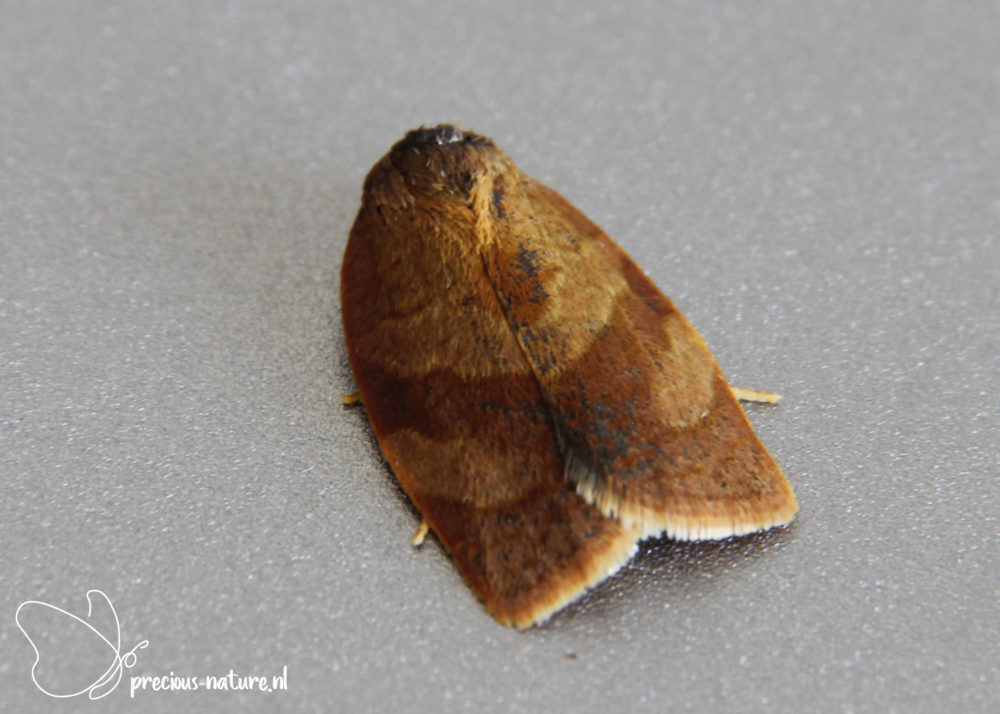
The male Carnation Tortrix (Caoecimorpha pronuba) is distinguishable from the female. The male is smaller than the female. The male’s forewing is dark yellow-brown, with a faint, dark brown net-like pattern on the outside and a dark brown to purplish spot. The female’s wings are more extended, and a peak shape is visible at the apex. The top of the wing is lighter in colour, and the reticulated pattern is visible. The hindwing is orangish. The flying period is two generations for much of the year, and the wingspan is 14-24 mm. Larvae can be found in the spinning. Host plant: Rose, Spurge, Cardinal’s Cap. Dutch name: Anjerbladroller. Frisian name: –
Flying period:


Tribe: Archipini
Genus: Choristoneura
Great Tortrix – 2023 (NL)
(NCBI-index: 1.100946)
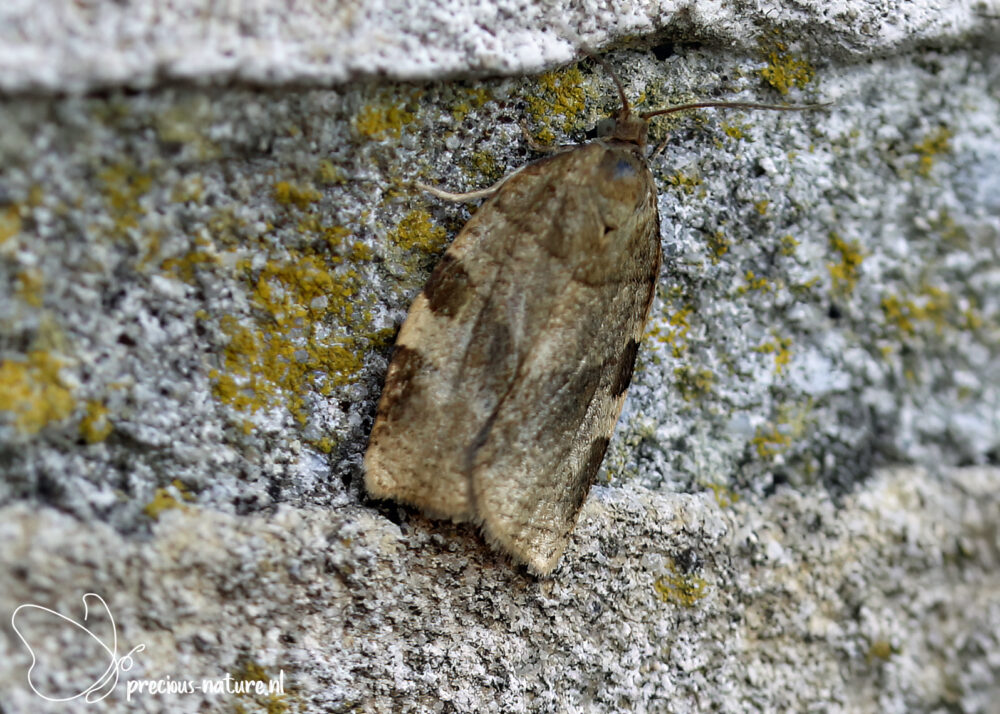
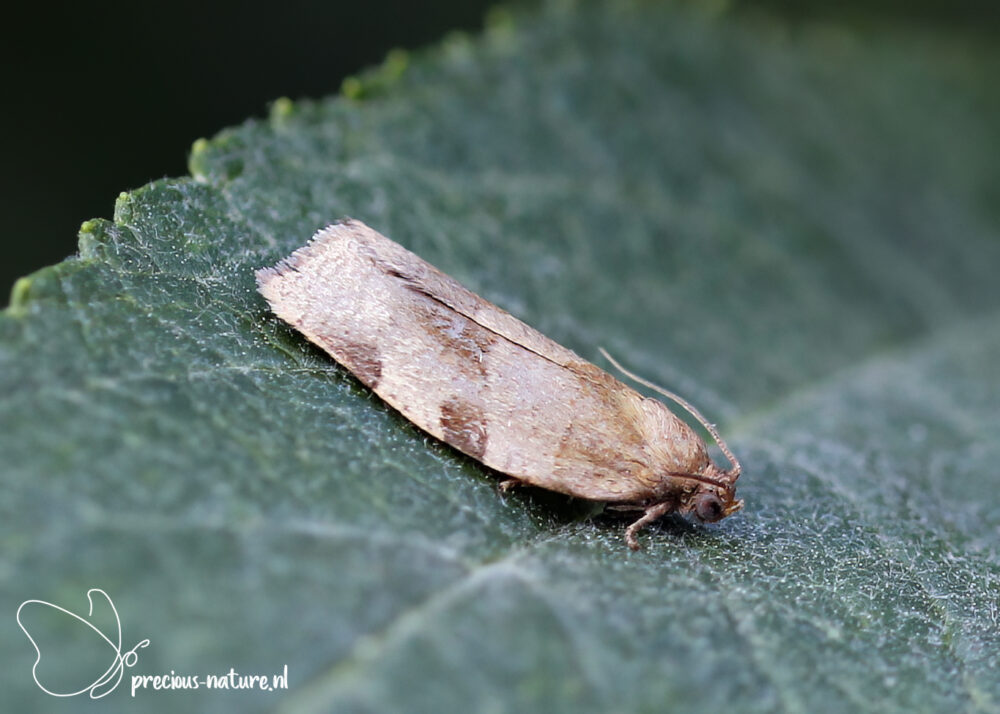
One of the larger species and easily recognisable is the Great Tortrix (Choristaneura hebenstreitella). The forewing is tan and grey, with faint brown lines that create a net-like structure. Halfway along the inner edge, a broad, dark transverse band falls short of the dark spot at the leading edge. Near the wing tip, a second dark spot, almost a semicircle, can be seen along the leading edge. A dark zone is also present at the wing root, distinguishing it from the Large Ivy Tortrix (Lozotaenia forsterana). The flight period spans one generation, from late May to July, and the wingspan ranges from 20 to 30 mm. Host plant: Oak, Birch, Hazel. Dutch name: Reuzenbladroller. Frisian name: –
Flying period:

Tribe: Archipini
Genus: Clepsis
Cyclamen Tortrix – 2018 (NL)
(NCBI-index: 1.144650)
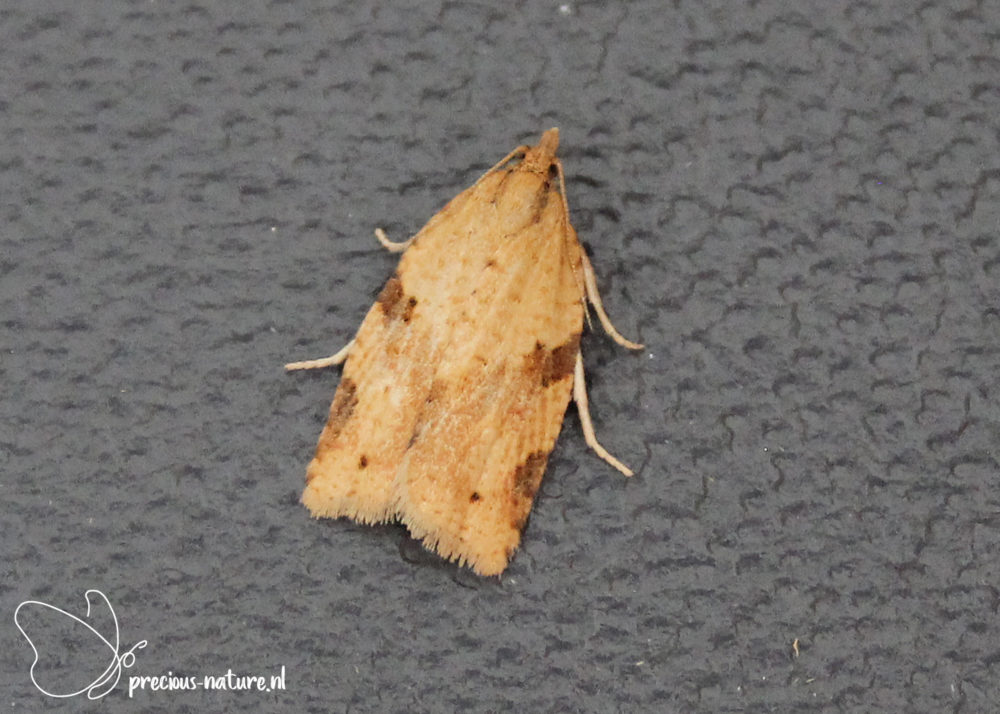
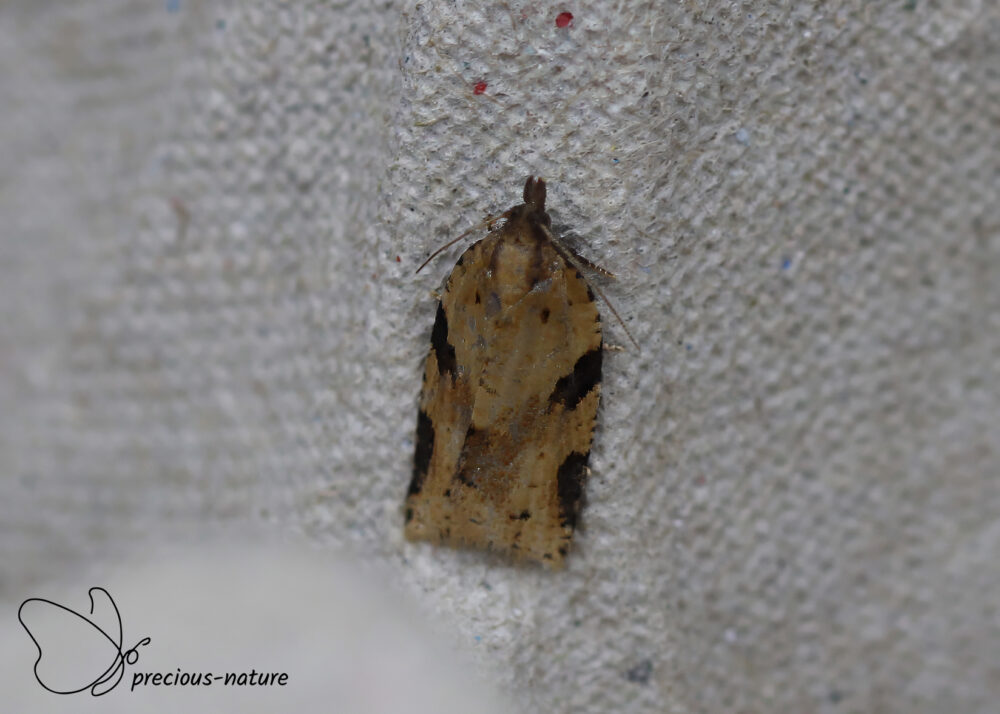
A common leafroller is the Cyclamen Tortrix (Clepsis spectrana). The forewing is pale yellow-brown, sometimes a little reddish, with various speckles. The dark brown transverse band halfway down the wing and the dark brown spot near the apex are striking. The flying period spans two generations, from May to September, and the wingspan ranges from 16 to 22 mm. The larvae feed on the spun leaves and flowers. Host plant: Willow, Meadowsweet, Yellow Flag, Nettle, Honeysuckle, Cyclamen, Strawberry, Hop. Dutch name: Koolbladroller. Frisian name: –
Flying period:
Tribe: Archipini
Genus: Clepsis
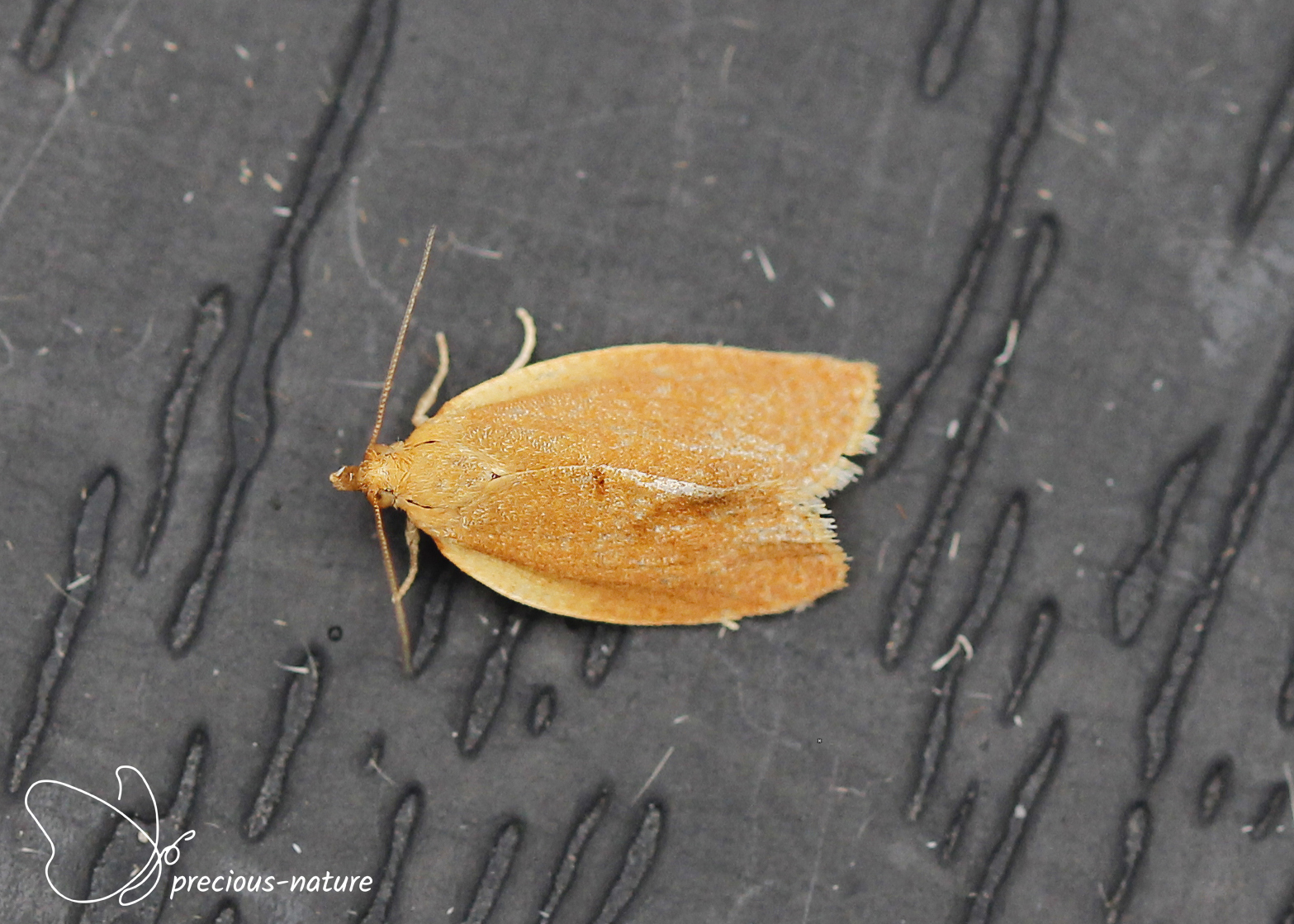
Privet Tortrix – 2018 (NL)
(NCBI-index: 1.100947)
The male and female of the Privet Tortrix (Clepsis consimilana) are, as you often see with the leafrollers, differently marked. The male’s forewing is tan with light markings and an oblique transverse band. The female is darker and has a reddish-brown speckle on the forewing. Furthermore, the female lacks a transverse band or other markings, except for a few black spots along the termen. The flying period in one generation is from June to September, and the wingspan is 13-19 mm. The larvae feed on trees, preferring dead or withered leaves in dense, untidy clusters. Host plant: Privet, Lilac, Honeysuckle, Hawthorn, Apple. Dutch name: Tuinbladroller. Frisian name: –
Flying period:
Tribe: Archipini
Genus: Clepsis
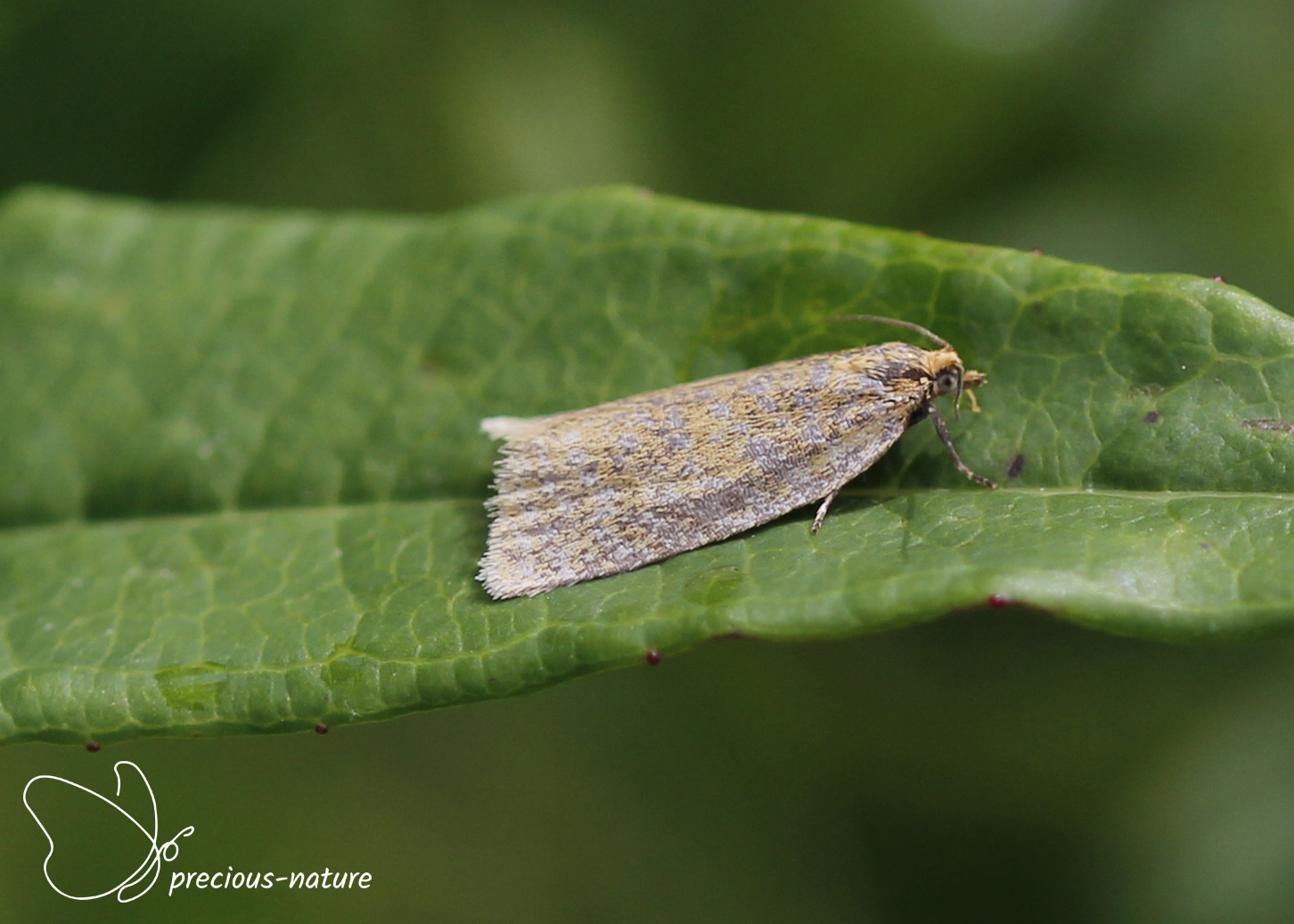
Wood-rush Tortrix – 2024 (CH)
(NCBI-index: 1.197227)
Sometimes you discover a species with a Latin name but no Dutch or English name. For leafrollers, you often see that the name is related to the host plant. That is why I have chosen the Wood-rush Tortrix (Clepsis rogana). In most cases, the upper side of the forewing with its pale white base colour is a variation of yellow spots with brownish scales in between. The fringes are white. The flight period is one generation from June to August, and the wingspan is 20-22 mm. Host plant: Wood-rush, Bilberry, White Hellebore. Dutch name: Veldbesbladroller. Frisian name: –
Flying period:

Tribe: Archipini
Genus: Lozotaeniodes
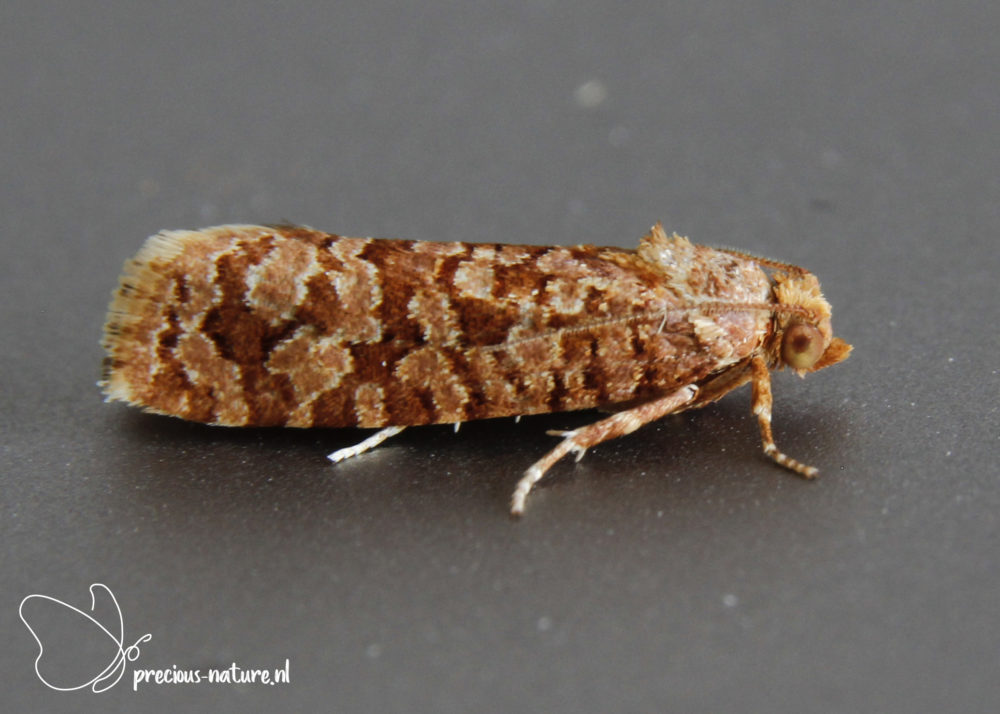
Orange Pine Tortrix – 2020 (NL)
(NCBI-index: 1.870046)
The forewing of the Orange Pine Tortrix (Lozotaeniodes formosana) is pale yellow-brown with many lighter, continuous spots that are dark reddish-brown edged. The flying period in one generation is from May to August, and sometimes a second generation in October. The wingspan is 20-26 mm, and the larvae feed in a silk tube along a twig. Host plant: Scots Pine. Dutch name: Stipjesbladroller. Frisian name: –
Flying period:


Tribe: Archipini
Genus: Pandemis
Barred Fruit-tree Tortrix – 2017 (NL)
(NCBI-index: 572788)
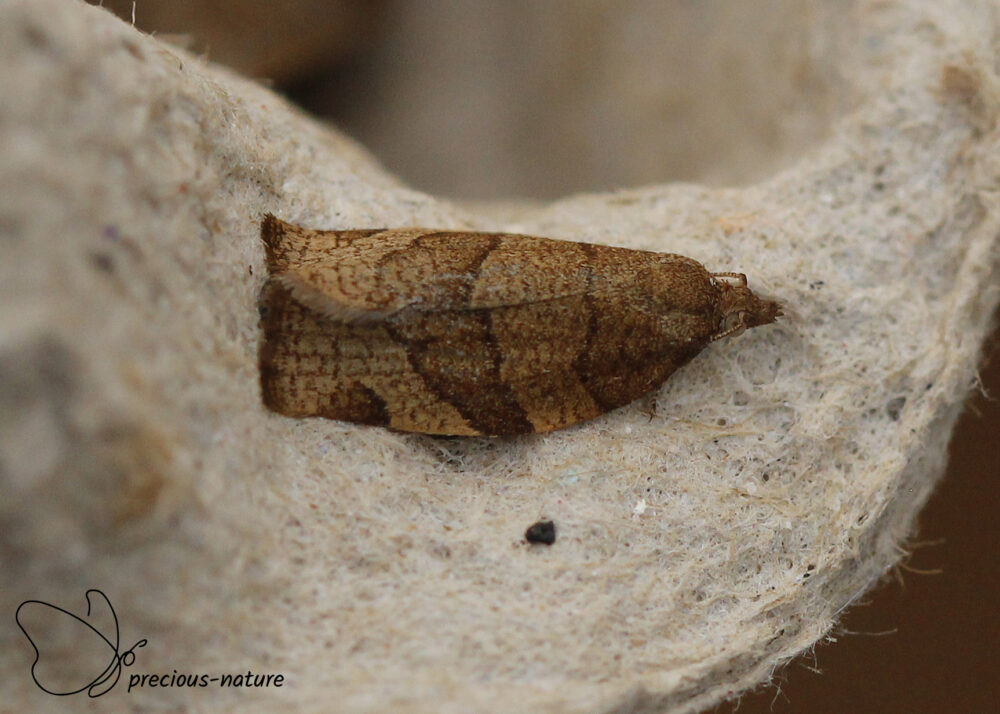
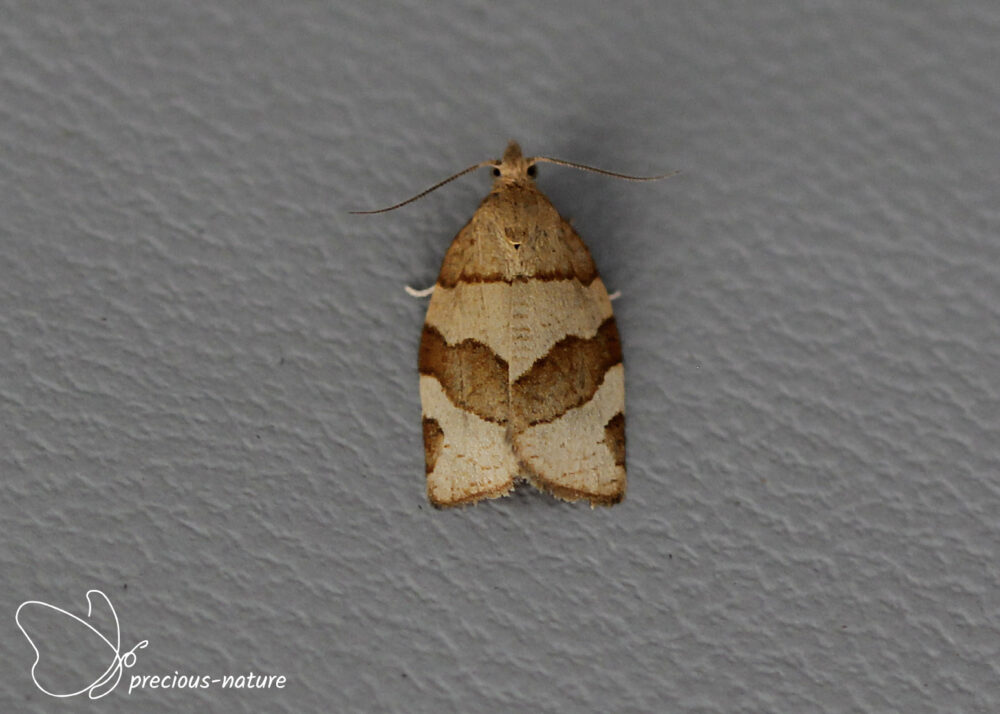
The Barred Fruit-tree Tortrix (Pandemis cerasana) is a small leafroller that, like many relatives, keeps its wings in a flat “bell” shape when resting. The top of the wing is brown, and from above a clear brown V-shaped band is visible. More to the apex, a dark brown spot can be seen along the termen. Flight time is one generation from June to September, and the wingspan is 16-25 mm. Larvae can be found in a rolled or folded leaf. Host plant: Oak, Alder, Birch, Bilberry. Dutch name: Kersenbladroller. Frisian name: –
Flying period:
Tribe: Archipini
Genus: Ptycholoma
Brindled Tortrix – 2020 (NL)
(NCBI-index: 116133)
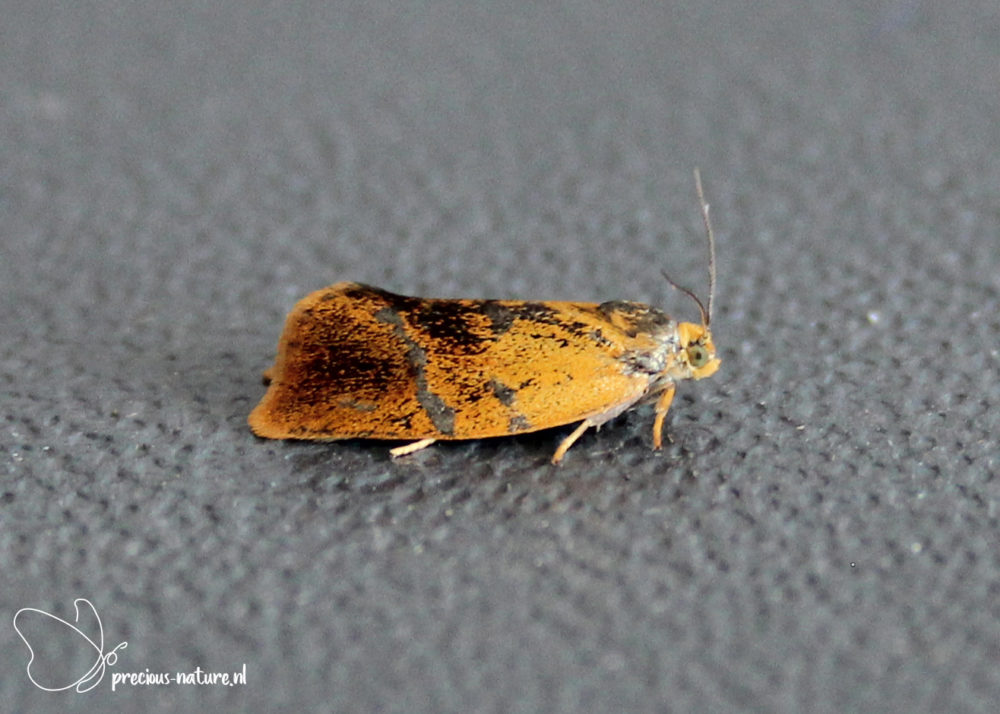
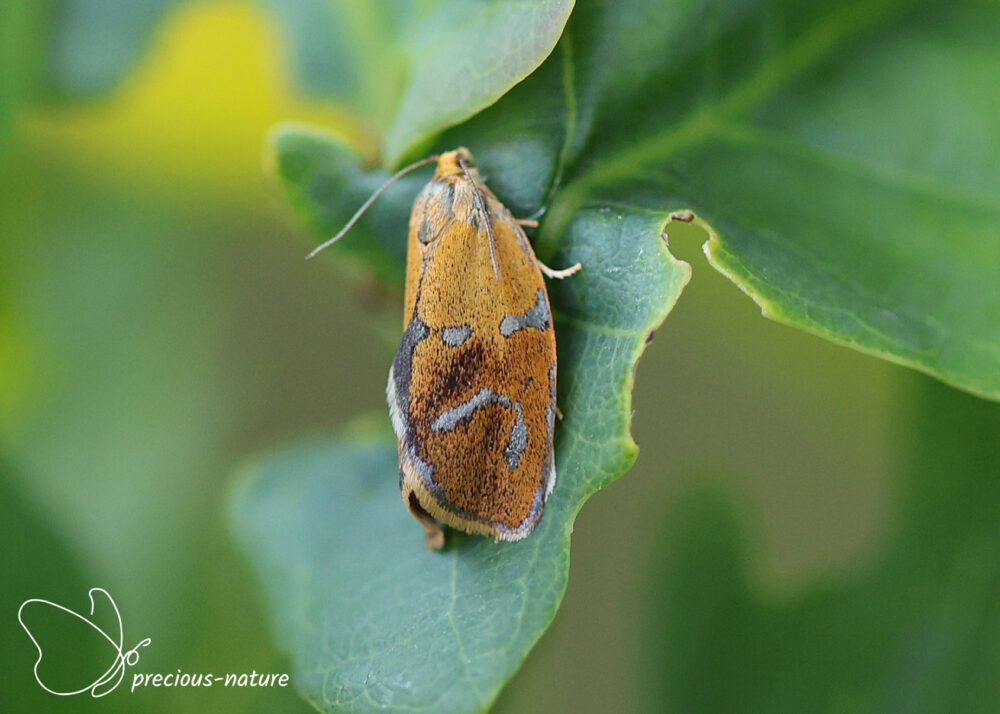
The forewing of the Brindled Tortrix (Ptycholoma lecheana) is predominantly yellow-brown with many dark to pale ruddy brown spots in the outer half. A dark oblique spot is visible halfway along the dorsum. Furthermore, a lead-grey thin cross band halfway down the wing from the costa and a second lead-grey cross band more towards the apex. The flying period in one generation is from May to mid-August, and the wingspan is 16-20 mm. The larvae feed on rolled or spun leaves. Host plant: Apple, Poplar, Oak, Willow, Larch. Dutch name: Koraalbladroller. Frisian name: –
Flying period:


Tribe: Archipini
Genus: Syndemis
Dark-barred Tortrix – 2020 (NL)
(NCBI-index: 1.101060)
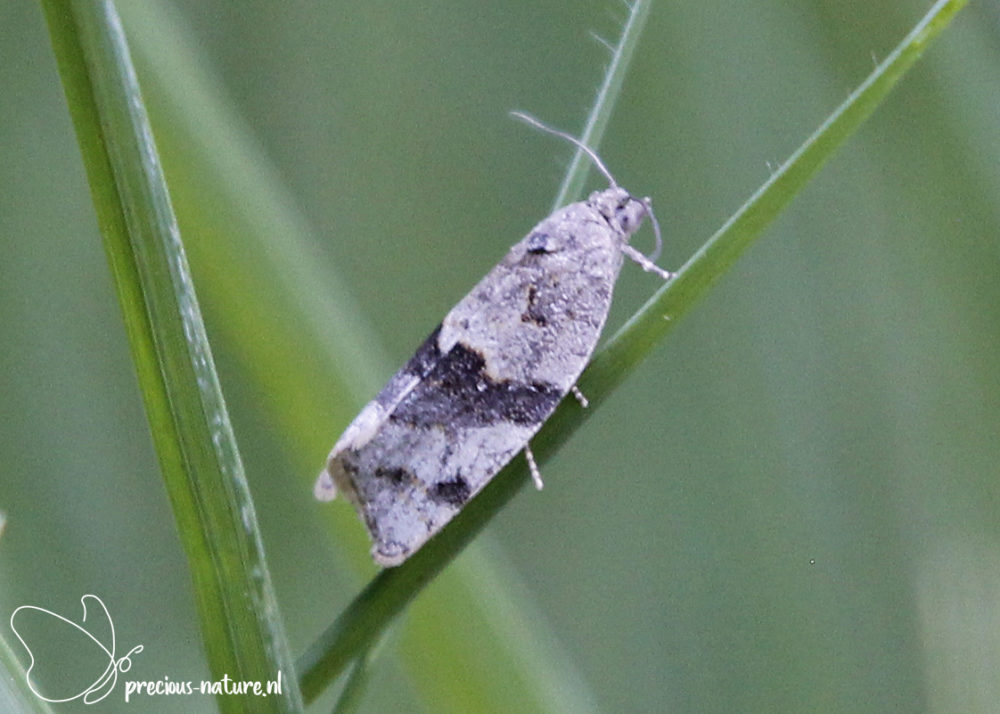
The forewing of the Dark-barred Tortrix (Syndemis musculana) is grey-white, silver-grey to grey-brown, and sparsely speckled. From the centre of the dorsum, a dark brown, sometimes black, median band tapers towards the costa. A dark spot is visible along the costa, close to the apex. The intensity of the markers varies widely. The flying period in one generation is from the end of April to the middle of July, and the wingspan is 15-22 mm. The larvae feed on a rolled or folded leaf. Host plant: Bog-myrtle, Bramble, Oak, Birch. Dutch name: Struikbladroller. Frisian name: –
Flying period: