The Tortricini are a tribe within the subfamily Tortricinae, which is part of the Leafroller family (Tortricidae). The approximately 400 members, divided into 10 genera, are primarily native to the colder parts of the Northern Hemisphere and Eastern countries. Within this tribe, the genera Acleris, Aleimna, and Tortrix are mainly found in Europe. Females lay their eggs singly, and the larvae roll up leaves. One of the group’s defining characteristics is a modified complex of the seminal and anal canals in the male.
Tribe: Tortricini
Genus: Acleris
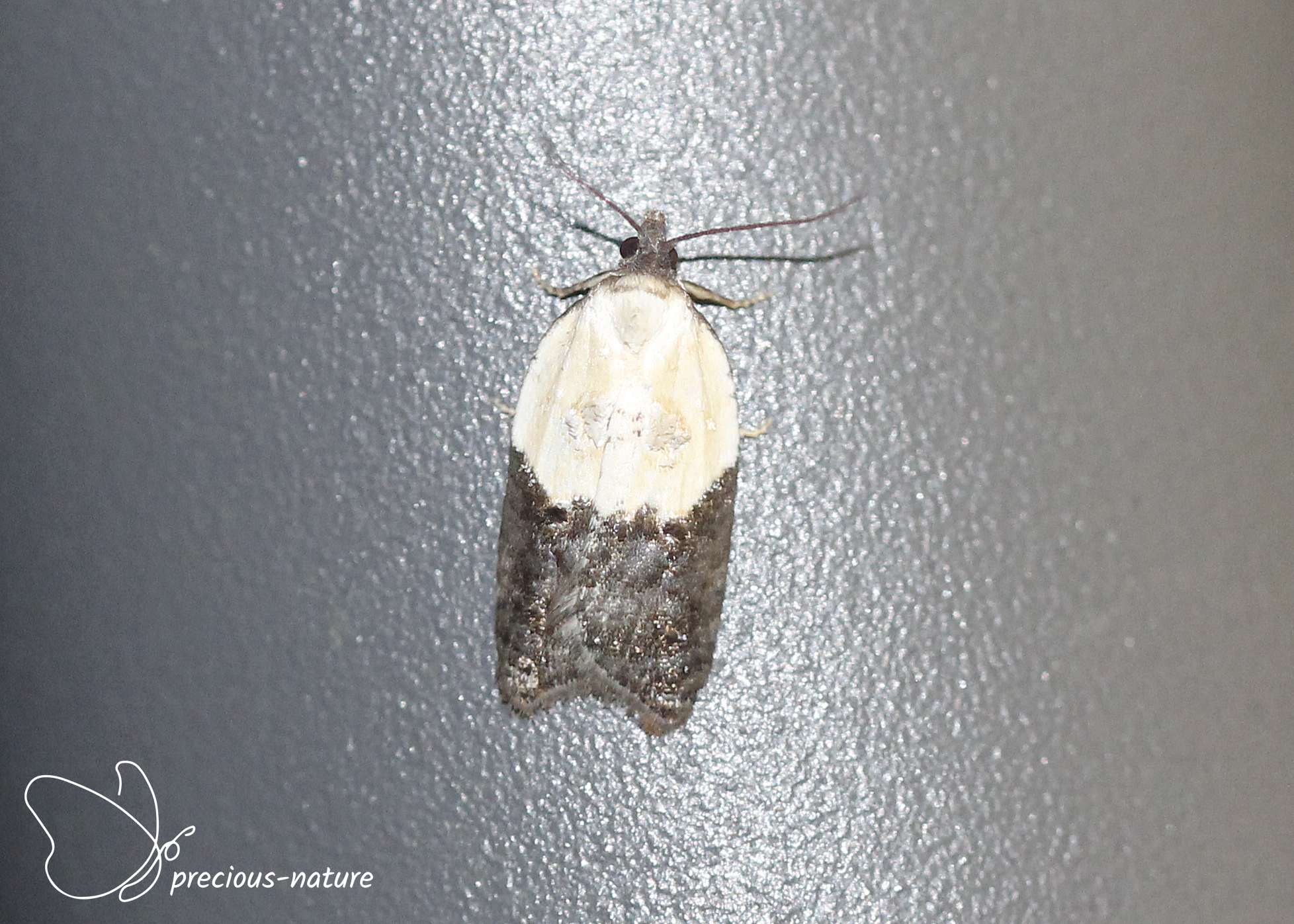
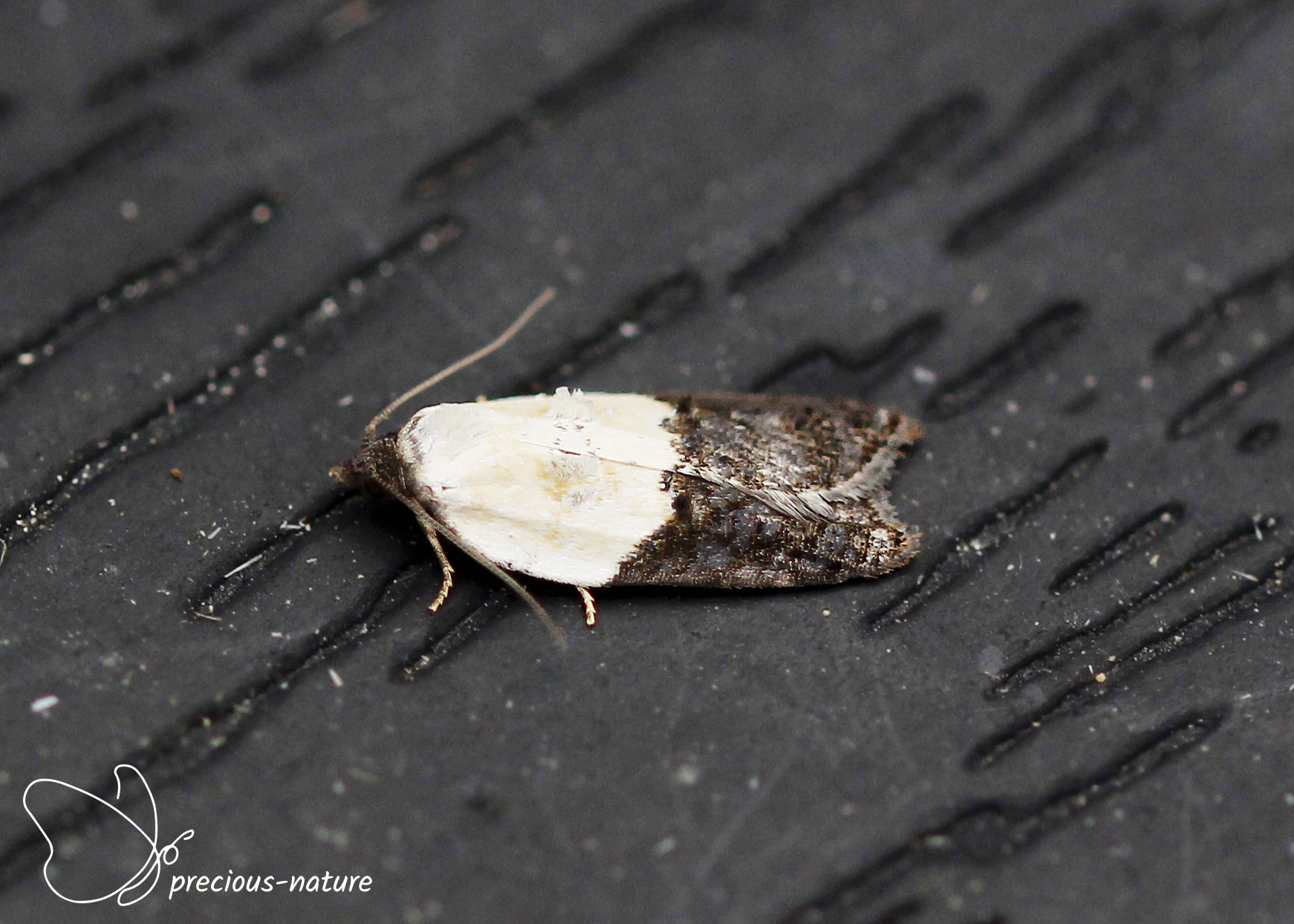
Garden Rose Tortrix – 2018 (NL)
(NCBI-index: 572803)
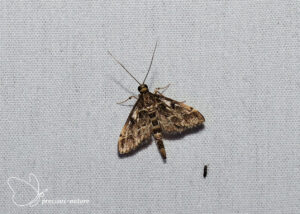
The Garden Rose Tortrix (Acleris variegana) is an easily recognised micro-moth. A clear white spot is visible when resting, with a dark, round spot in the middle. The rest of the wing is dark brown or grey. Flight time is one generation from July to September, and the wingspan is 14-18 mm. Larvae can be found in a folded leaf or loosely spun leaves. Host plant: Hawthorn, Blackthorn, Pear, Rose, Hazel, Elm. Dutch name: Witschouderbladroller. Frisian name: –
Flying period:



Tribe: Tortricini
Genus: Acleris
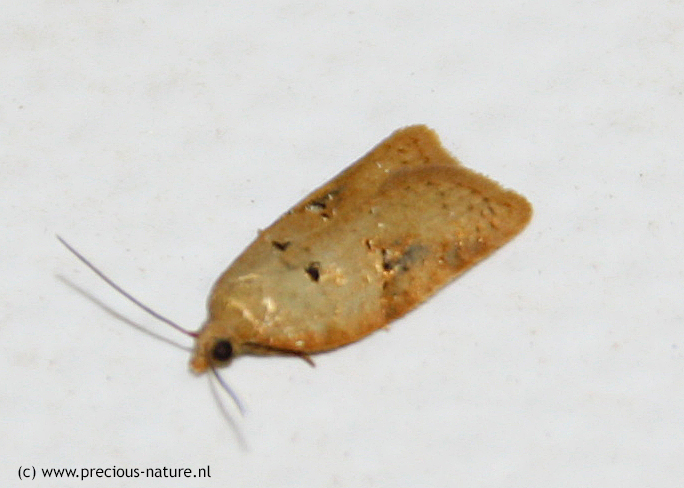
Rusty Oak Button – 2018 (FR)
(NCBI-index: 758707)
The Rusty Oak Button (Acleris ferrugana) is almost indistinguishable from the Rusty Birch Button (Acleris notana). It would be best to do this through genitals testing. I am, therefore, not entirely sure whether I made the right choice. The forewing is tan to dark reddish-brown with variable black spots. At the costa is a triangle-shaped pale brown band with the tip protruding halfway up the wing. This dark band is completely smooth with the Rusty Birch Button, while the Rusty Oak Button has a notch on both sides of the triangle. Near the wingtip, it is black with some silver-grey spots. A straightforward black point is visible at 1/3 from the base. The flying period spans two generations: one from July to mid-August and another from September to May, during which the adults overwinter. The wingspan is 14-18 mm. The larvae feed mainly by spinning between leaves. Host plant: Oak. Dutch name: Lichte boogbladroller. Frisian name: –
Flying period:

Tribe: Tortricini
Genus: Acleris
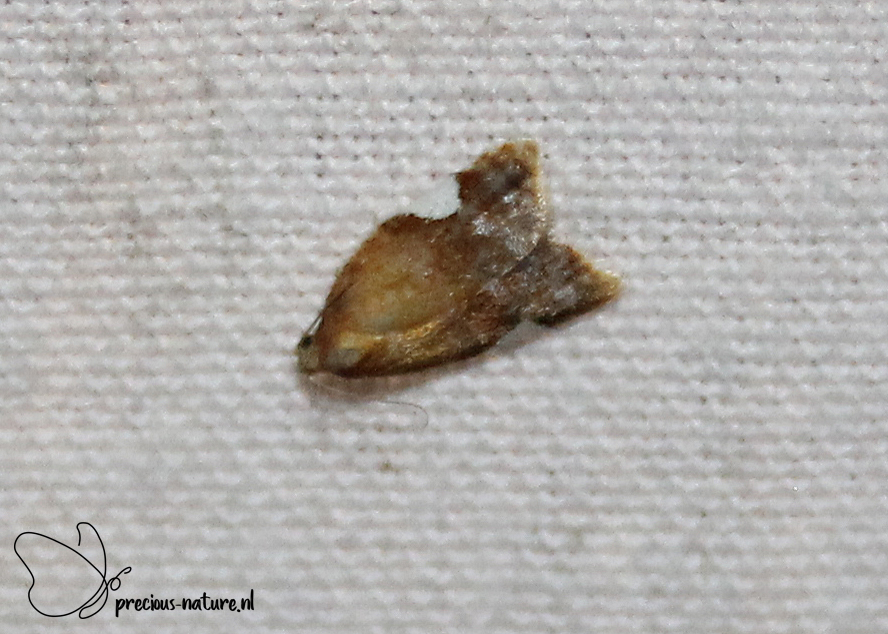
Golden Leafroller Moth – 2020 (NL)
(NCBI-index: 572802)
One of the Acleris species that is relatively easy to recognise is the Golden Leafroller Moth (Acleris holmiana). The forewing is yellowish-brown with a lighter colour at the base and the apex. Especially the white triangular spot halfway down the costa makes it unique to recognise this species. The flying period is from June to the beginning of September, and the wingspan is 10-15 mm. The larvae feed between two spun leaves. Host plant: Hawthorn, Apple, Pear, Rose. Dutch name: Rode driehoekbladroller. Frisian name: –
Flying period:

Tribe: Tortricini
Genus: Acleris
Maple Button – 2023 (NL)
(NCBI-index: 572801)
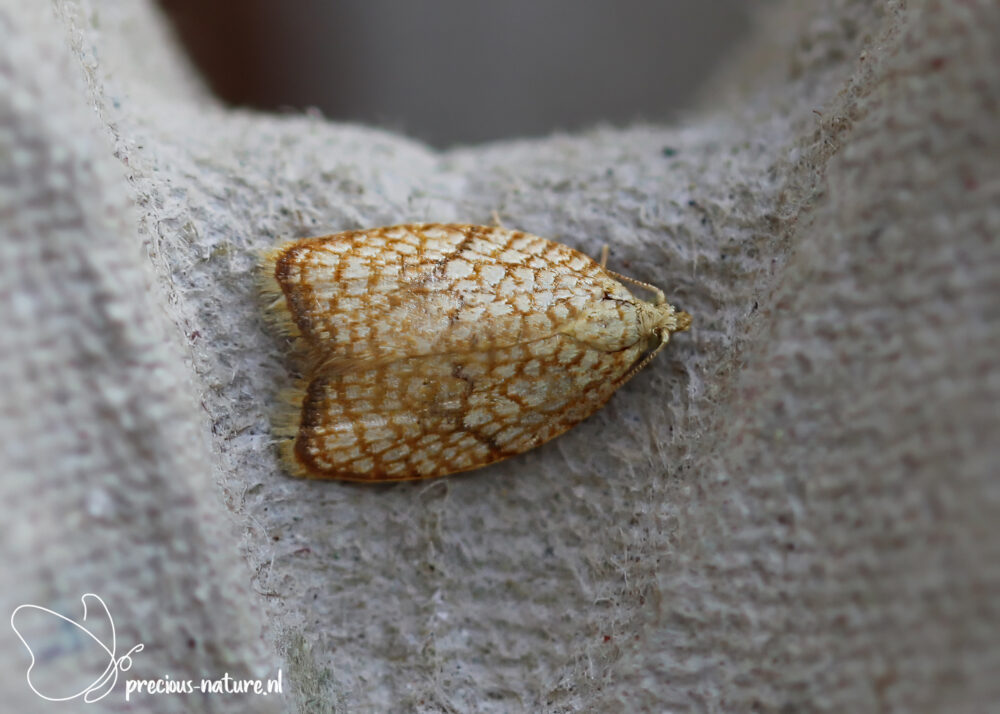
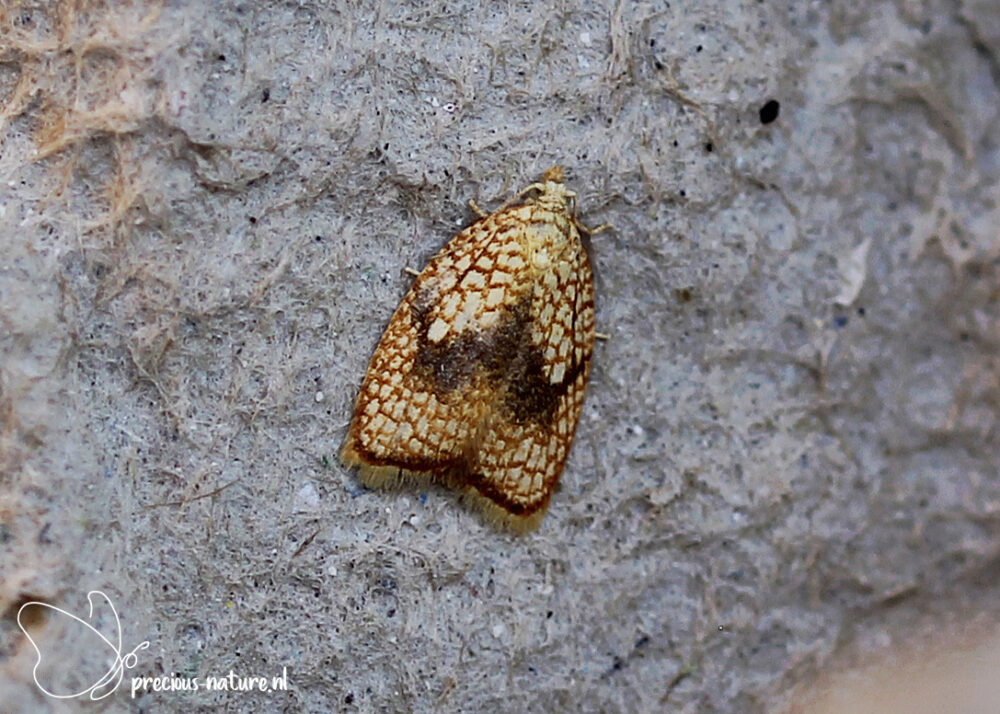
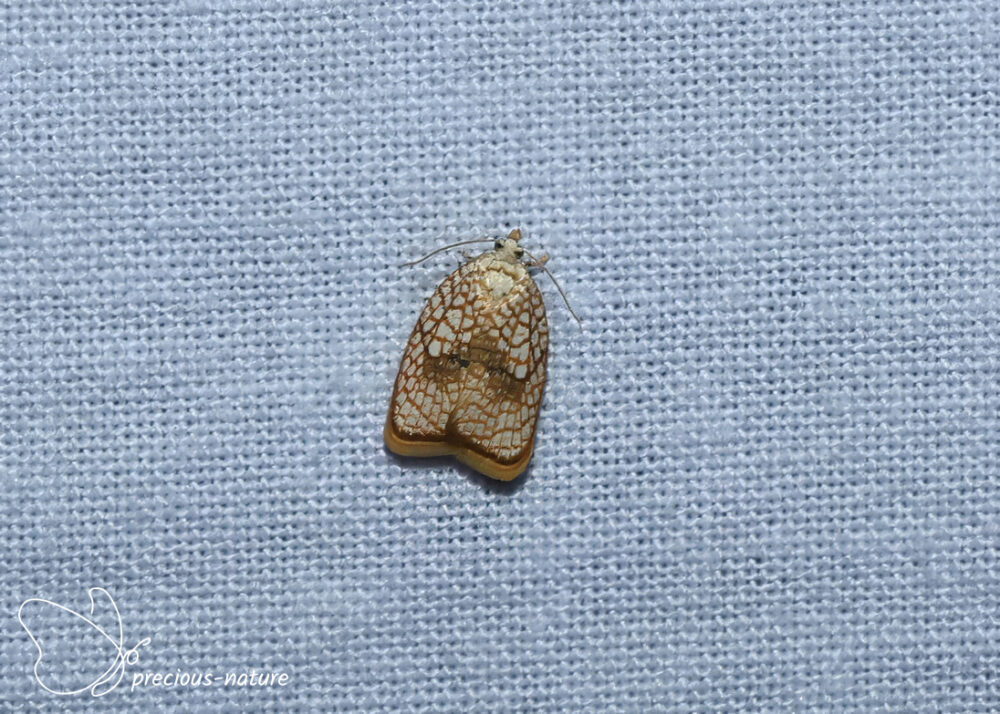
A leafroller that is relatively easy to recognise because of its colour and pattern of brown lines is the Maple Button (Acleris forsskaleana). The forewing is yellow with a network of reddish-brown lines. Halfway down the forewing is a striking dark grey-brown line across the wing. Angled in the middle, this transverse line can vary considerably in intensity and width, sometimes with a dark grey spot at its centre. A broader dark grey-brown line runs along the rear edge. The flight period spans one generation, from June to mid-September, and the wingspan ranges from 12 to 17 mm. Host plant: Field Maple. Dutch name: Kleine boogbladroller. Frisian name: –
Flying period:
Tribe: Tortricini
Genus: Acleris
Yellow Rose Tortrix – 2025 (NL)
(NCBI-index: 763074)
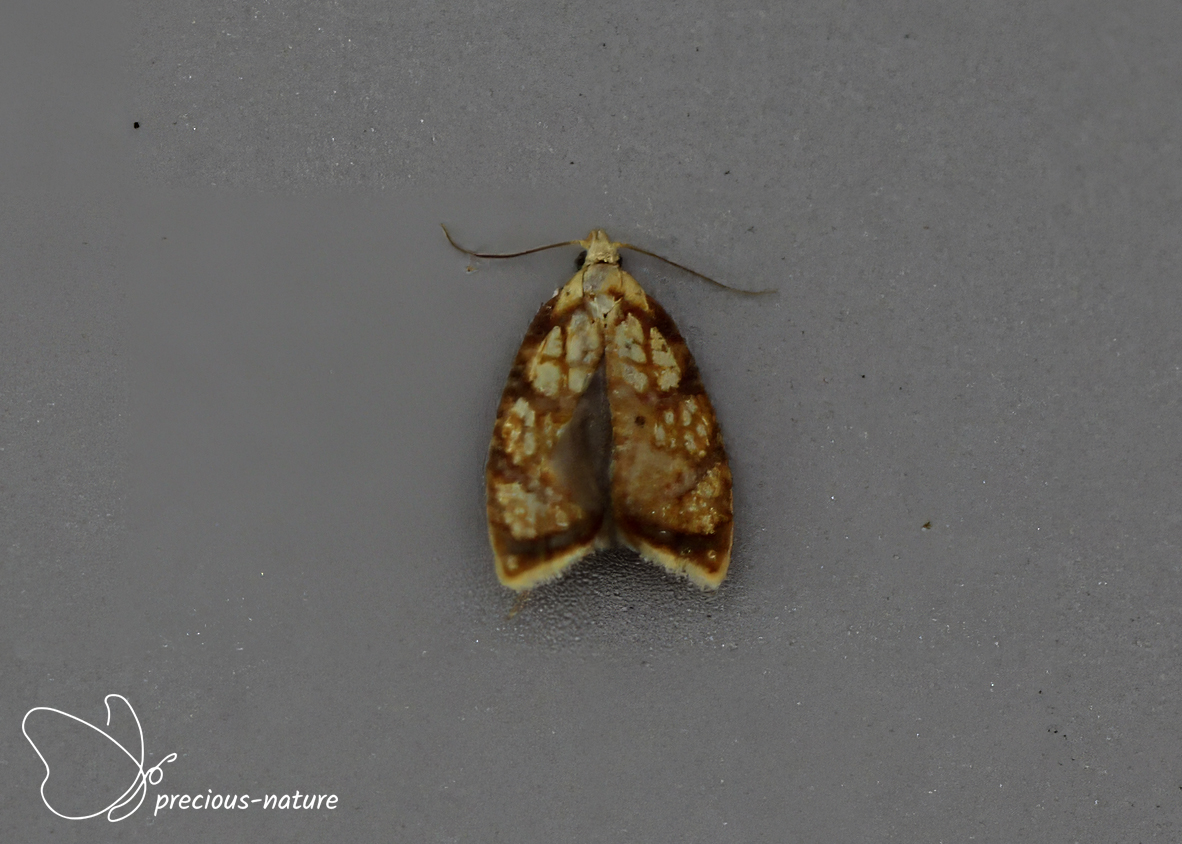
A species easy to recognise and common in gardens and hedges is the Yellow Rose Tortrix (Acleris bergmanniana). The head and body are yellow, as is the base colour of the forewing. The forewing is speckled orange, especially in the outer 2/3, with blue-grey markings bordered in dark brown. These markings, which run inward as transverse bands on 1/3 and just past the halfway point from the leading edge to halfway along the wing, are very prominent along the leading edge and trailing edge. It does sometimes happen that the blue-grey colour is missing, but the markings remain the same in structure. The flight period is one generation from June to early August, and the wingspan is 10-14 mm. The larvae grow in spun leaves and shoots. Host plant: Rose. Dutch name: Gouden boogbladroller. Frisian name: –
Flying period:

Tribe: Tortricini
Genus: Aleimma
Yellow Oak Button – 2019 (NL)
(NCBI-index: 758720)
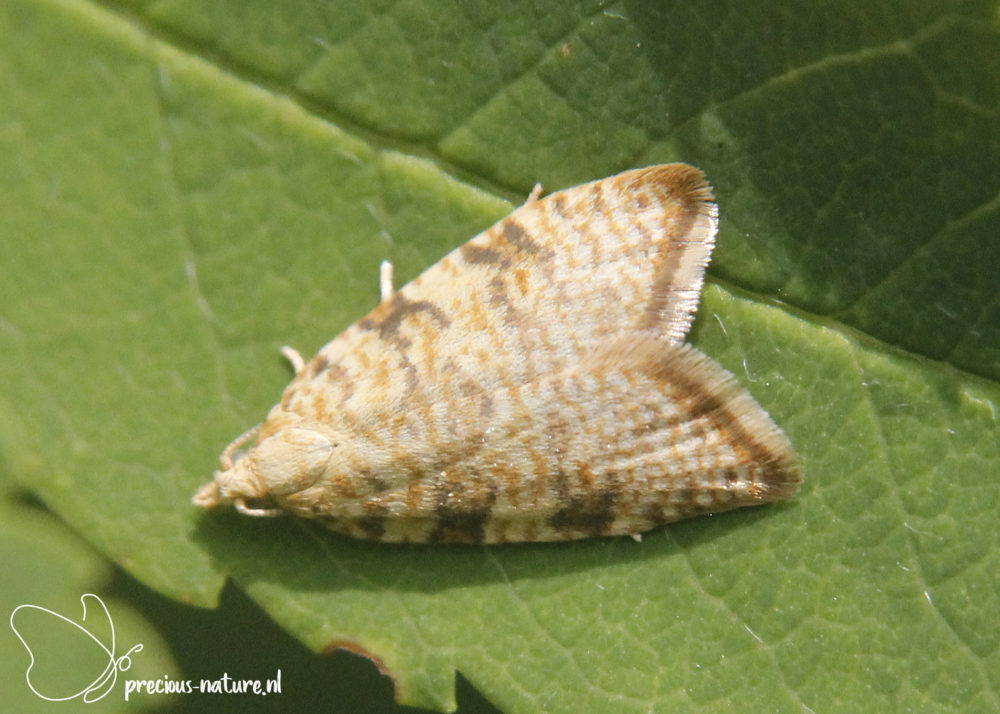
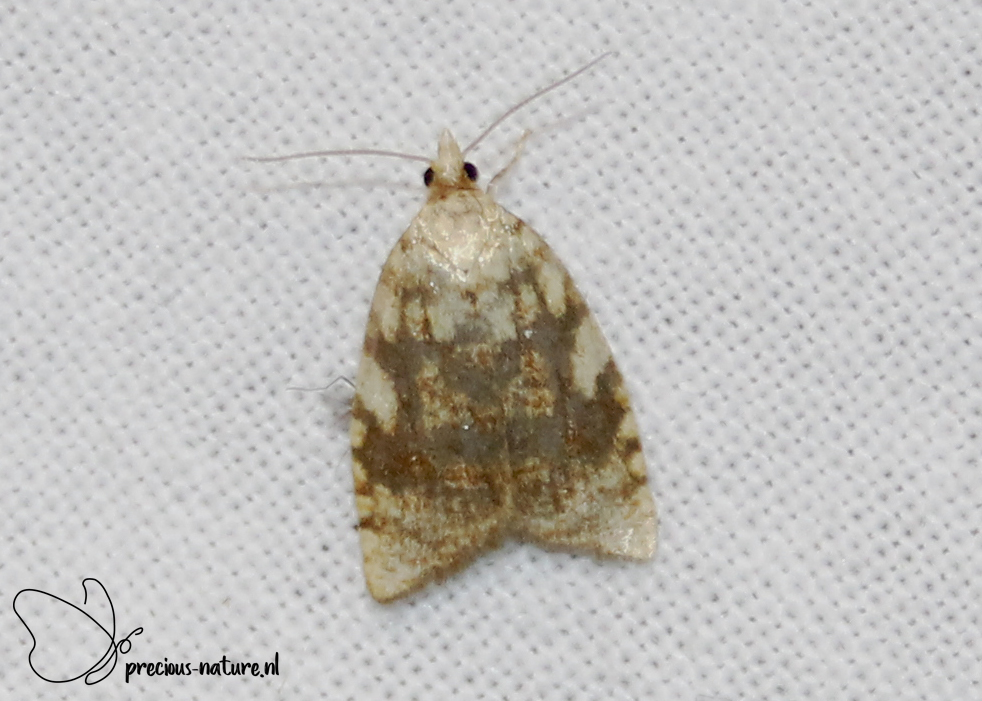
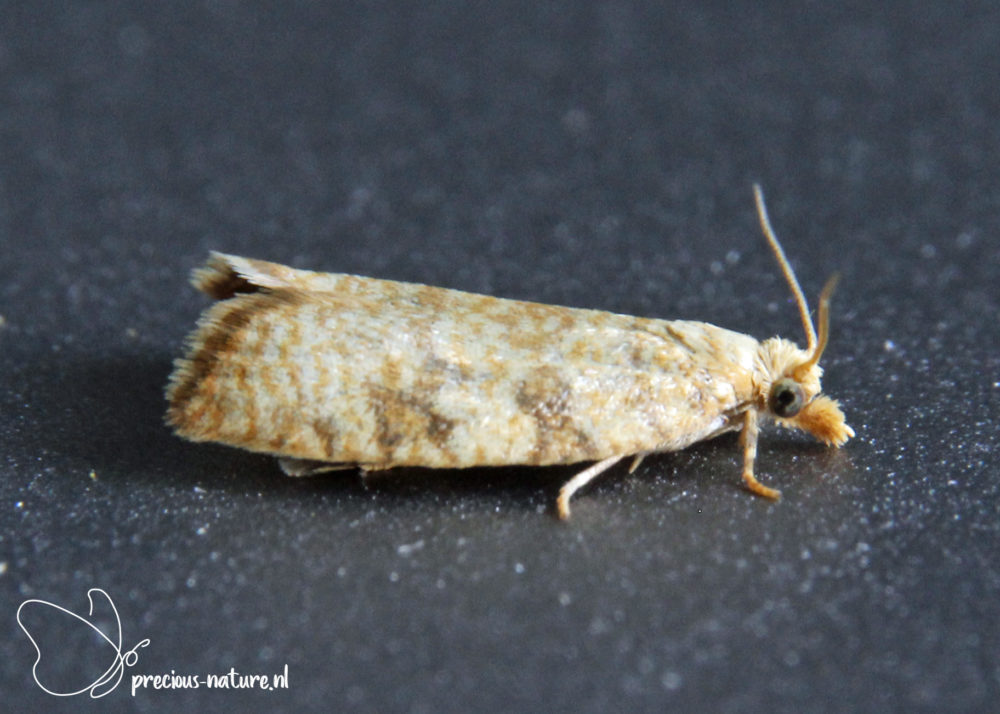
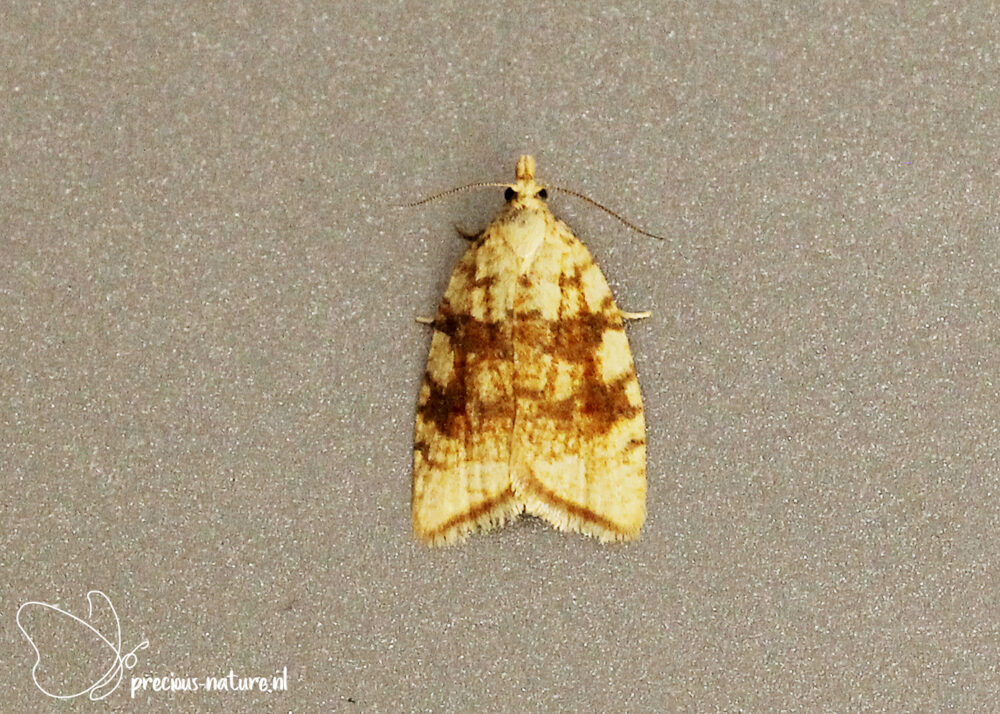
On a summer evening, I came across the Yellow Oak Button (Aleimma loeflingiana) along a sidewalk among some weeds. Enjoying the last rays of the sun falling on its yellow-brown front wing, many small dark brown spots can be seen as if they were sun freckles. The variation in the drawing is substantial. Usually, there is a dark marking at 1/3 and halfway up the costa, and the fringes have a broad brown baseline. The flying period in one generation is from June to August, and the wingspan is 14-19mm. Larvae can be found in a rolled leaf or a pocket formed from a rolled leaf. Host plant: Oak, Maple. Dutch name: Zonnesproetbladroller. Frisian name: –
Flying period:
Tribe: Tortricini
Genus: Tortrix
Green Oak Tortrix – 2018 (NL)
(NCBI-index: 311328)
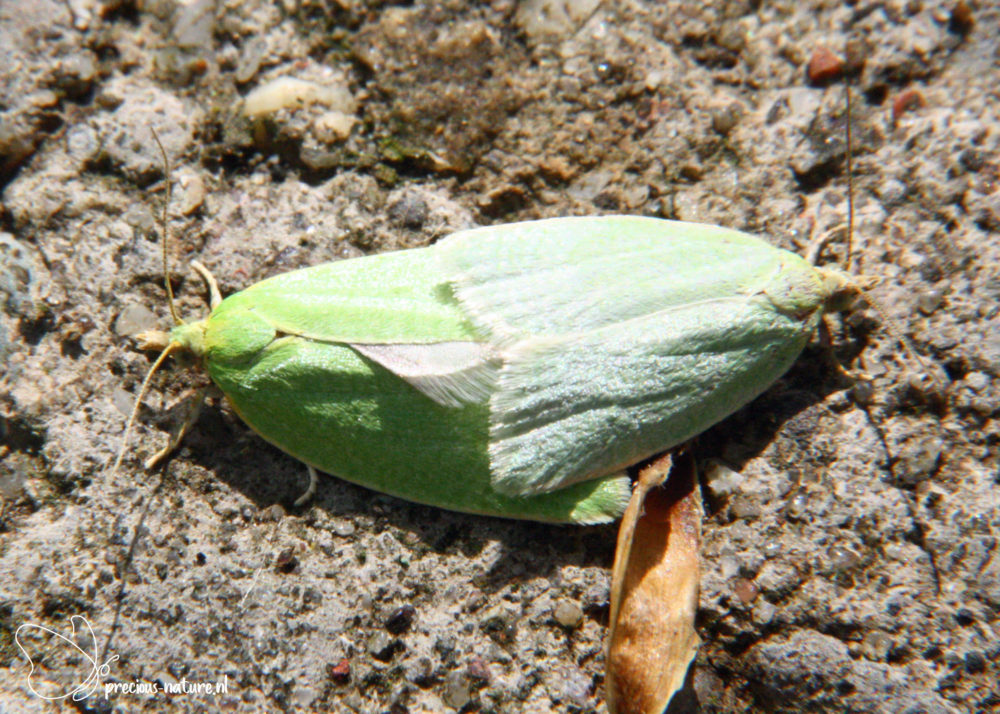
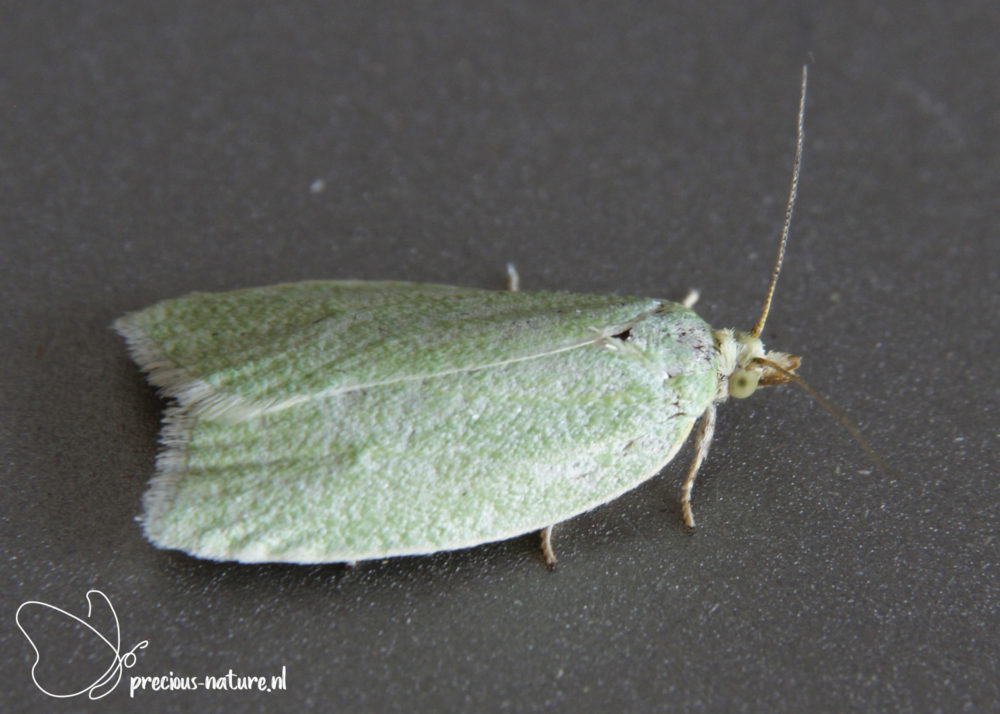
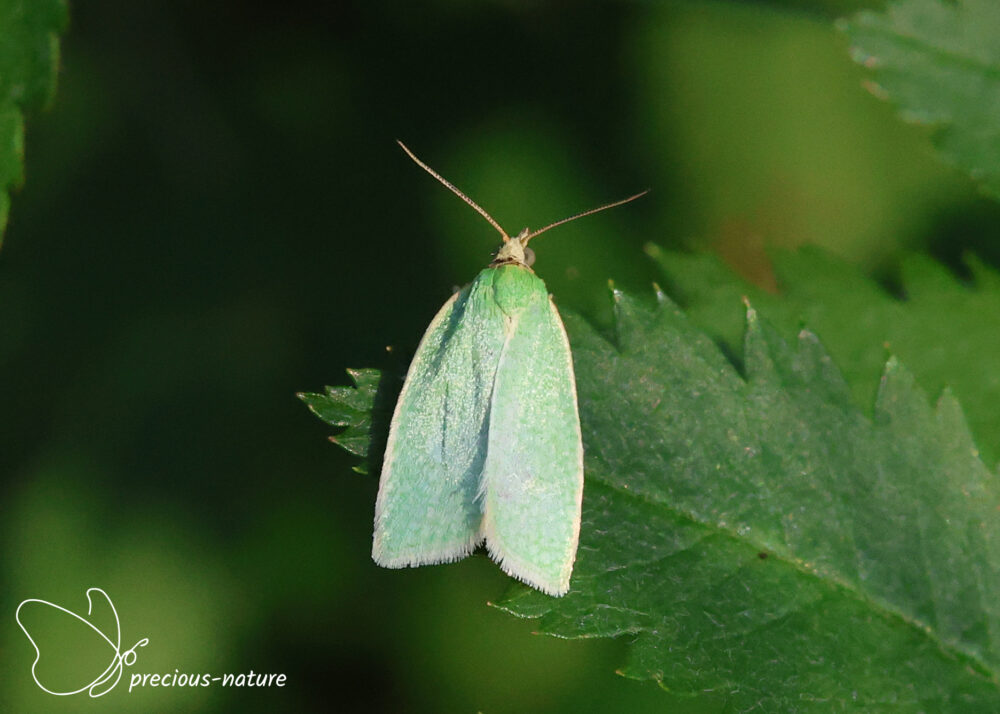
The Green Oak Tortrix (Tortrix viridana) is sometimes confused with the Cream-bordered Green Pea (Earias clorana). There is a clear difference. This micro-moth has its wings flat in the resting position, while the Cream-bordered Green Pea has them in a roof shape in the resting position. The forewing is light green with a light, spotty white appearance. The costa shows a fragile yellow line. The males are slightly smaller than the females. The flying period is from May to July in one generation, and the wingspan is 18-23 mm. Larvae can be found in a rolled or folded leaf. Host plant: Oak. Dutch name: Groene eikenbladroller. Frisian name: –
Flying period: