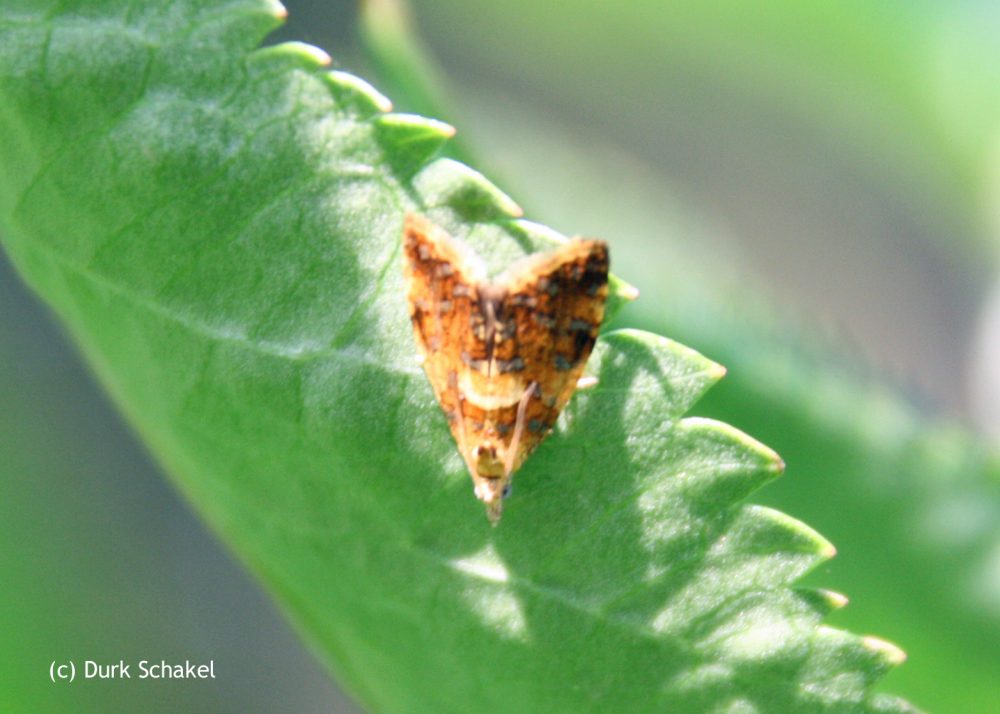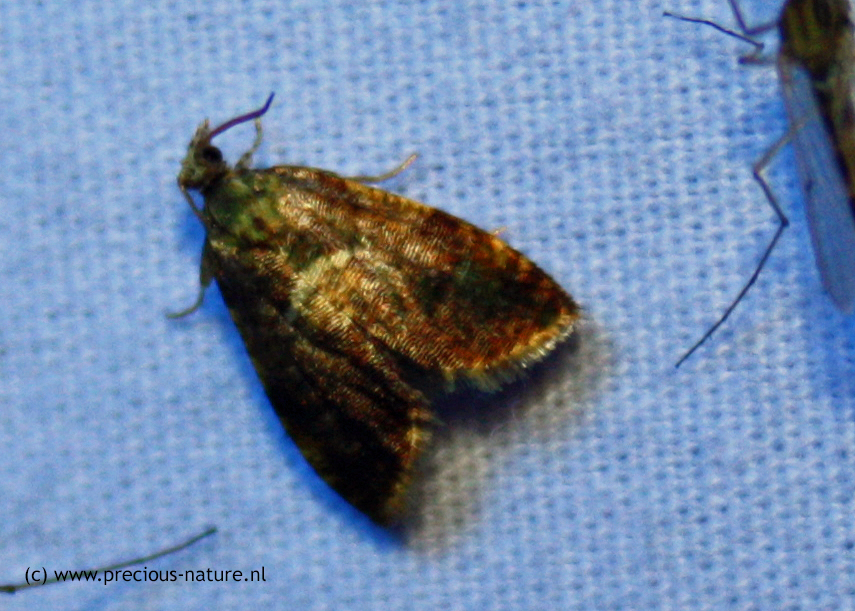
The Cochylini are a tribe within the subfamily Tortricinae, which is part of the family Leafrollers (Tortricidae). This is a large tribe with over 1,000 described species. The Cochylini are found in all faunal regions, but are primarily found in the colder parts of the Northern Hemisphere and Central and South America. In Europe, genera such as Aethes, Agapeta, Cochylis, and Phalonidia occur. The larvae feed by boring into roots, stems, and seeds. Characteristic features of the group include wing patterns, vein structures, and male reproductive organs.
Tribe: Cochylini
Genus: Aethes
Burdock Conch – 2020 (NL)
(NCBI-index: 1.594218)
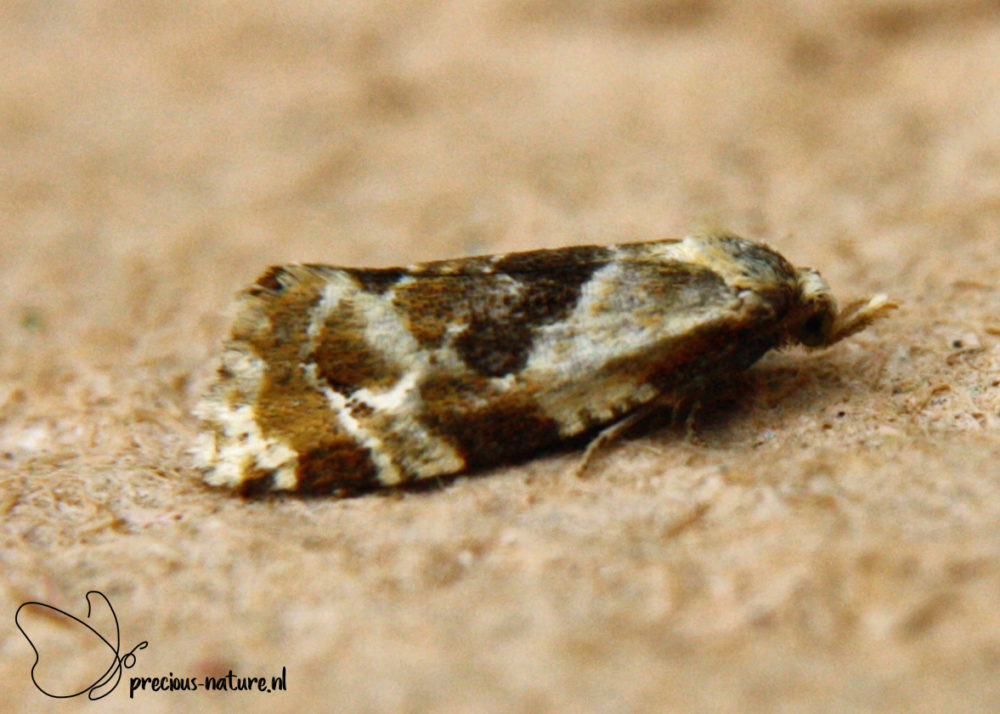
The Burdock Conch (Aethes rubigana) is very similar to the Thistle Conch (Aethes cnicana). The big difference is in the dark cross band on the cream-white forewing, which is wider in the Burdock Conch than in the Thistle Conch. Light brown patches can also be seen on the forewing, with the two spots close to the costa being slightly darker. The flying period in one generation is from the beginning of June to August, and the wingspan is 15-19 mm. The larvae feed on seeds. Host plant: Greater Burdock. Dutch name: Donker c-smaluiltje. Frisian name: –
Flying period:

Tribe: Cochylini
Genus: Aethes
Yarrow Conch – 2020 (NL)
(NCBI-index: 1.594220)
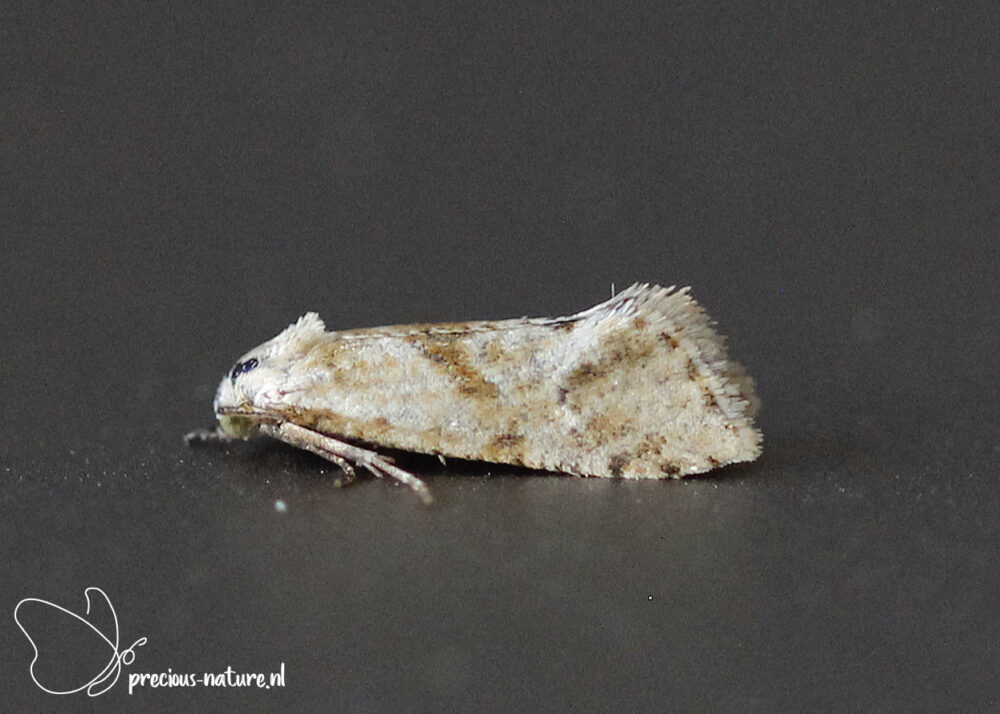
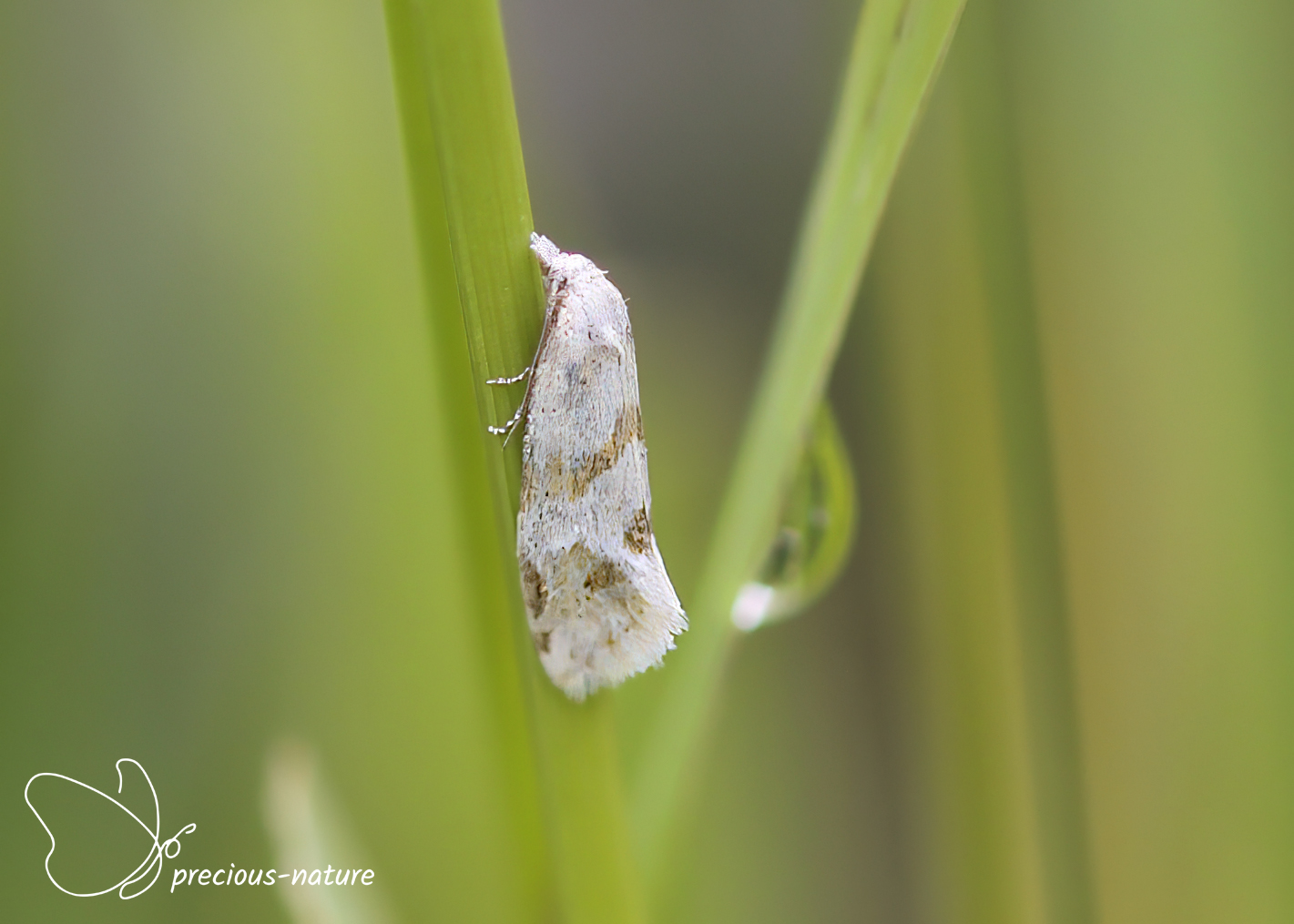
The Yarrow Conch (Aethes smeathmanniana) has a pale yellow forewing with some yellow-brown spots. Furthermore, two orange-brown or red-brown transverse bands run from the dorsum to the centre. The cross band on 1/3 continues to the centre, and the cross band on 2/3 is relatively short. The flying period in one generation is from the beginning of May to the middle of June, and the wingspan is 12-19 mm. The larvae feed on the yarrow seeds I have as a host plant in my garden. Host plant: Yarrow, Common Knapweed, Corn Chamomile. Dutch name: Kommabladroller. Frisian name: –
Flying period:

Tribe: Cochylini
Genus: Agapeta
Common Yellow Conch – 2017 (NL)
(NCBI-index: 1.100904)
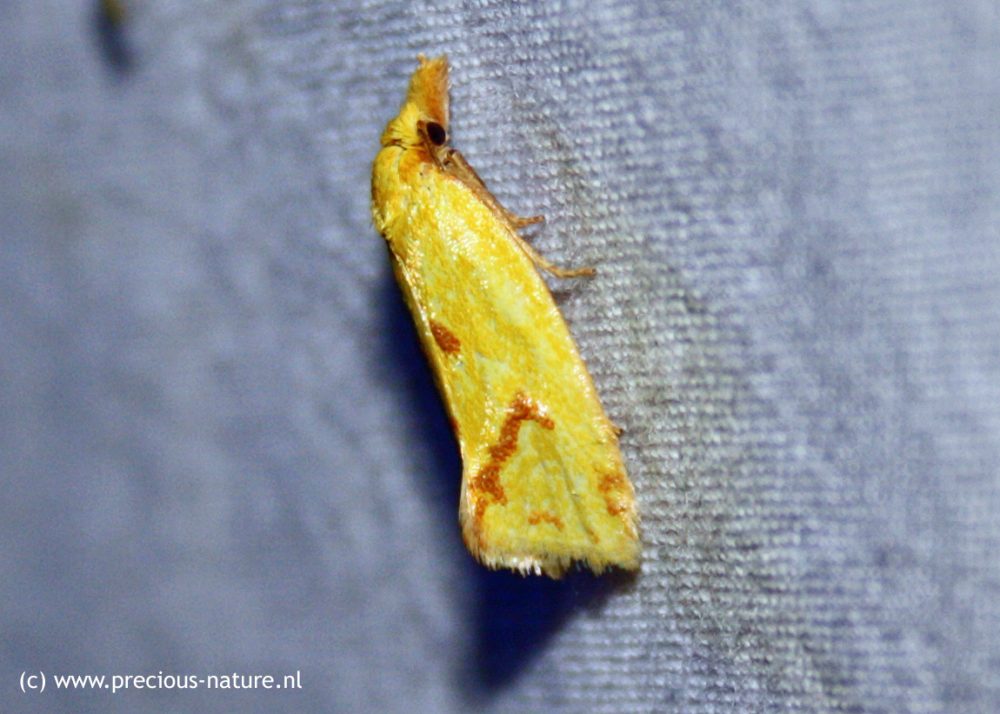
The Common Yellow Conch (Agapeta hamana) has a bright, pale yellow forewing. On the forewing, there are different numbers of orange or brown markings that differ in intensity. In any case, there is always a clear, broad line from the centre to the tornus of the forewing. It flies in the evening and comes on light easily. The flying period is from April to September, possibly in one generation, and the wingspan is 15-24 mm. The larvae can be found in the roots. Host plant: Musk, Thistle. Dutch name: Distelbladroller. Frisian name: –
Flying period:

Tribe: Cochylini
Genus: Cochylimorpha
Straw Conch – 2022 (NL)
(NCBI-index: 1.660606)
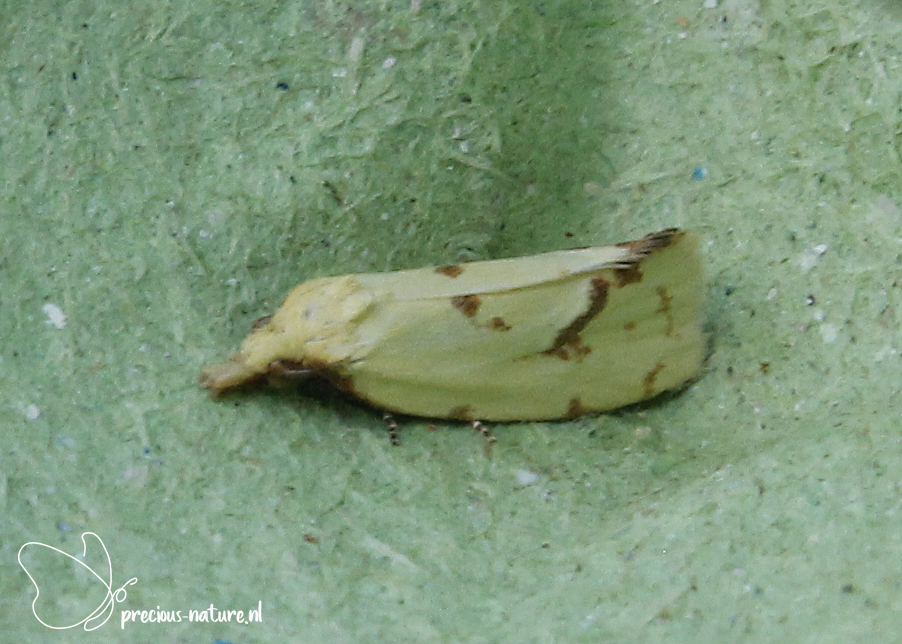
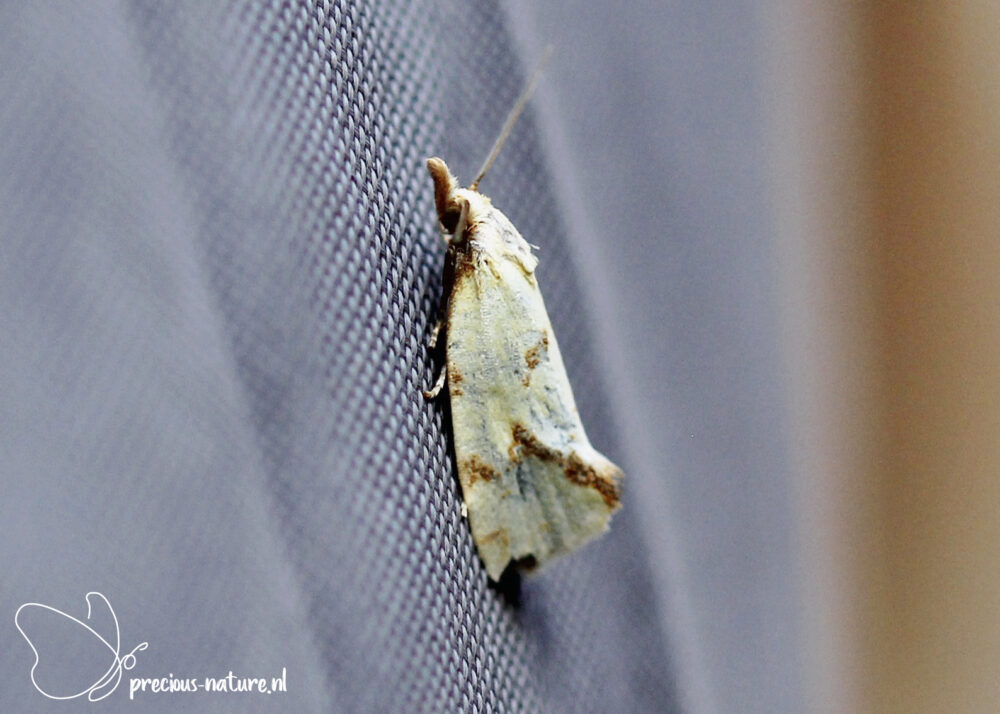
Discovering new leaf rollers in the moth trap is always a surprise. Since many leaf rollers look alike at first glance, I remain alert to possible new species. The Straw Conch (Cochylimorpha straminea) is a leaf roller of a similar species. It is a reasonably solid buff moth with a pale rust-coloured band forming a ‘V’ pattern on its back. Some dark brown spots are along the leading edge near the wing tip. Some brown spots are near the trailing edge, but none of the markings are particularly pronounced. The flight period spans two generations, from May to September, and the wingspan ranges from 10 to 16 mm. The larvae feed in the stem just below the flower bud or in young shoots as far as the second generation is concerned. Host plant: Common Knotweed. Dutch name: Moerasbladroller. Frisian name: –
Flying period:

Tribe: Cochylini
Genus: Cochylis
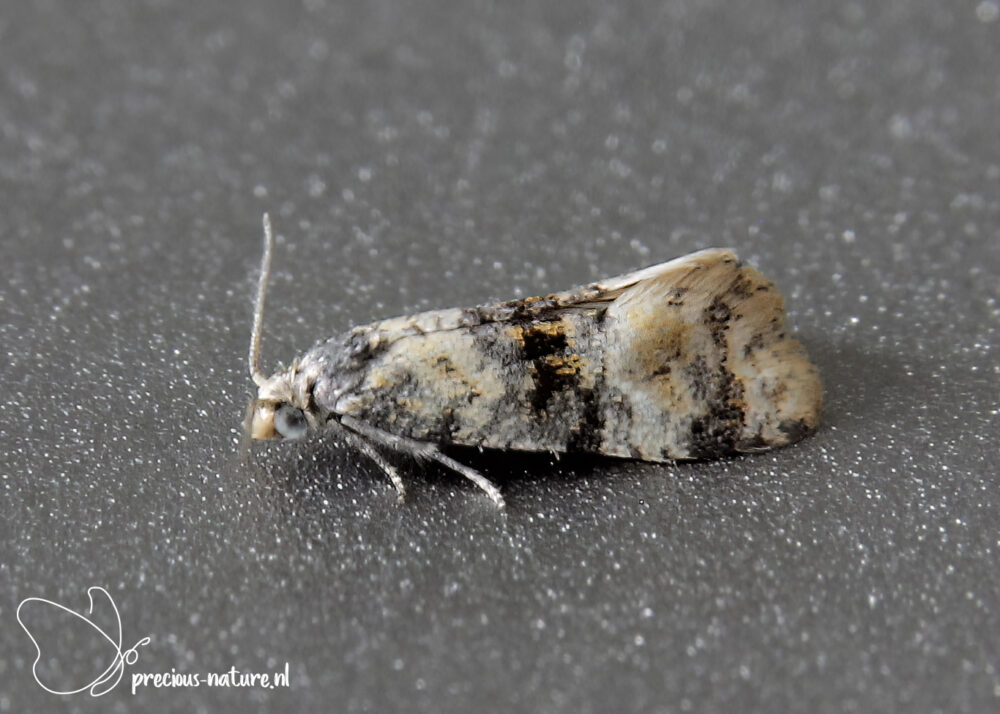
Birch Conch – 2021 (NL)
(NCBI-index: 1.594254)
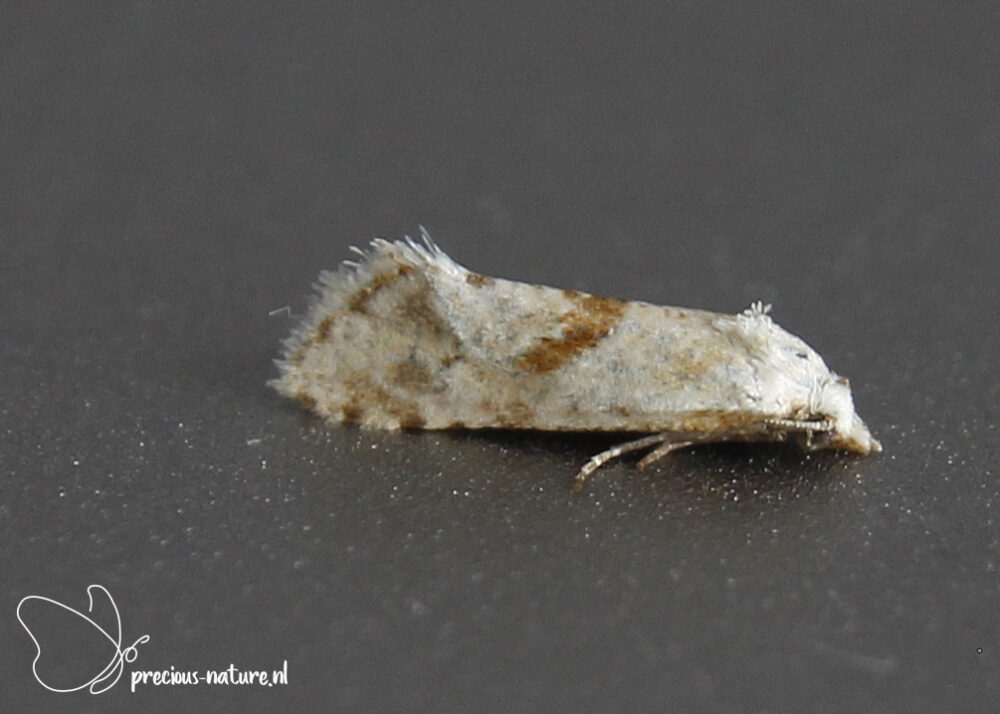
The Birch Conch (Cochylis nana) has a white head and a white forewing with heavily suffused pale yellow-brown areas. The basal area of the wing is grey, extending along the costa. Halfway from the dorsum, a grey mixed black cross-band narrows towards the costa. A yellow-brown spot is visible in the centre of this cross-band. The flight period is from May to July in one generation, and the wingspan is 9-13 mm. Host plant: Birch. Dutch name: Vroege dwergbladroller. Frisian name: –
Flying period:

Tribe: Cochylini
Genus: Eulia
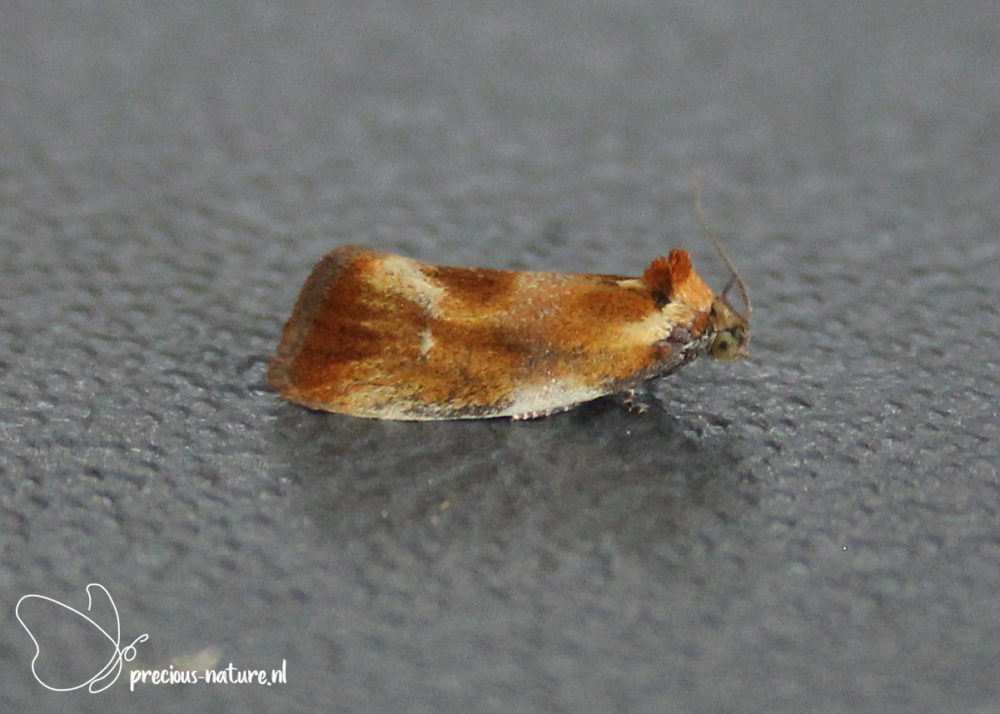
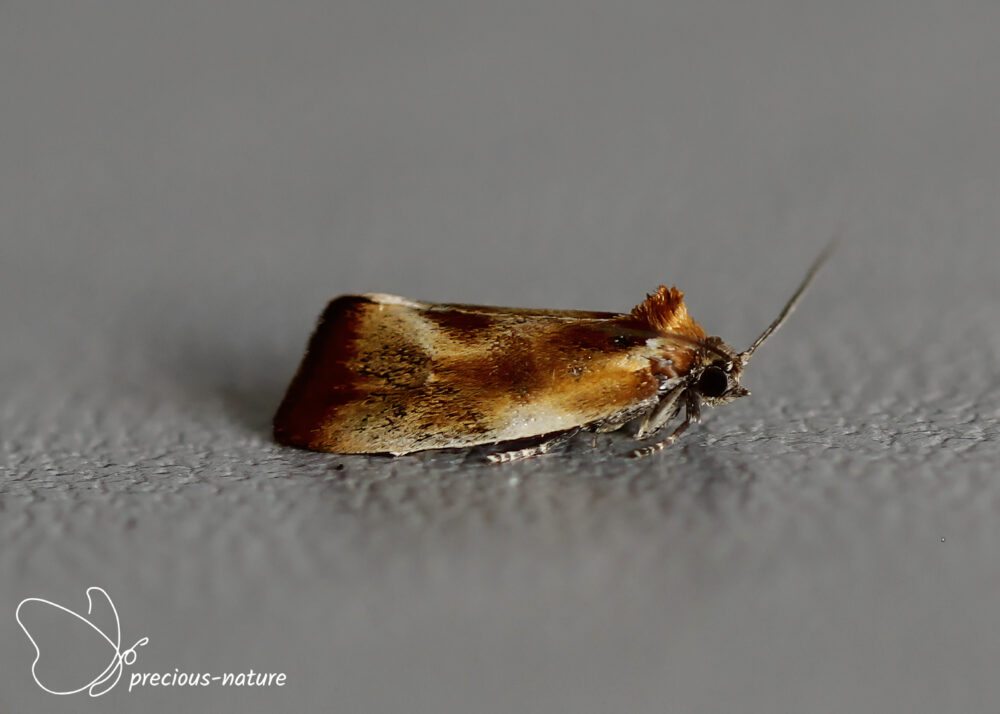
Brassy Tortrix – 2019 (NL)
(NCBI-index: 572847)
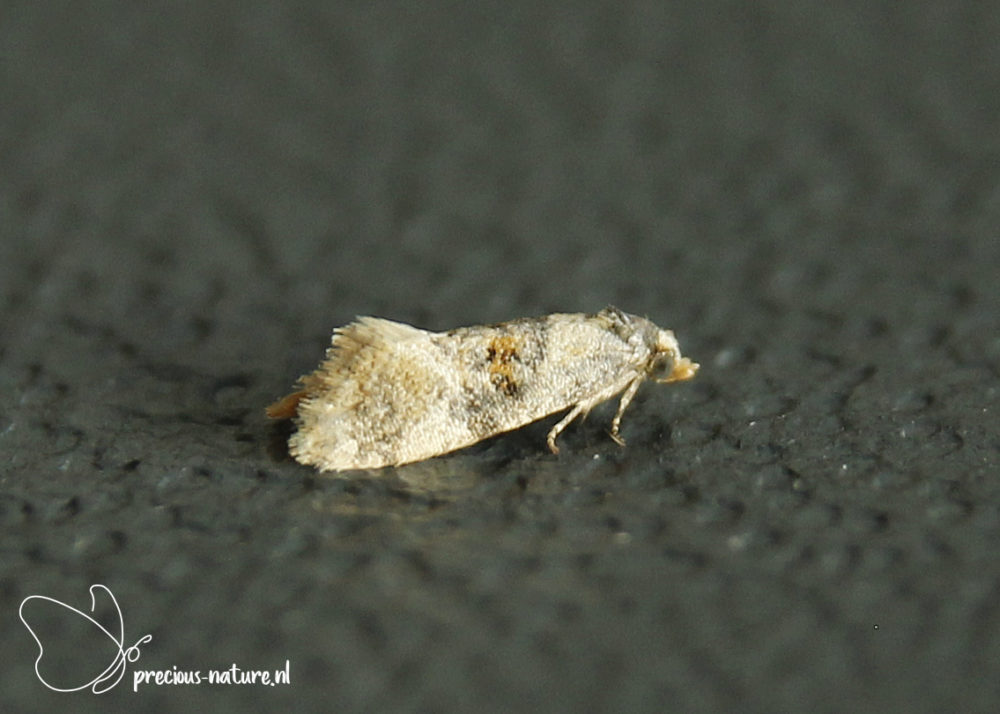
A leafroller named for its colour scheme is the Brassy Tortrix (Eulia ministrana). The forewing is pale yellow with orange-brown to reddish-brown spots in the centre and towards the costal edge. There is a white dot or spot at 3/4. The flying period is from April to July in one generation, and the wingspan is 18-25mm. The larvae feed in the spinning between two leaves. Host plant: Birch, Oak, Willow. Dutch name: Papegaaibladroller. Frisian name: –
Flying period:

Tribe: Cochylini
Genus: Eupoecilia
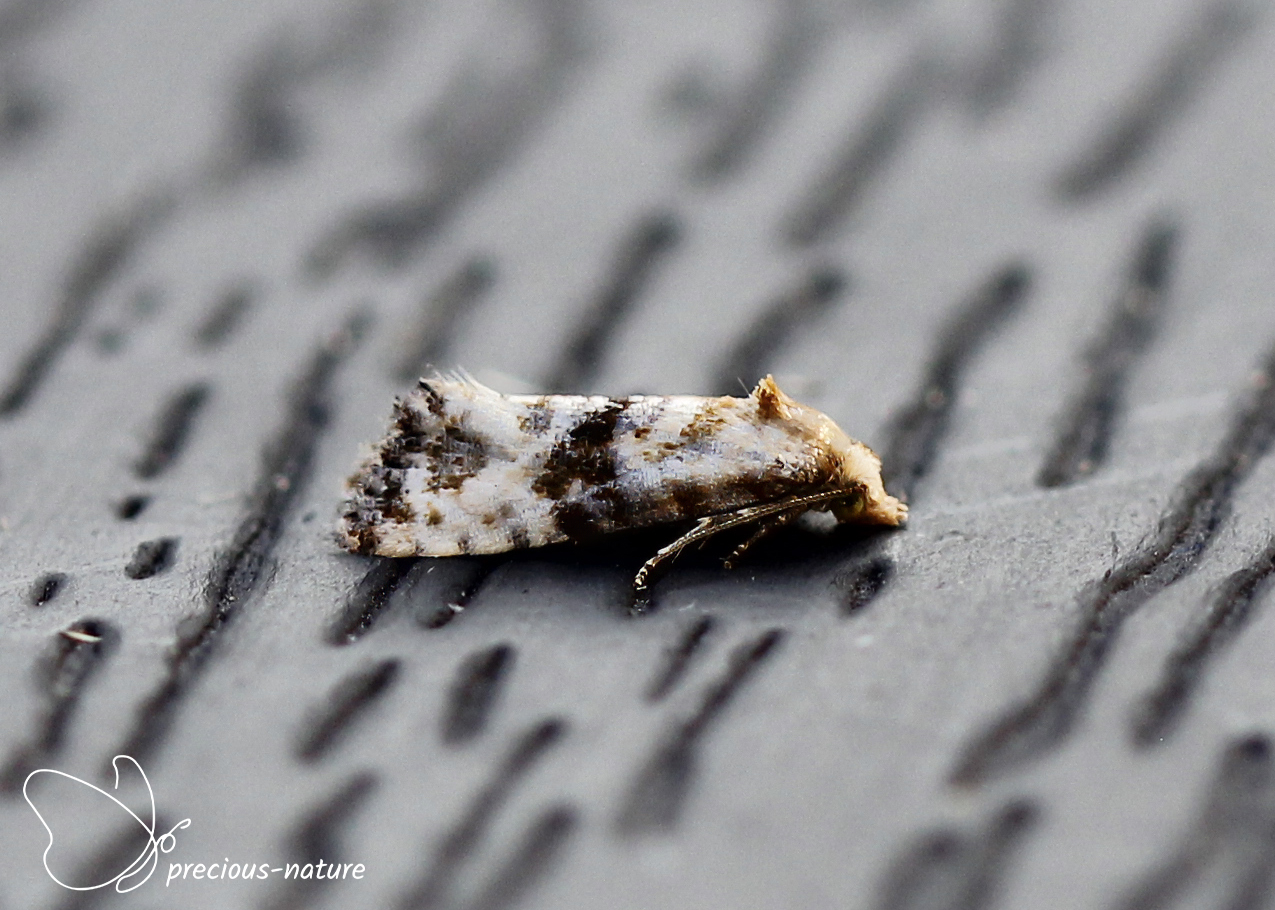
Dark-barred Straw – 2025 (NL)
(NCBI-index: 1.594304)
The forewing is creamy white with orange-brown spots. A dark transverse band runs from halfway along the inner edge to the centre of the wing, where it narrows and then continues to the leading edge. A brown to dark brown band runs along the trailing edge, with its intensity and width varying. The Dark-barred Straw (Eupoecilia angustana) resembles the Black-fronted Straw (Cochylis atricapitana), the White-faced Straw (Cochylis dubitana), and the White-fronted Straw (Cochylis hybridella), but all have an interrupted or incomplete transverse band. The flight period is one generation from May to September, and the wingspan is 10-15 mm. Host plant: Heather, Yarrow, Marjoram. Dutch name: Gewoon smalsnuitje. Frisian name: –
Flying period:
Tribe: Cochylini
Genus: Gynnidomorpha
Coast Conch – 2019 (NL)
(NCBI-index: 1.176455)
Leafrollers can be pretty challenging to identify, especially when species from a subfamily are very similar. For now, I will stick to a Coast Conch (Gynnidomorpha permixtana), but this micro moth can also be confused with the somewhat larger Fen Conch (Gynnidomorpha minimana). The Coast Conch has a cream-orange-brown forewing with dark brown or grey spots here and there, especially along the costa. There is an oblique dark cross band from 1/3 of the dorsal edge to near the costal edge, where it bends to halfway up the costal edge. The flying period spans two generations, from May to June and from the end of July to August, and the wingspan is 10-12 mm. Larvae could be found in the flowers and the seeds. Host plant: Red Bartsia. Dutch name: Ratelaarbladroller. Frisian name: –
Flying period:

Tribe: Cochylini
Genus: Neocochylis
White-faced Straw – 2024 (CH)
(NCBI-index: 2.769475)
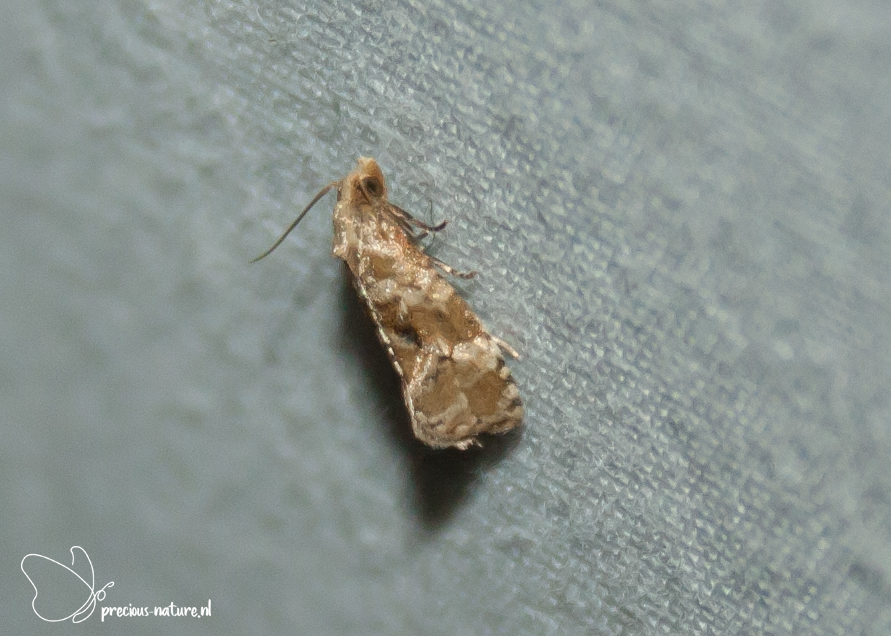
The White-faced Straw (Neocochylis dubitana) has, like the White-fronted Straw (Neocochylis hybridella), been transferred from the genus Cochylis to the genus Neocochylis. Both leafrollers look very similar, but a third similar leafroller, the Black-fronted Straw (Cochylis atricapitana), has not changed its genus name. The forewing is predominantly white with yellowish irregular spots. The wing root is grey-speckled black, just like the wing tip. A mark of the same colour can be seen along the trailing edge. Head, palps and thorax colours can distinguish the three leafrollers. The White-faced Straw has a white head and palps and a black thorax; in the White-fronted Straw, all these parts are white, and in the Black-fronted Straw, they are black. The flight period spans two generations, from May to September, and the wingspan ranges from 12 to 14 mm. Host plant: Ragwort, Hawkbeards, Perennial Sow-thistle. Dutch name: Blauwe distelbladroller. Frisian name: –
Flying period:
Tribe: Cochylini
Genus: Phalonidia
Loosestrife Conch – 2019 (NL)
(NCBI-index: 1.176460)
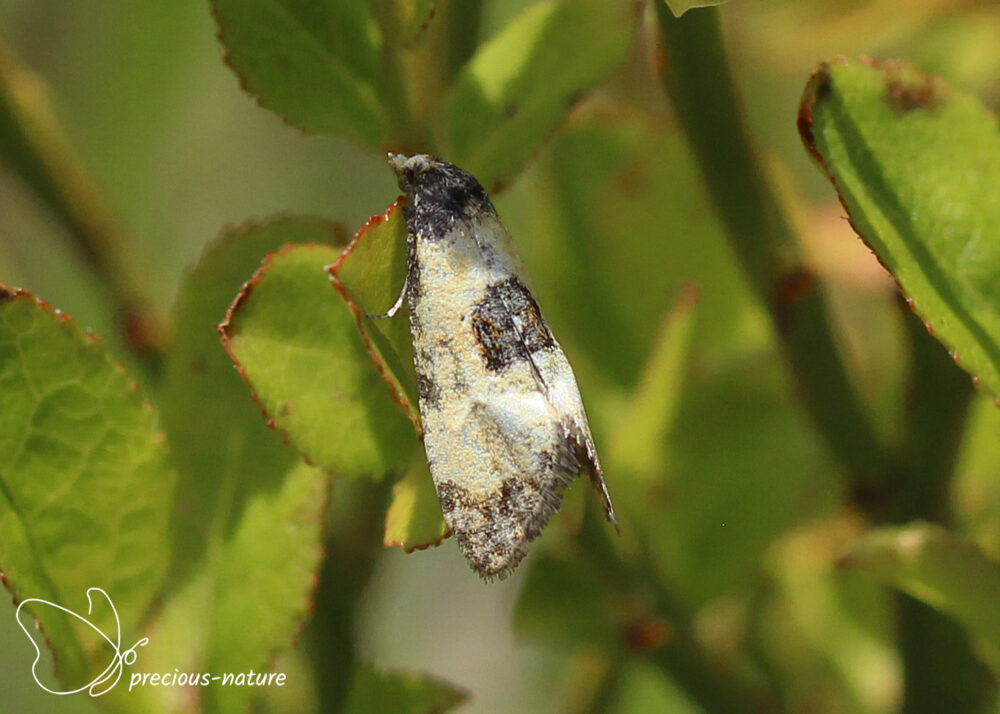
The Loosestrife Conch (Phalonidia udana) is difficult to identify. This leafroller is often confused with the Water-mint Conch (Phalonidia manniana). A genital examination is necessary to provide certainty. Based on the colours of the species that I have spotted, I think I am dealing with the Loosestrife Conch. On the predominantly light brown-white forewing, a light brown transverse band starts halfway from the costa, which kinks after 1/3 and turns into a dark brown band. Near the apex is a light brown transverse band that runs diagonally toward the dorsum. The Water-mint Conch often gives a darker and more colourful impression. The flying period is from April to August, and the wingspan is 10-14 mm. Host plant: Reed. Dutch name: Wederikbladroller. Frisian name: –
Flying period:


Tribe: Cochylini
Genus: Phalonidia
Aster Straw – 2025 (NL)
(NCBI-index: 1.176456)
The characteristic feature of the Aster Straw (Phalonidia affinitana) is the diagonal dark transverse band on the otherwise straw-yellow forewing. This dark transverse band runs from the inner margin to halfway down the wing. A black line sometimes borders the inner margin. A dark spot is visible at the inner margin corner, even in poorly marked specimens. The flight period is one generation from May to August, and the wingspan is 11-14 mm. Host plant: Sea Aster. Dutch name: Zultebladroller. Frisian name: –
Flying period:
Tribe: Cochylini
Genus: Pseudoargyrotoza
Yellow-spot Twist – 2017 (NL)
(NCBI-index: 1.101037)
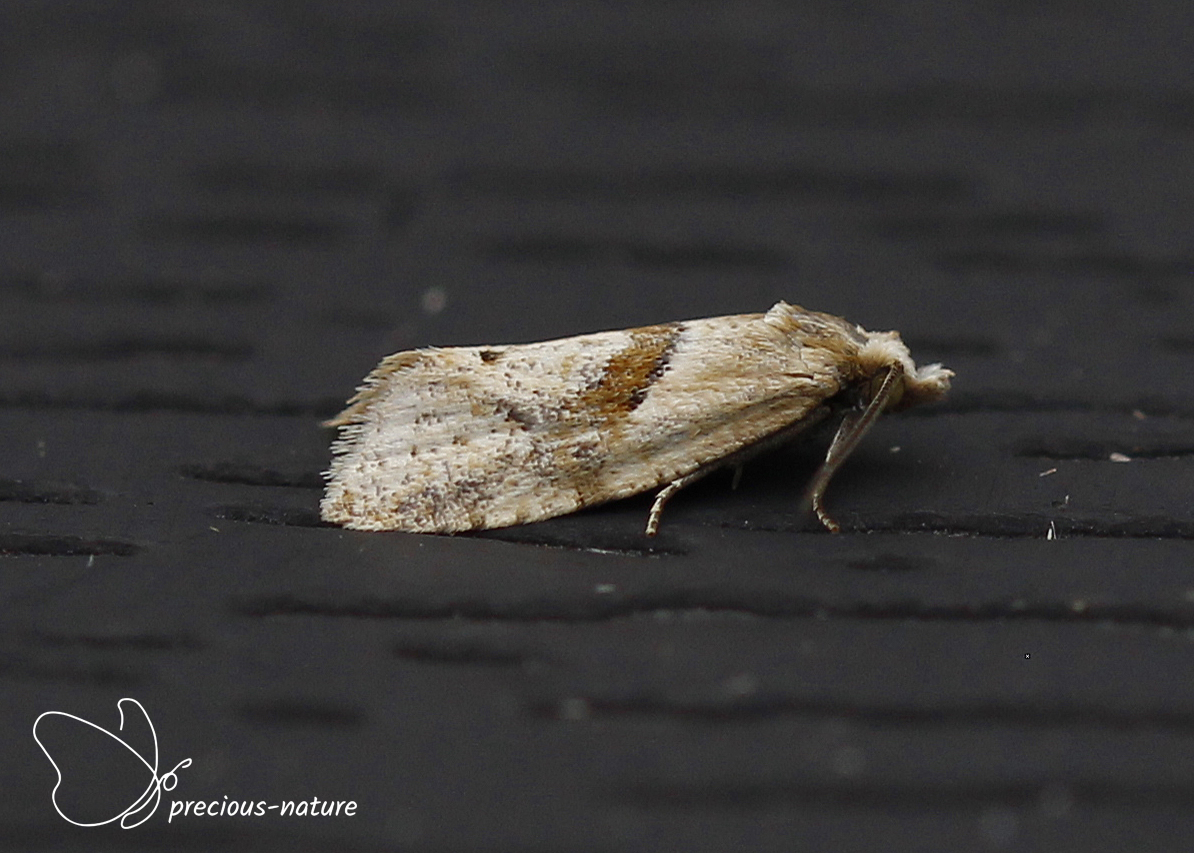
The Yellow-spot Twist (Pseudargyrotoza conwagana) is a small yellow-brown leafroller with a striking light yellow spot visible when resting. Furthermore, the small silver-grey spots that form the transverse lines stand out. The flight time is from May to July and can be admired during the day. The wingspan is 11-15 mm. Larvae feed on seeds or berries. Host plant: Privet, Ash. Dutch name: Zilvervlekbladroller. Frisian name: –
Flying period: