No international consensus exists on the Apameini taxonomic hierarchy. Based on morphological characteristics, some scientists still classify this tribe under the subfamilies Hadeninae or Xyleninae, both within the owlet moths (Noctuidae). Modern classifications place this group as a tribe under the Noctuinae. On this website, the classification follows the National Centre for Biotechnology Information (NCBI) database as a starting point.
The Apameini comprise more than 800 species worldwide, distributed across at least 70 to 93 genera, and are found primarily in grassy, wet environments. Most caterpillars are true endophagous larvae and exhibit behaviour involving burrowing into a stem or rhizome. Some species focus primarily on young grasses, completely eating through the stems just below or at the soil surface, causing them to fall over or die.
Genus: Amphipoea
Saltern Ear – 2017 (NL)
(NCBI-index: 1.219315)
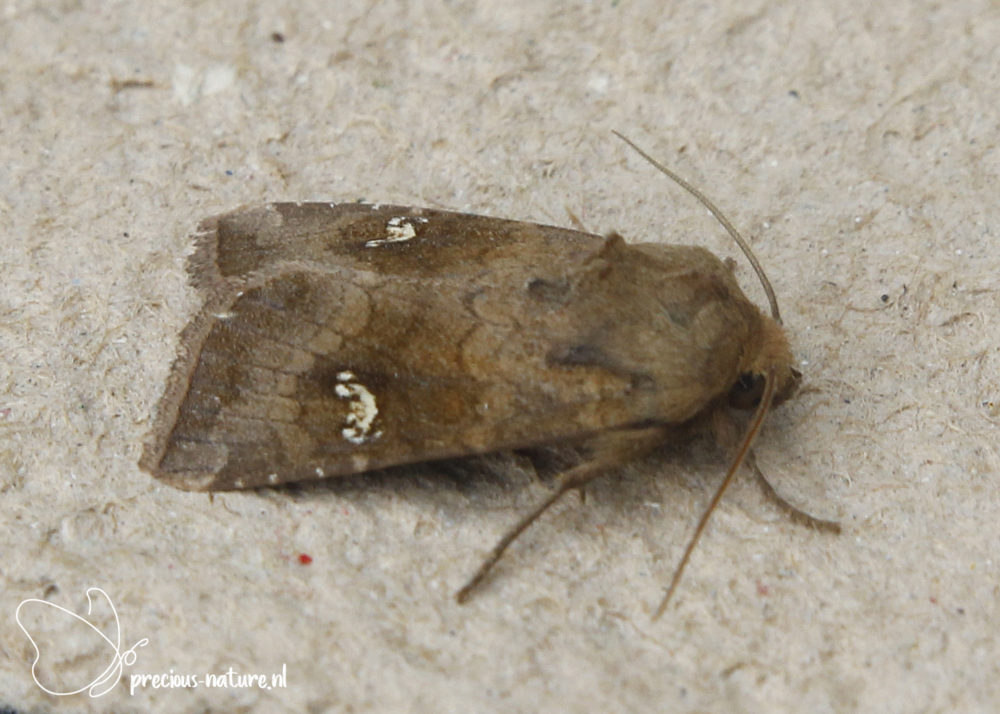
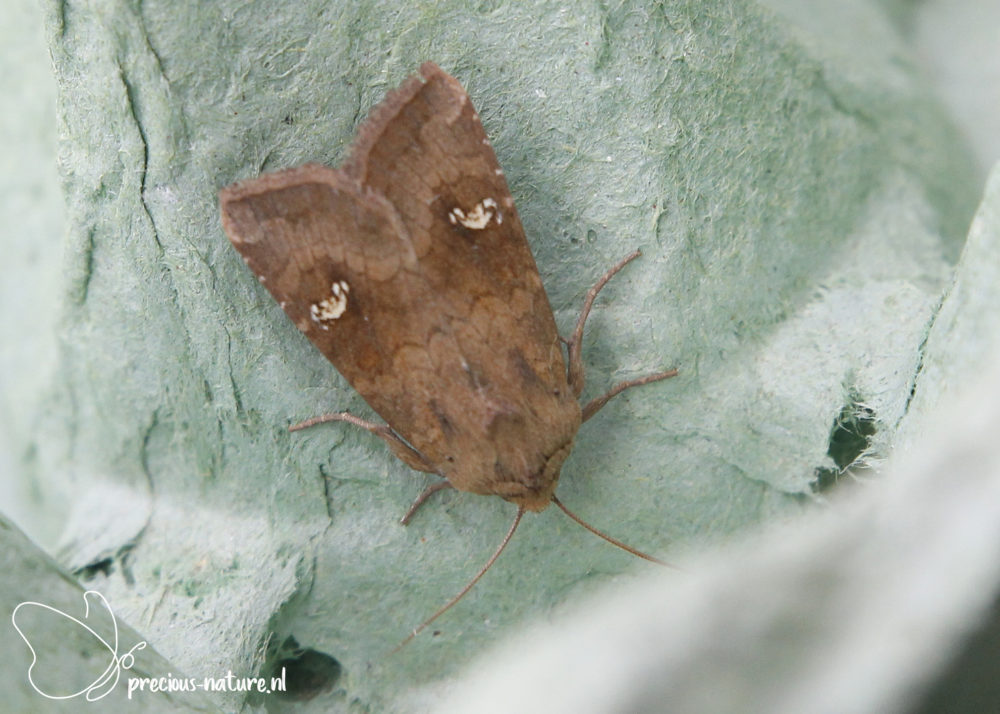
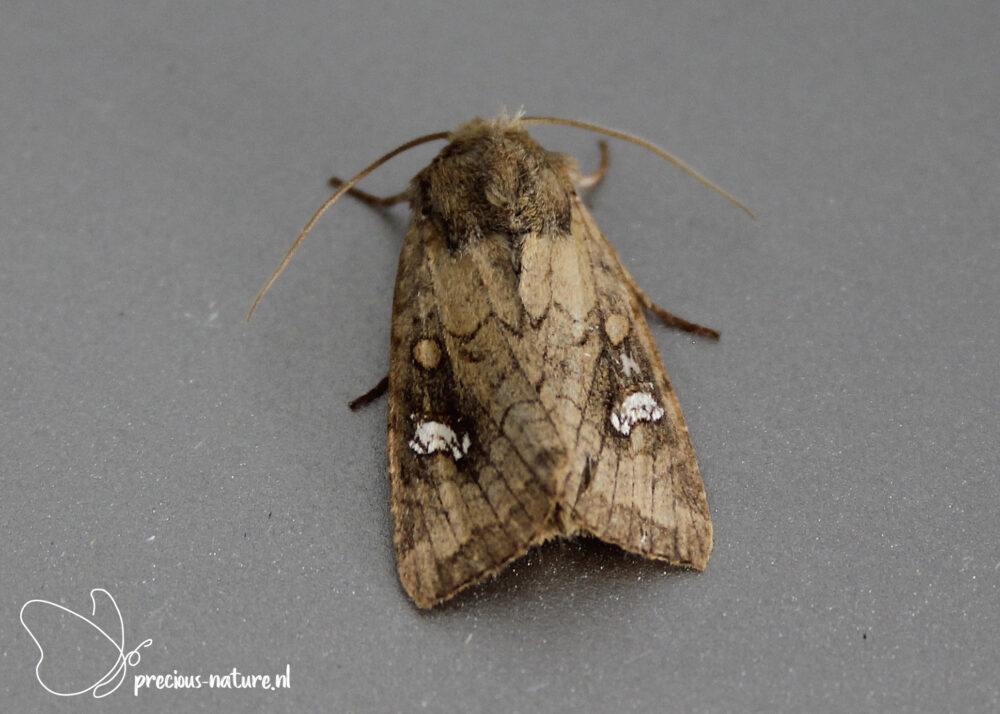
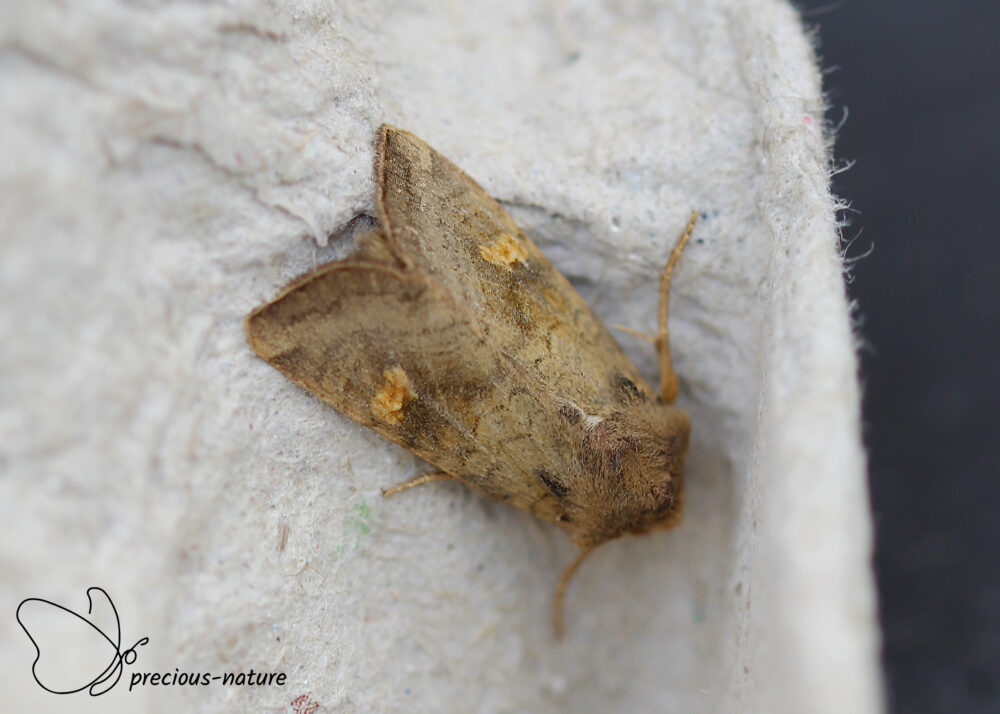
The Saltern Ear (Amphipoea fucosa) is one of the three Amphipoea species recorded in the Netherlands. Characteristic is the large number of thin black cross lines that vary in intensity. The kidney mark is yellow, orange, or white and is noticeable. The base colour of the wings is light yellow-brown. The biotope where the species has been observed may support the determination. The Saltern Ear is mainly found in more or less moist grasslands in the coastal region and locally inland (river area). It flies in one generation from July to October, and the wingspan is 29-35 mm. Host plant(s): various grasses. Dutch name: Weidevlekuil. Frisian name: Gielbrún flekûltsje.
Flying period:

Genus: Apamea
Dark Arches – 2008 (NL)
(NCBI-index: 875885)
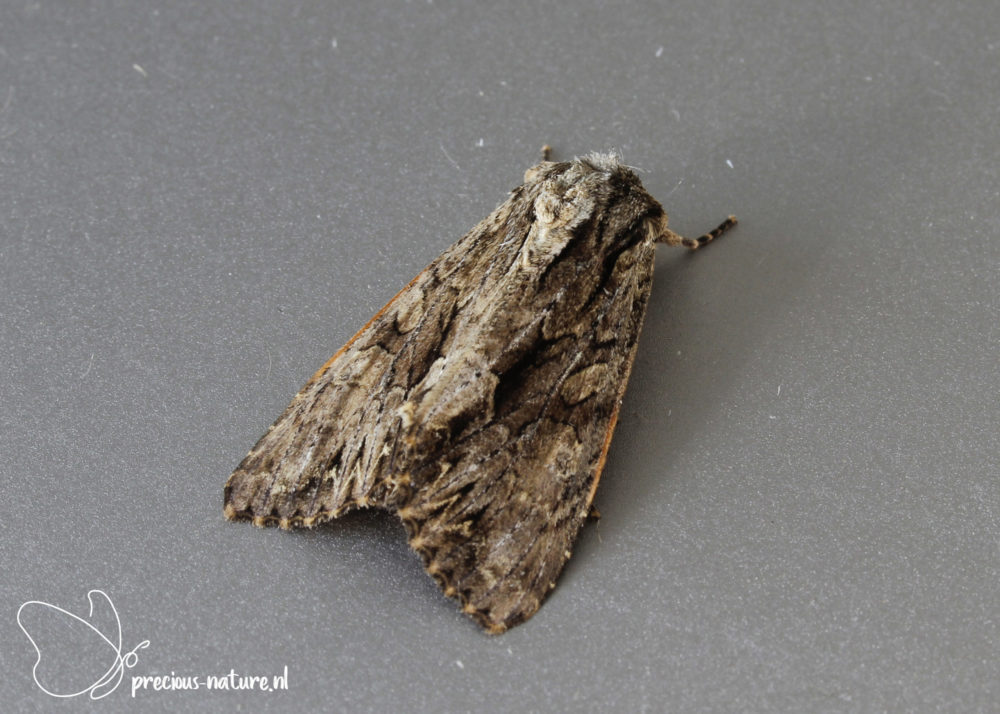
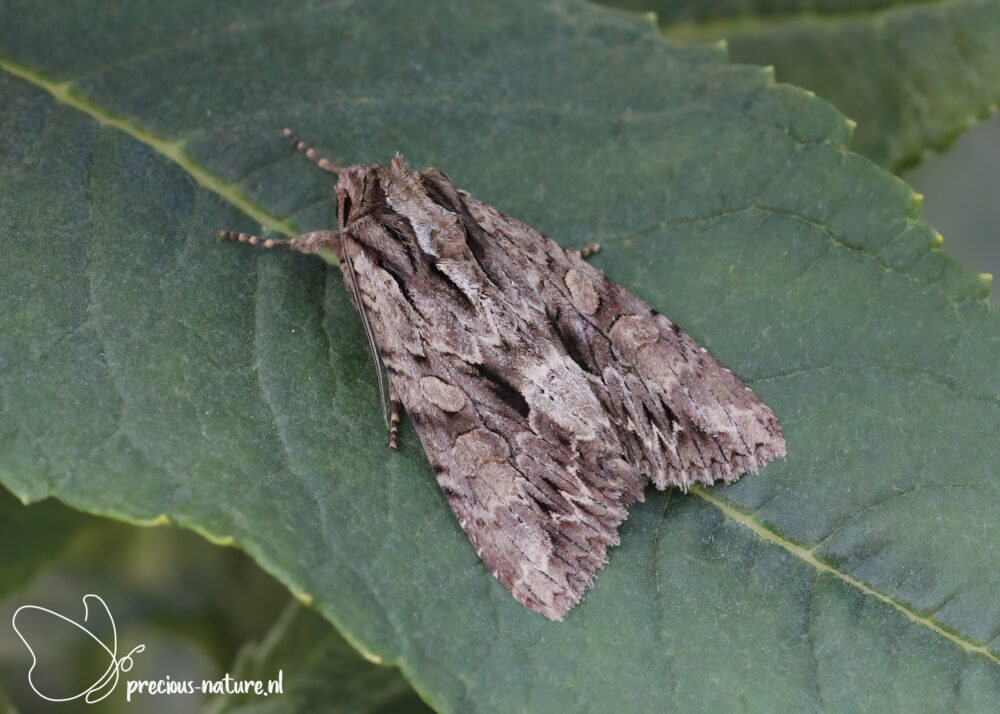
The Dark Arches (Apamea monoglypha) is somewhat larger than its counterparts. The top of the forewing is grey-brown or grey-yellow, and the owl marks are visible. The oval mark is elongated and slopes upwards. In the light wave line near the termen of the forewings, a ‘W’ can be recognised, and on the top of the chest piece, there are two dark V-shaped lines. It flies in one generation from June to September, and the wingspan is 38-52 mm. Host plant(s): Common Couch, Cock’s-foot. Dutch name: Graswortelvlinder. Frisian name: Gerswoartelûltsje.
Flying period:


Genus: Apamea
Clouded-bordered Brindle – 2018 (NL)
(NCBI-index: 753153)
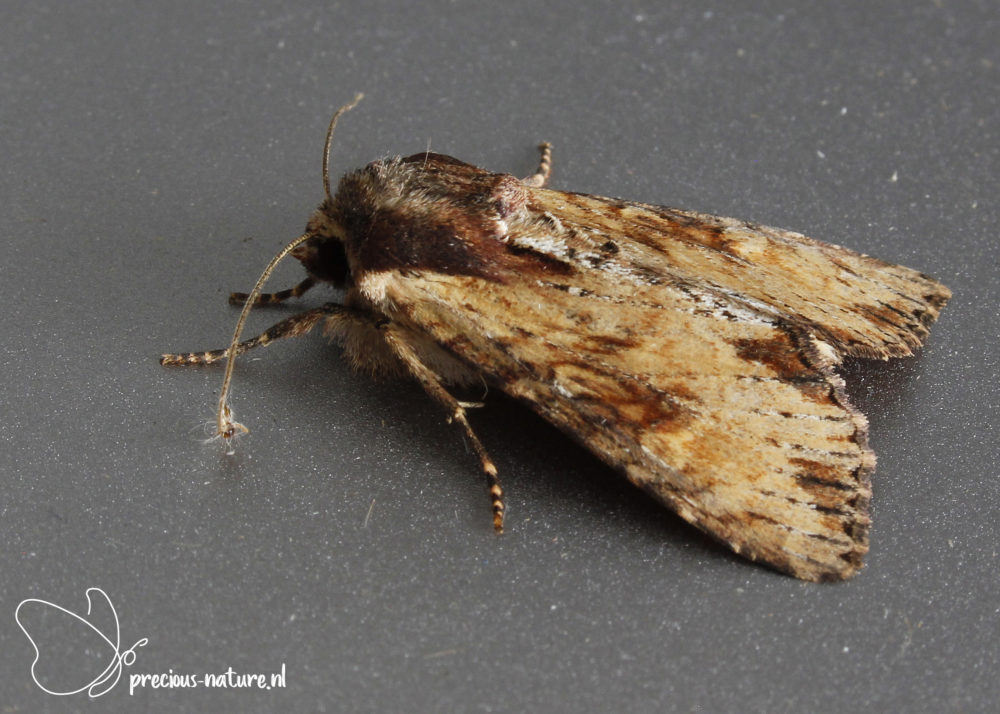
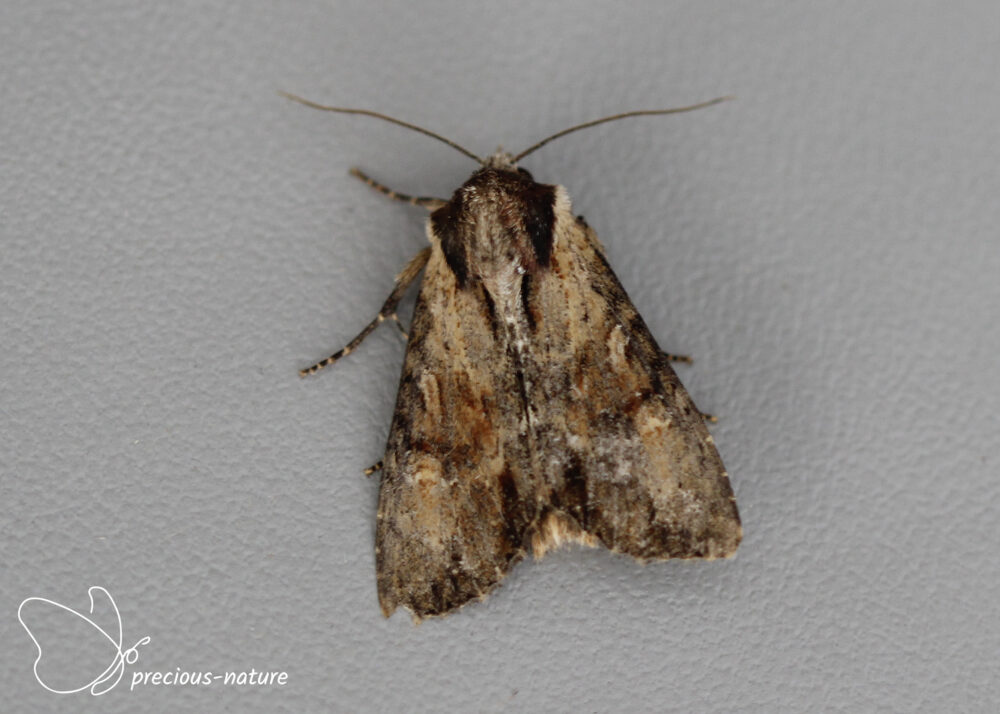
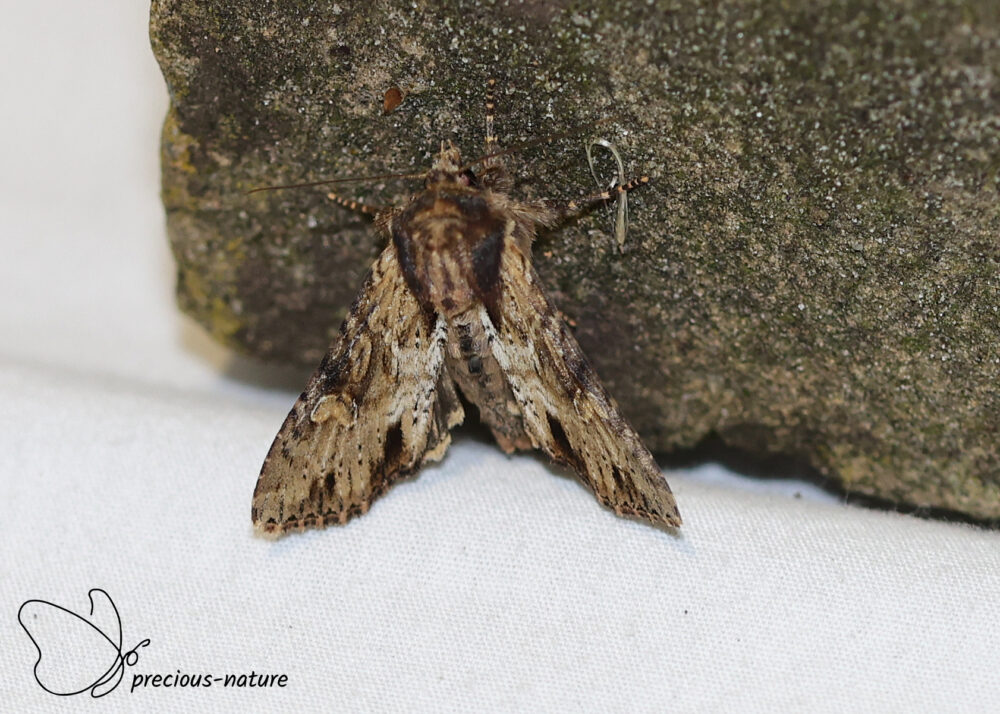
The Clouded-bordered Brindle (Apamea crenata) is a variable species with two distinct colour forms. One colour is light yellow to brown, with a slightly red- or grey-tinted forewing. Striking are the dark brown, broad shoulders that run into two black stripes at the inner edge of the wing. In a resting position, the two black stripes seem to converge. Several reddish-brown spots and streaks are visible along the costa. Reddish-brown toothed spots also appear on the costa. The other colour form has a reddish-brown forewing that is drawn quite smoothly and only shows the yellowish-outlined kidney and oval mark. The flight period is from the end of April to mid-July in one generation, and the wingspan is 36-44 mm. Host plant(s): various grasses. Dutch name: Variabele grasuil. Frisian name: Fariabel gersûltsje.
Flying period:


Genus: Apamea
Small Clouded Brindle – 2019 (NL)
(NCBI-index: 689062)
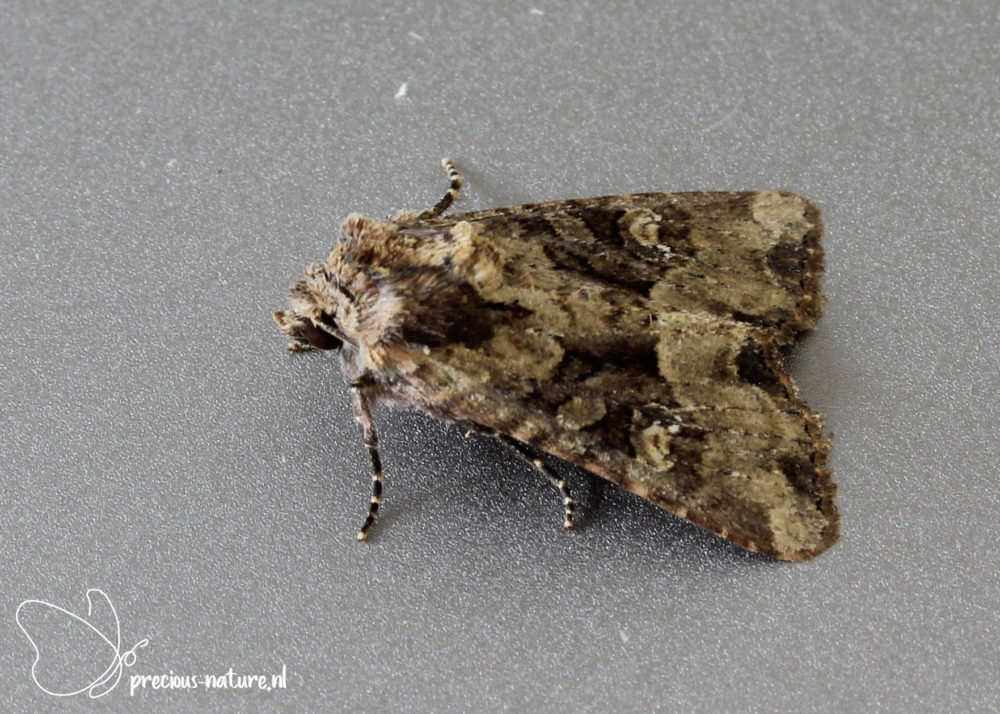
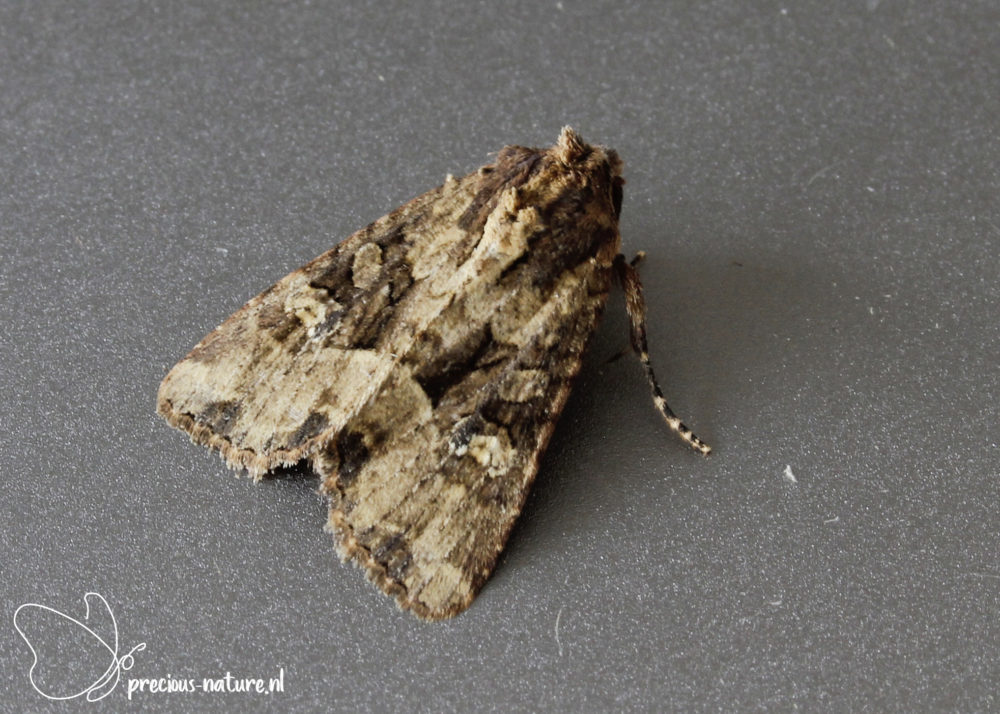
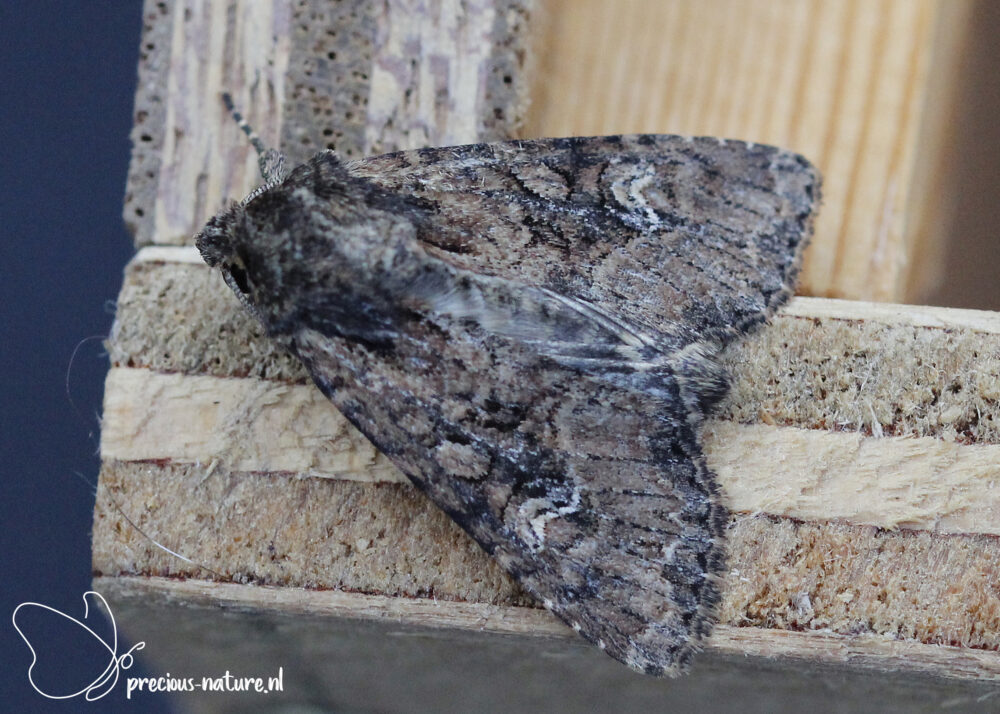
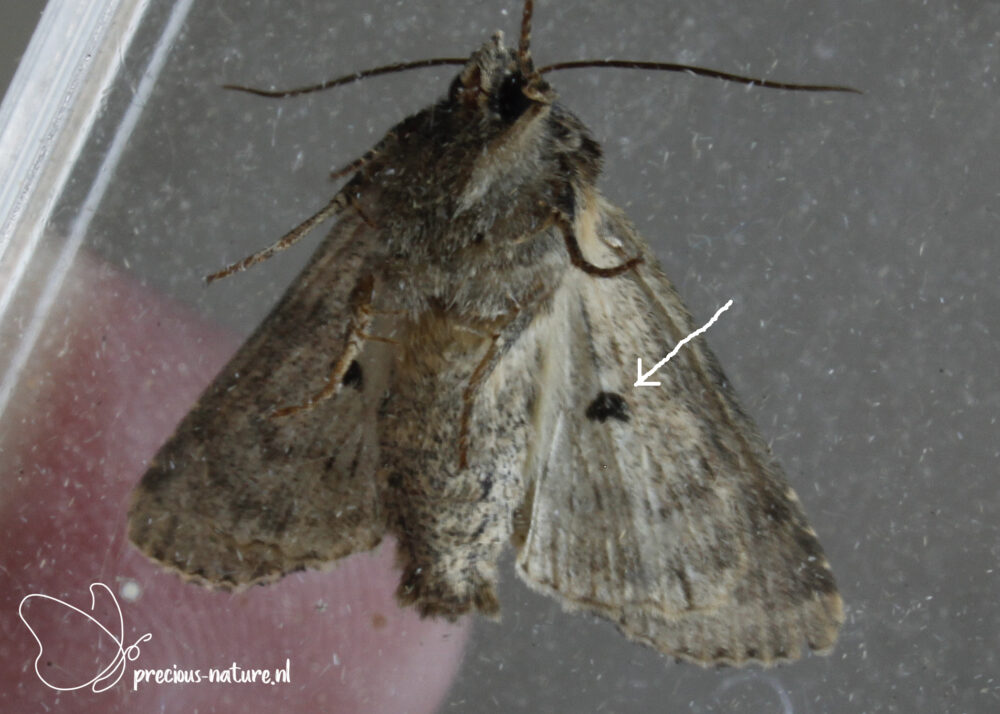
A smaller Apamea species is the Small Clouded Brindle (Apamea unanimis). This owlet moth is recognisable by the always visible white border on the hollow part of the kidney mark. The forewing has a light to dark, reddish-brown or olive-brown colour and a variable, sometimes rough, marbled appearance. There are two black stripes at the base, one in the centre and one near the dorsum. The stripe in the centre and the blackish side of the shoulder form a striking, bold black smudge. On the hindwing, a clear crescent-shaped spot is missing from other Apamea species. The flight period is from early May to mid-July, and the wingspan is 30-38 mm. Host plant(s): grasses, Reed-canary Grass. Dutch name: Rietgrasuil. Frisian name: –
Flying period:


Genus: Apamea
Rustic Shoulder-knot – 2019 (NL)
(NCBI-index: 689061)
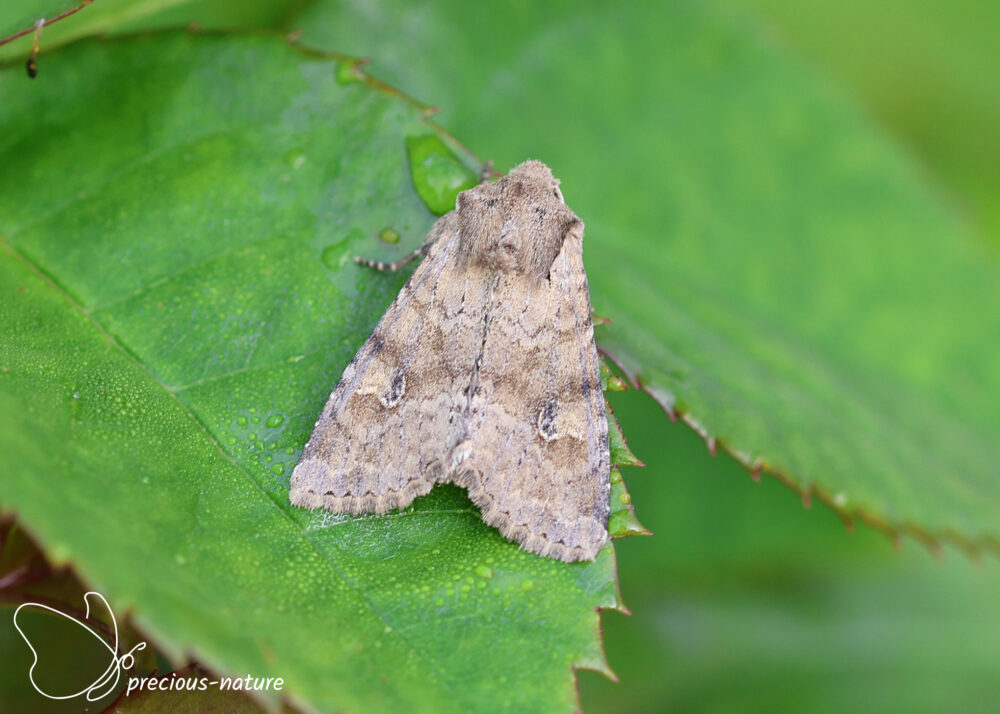
The most characteristic of the Rustic Shoulder-knot (Apamea sordens) is the usually slightly branched black streak at the base of the forewing. The forewing is relatively broad, sand-coloured, or greyish-brown and has a pointed apex. The oval and kidney marks are pretty large, and the kidney mark is often largely or entirely outlined in white. A reddish spot can sometimes be seen in the marginal area. The flight period is from the end of April to the end of July in one generation, and the wingspan is 34-42 mm. Host plant(s): various grasses, including Cock’s-foot. Dutch name: Kweekgrasuil. Frisian name: –
Flying period:
Genus: Apamea
Light Arches – 2021 (NL)
(NCBI-index: 987881)
The Light Arches (Apamea lithoxylaea) is a fairly light, sparsely marked owlet moth. The wings are light straw yellow and are finely drawn with dark brown to black-brown lines and dots. A pair of transverse lines, formed by small dark dots, runs across the pointed forewing. The hindwing has no transverse lines but does have an anal angle. The wing shape, the light-coloured thorax, and the lack of the transverse line on the hindwing distinguish this owlet moth from the Reddish Light Arches (Apamea sublustris). The wingspan is 43-50 mm, and the flight period is one generation from June to September. Host plant(s): various grasses. Dutch name: Bleke grasworteluil. Frisian name: –
Flying period:
Genus: Helotropha
The Crescent – 2018 (NL)
(NCBI-index: 987462)
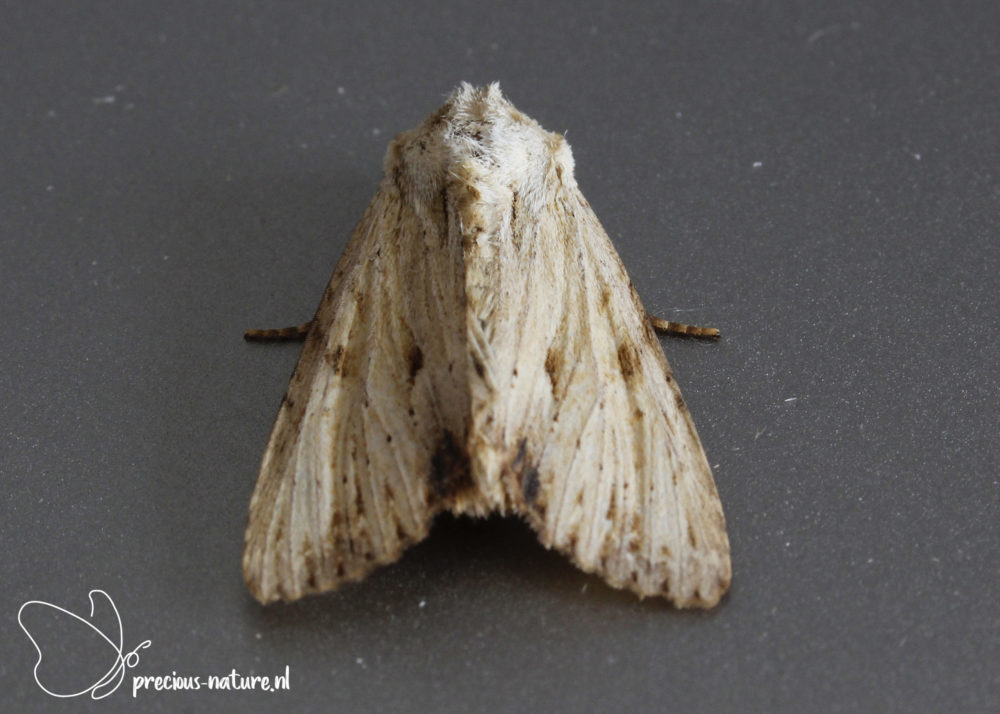
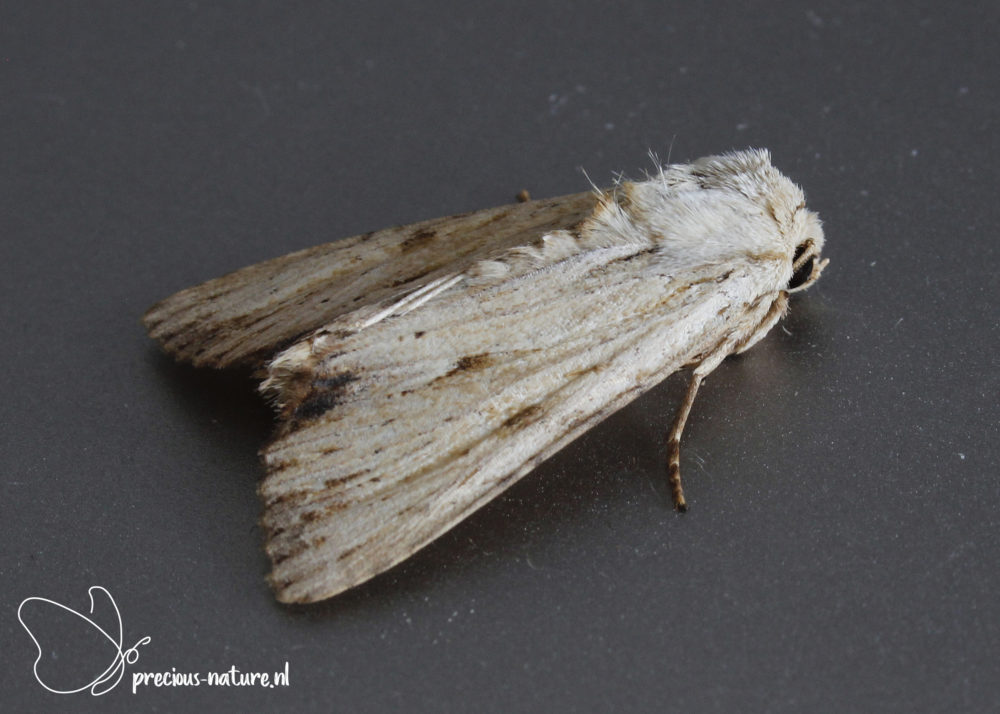
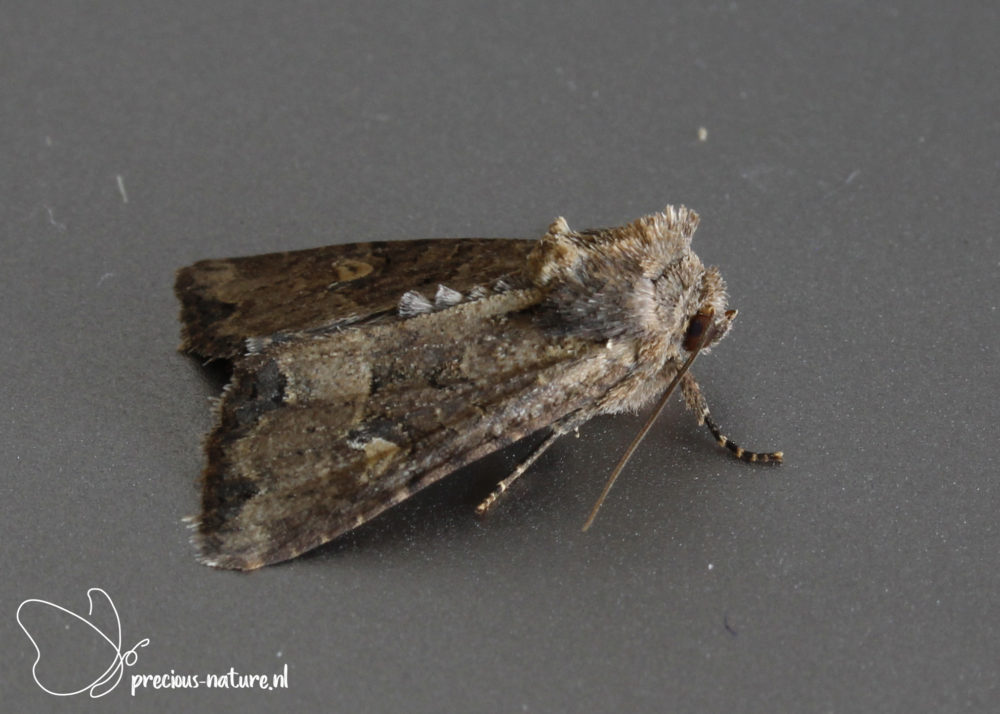
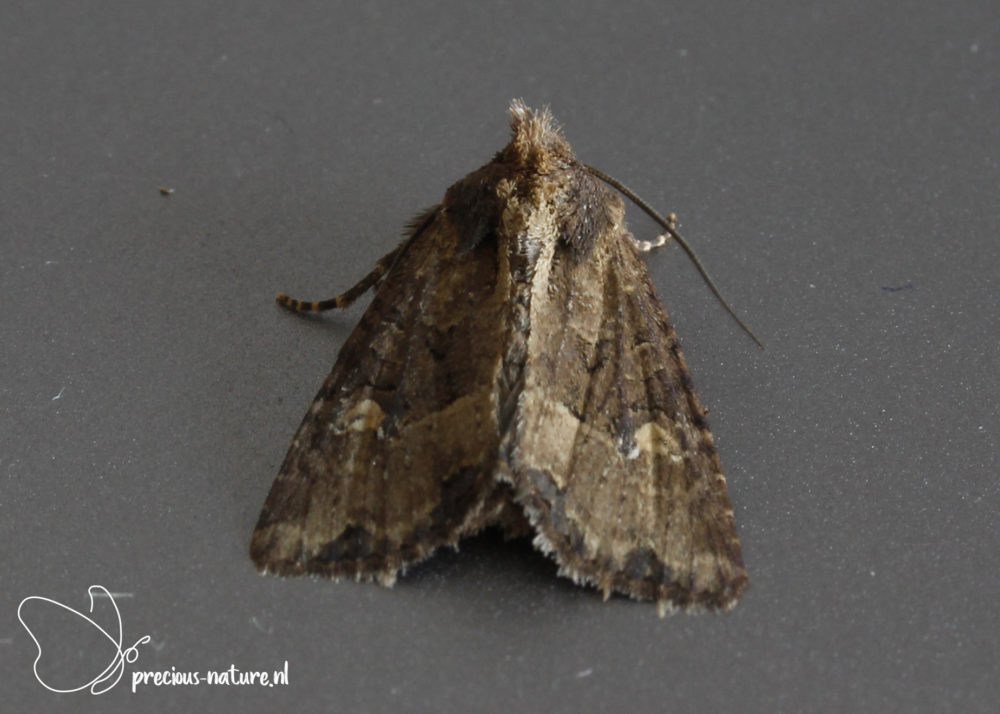
The first specimen I spotted of the Crescent (Helotropha leucostigma) was a bit of a puzzle because it was already somewhat faded. This owlet moth’s costa and termen form a somewhat right angle. The top of the forewing is chocolate brown or reddish, and the kidney mark is quite strikingly white. Some specimens are drawn smoothly, but others show clearly veined white veins, as in my first specimen. In addition, a remarkably light band often appears in the marginal area, with a straight inner edge. This owlet moth flies in one generation from June to early October, and the wingspan is 37-44 mm. Host plant(s): Yellow Flag. Dutch name: Gele lisboorder. Frisian name: Barchjeblomboarder.
Flying period:

Genus: Hydraecia
Rosy Rustic – 2018 (NL)
(NCBI-index: 214171)
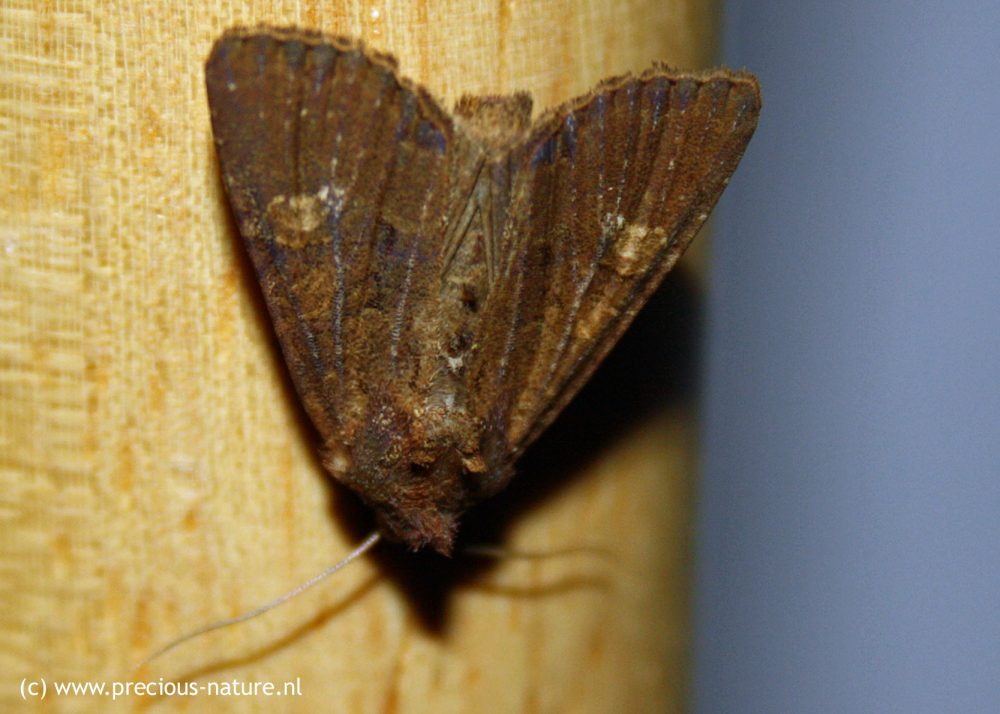
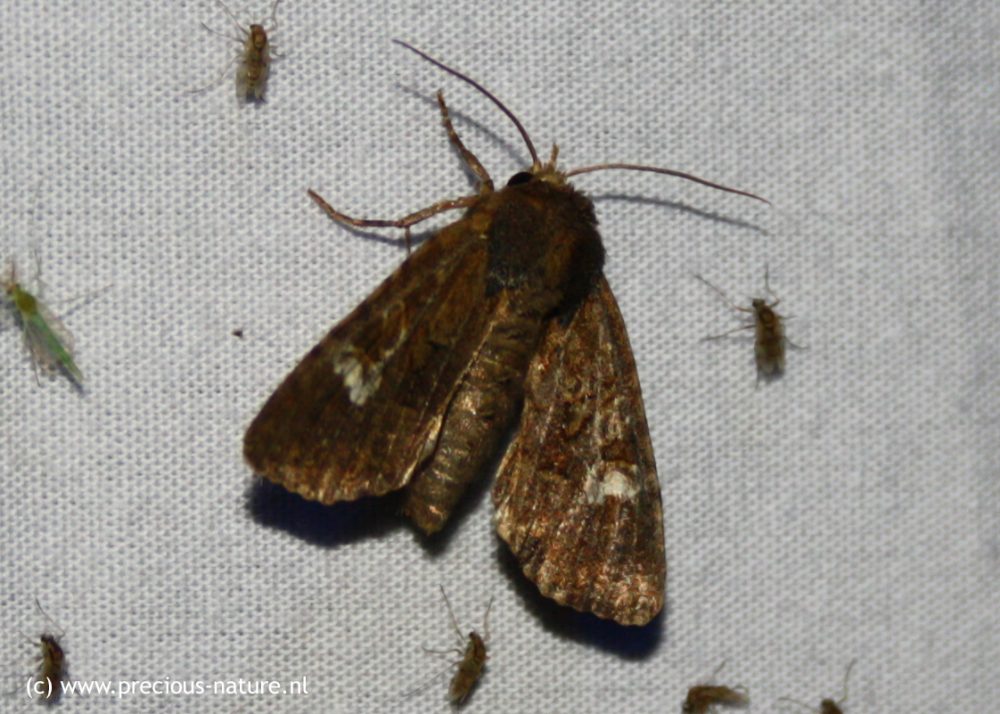
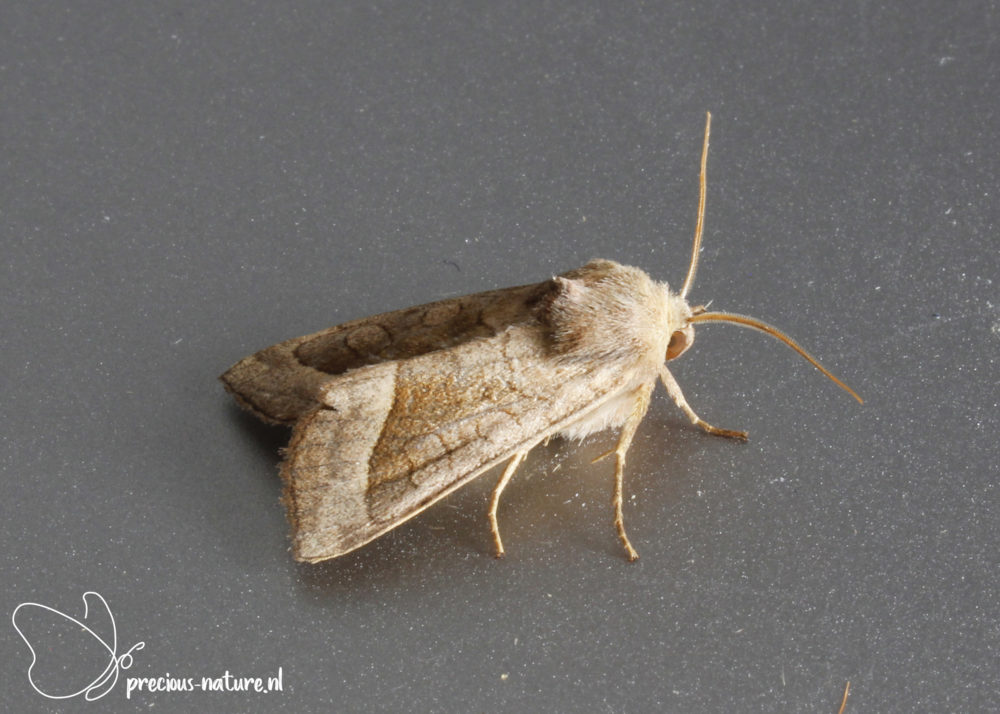
With the bluish light of the UV lamp I use to attract moths, you sometimes don’t see everything. I often shine a flashlight to see if I am dealing with a new species. Then you suddenly notice a Rosy Rustic (Hydraecia micacea) sitting unobtrusively on a yellow brick that holds the canvas in place. This yellow-coloured, sometimes pinkish-brown, owlet moth has two dark central transverse lines on the front wing. The inner is irregular and has a striking kink at the dorsum. The outer transverse line runs diagonally across the wing and sharply turns at the costa towards the base. The part between the two transverse lines is darker than the rest of the wing. The oval and kidney marks are darkly rimmed. The flying period is one generation, from July to November. The wingspan is 28-45 mm. Host plant(s): various low plants, such as dock. Dutch name: Aardappelstengelboorder. Frisian name: –
Flying period:



Genus: Lateroligia
Double-lobed – 2020 (NL)
(NCBI-index: 688364)
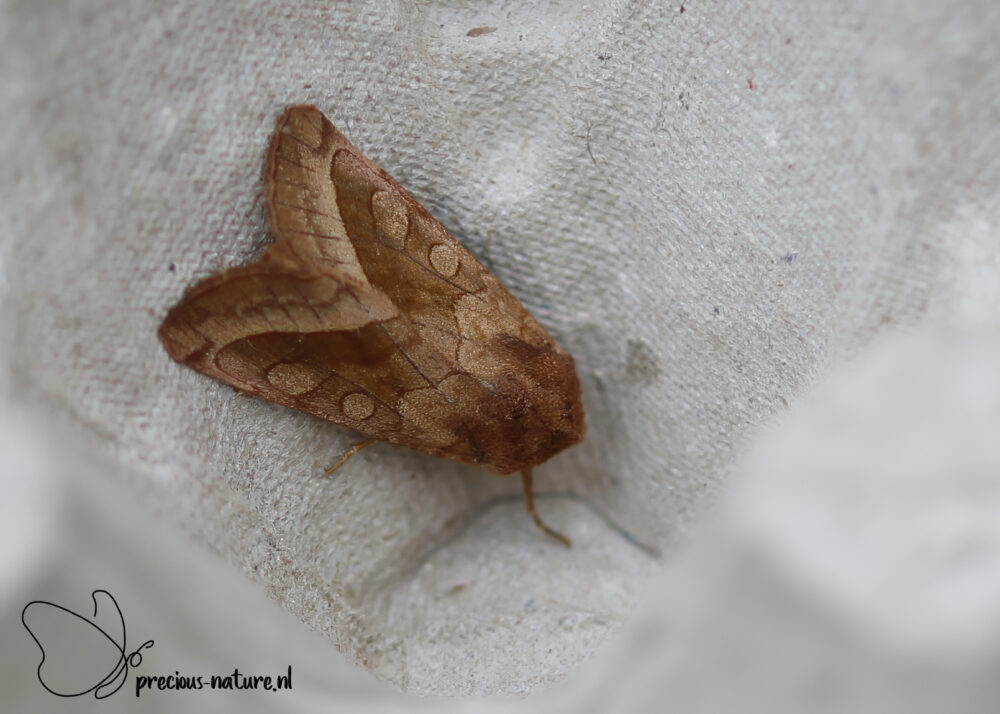
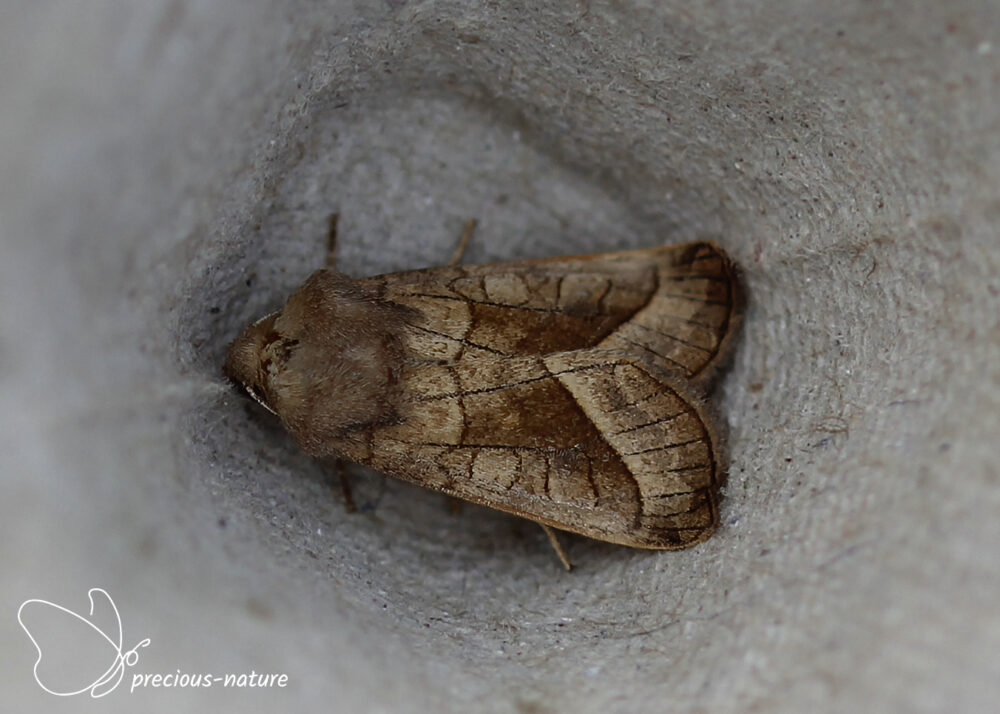
The Double Lobed (Lateroligia ophiogramma, alternatively Apamea ophiogramma) is a slender-built owlet moth with a sand-colored or light reddish-brown forewing. Key features include a reddish-brown to dark brown field along the costa. The field consists of oval and light-coloured kidney marks and ends in a broad, black-edged lob that runs into the midfield. Some specimens are almost entirely dark brown, but the dark lob is still clearly visible in these forms. The wingspan is 32-35 mm, and the flight period runs from June to mid-August for one generation. Host plant(s): Reed grass, Grain grass. Dutch name: Moerasgrasuil. Frisian name: Sompegersûltsje.
Flying period:

Genus: Luperina
Flounced Rustic – 2020 (NL)
(NCBI-index: 988174)
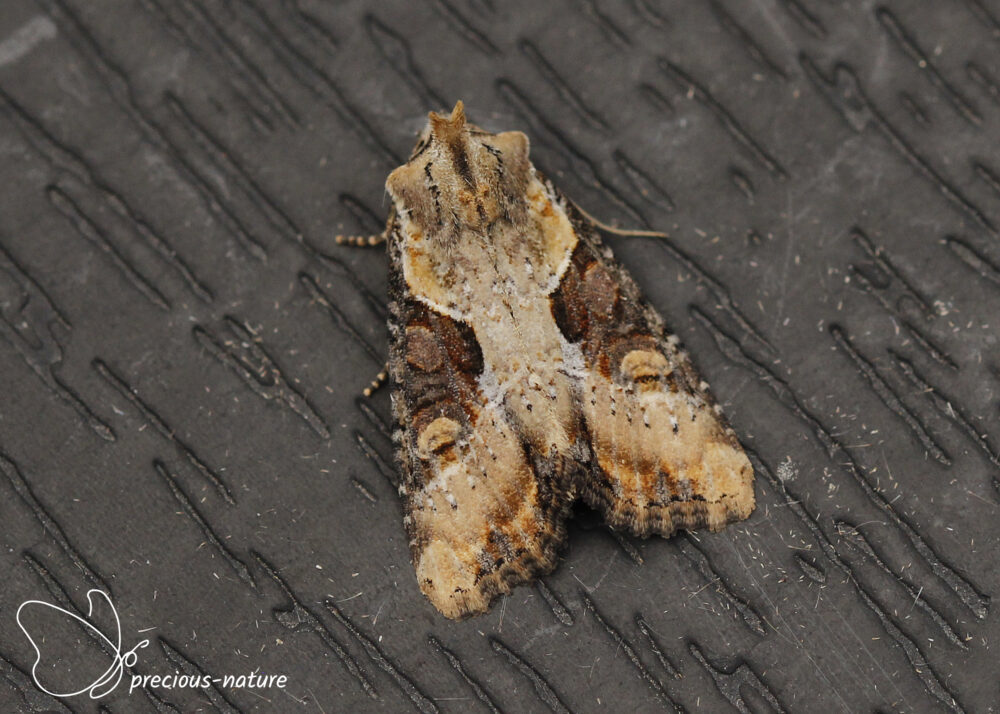
The Flounced Rustic (Luperina testacea) is an owlet moth variable in size, width, and colour. The drawing on the forewing is pretty constant. The kidney and oval marks are usually partially black-edged, and the black median lines mark the dark midfield. The colour of the forewing varies from dull straw-coloured, through light and dark brown to blackish brown, usually with a slight speckling. The hindwing is white or sometimes grey and slightly translucent, showing the light brown veins. The wingspan is 30-35 mm, and the flight period runs from July to early October for one generation. Host plant(s): various grasses. Dutch name: Gewone grasuil. Frisian name: Gewoane gersûltsje.
Flying period:
Genus: Mesapamea
Common Rustic – 2017 (NL)
(NCBI-index: 988129)
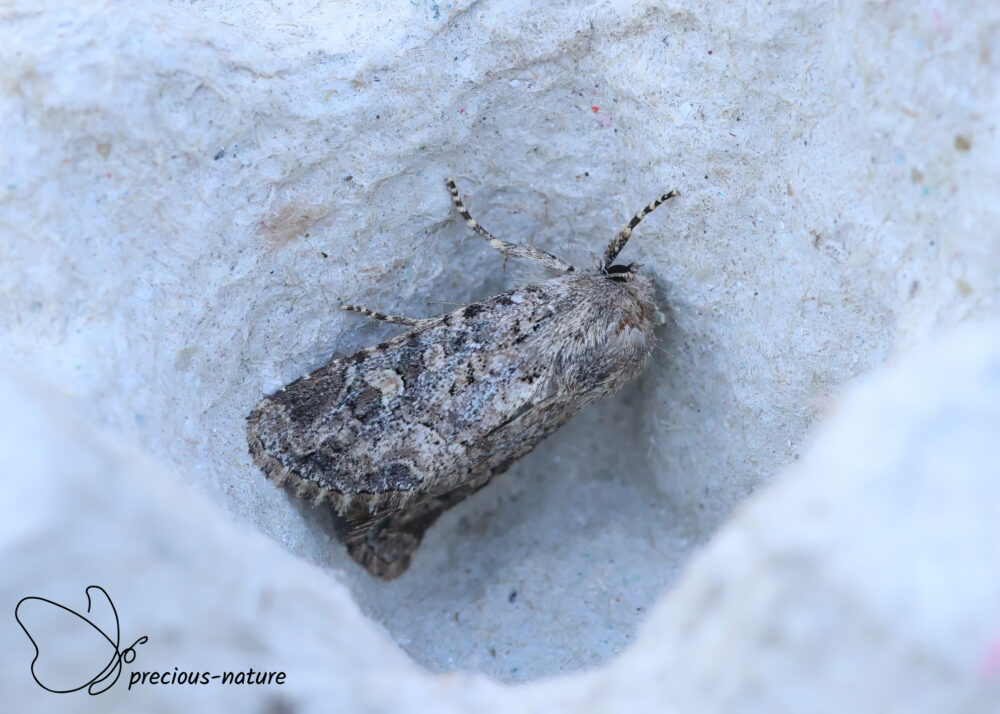
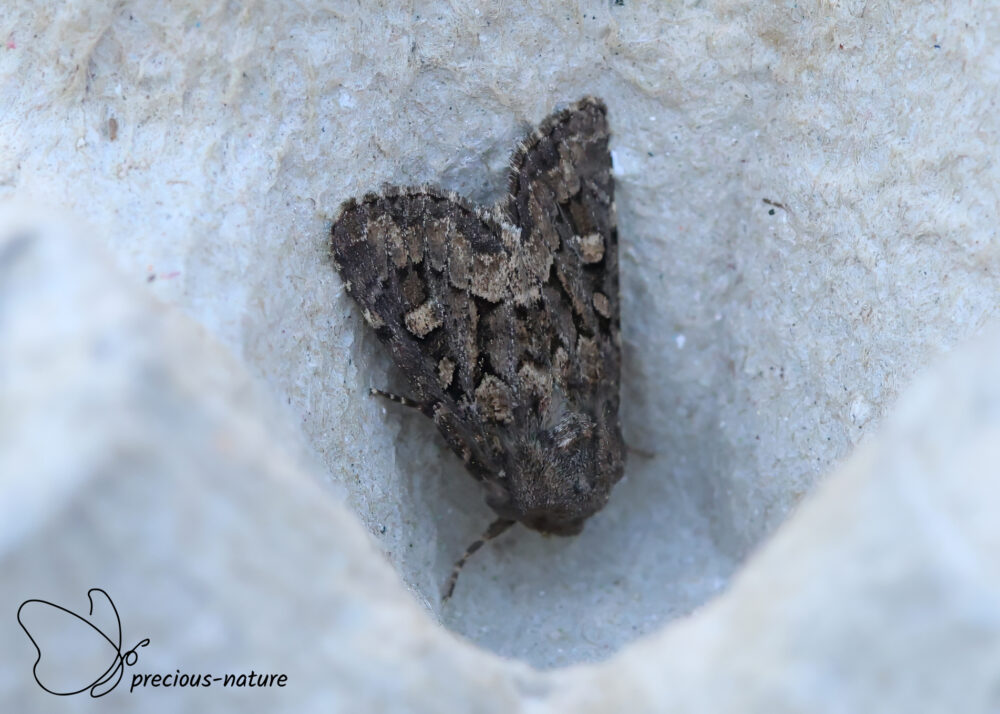
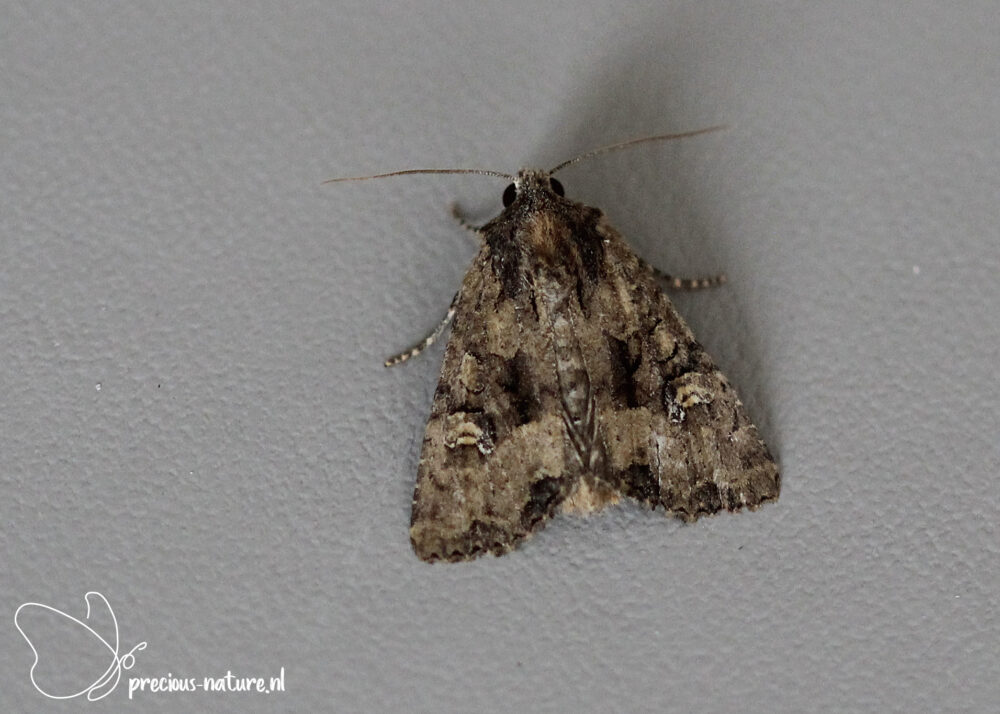
An owlet moth with many variations in colour, from light to dark, is the Common Rustic (Mesapamea secalis). The forewing has a rounded back edge and a blunt apex. The kidney mark, sometimes predominantly white to cream-coloured, has a clear white outline. The median lines vary in intensity and are sometimes connected by a black stain. Some specimens have a relatively recognisable and even appearance, while others are blotchy. It is almost indistinguishable from the Lesser Common Rustic (Mesapamea secalella). Very dark specimens with a chalk-white kidney mark usually belong to the Lesser Common Rustic, and on average, this species is slightly smaller. Specimens with a pronounced white marking on the forewing always belong to the Common Rustic. In most cases, genitalia research is needed. The flying period spans one generation, from May to September, and the wingspan ranges from 24 to 32 mm. Host plant(s): Cock’s-foot, Tall Fescue, Tufted Hair-grass, and cereal crops. Dutch name: Halmrupsvlinder. Frisian name: –
Flying period:


Genus: Oligia
Tawny Marbled Minor – 2018 (NL)
(NCBI-index: 988008)
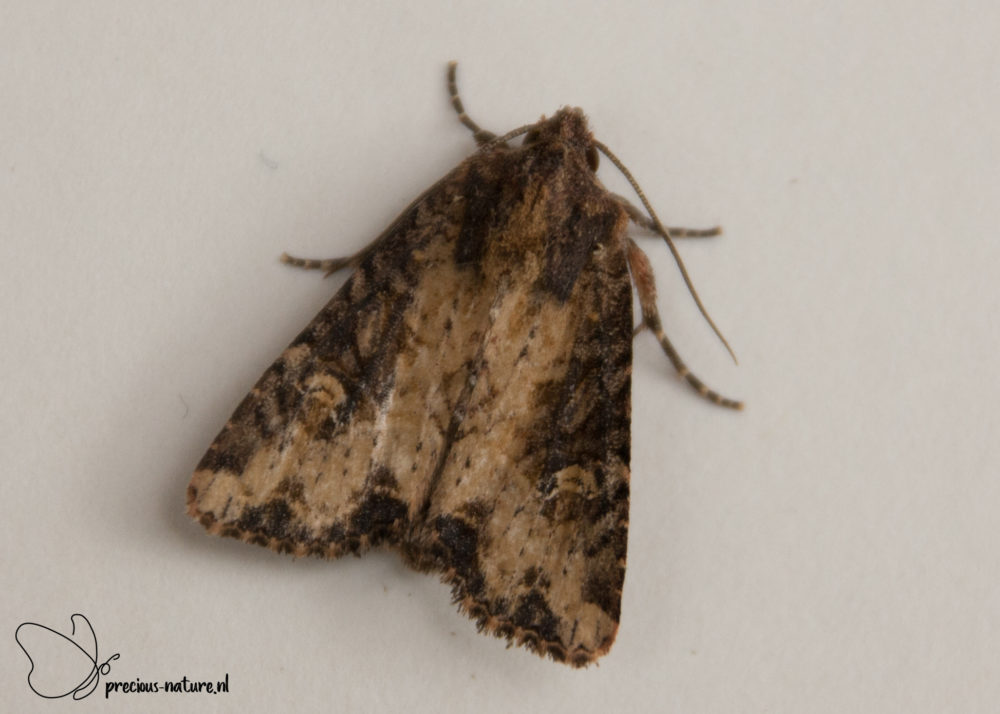
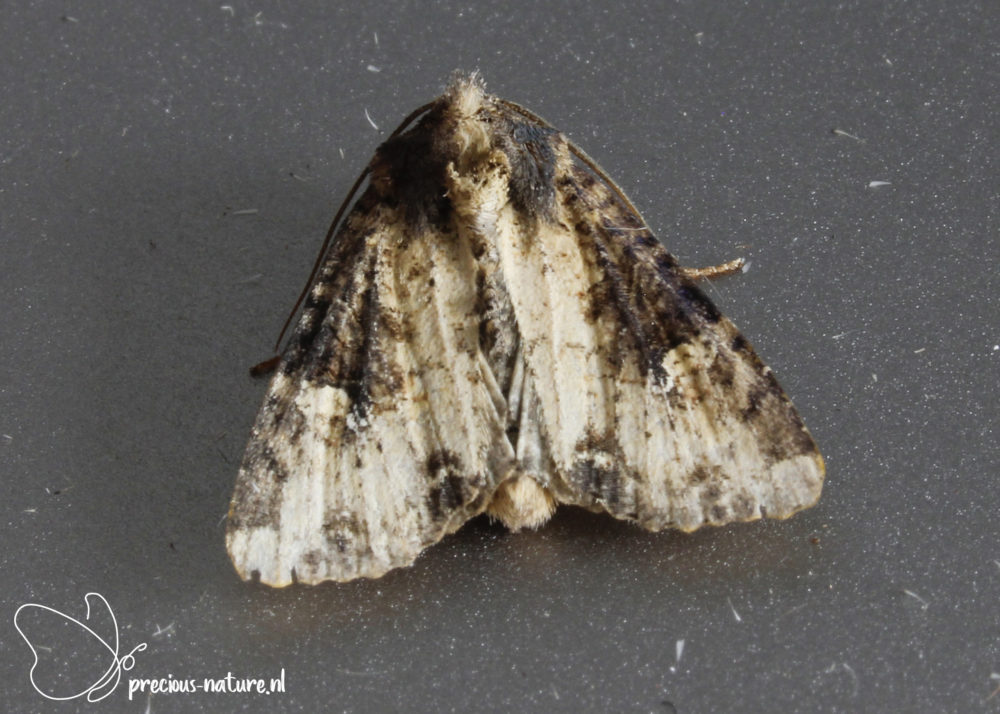
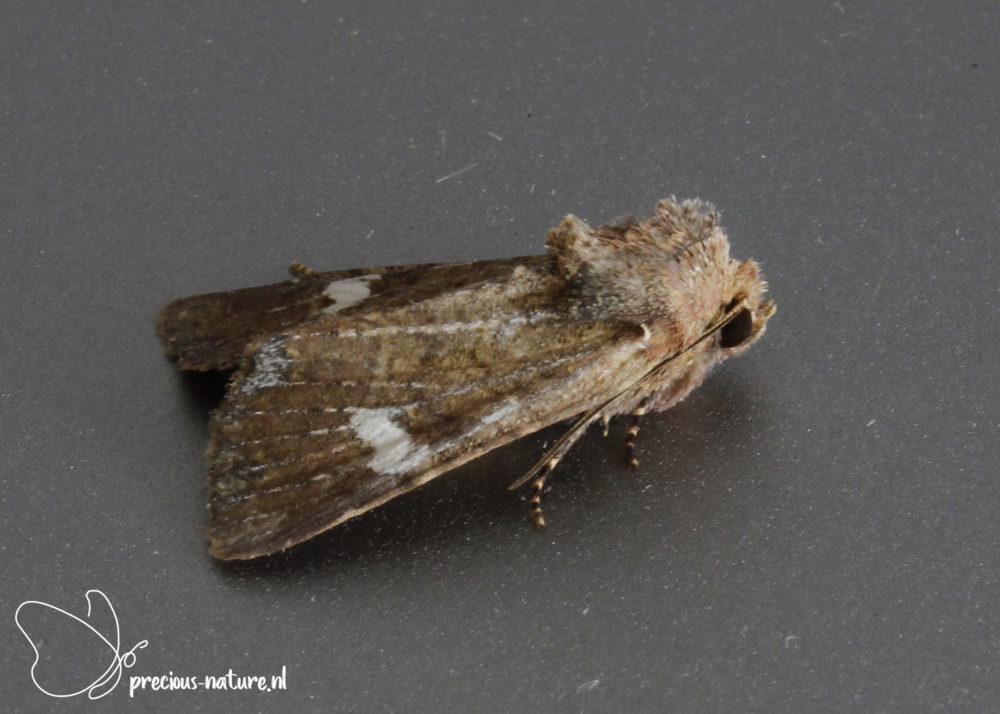
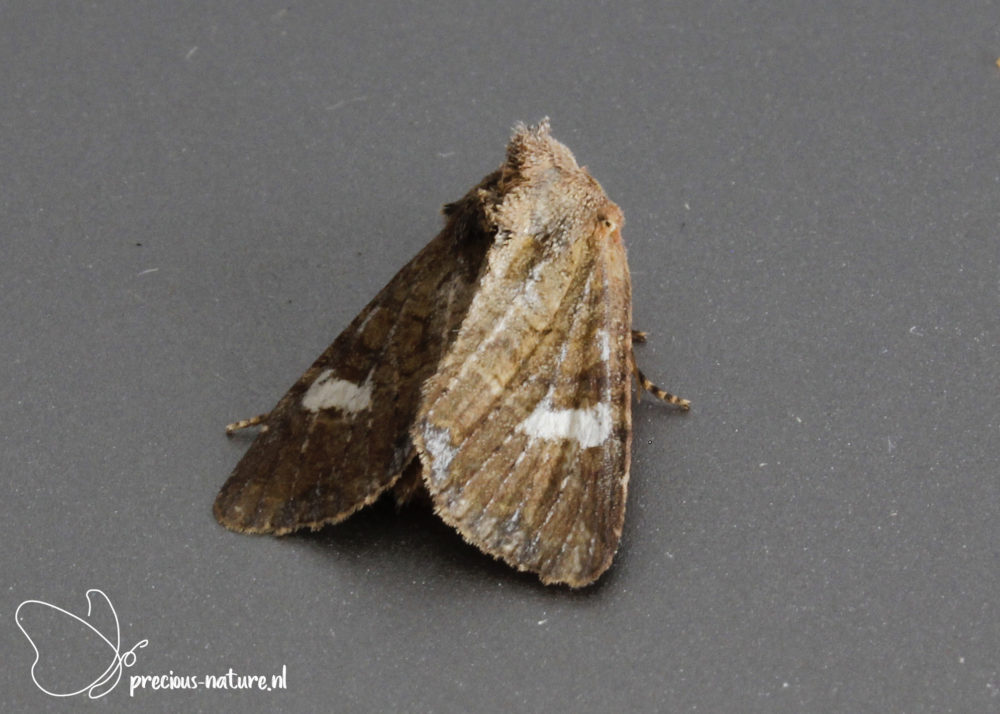
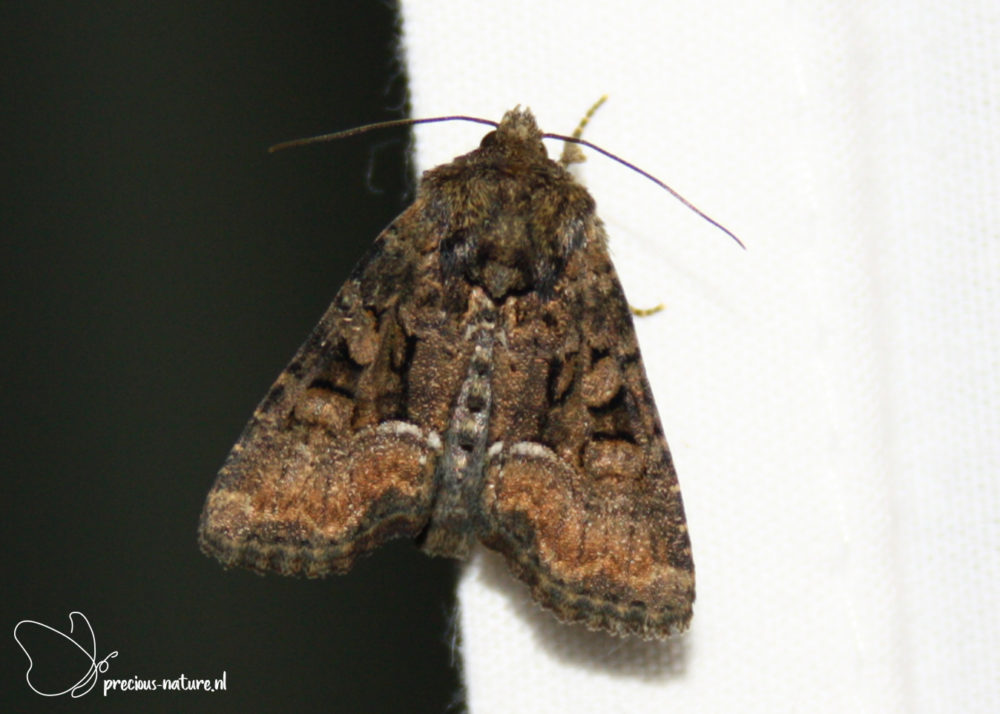
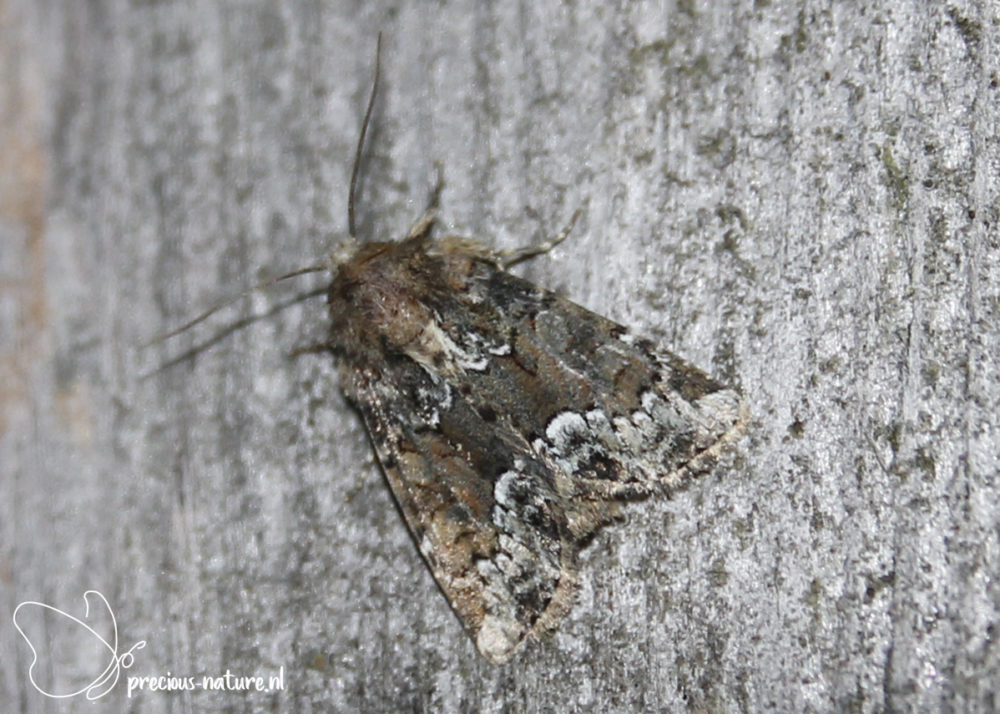
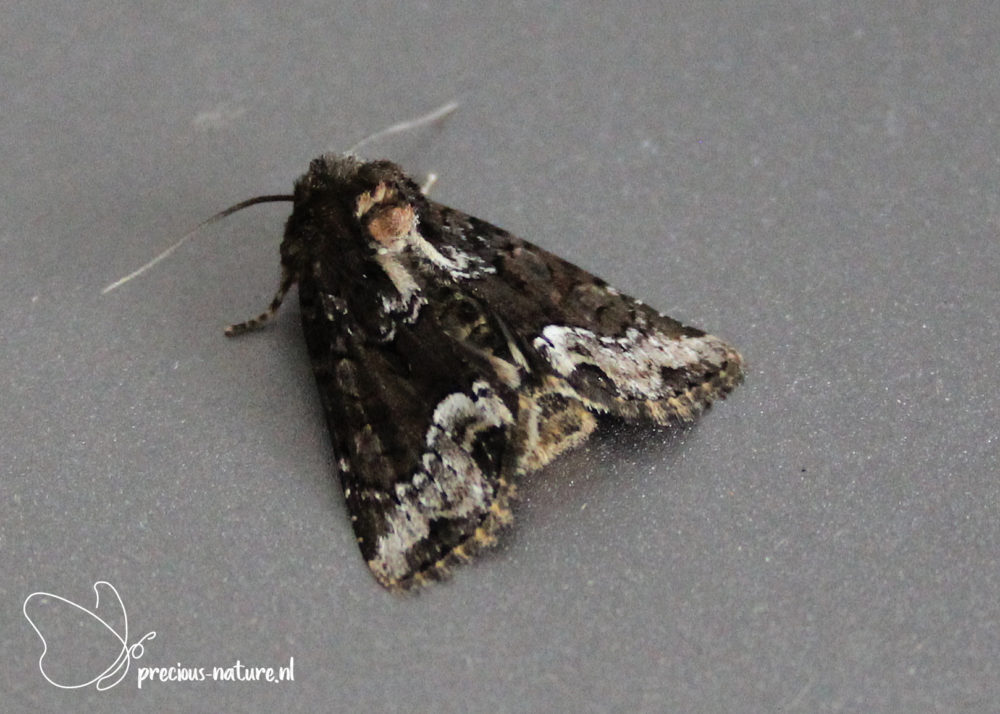
The Tawny Marbled Minor (Oligia latruncula) is very similar to the other species in its family. It is often smaller, dark, and grey to blackish, with the wide marginal band brown to coppery. The chest piece usually shows no orange or reddish tufts of hair. The apex can be brownish but also light grey or light brown. The white, wavy line bordering the dark median band is very noticeable against the lighter ones. The flight period is from mid-May to August, and the wingspan is 24-27 mm. Host plant(s): various grasses. Dutch name: Donker halmuiltje. Frisian name: –
Flying period:

Genus: Oligia
Marbled Minor – 2018 (NL)
(NCBI-index: 988009)
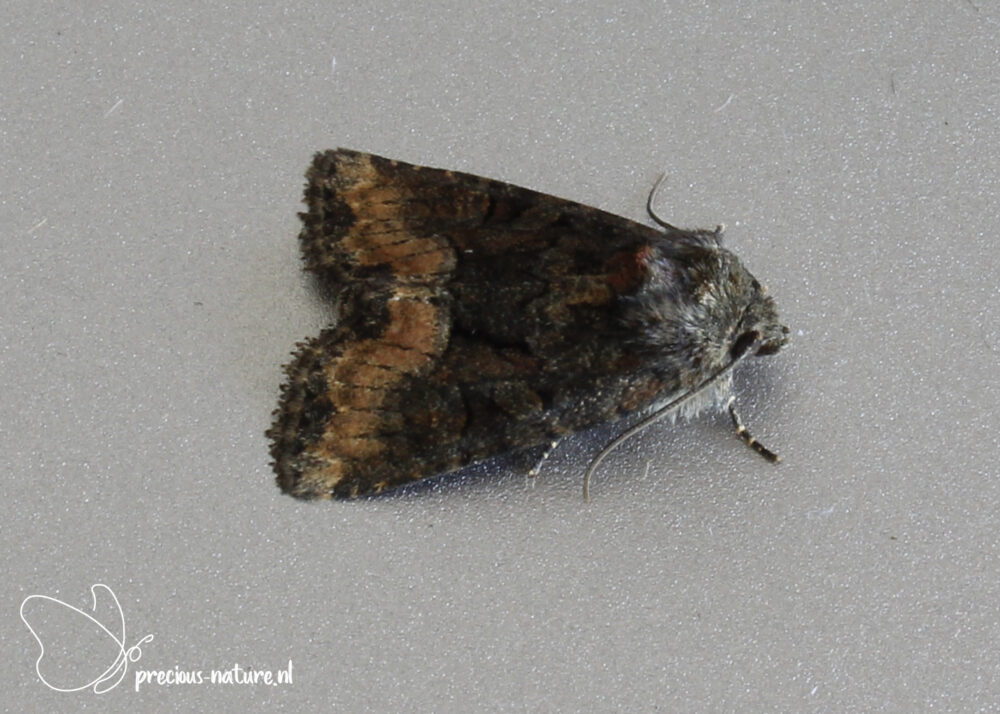
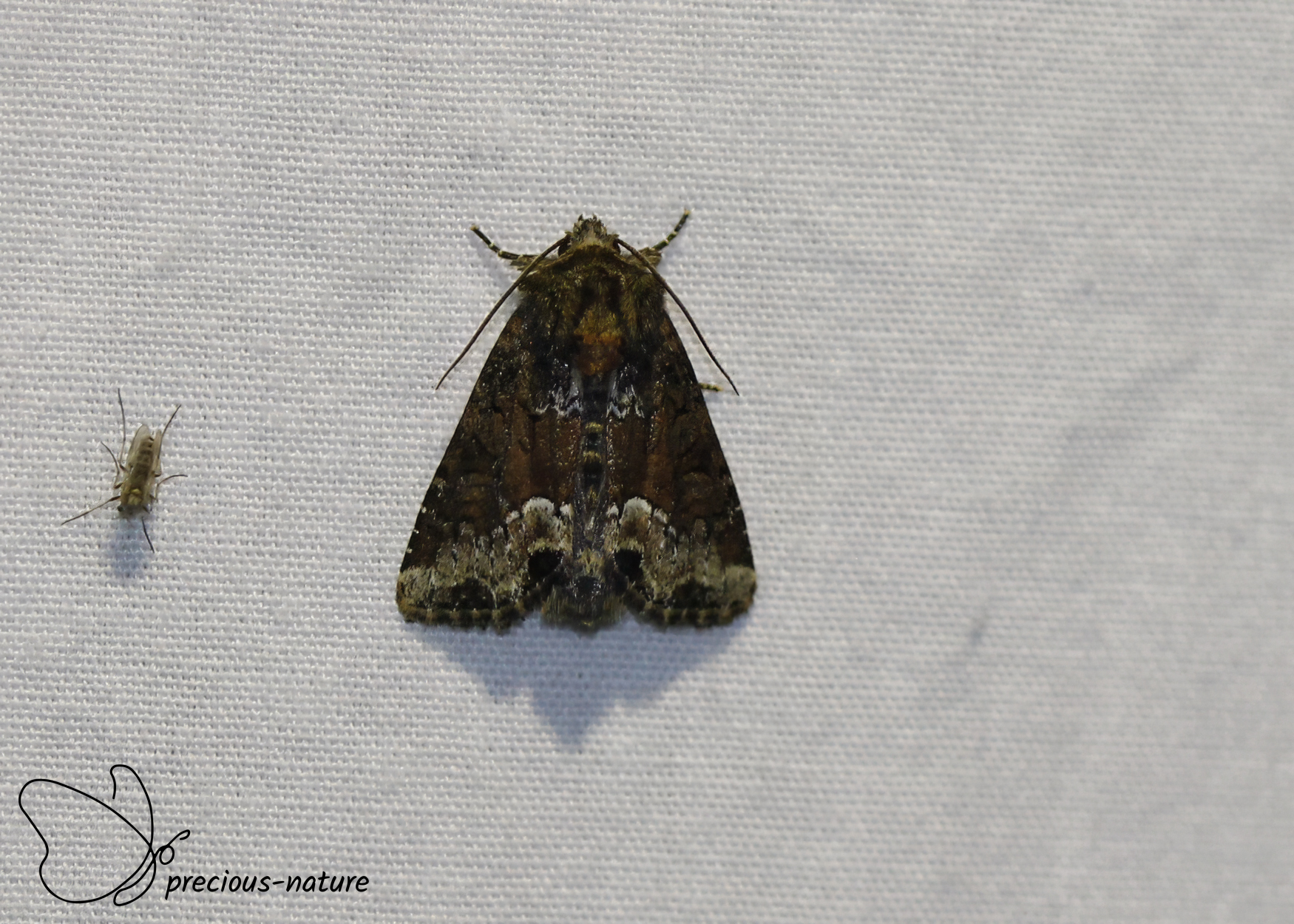
The Marbled Minor (Oligia strigilis), like the other minors, is very variable and difficult to distinguish from the other species in its family. The drawn copies are best distinguished by the black bar between the two central transverse lines and the rather light band in the zoom field. It features an orange tuft on the top of the chest piece, a characteristic design element. The multi-incised, vigorous, lobed inner edge of the light band in the zoom field is also characteristic. The notches are visible as thin black stripes on the veins in the marginal area. The most noticeable lobe is chalk white and is closest to the dorsum. When in doubt, genitals should provide a solution. The flight period is one generation, from May to the end of August, and the wingspan is 22-25 mm. Host plant(s): various grasses. Dutch name: Gelobd halmuiltje. Frisian name: –
Flying period:
Genus: Oligia
Middle-barred Minor – 2019 (NL)
(NCBI-index: 1.870138)
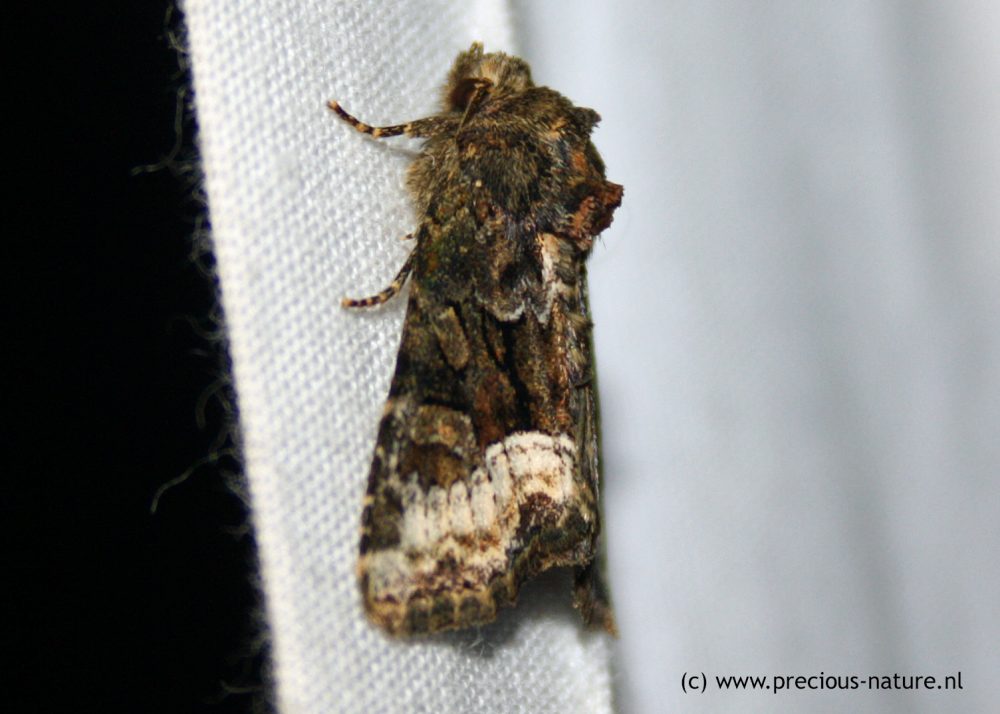
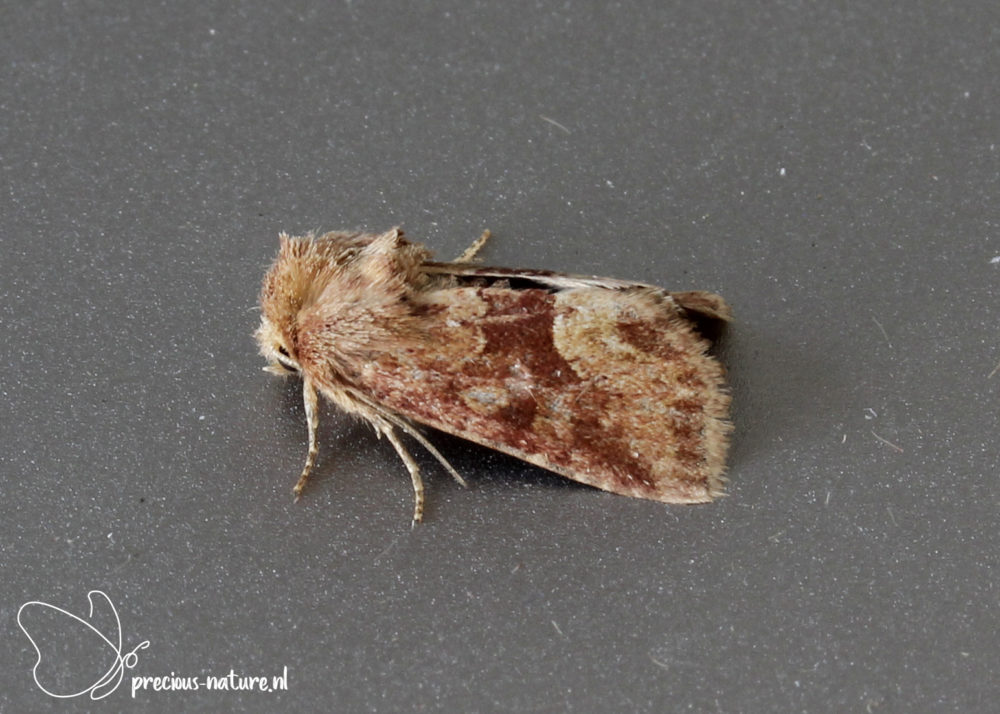
The Middle-barred Minor (Oligia fasciuncula) is best recognised among the minors. The ground colour of the top of the forewing is yellow-brown to orange-brown. The dark median band is most characteristic, bordered by white-lined transverse lines. The oval and kidney marks are light-coloured and not noticeably edged. The flying period is one generation, from May to July, and the wingspan is 22-26 mm. Host plant(s): various grasses. Dutch name: Oranjegeel halmuiltje. Frisian name: Oranjegiel halmûltsje.
Flying period:
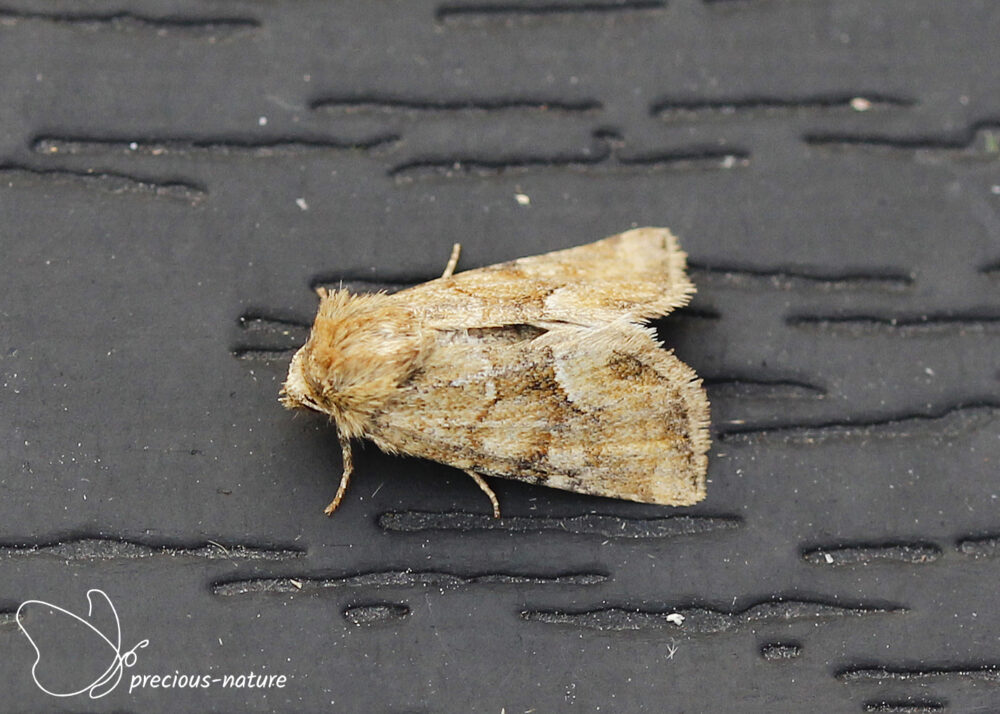
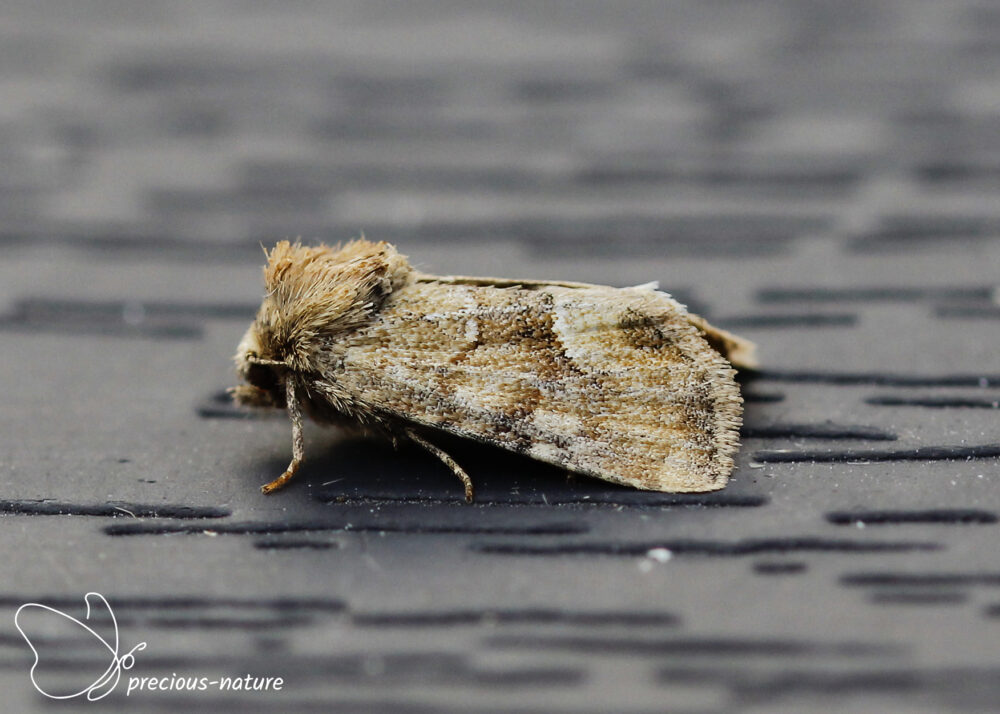
Tribe: Apameini
Genus: Rhizedra
Large Wainscot – 2018 (NL)
(NCBI-index: 988156)
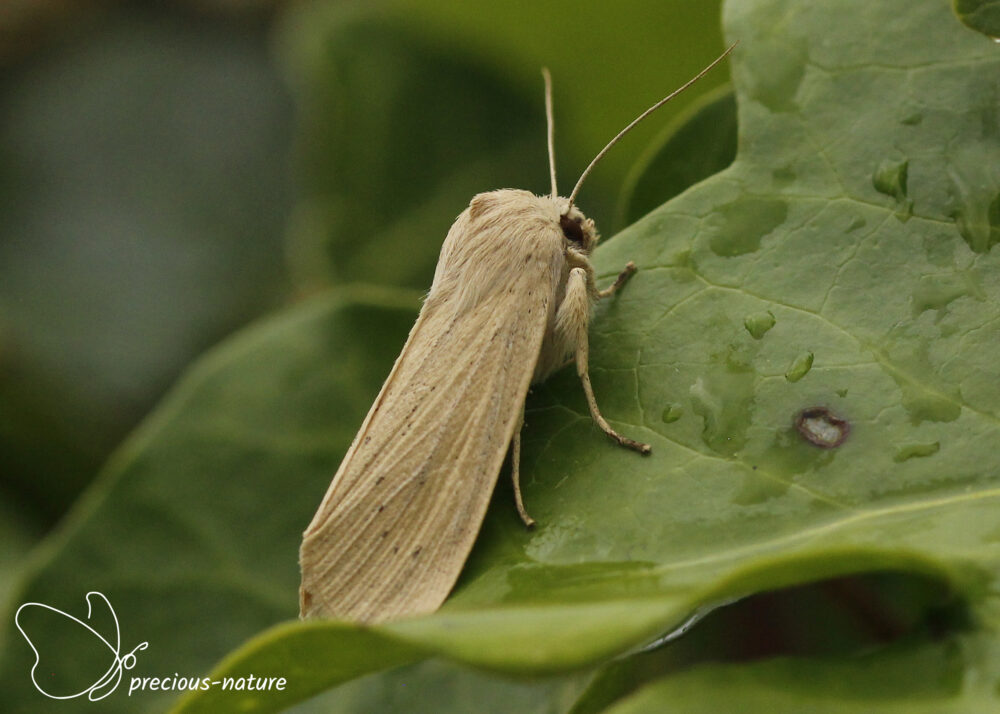
The Large Wainscot (Rhizedra lutosa) is a reasonably large owlet moth. The narrow, tapering forewing often has a sharp, sometimes slightly bent apex. The base colour ranges from straw grey or light greyish brown to light reddish-brown. A grey or blackish pollination is often present on the wing. A light vein is visible on the forewing, and a small dark core is present on the almost invisible kidney mark. The post-median line consists of a row of dark dots. The chest piece often has a delicate, comb-like median line. The flying period spans one generation, from late July to November, and the wingspan ranges from 42 to 50 mm. Host plant(s): Common reed. Dutch name: Herfstrietboorder. Frisian name: Hjerstreidboarder.
Flying period: