Noctuini is a group of genera belonging to the subfamily Noctuinae within the owlet moths (Noctuidae). This group comprises more than 500 described species worldwide.
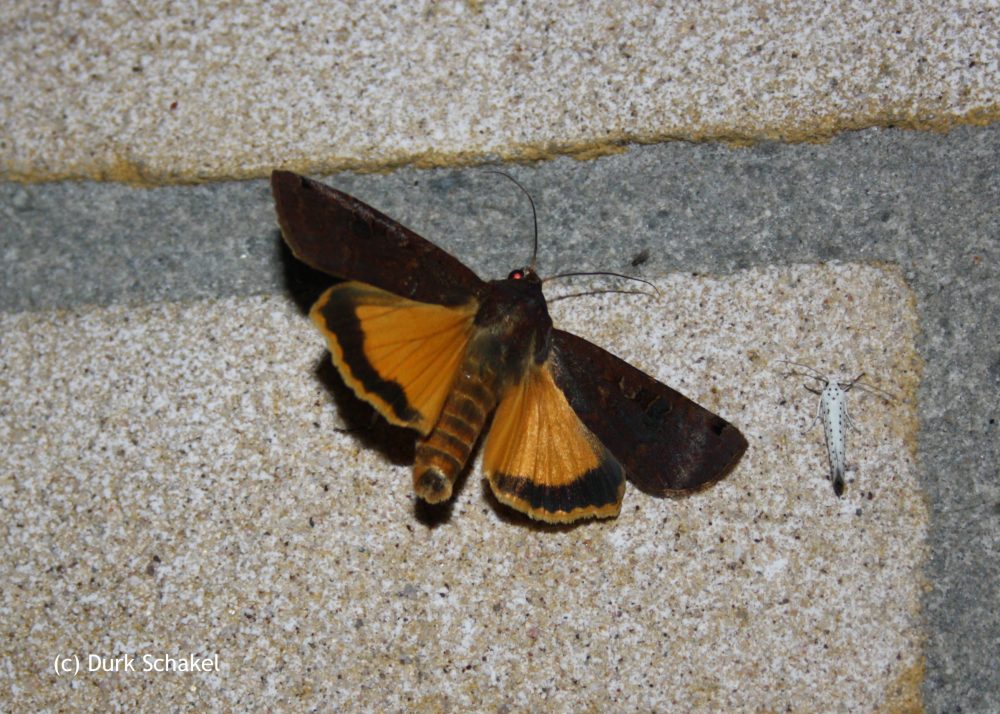
In the resting position, the adults fold their wings flat and tightly over each other. This makes them appear very narrow, allowing them to easily crawl away between vertical blades of grass or plant stems. The forewings have an inconspicuous camouflage colour (grey, brown, or blackish) to help them blend in during the day on tree bark or the ground. However, some genera, such as Noctua, have bright yellow or orange hindwings with a black edge that only become visible during flight to disorient enemies. They have a relatively thick, robust, densely hairy body and powerful wing muscles that enable fast, powerful flight.
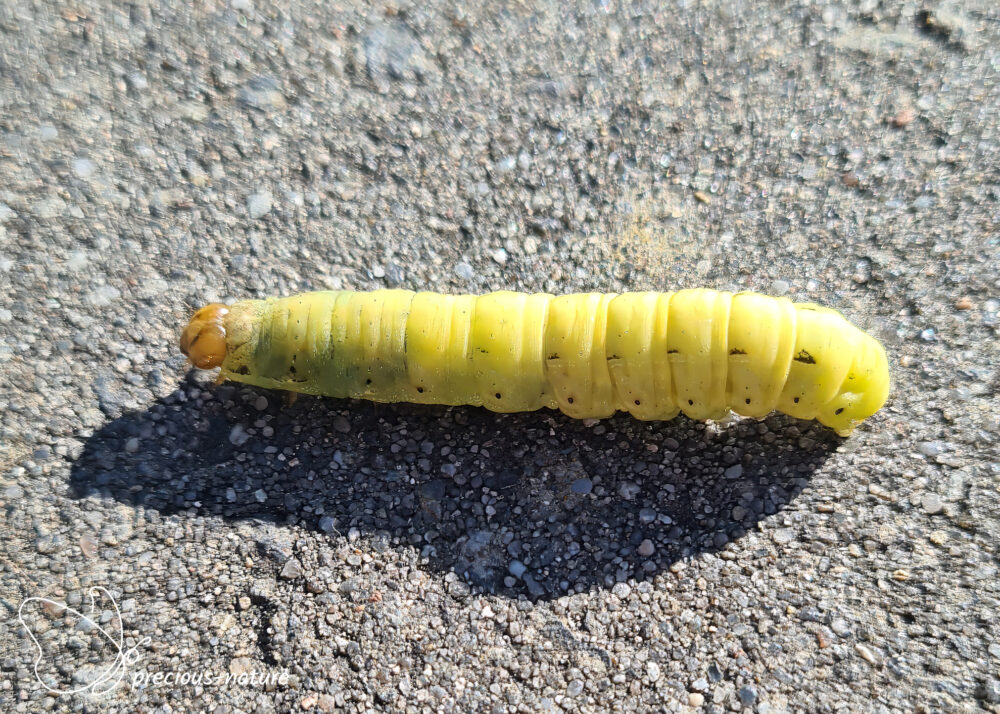
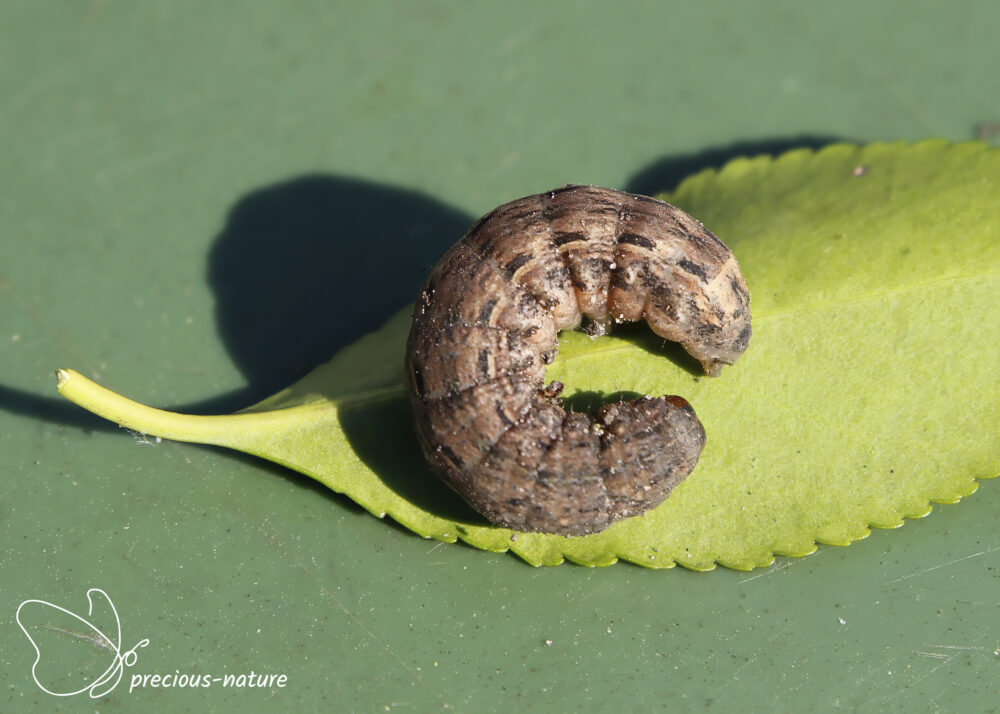
Almost all caterpillars are called ‘cutworms’. They are virtually bare and hairless, with a smooth, somewhat oily, shiny skin. During the day, they live hidden in the topsoil or under plant debris. Only when it gets dark do they emerge to feed on plant stems just above or just below the soil surface. When disturbed or touched, the caterpillars immediately roll themselves up tightly into a characteristic C-shaped spiral.
Genus: Agrotis
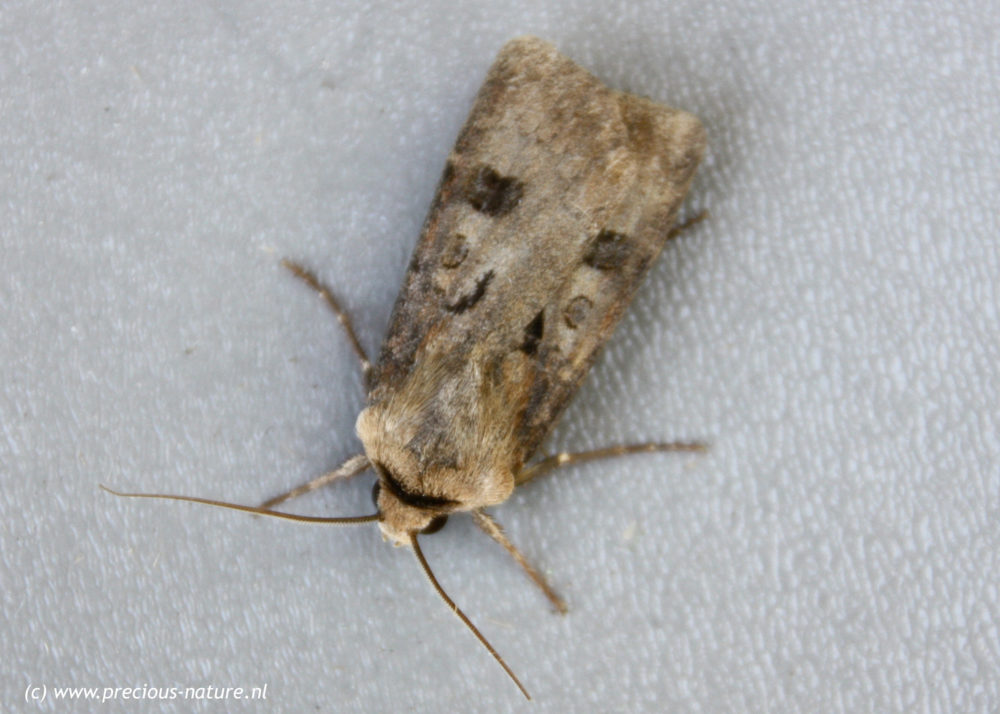
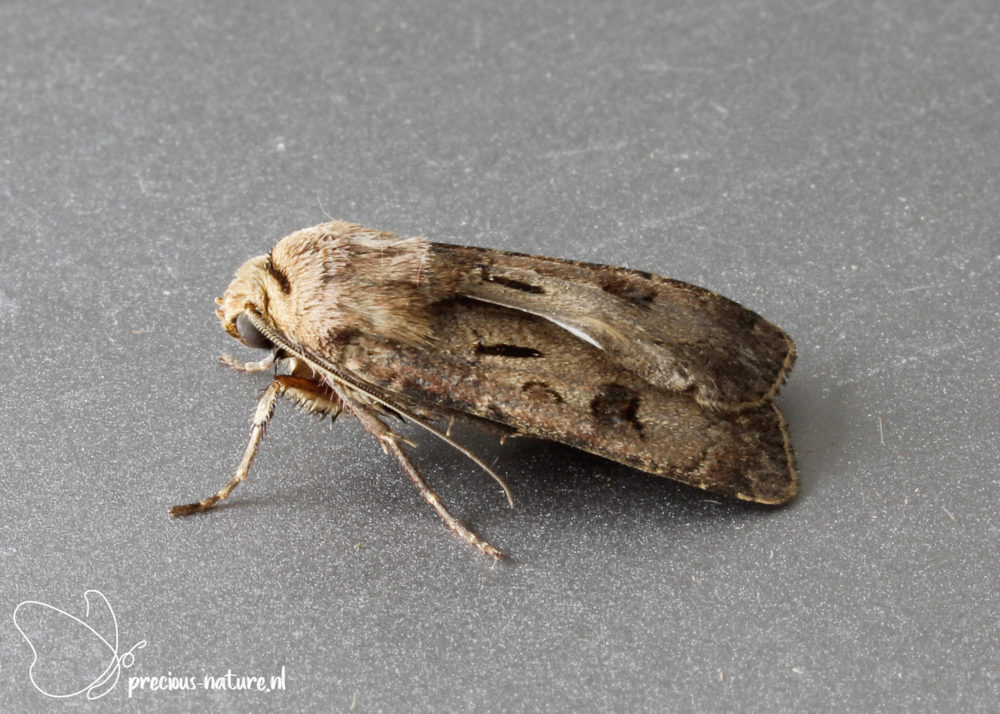
Heart and Dart – 2015 (NL)
(NCBI-index: 215162)
The Heart and Dart (Agrotis clavis) has a light brown to dark brown ground colour. On the forewing, you can always see a striking dark dart mark in the longitudinal direction of the veins. The owl marks are coloured darker than the ground colour and are recognisable. It flies in two generations from May to October, and the wingspan is 30-38 mm. Host plant(s): Ribwort Plantain, Fat-hen. Dutch name: Gewone worteluil. Frisian name: Gersûltsje.
Flying period:


Genus: Agrotis
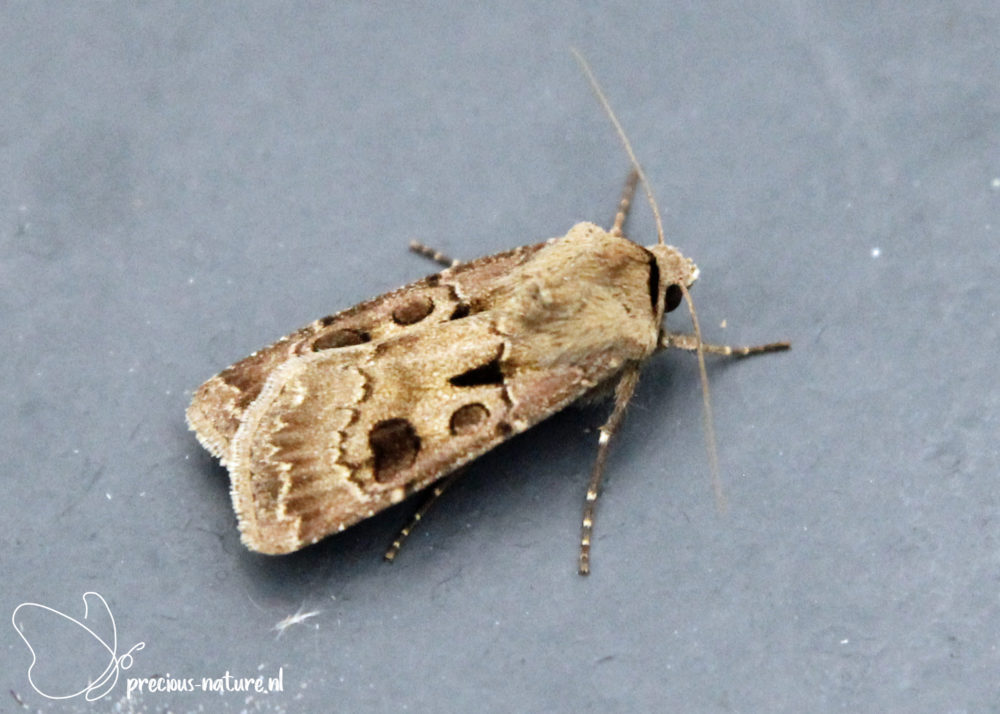
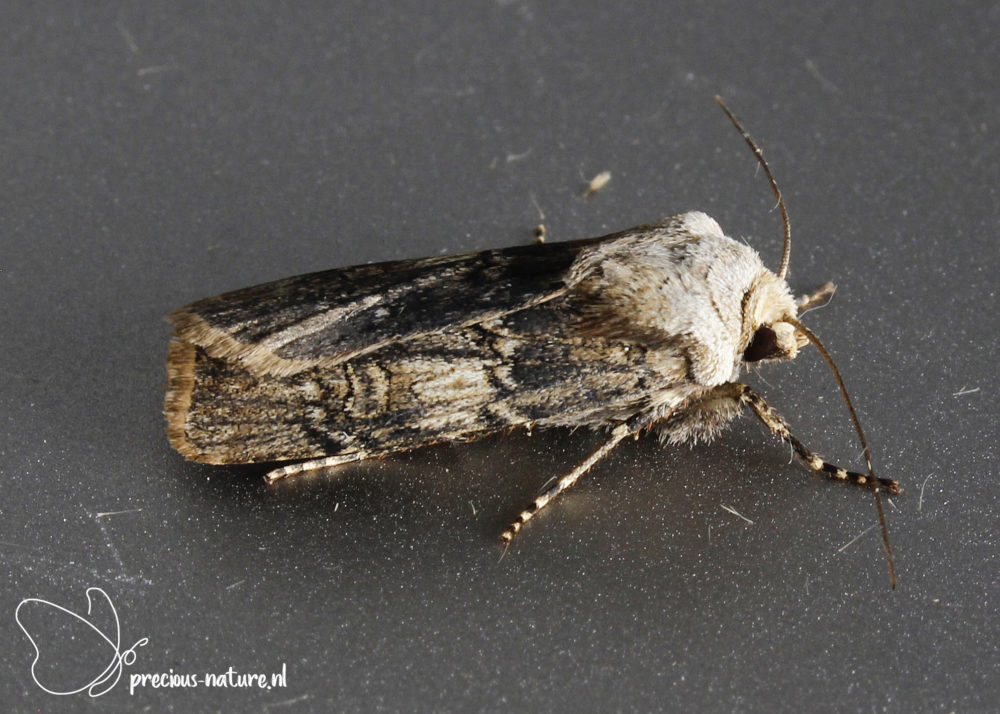
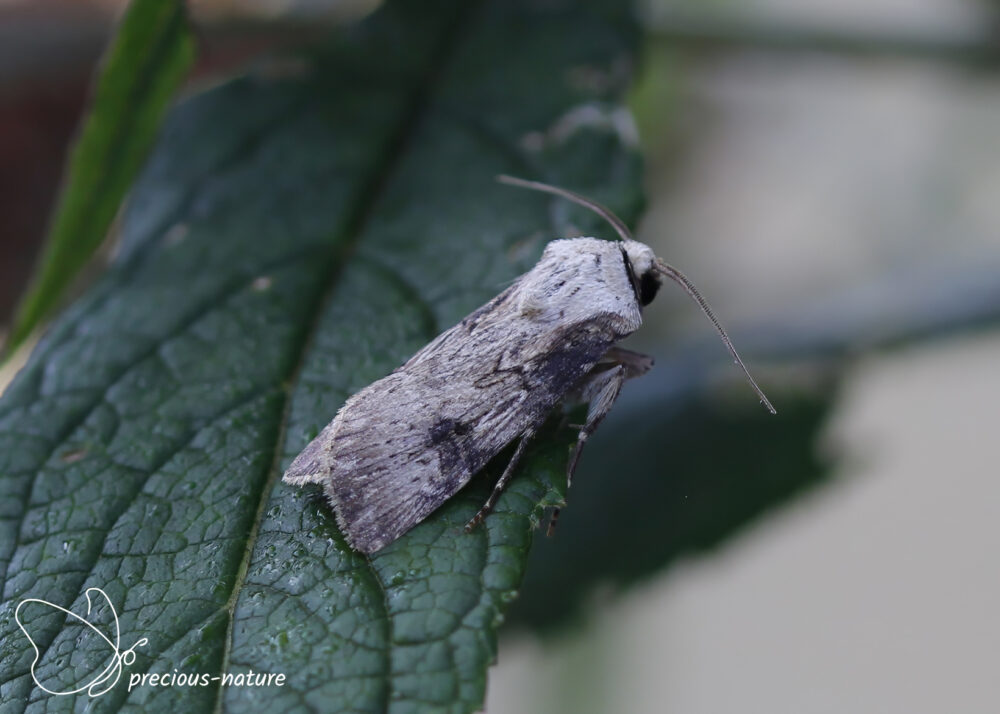
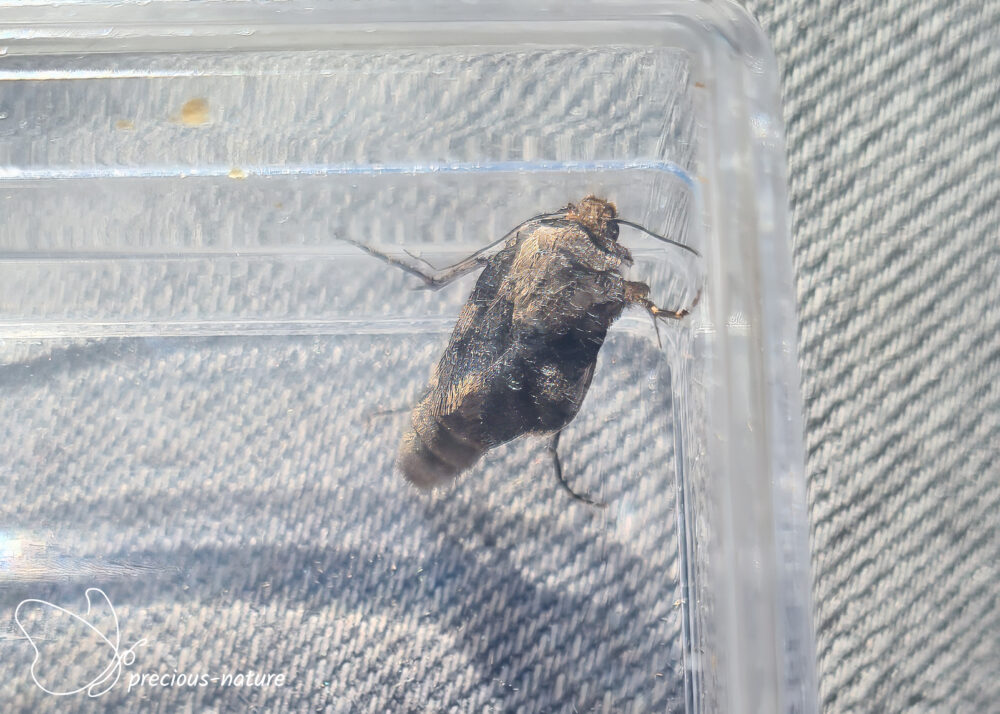
Shuttle-shaped Dart – 2017 (NL)
(NCBI-index: 1.857961)
The Shuttle-shaped Dart (Agrotis puta) has a light oval mark on the forewing with a dark core. The male has a light brown forewing, and the kidney mark is difficult to see. The oval mark does stand out clearly. The female has a much darker-coloured forewing. It flies in two generations from April to October, and the wingspan is 30-32 mm. Host plant(s): Sorrel, Dandelion, lettuce. Dutch name: Puta-uil. Frisian name: Putaûltsje.
Flying period:

Genus: Agrotis
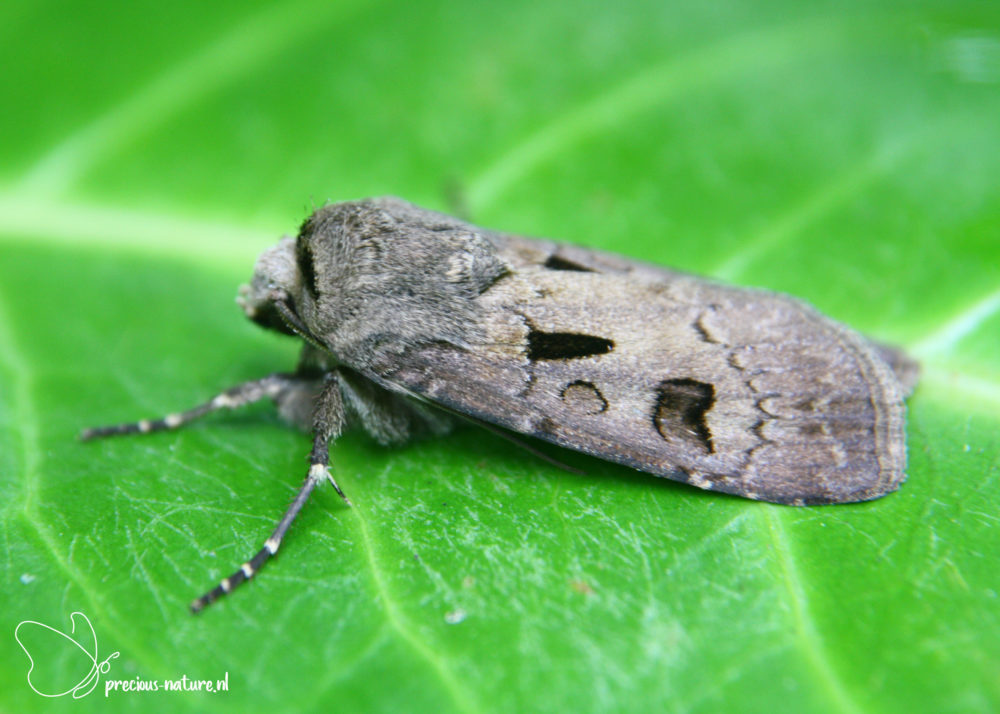
Dark Sword-grass – 2018 (NL)
(NCBI-index: 56364)
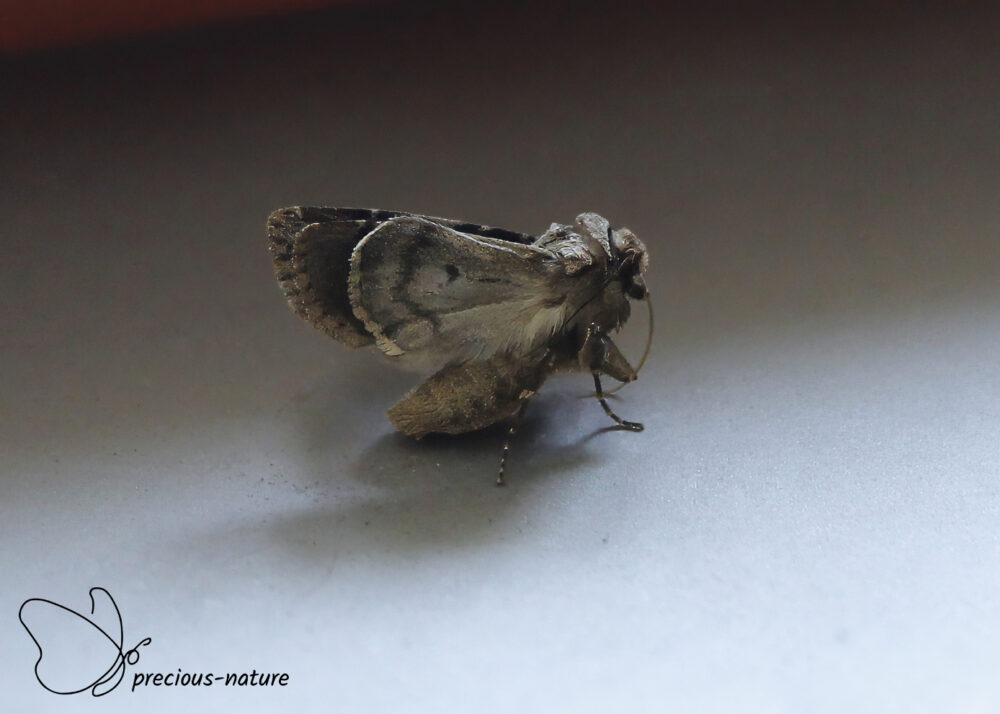
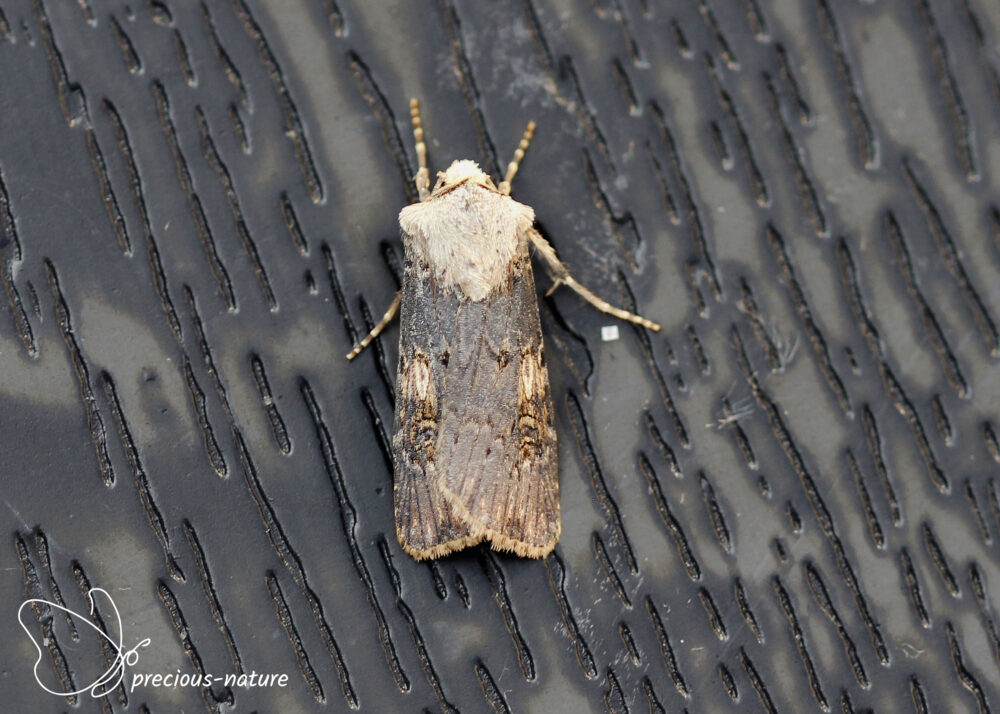
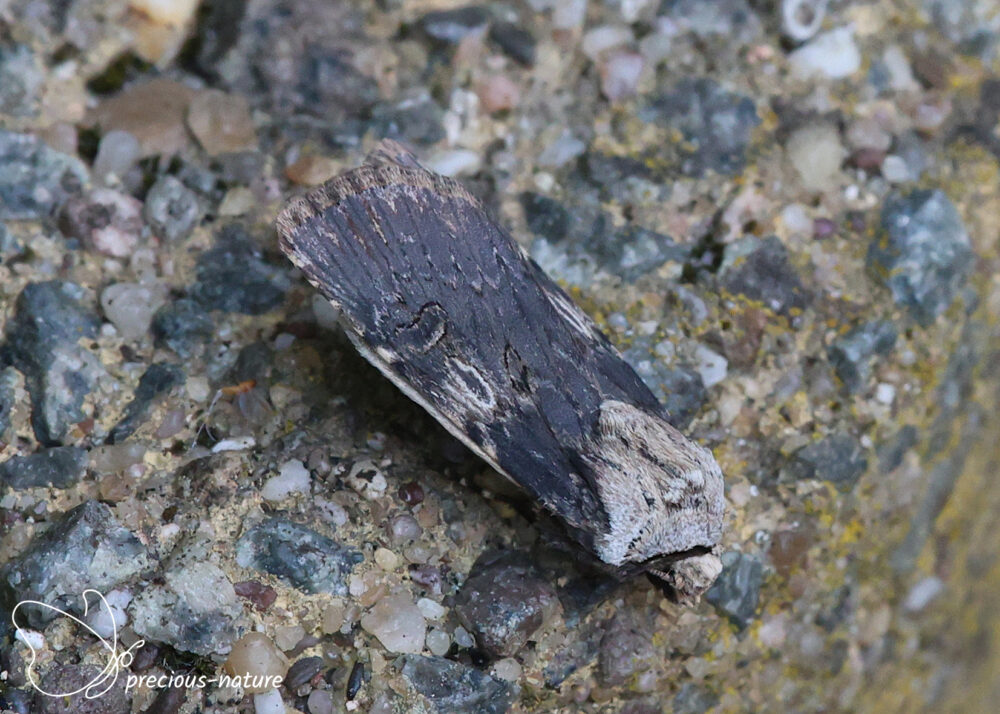
An easily recognisable owlet moth is the Dark Sword-grass (Agrotis ipsilon). Characteristic is the elongated, black, arrow-shaped streak outside the kidney mark. This streak extends far into the costal area and sometimes touches the more minor arrow spots on the inside of the wave line. At rest, the wings fold over each other, creating a narrow, elongated impression. The wings vary in colour from light to dark brown, with the light specimens having a dark streak along the front edge. The flight period spans from April to October, occurring in two generations, and the wingspan ranges from 35 to 50 mm. Host plant(s): various herbaceous plants, grasses, vegetables. Dutch name: Grote worteluil. Frisian name: Grutte woartelûle.
Flying period:


Genus: Agrotis
Heart and Club – 2024 (NL)
(NCBI-index: 997525)
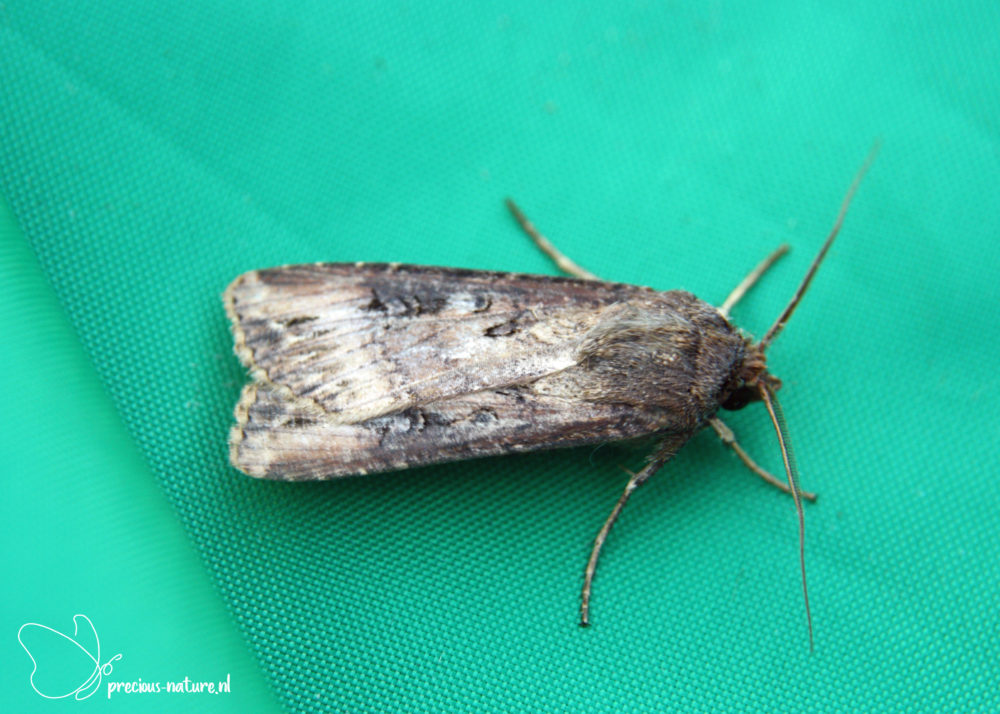
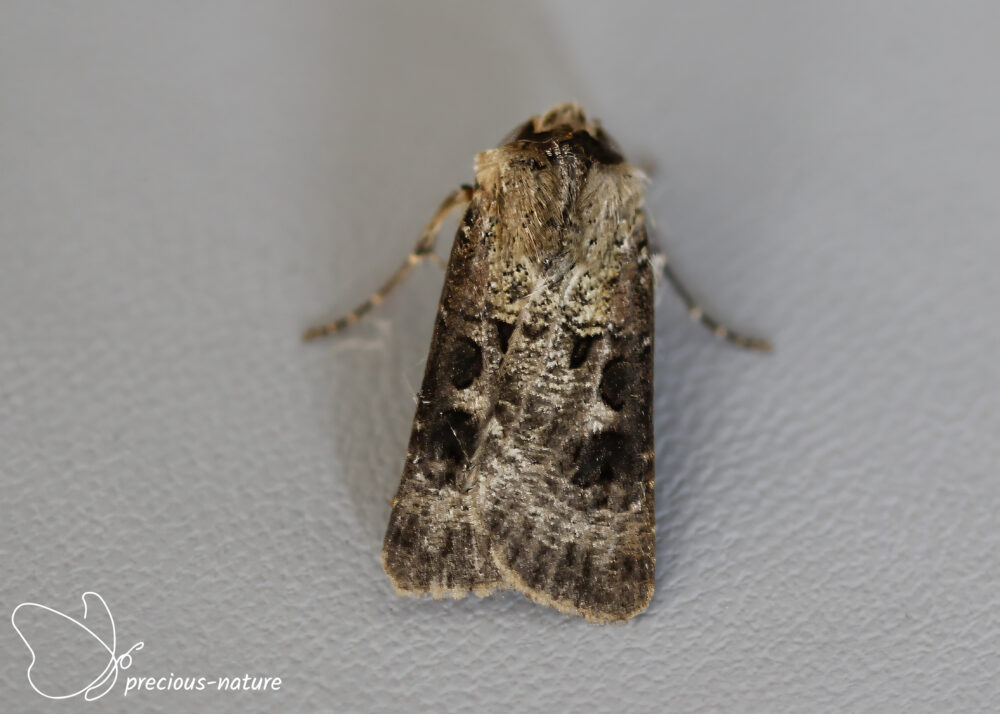
The ground colour of the rather blunt forewing of the Heart and Club (Agrotis clavis) varies from very light brown or greyish light brown with dark brown spots to almost entirely dark brown or even almost black. The lighter forms often have a forewing with a dark leading edge. The dart mark is oval and not filled. You can see a light stripe in the dart mark. Around the owl marks are often fine black scales that give the impression the black edging has run out or faded. The hindwing of the male is light to dark grey, and that of the female is dark grey with a central spot. The flight period is from mid-May to the end of July in one generation, and the wingspan is 35-40 mm. Host plant(s): Dandelion, Sorrel, Clover. Dutch name: Geoogde worteluil. Frisian name: –
Flying period:

Genus: Diarsia
Small Square-spot – 2017 (NL)
(NCBI-index: 987925)
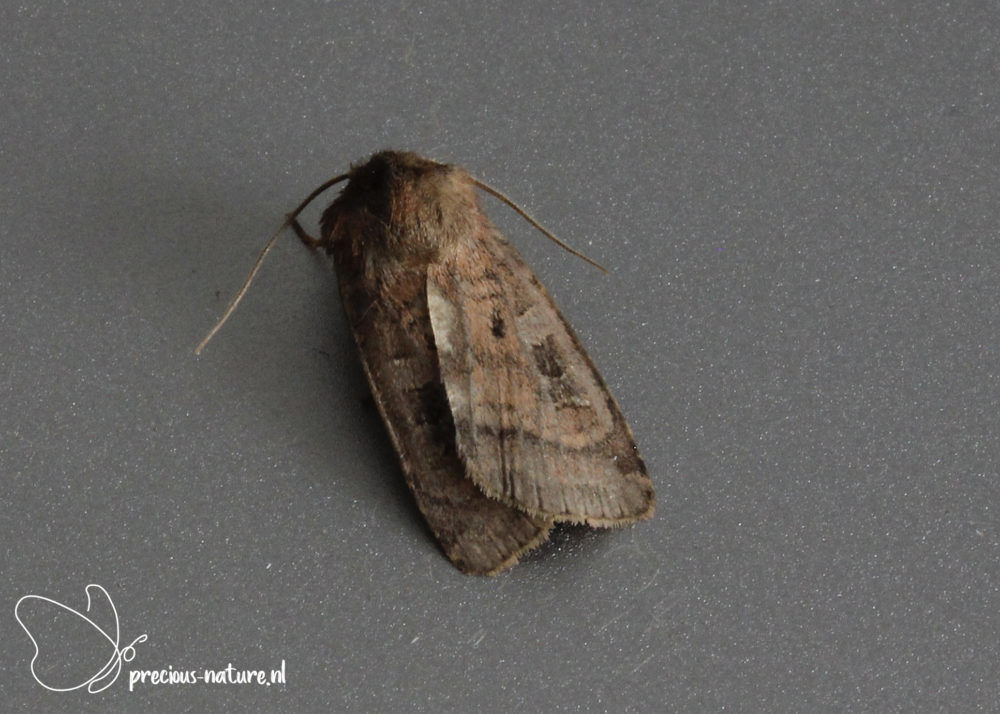
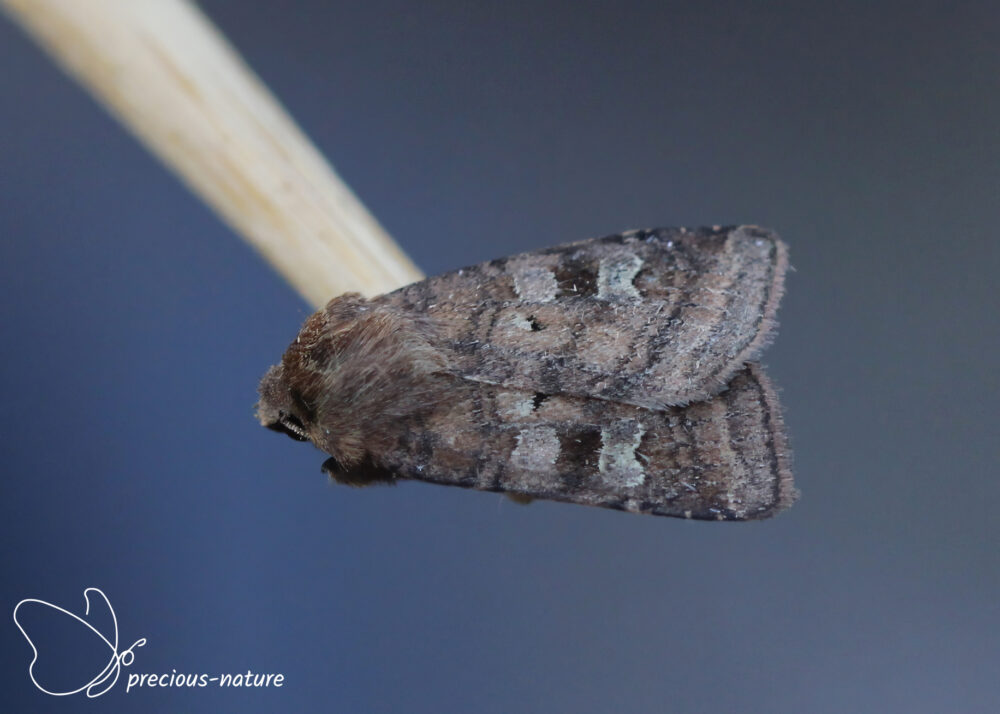
The Small Square-spot (Diarsia rubi) has a reddish glow (rubi = red) over the top of the forewing. The wing also has a reddish-brown or dark-brown band and speckling. The post-median line is edged on the outside with a dark line that gradually merges into a lighter zone. Between the kidney and the oval mark is a dark square spot. The flight period is from May to October in two generations, and the wingspan is 28-33 mm. Host plant(s): Dandelion, Sorrel, Foxglove. Dutch name: Gewone breedvleugeluil. Frisian name: Gewoan breedwjukûltsje.
Flying period:
Genus: Noctua
Large Yellow Underwing – 2008 (NL)
(NCBI-index: 214277)
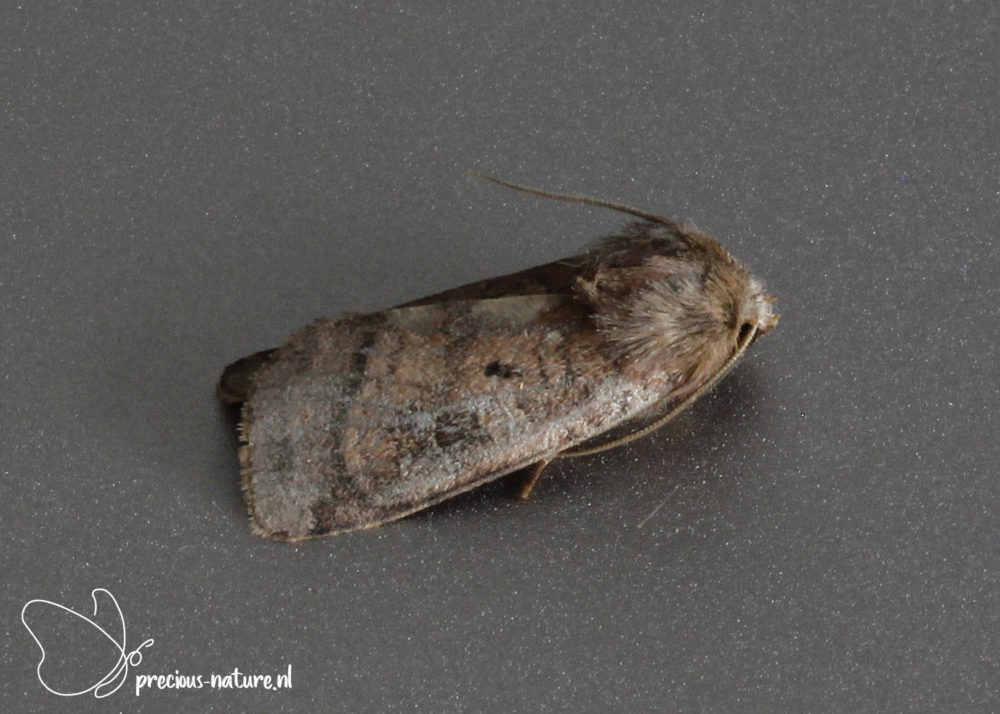
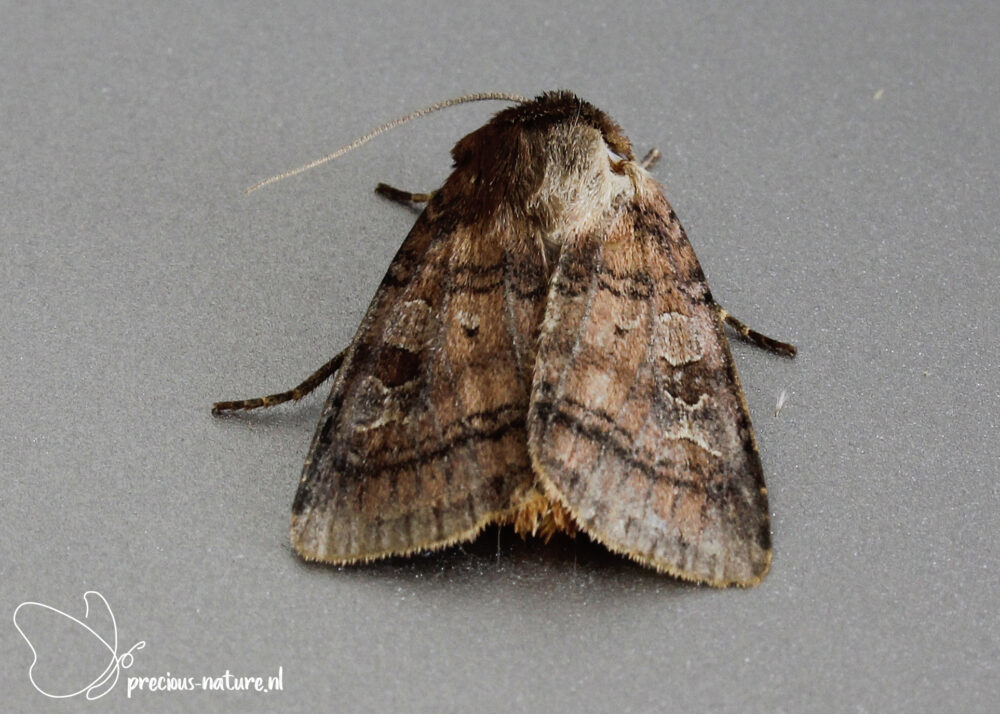
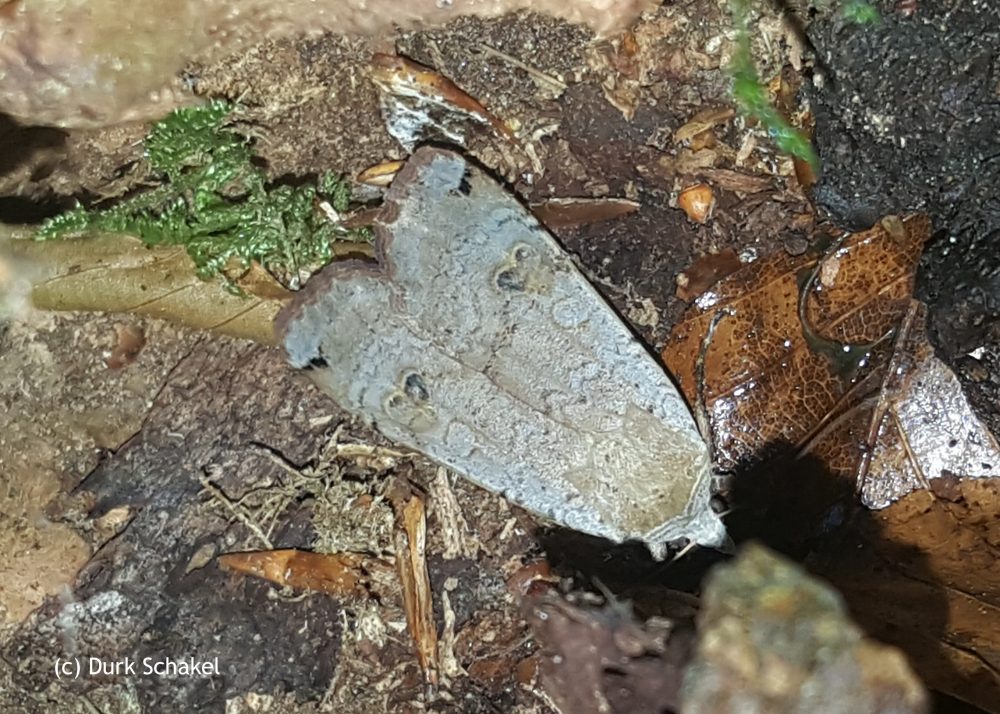
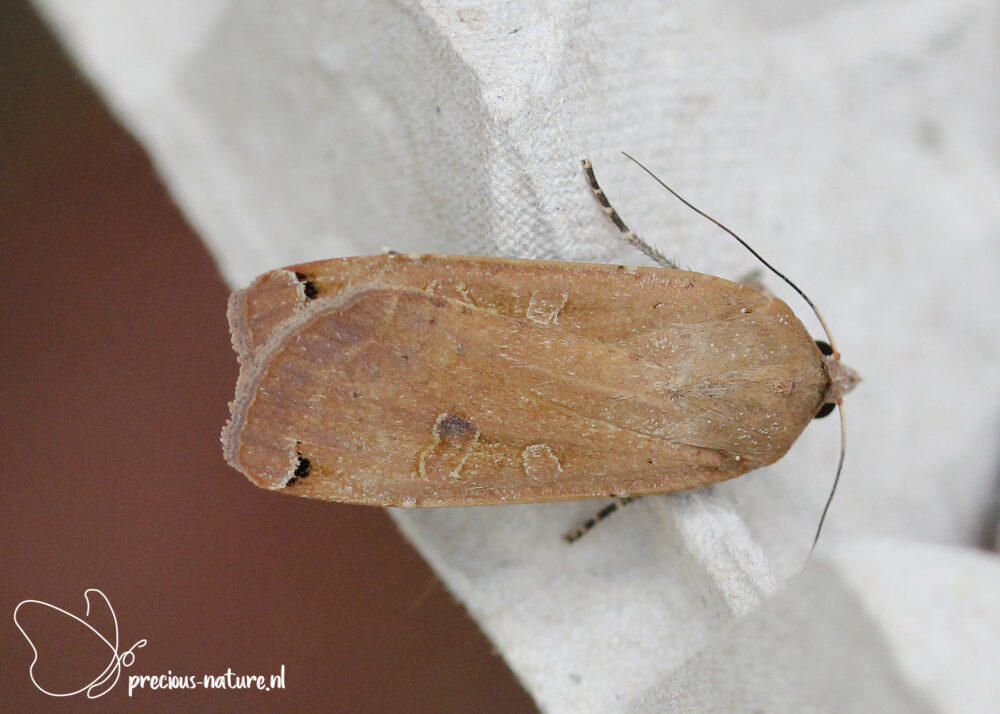
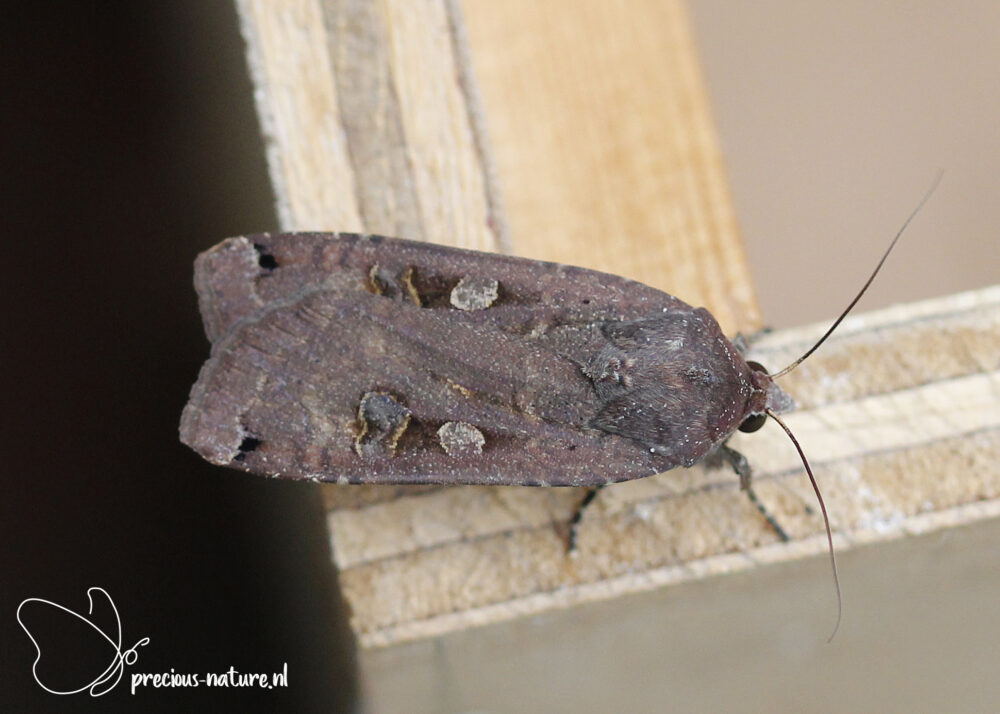
The Large Yellow Underwing (Noctua pronuba) is very variable in colour but a characteristic owlet moth with a long, narrow, rounded forewing. The colour of the forewing can vary from red-brown to black-brown with slight marking to light brown with light brown or grey marbling. A black spot occurs where the wave line touches the costa. The hindwing is orange with a narrow black dorsum. The kidney and oval marks are visible. It flies at night in one generation from June to October, and the wingspan is 42-52 mm. During the day, it hides in low bushes or plants. Host plant(s): Dock, Marigolds, Foxglove, Annual Meadow-grass. Dutch name: Huismoeder. Frisian name: Tsjoenster.
Flying period:


Genus: Noctua
Lesser Broad-bordered Yellow Underwing – 2017 (NL)
(NCBI-index: 987995)
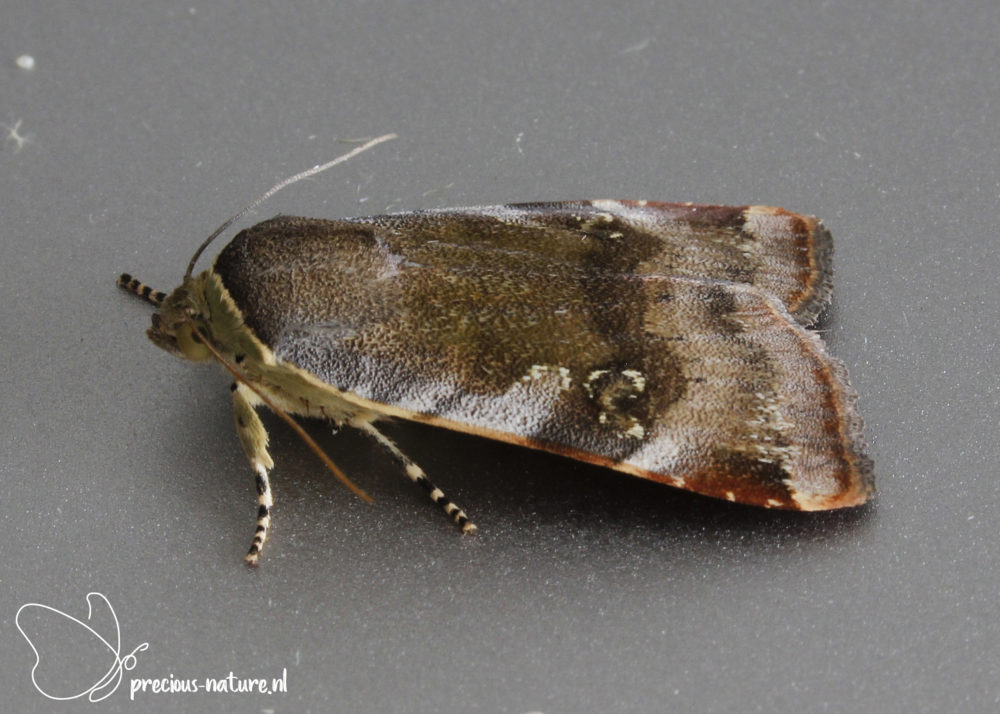
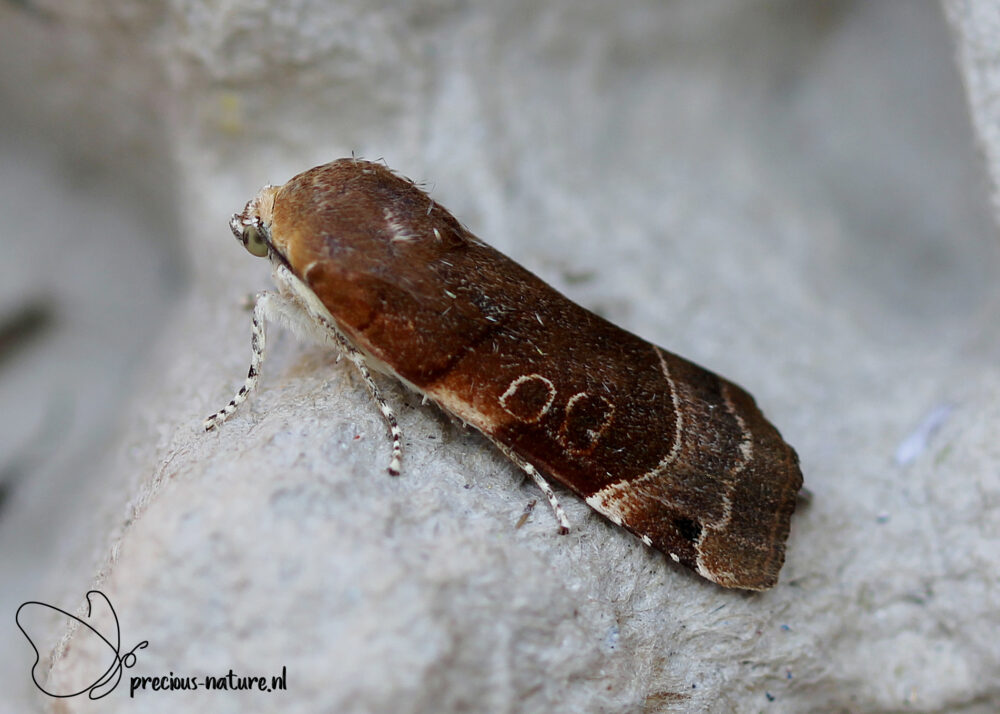
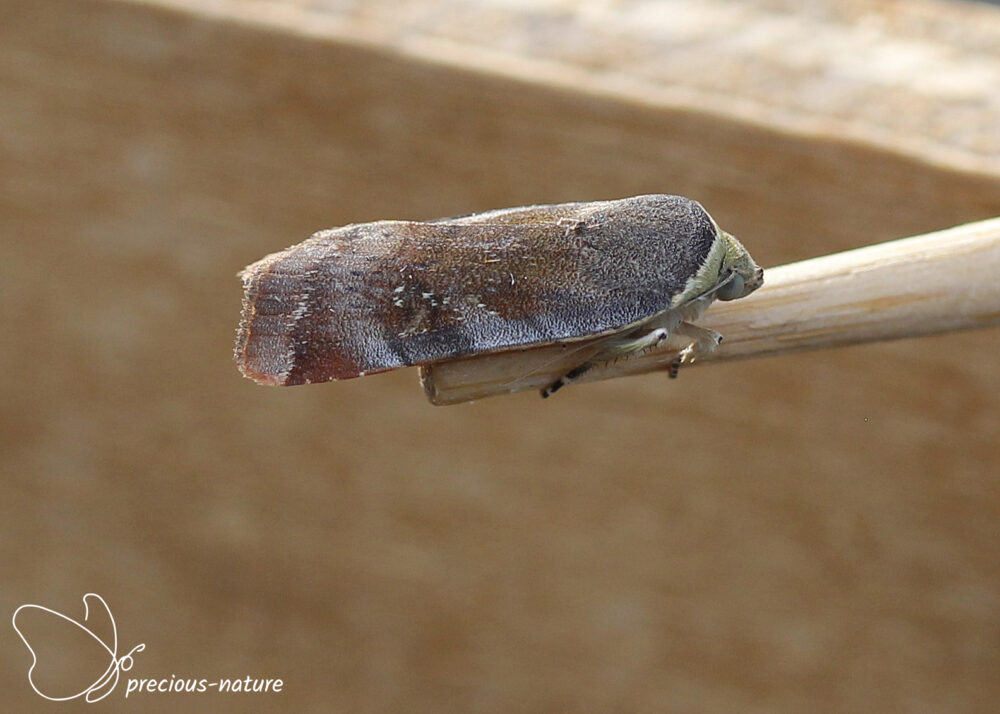
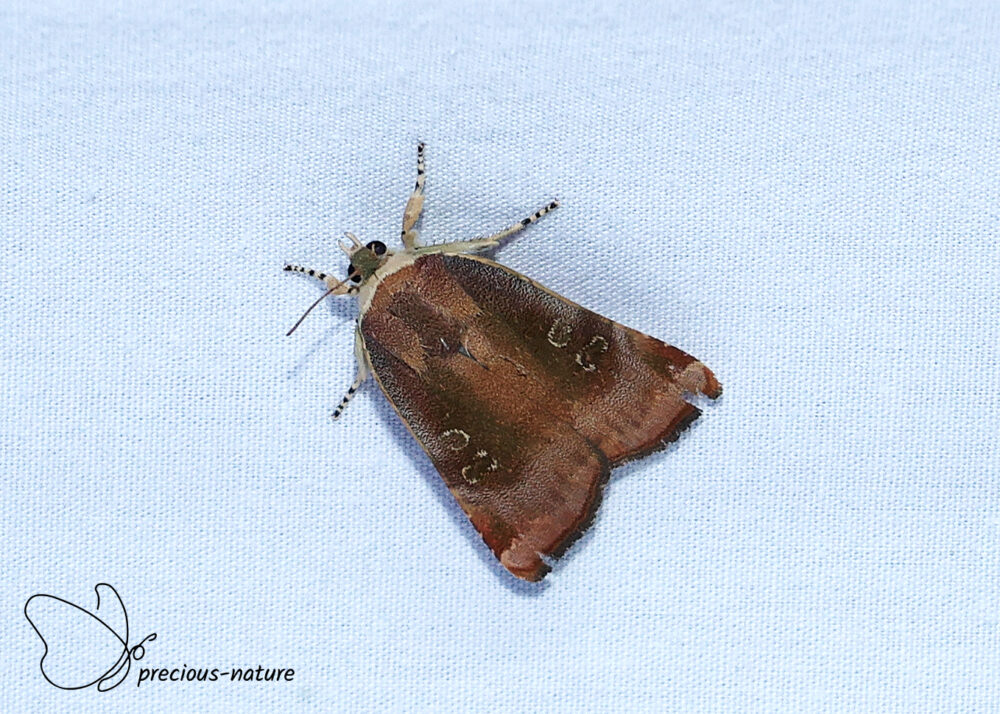
The Lesser Broad-bordered Yellow Underwing (Noctua janthe) is difficult to distinguish from the Langmaid’s Yellow Underwing (Noctua janthina). This is especially the case in the resting position. The difference between the two is best seen in the yellow hindwing. This owlet moth has a purple or reddish-brown forewing with a dark transverse band that turns into a light zone. The owl marks are barely visible. The legs are coloured in a light, solid colour, with black rings in part. The flight period ranges from June to September, and the wingspan is 30-40 mm. Host plant(s): White Dead-nettle, Broad-leaved Dock, Scentless Mayweed. Dutch name: Open-breedbandhuismoeder. Frisian name: Iepenbreedbântsjoenster.
Flying period:

Genus: Noctua
Lunar Yellow Underwing – 2017 (NL)
(NCBI-index: 1.858045)
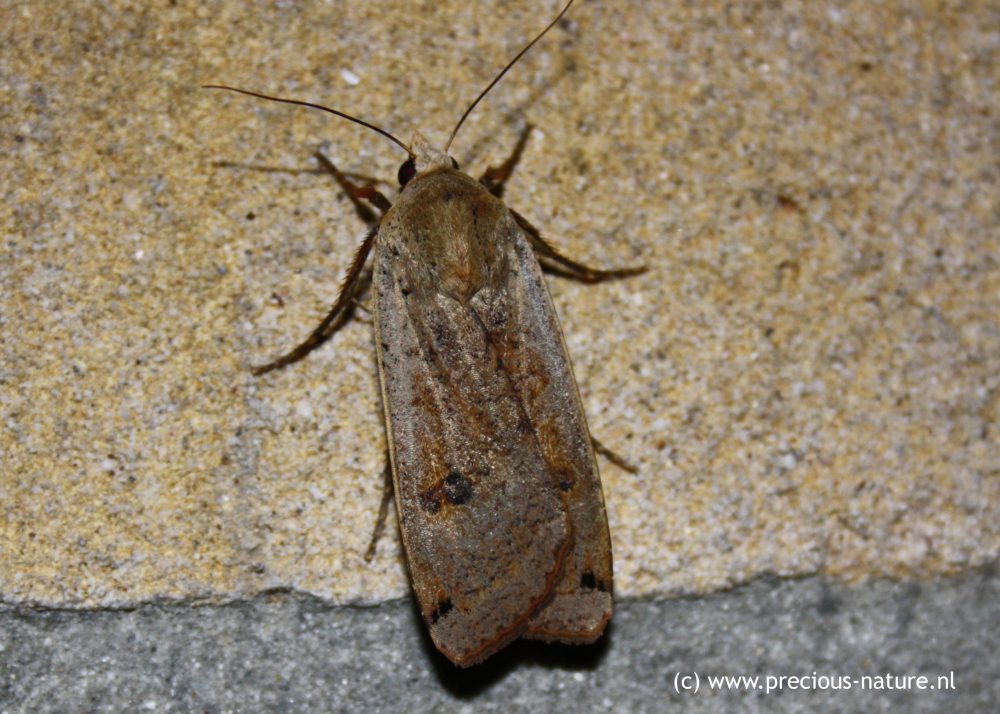
The Lunar Yellow Underwing (Noctua orbona) is very similar to the Lesser Yellow Underwing (Noctua comes), which has a broader forewing. The Lunar Yellow Underwing has a distinct black spot on the primarily greyish-brown forewing near the apex. This black spot is missing from the Lesser Yellow Underwing. The orange-yellow hindwing has a dark moon-shaped median spot, and a narrow black band runs along the termen. Often, against the costa of the forewing, just below the kidney mark, there is a small dark spot with a whitish spot next to it. The flying period spans one generation, from May to September, and the wingspan ranges from 38 to 45 mm. Host plant(s): various grasses and herbaceous plants. Dutch name: Zwartpuntvolgeling. Frisian name: Swartpuntfolgeling.
Flying period:

Genus: Noctua
Langmaid’s Yellow Underwing – 2019 (NL)
(NCBI-index: 987996)
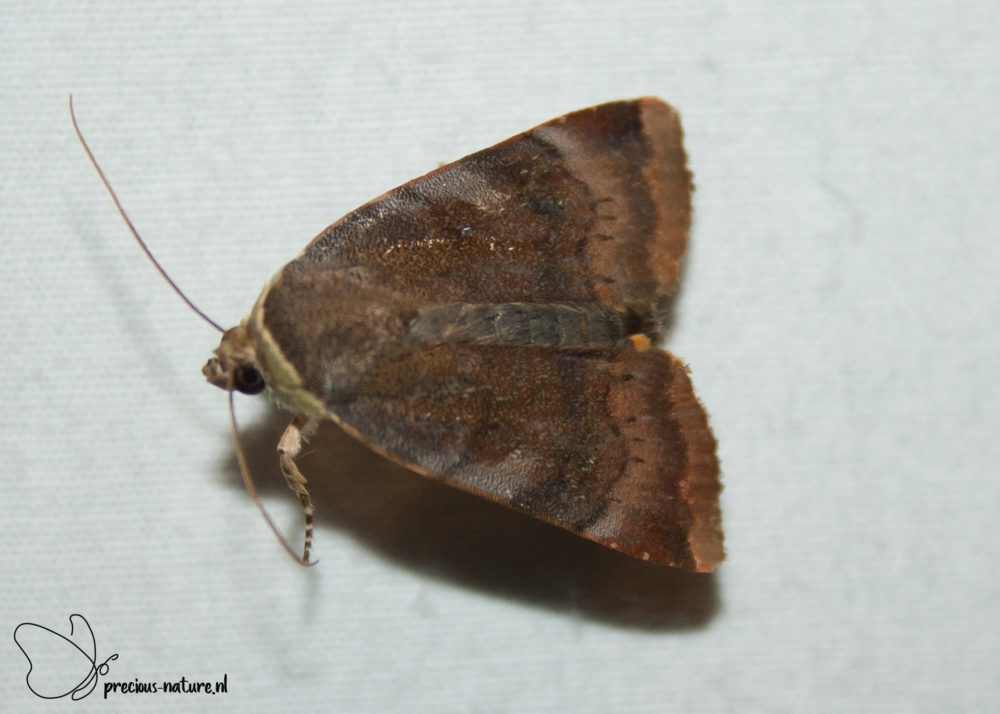
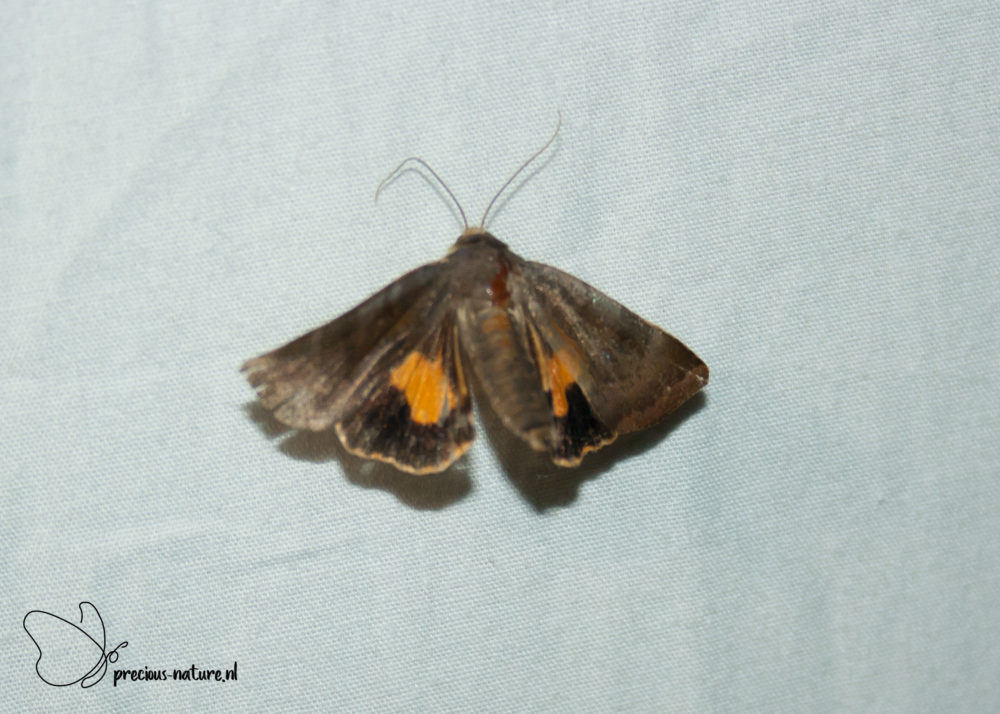
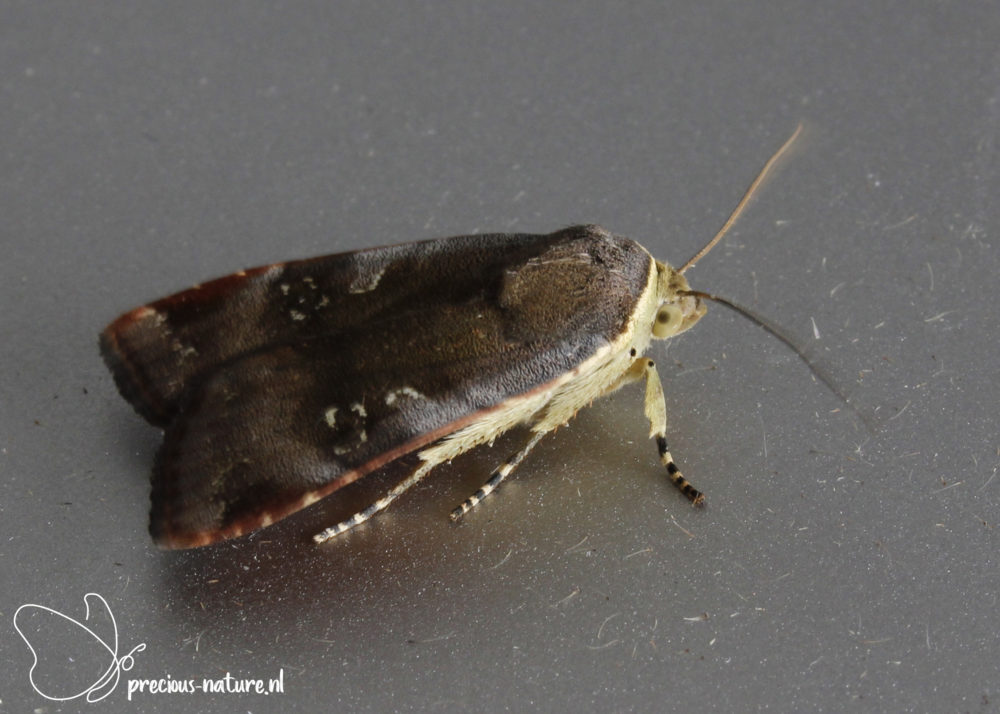
For the identification of the Yellow Underwings, it is essential to take a look at the top of the hindwings. They are highly characteristic and help you identify the correct species. For the Langmaid’s Yellow Underwing (Noctua janthina), I was lucky enough to take a picture at the right time. This owlet moth is smaller than its relatives and has a purple or reddish forewing that sometimes looks blue-grey. The markings on the forewing are relatively difficult to see. You often see a clear banding. The most characteristic is the hindwing, which is ocher yellow with a large dark spot at the base of the wing and a very wide blackish band along the termen, which are joined together along the costa. You usually see black veins in the more or less enclosed round or oval orange field in between. The flying period is one generation, from late June to September, and the wingspan is 35 mm. Host plant(s): various herbaceous plants. Dutch name: Kleine breedbandhuismoeder. Frisian name: Lytse broadbântsjoenster.
Flying period:

Genus: Noctua
Broad-bordered Yellow Underwing – 2020 (NL)
(NCBI-index: 753202)
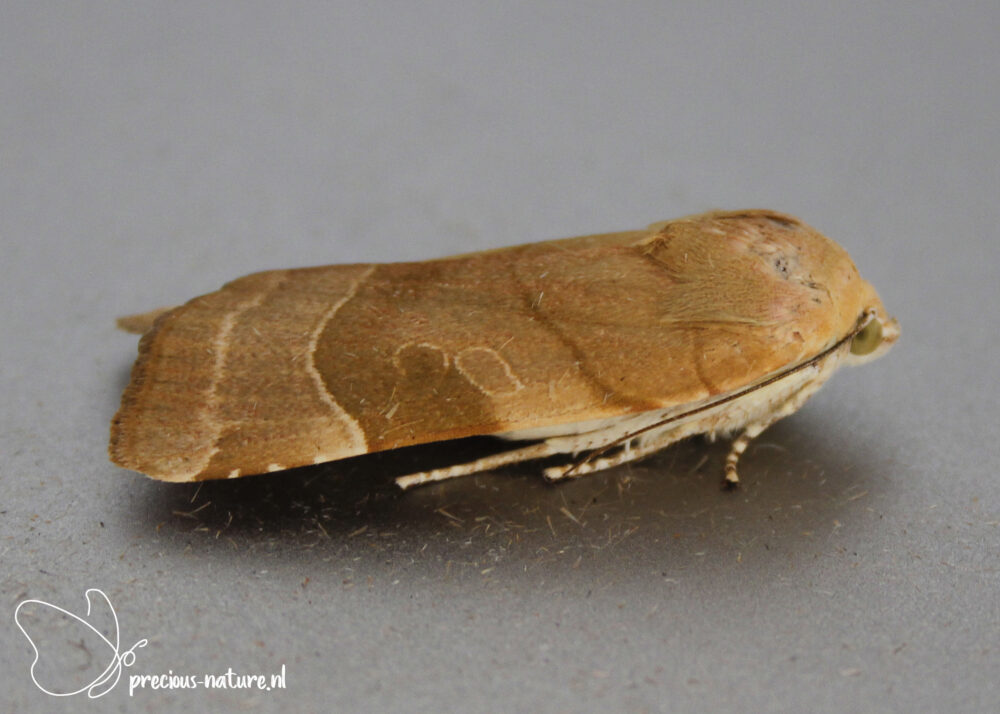
You should always focus on the hindwing to recognise the yellow underwing species and ensure correct identification. This is not immediately necessary for the Broad-bordered Yellow Underwing (Noctua fimbriata). The colour of the top of the forewing is variable, but the drawing is fairly constant. The male’s forewing is reddish-brown to olive green, and in the female, it is light brown, light green, or reddish-brown. The transverse lines are imperforate, and a broad black seam runs along the back edge of the orange-yellow hindwing. The white legs are ringed black and white at the end. The wingspan is 45-55 mm, and the flight period is from June to October for one generation. Host plant(s): Common Nettle, Sorrel, Birch, Blackberry, Privet, Willow. Dutch name: Breedbandhuismoeder. Frisian name: Breedbântsjoenster.
Flying period:
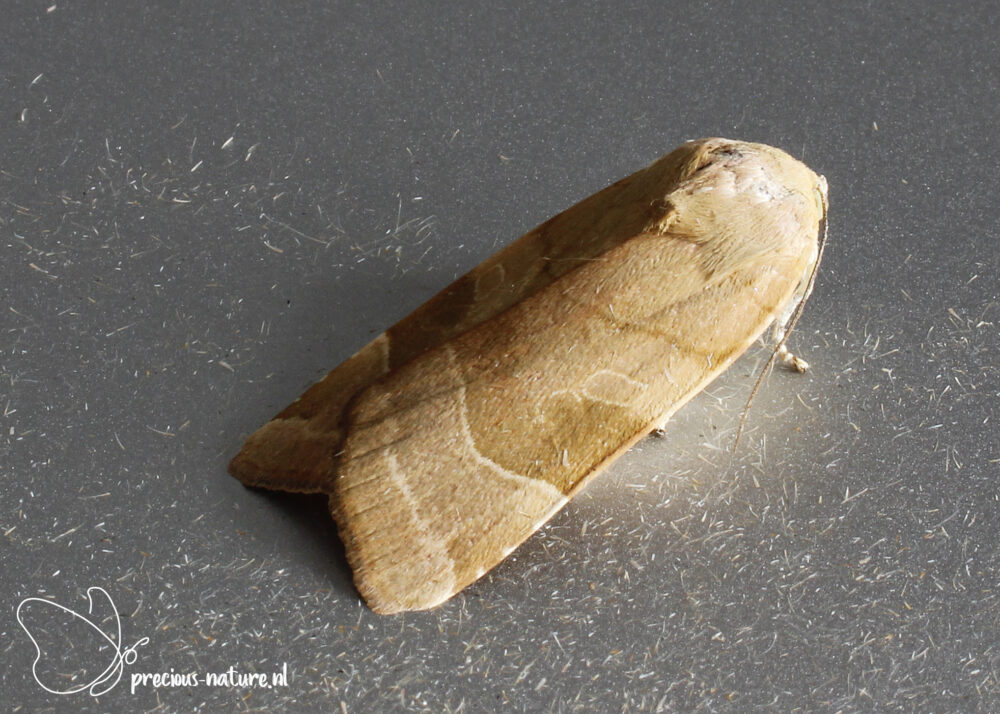
Genus: Noctua
Least Yellow Underwing – 2021 (NL)
(NCBI-index: 987993)
The smallest Noctua species in the Netherlands is the Least Yellow Underwing (Noctua interjecta). The forewing is a striking warm orange-brown to reddish-brown. The various lines and owlet markings are barely visible, of which the inner lobe of the kidney mark is most clearly visible. The hindwing is orange-yellow with a broad dark brown band and a moon-shaped dark centre spot that sometimes coincides with the dark band. The dark centre spot is sometimes more visible on the underside of the wing than on the top. The wingspan is 31-36 mm, and the flight period is one generation from June to October. Host plant(s): herbaceous plants. Dutch name: Kleine huismoeder. Frisian name: Lytse tsjoenster.
Flying period:
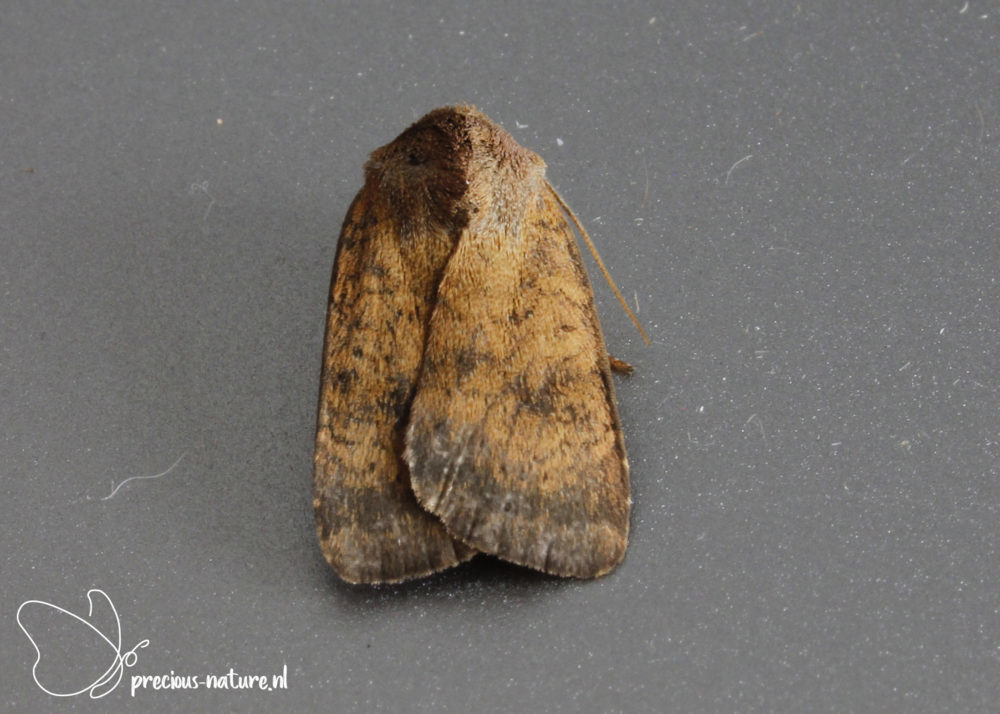
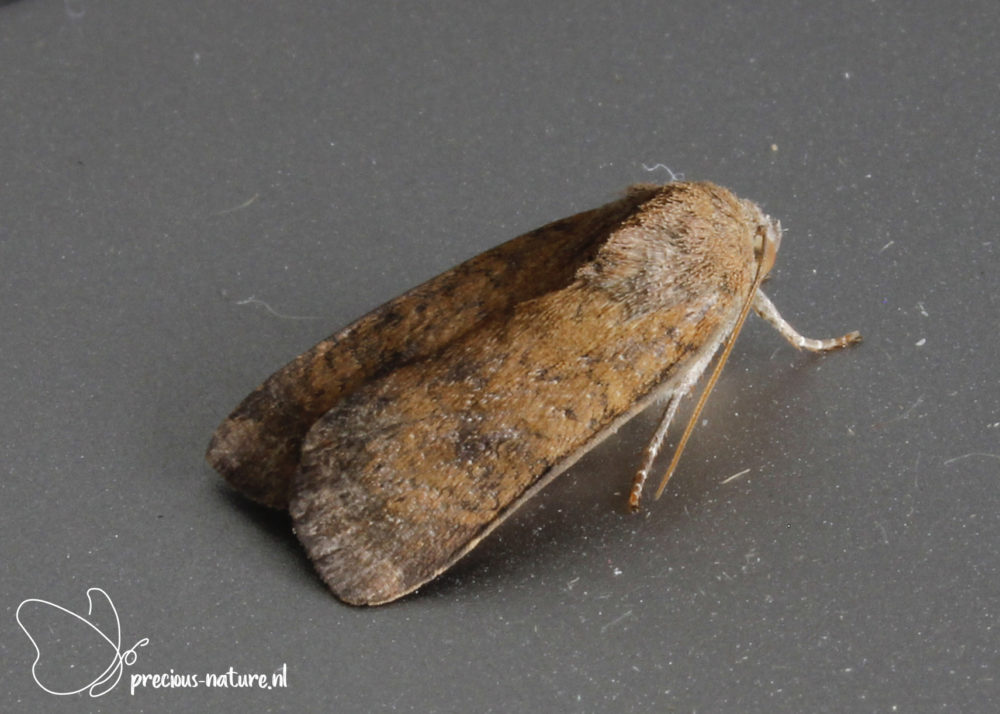

Genus: Noctua
Lesser Yellow Underwing – 2025 (NL)
(NCBI-index: 987992)
Of the Noctua species that occur in the Netherlands, the Lesser Yellow Underwing (Noctua comes) was the last one I wanted to discover. When I photographed it on my canvas as it landed, I strongly suspected I’d complete my task. Closer examination of the upperside of the hindwing confirmed this. On the orange-yellow hindwing, a dark, crescent-shaped central spot is visible, and a relatively narrow black-brown band runs along the trailing edge. This makes it very similar to the Lunar Yellow Underwing (Noctua orbona), but that species has a distinct black spot on the upperside of the forewing, at the wingtip. The colour of the relatively broad forewing is highly variable. The ground colour ranges from light brown—often greyish and sometimes greenish-tinged—through reddish-brown to almost black. The wavy line is usually clearly visible and sometimes thickens at the leading edge of the wing to form a triangular spot, one side of which is always faint. A sharply defined black spot is therefore always missing. The flight period is one generation from mid-May to early October, and the wingspan is 38-44 mm. Host plant(s): herbaceous plants. Dutch name: Volgeling. Frisian name: Folgeling.
Flying period:

Genus: Ochropleura
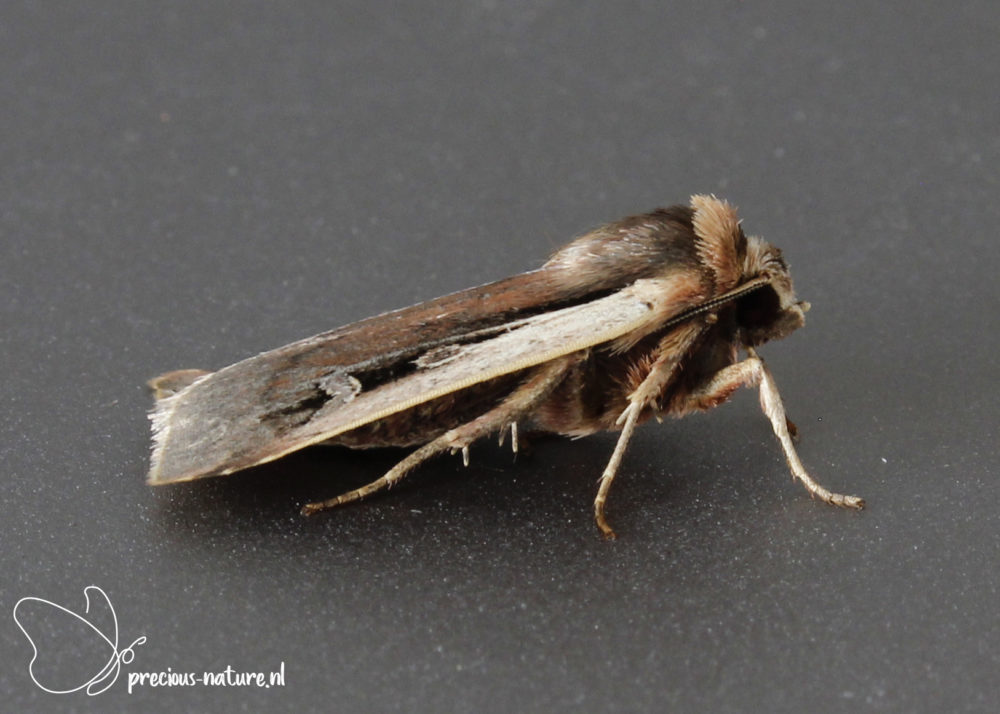
Flame Shoulder – 2017 (NL)
(NCBI-index: 320037)
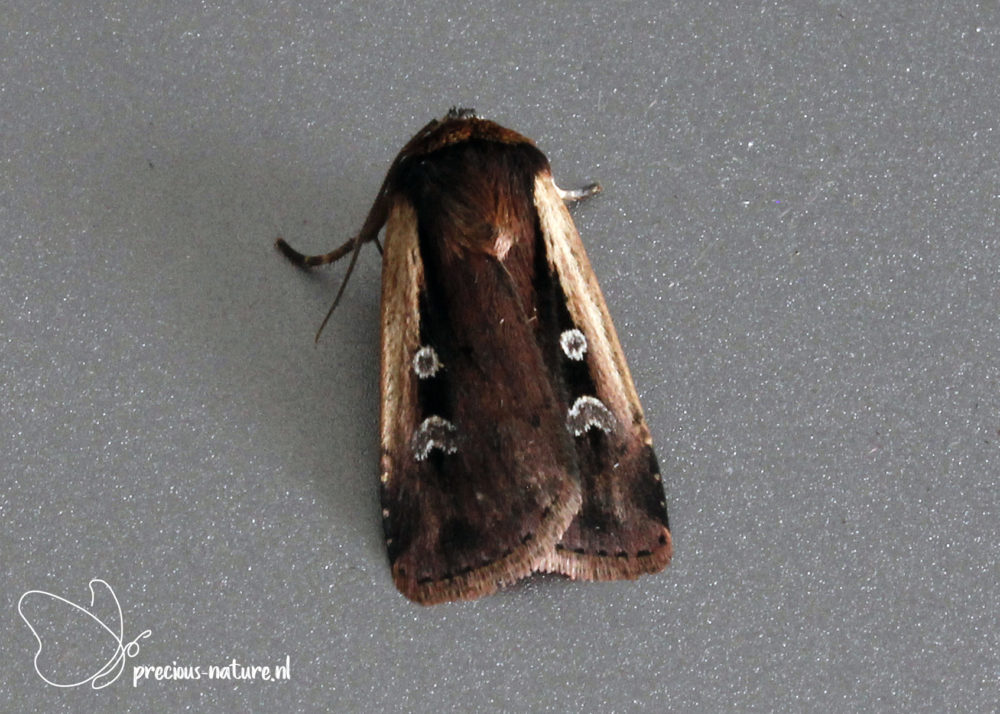
The Flame Shoulder (Ochropleura plecta) is most noticeable because of its yellow-colored broad streak along the costa. A black streak is right next to this light streak, and the rest of the wing is dark brown. The owl marks are noticeable because of the white outline. The head has a striking light brown hair tuft. The flight period is from April to October in two or three generations, and its wingspan is 24-30 mm. Host plant(s): Bedstraws, docks, Groundsel, Ribwort Plantain. Dutch name: Haarbos. Frisian name: Hierbosk.
Flying period:
Genus: Xestia
Setaceous Hebrew Character – 2017 (NL)
(NCBI-index: 987431)
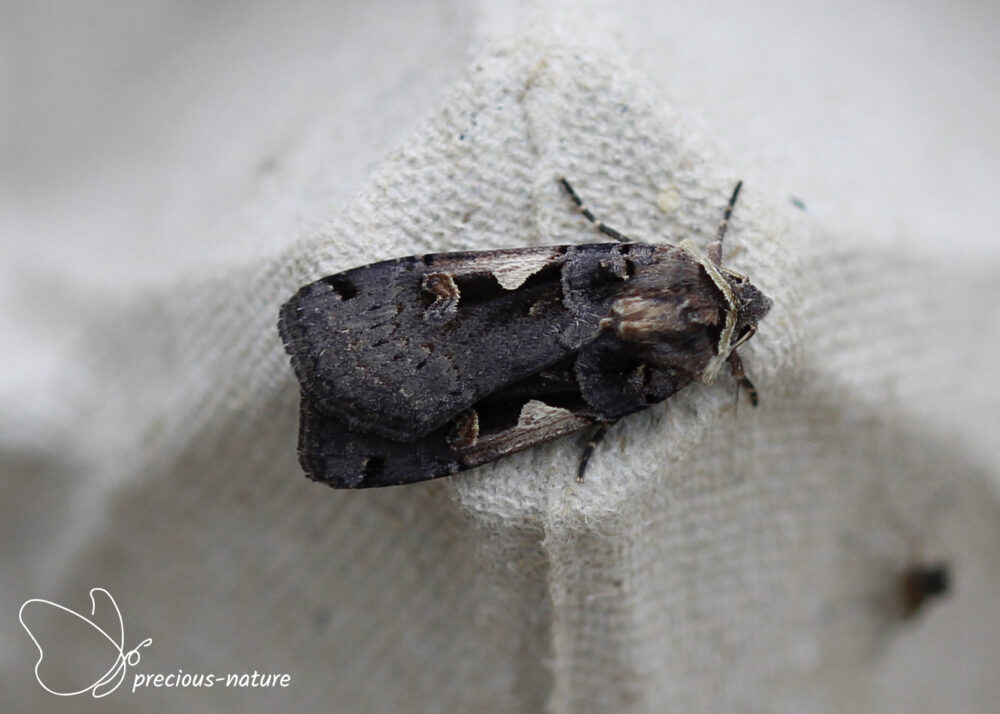
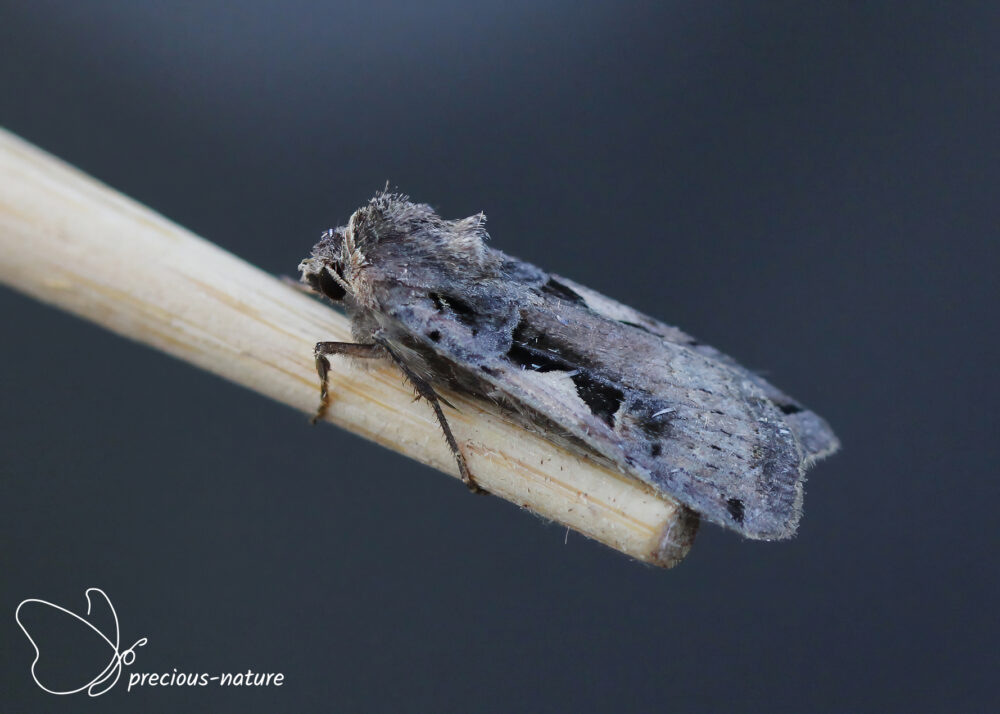
The striking, straw-yellow triangular spot along the costa of the forewing easily recognises the Setaceous Hebrew Character (Xestia c-nigrum). A black spot in the form of an angular ‘C’ adjoins this light spot. The collar of this owlet moth is also straw yellow. The rest of the forewing is dark grey. The hindwing is white, with grey speckling along the termen. It flies in two generations from April to the end of November, and the wingspan is 28-38 mm. Host plant(s): Common Nettle, White Dead-nettle, willowherbs, and burdocks. Dutch name: Zwarte C-uil. Frisian name: Swart c-ûltsje.
Flying period:

Genus: Xestia
Square-spot Rustic – 2018 (NL)
(NCBI-index: 988049)
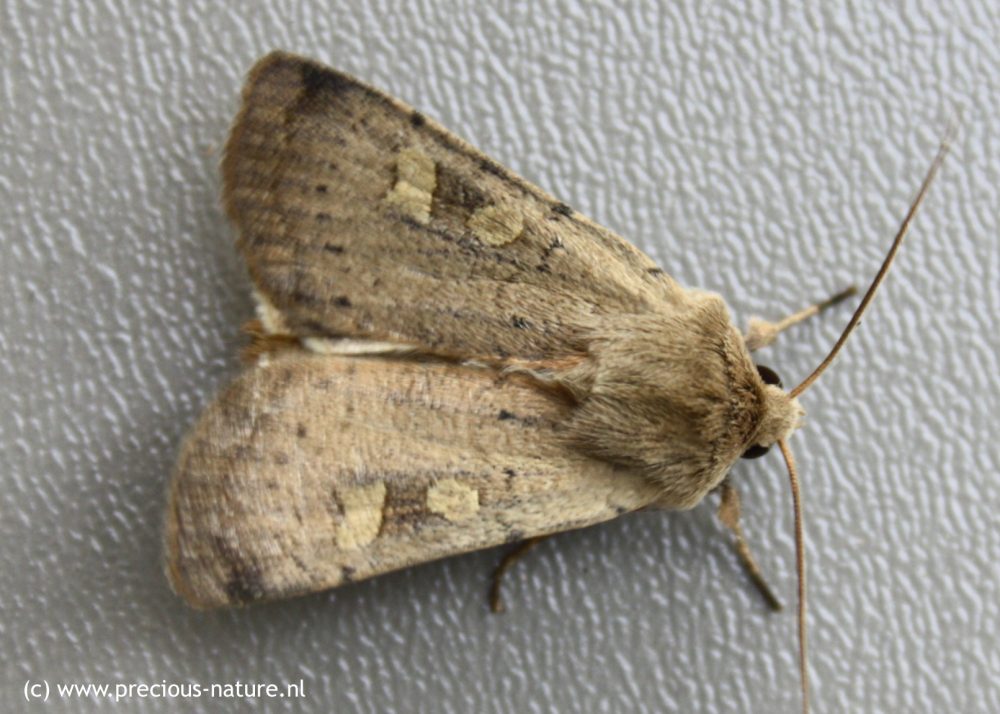
An owlet moth, mainly seen in late summer, is the Square-spot Rustic (Xestia xanthographa). It has a very varied variety of colours. The light and/or slightly outlined kidney mark is characteristic. They sometimes appear square due to the dark padding at the ends of the lobes. The oval mark is often light; there is often a dark stain between the oval and kidney marks. The scalloped transverse lines are not always visible. The outer transverse line is always visible as a row of dots or dashes. The colour of the forewing varies from light brown to red or greyish brown. The flight period spans one generation, from late July to October, and the wingspan ranges from 32 to 35 mm. Host plant(s): grasses and herbaceous plants such as plantains and cleavers. Dutch name: Vierkantvlekuil. Frisian name: Fjouwkantflekûltsje.
Flying period:

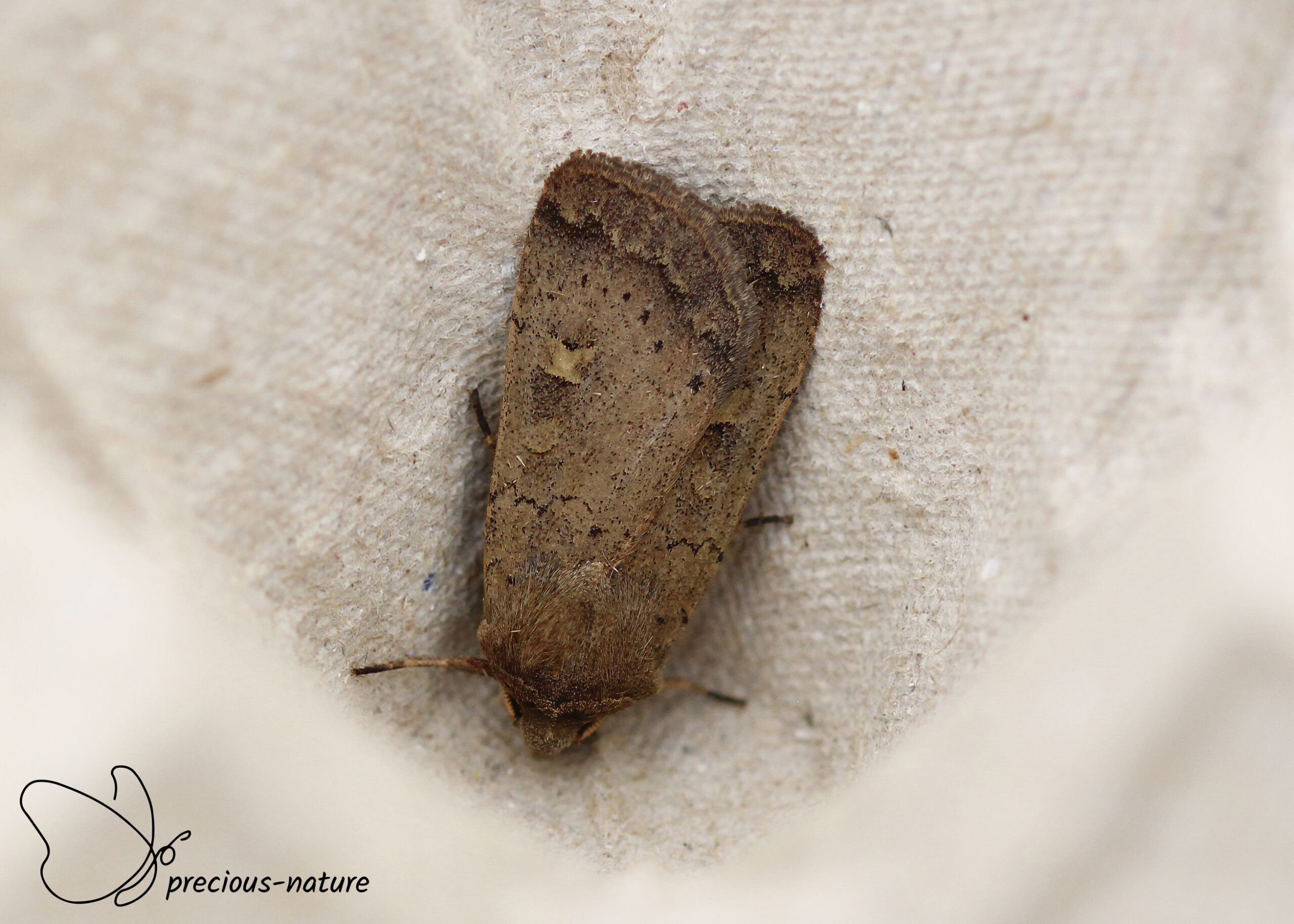
Genus: Xestia
Double Square-spot – 2020 (NL)
(NCBI-index: 988048)
The Double Square-spot (Xestia triangulum) is an owlet moth that closely resembles the Triple-spotted Clay (Xestia ditrapezium). The moderately broad forewing is usually light greyish-brown with sometimes a reddish or pinkish tint. Sometimes, the forewing is darker or predominantly grey. The Double Square-spot has a slightly broader and lighter forewing than the Triple-spotted Clay and a grey-brown hindwing, whereas the Triple-spotted Clay has a light brown hindwing. A faint central spot can be seen on the hindwing, and the fringes are slightly lighter in colour than the hindwing. The difference is best seen in the zone between the ante-median and median lines. In the Double Square-spot, this zone is as light as the base. This zone is darker in the Triple-spotted Clay. The forewing shows a black field in which the lighter oval mark protrudes obliquely. The black spots above and below the oval mark are often not connected. Near the apex of the forewing, a black spot can be seen that distinguishes it from the similar Square-spotted Clay (Xestia stigmatica). The flight period spans from May to September in one generation, and the wingspan ranges from 36 to 46 mm. Host plant(s): Plantain, Sorrel, Common Nettle. Dutch name: Driehoekuil. Frisian name: Trijehoekûltsje.
Flying period: