Traditionally, the tribe Hadenini belonged to the subfamily Hadeninae within the owlet moths (Noctuidae). However, modern phylogenetic studies have led to more stable taxonomic insights. Although scientists have not reached consensus, Hadenini have been moved to the Noctuinae. Using the National Centre for Biotechnology Information (NCBI) database as a starting point, this website follows that classification.
The Hadenini form a fairly large tribe, with more than 140 genera described worldwide. They are generally robust moths with body hair that helps retain heat while flying on cooler nights. An important anatomical feature is the presence of fine hairs on the compound facet eyes. In most other owlet species, the eyes are completely bare or only have eyelashes at the edges. The forewings are relatively short and broad.
Genus: Anarta
The Nutmeg – 2017 (NL)
(NCBI-index: 987454)
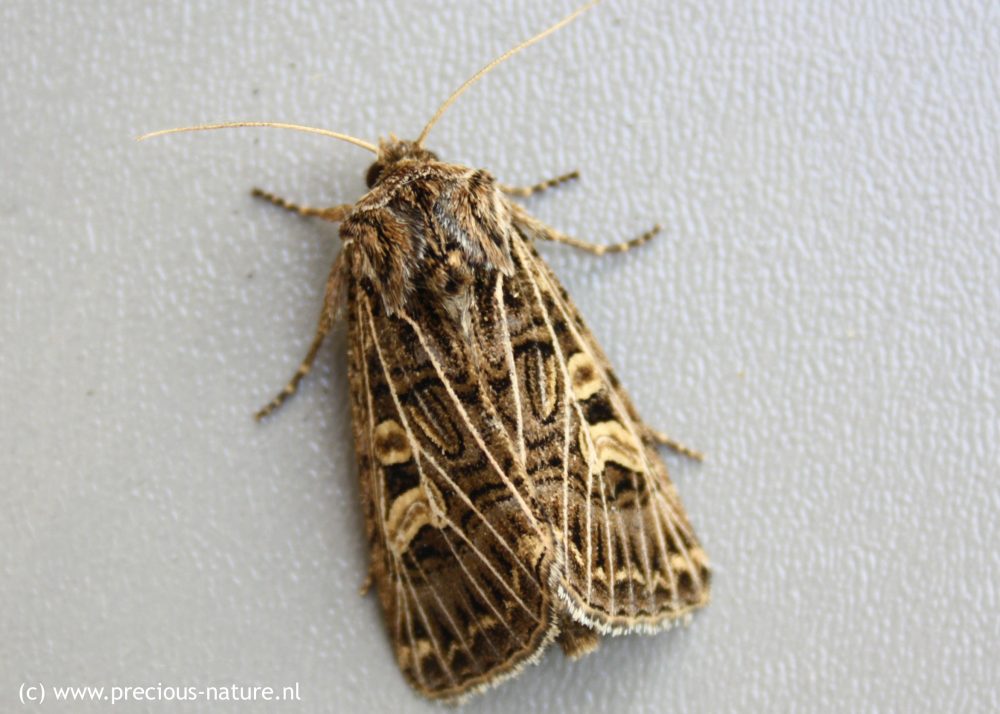
An essential characteristic of the Nutmeg (Anarta trifolii) is the clear white ‘W’ in the light, black-deposited wave line. The ground colour is brownish-light to dark grey. The inner lobe of the reasonably large kidney mark is always darker than the base colour of the wing. The midfield and apex are lighter colored. The flight period is from mid-April to mid-October in two, and sometimes three, generations, and its wingspan is 30-35 mm. Host plant(s): Orache, Goosefoot. Dutch name: Spurrie-uil. Frisian name: Sparjeûltsje.
Flying period:

Genus: Anarta
Marbled Nutmeg – 2024 (CH)
(NCBI-index: 987453)
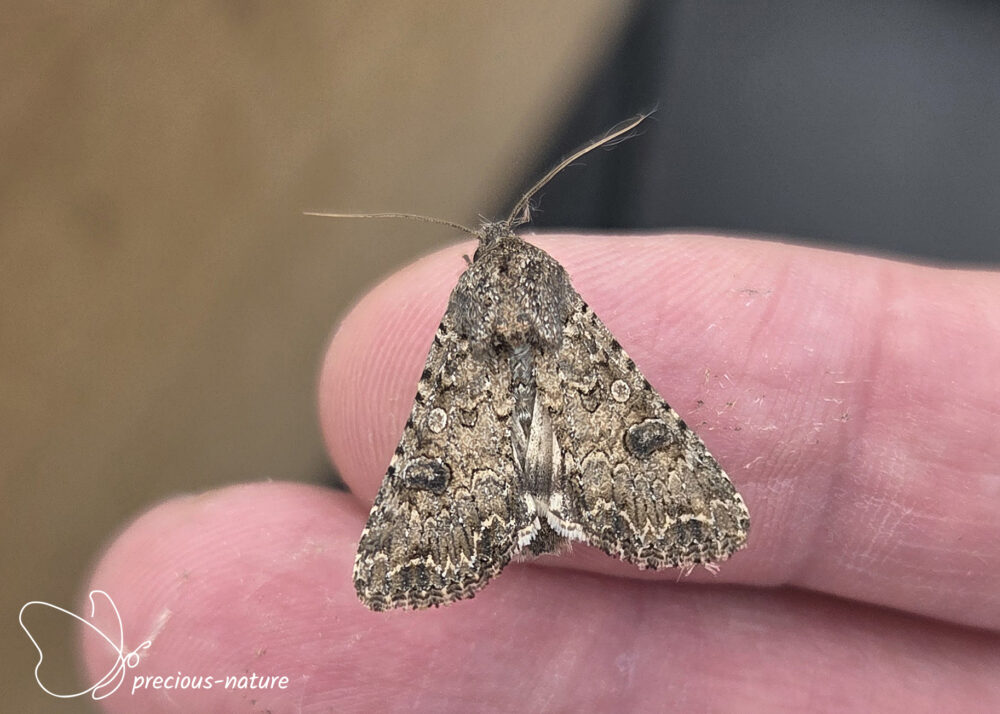
Owlet moths are often challenging to identify. Specific characteristics usually indicate the genus. The white wavy line with a W always points to the Anarta genus. For the Marbled Nutmeg (Anarta odontites), it was a bit of a puzzle because the photo was not sharp. In addition to the host plant on which I saw it sitting, the ring spot is particularly characteristic. The bright white ring with a slightly darker core stands out in the light stripe running inward from the front edge. The upper side of the thorax is hairy with a striking white transverse stripe close to the head. The flight period is two generations from April to the end of July, and the wingspan is 30-34 mm. Host plant(s): Crown Vetch, Horse-shoe Vetch. Dutch name: Witringpijluil. Frisian name: –
Flying period:


Genus: Conisania
Barett’s Marbled Coronet – 2025 (IT)
(NCBI-index: 1.858092)
The Barrett’s Marbled Coronet (Conisania luteago) ranges across Western and Central Europe and is rare in Northern Europe. It was first seen in the Netherlands in 2023. Habitat loss, overgrowth, and nitrogen deposition have reduced suitable habitats. As a result, the Barrett’s Marbled Coronet is listed as rare or vulnerable in several countries. Preserving open, poor, sandy habitats is essential to the species’ survival. The Barrett’s Marbled Coronet can be distinguished from related species within the genus Conisania and similar Noctuinae by the combination of an ochreous to yellowish-brown ground colour, a weakly developed annular and reniform spot, and few contrasting transverse lines. The hindwings are light grey to cream, with a narrow, darker marginal band and a light fringe. Genitalic examination may be needed for specific identification in cases of wear or colour overlap. The flight period is one generation from May to July, and the wingspan is 30-35 mm. Host plant(s): Dune Wormwood. Dutch name: Bruine silene-uil. Frisian name:–
Flying period:

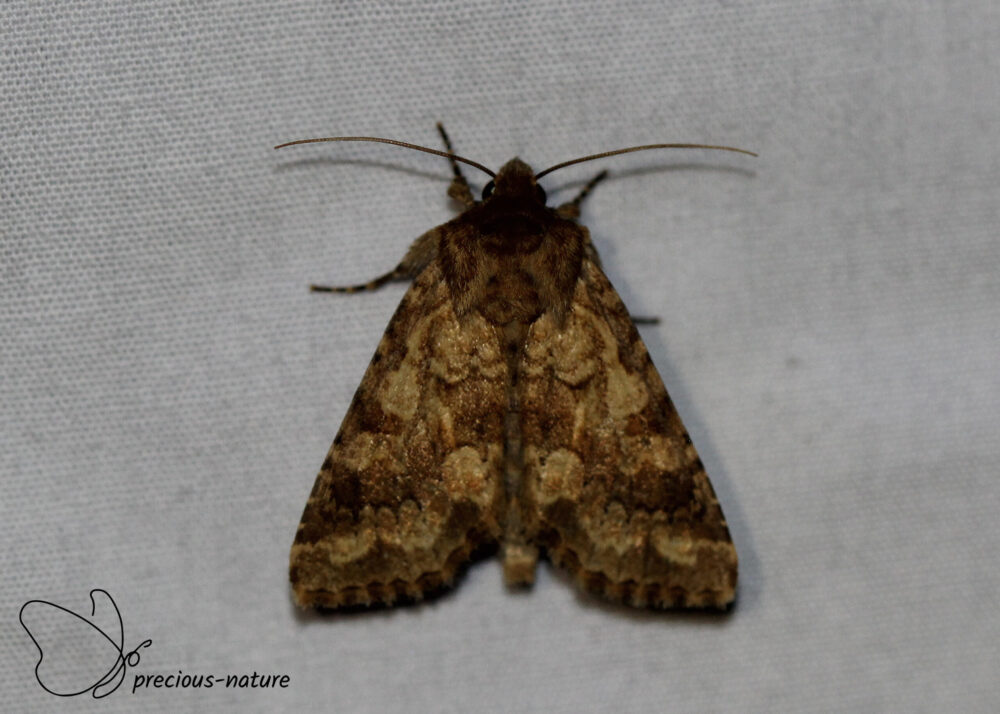
Genus: Euplexia
Small Angle Shades – 2020 (NL)
(NCBI-index: 987933)
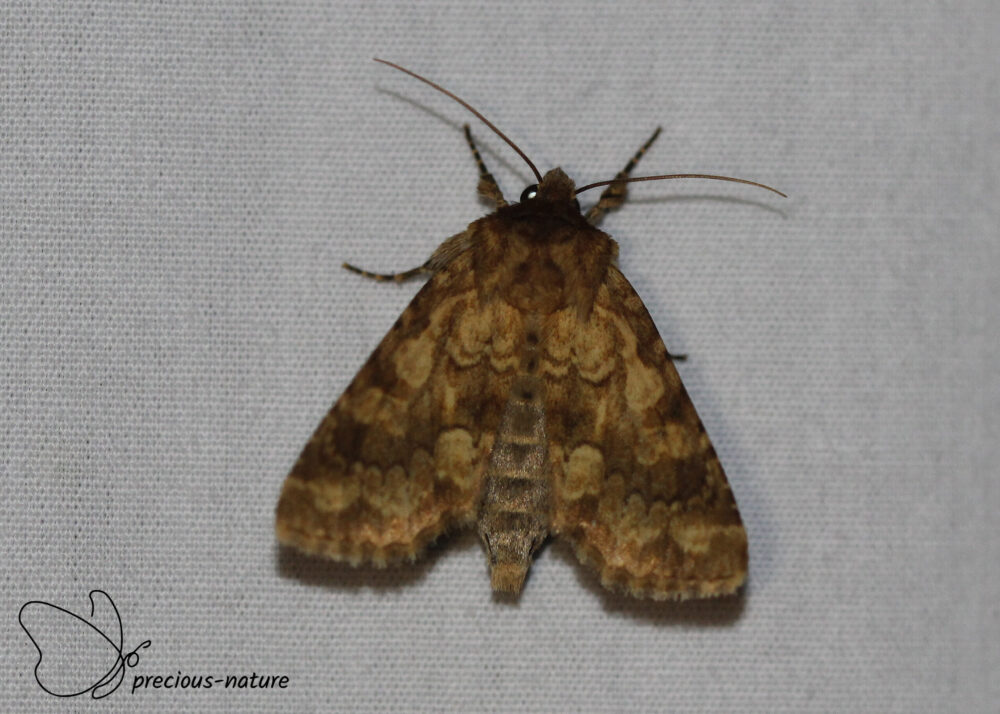
Like the Angle Shades (Phlogophora meticulosa), the Small Angle Shades (Euplexia lucipara) has a resting position that makes it look like a dead leaf. The costa is folded under the rest of the wing, and the apex is downwards. The Small Angle Shades can be recognised by the white to pale yellow kidney mark on the border of the dark median band and the broad light brown or pink-brown zone at the dorsum. In that broad light-brown zone, the golden-yellow spot near the kidney mark is noticeable. The wingspan is 27-32 mm, and the flying period is from May to August in one generation. Host plant(s): Fern, Birch. Dutch name: Levervlek. Frisian name: Leverflek.
Flying period:

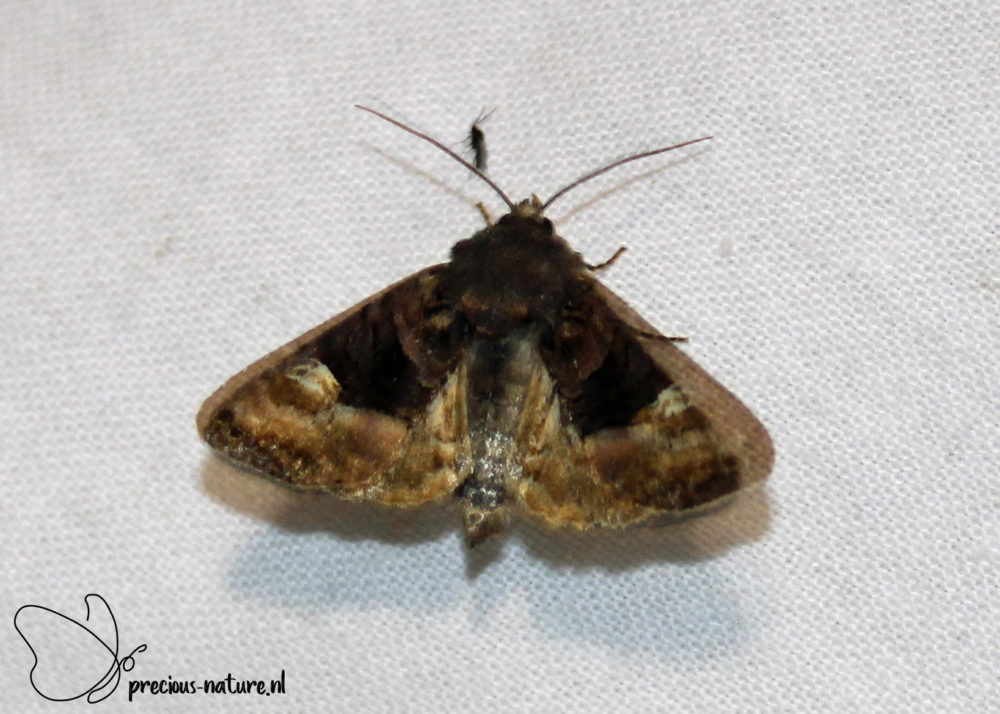
Genus: Hadena
Varied Coronet – 2021 (NL)
(NCBI-index: 987949)
A less dull-colored and marked owlet moth is the Varied Coronet (Hadena compta). The forewing is chocolate brown with black spots and a striking white median band. The white median line extends from the centre of the costa to the dorsum, including the white oval mark, which is partially outlined in black. The darkly outlined white kidney mark lies against this white median line. The Varied Coronet is well distinguishable from the Marbled Coronet (Hadena confusa) and the White Spot (Hadena albimacula) because of the completely continuous white median line. The wingspan is 25-30 mm, and the flight period is from May to August in one generation. Host plant(s): Sweet William. Dutch name: Witband-silene-uil. Frisian name: –
Flying period:
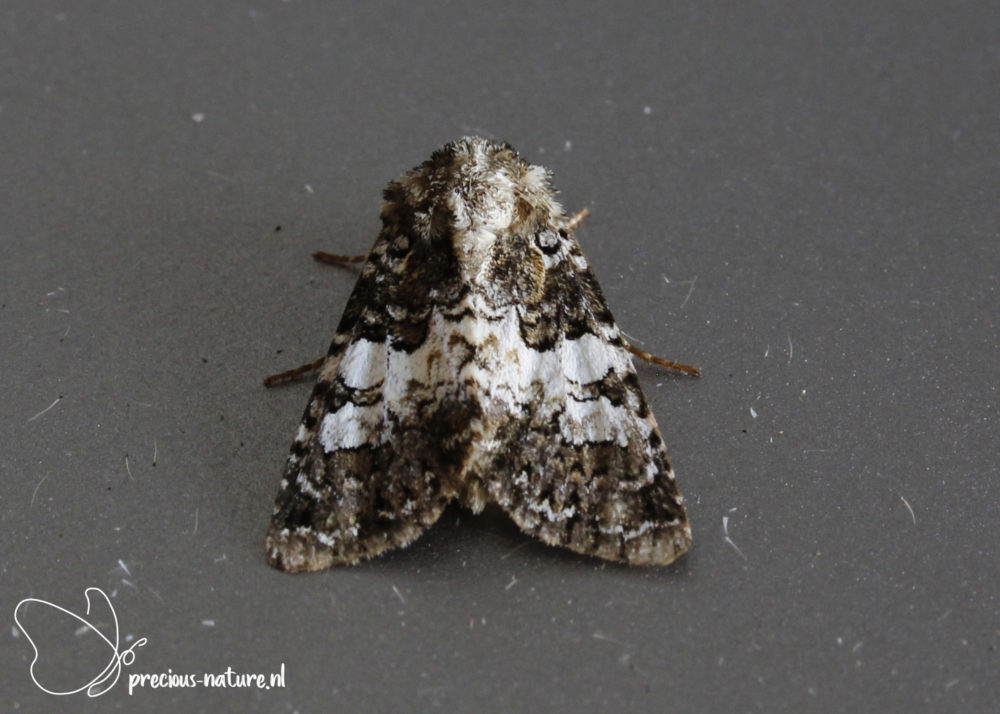
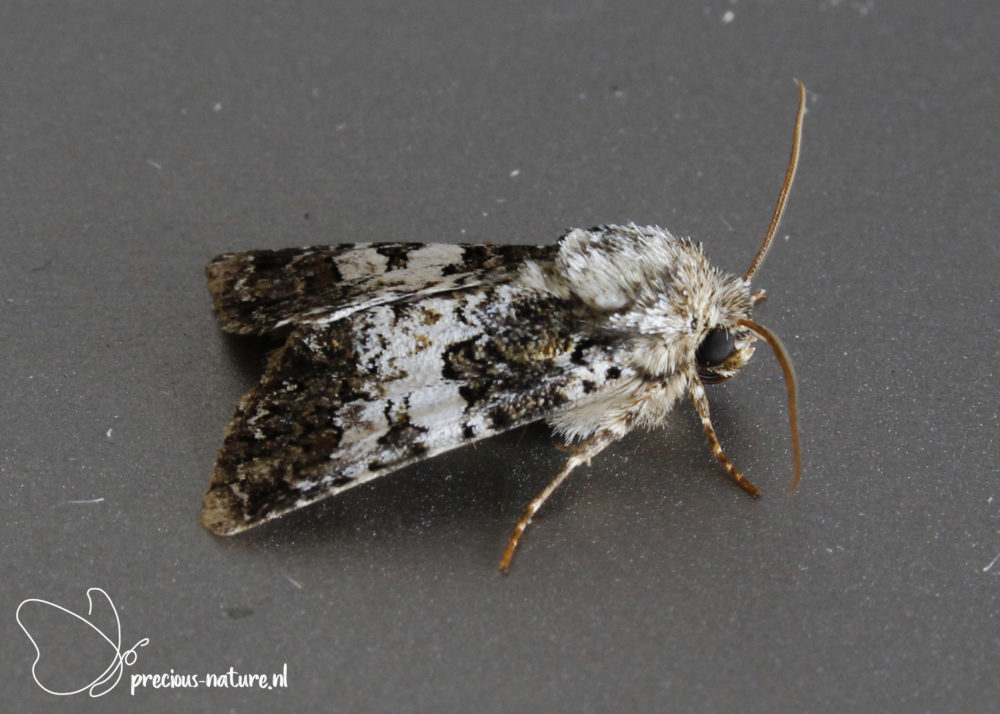
Genus: Hadena
The Lychnis – 2023 (NL)
(NCBI-index: 987947)
The Lychnis (Hadena bicruris) has predominantly grey-brown and fairly broad forewings. The dark tap spot and elongated, white-lined, narrow ring and kidney spot can be seen on the forewing. The ring spot and kidney spot converge towards the posterior edge, forming a V shape. The two spots rarely merge. The hindwings are grey with a lighter base. The ring spot is quite elongated. The flight period is in two, sometimes three generations, from the end of April to the end of September, and the wingspan is 30-40 mm. Host plant(s): Red Campion, Sweet Daisy. Dutch name: Gewone silene-uil. Frisian name: –
Flying period:

Genus: Hadena
Viper’s Bugloss – 2025 (IT)
(NCBI-index: 1.869979)
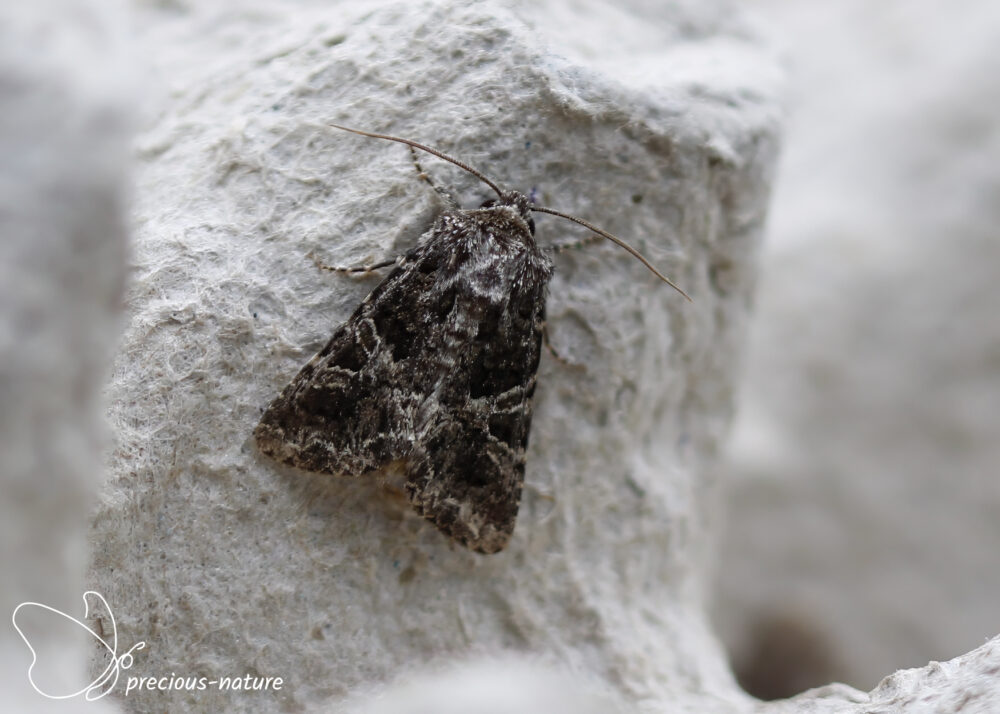
The Viper’s Bugloss (Hadena irregularis) is a small yet strikingly marked moth, primarily found in calcareous dunes. The forewings are a warm, sandy colour with fine, irregular lines and often a light, conspicuous ring spot connected to the kidney spot on the underside. Despite its modest size, it is graceful. In the Netherlands, the eared silene is now rare and is best known from the dunes of North Holland. Its dependence on specific plants and habitats makes it a species that speaks volumes about the quality of our dune environment. The flight period spans one or two generations, from early June to early August, and the wingspan measures 32-36 mm. Host plant(s): Spanish Catchfly, Gypsophila. Dutch name: Oorsilene-uil. Frisian name: –
Flying period:

Genus: Hadena
Marbled Coronet – 2025 (IT)
(NCBI-index: 987950)
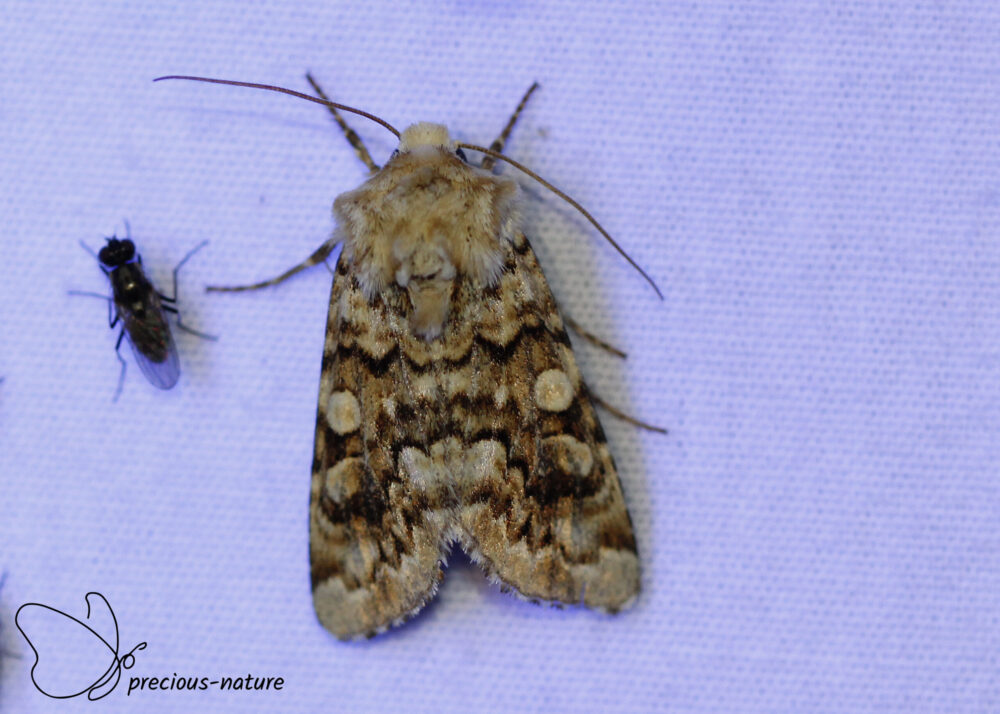
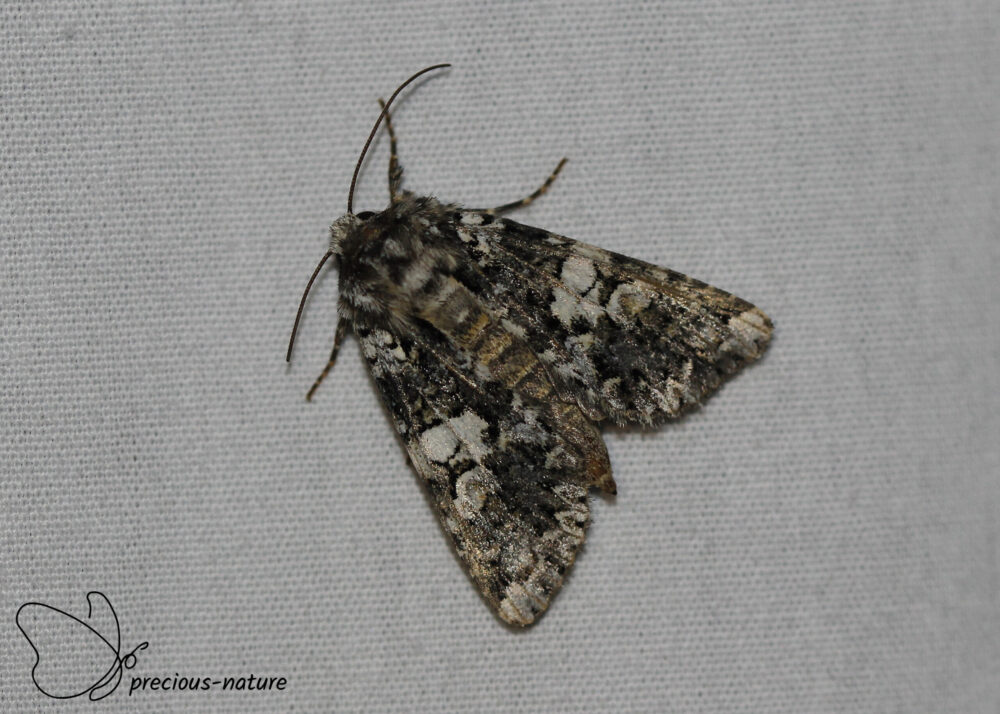
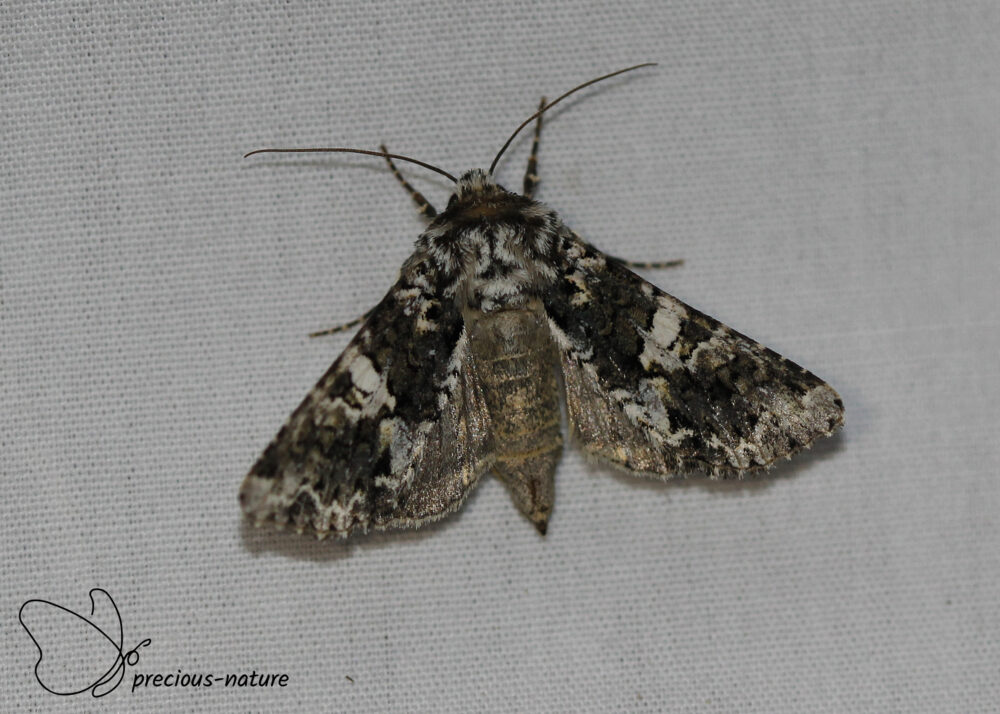
The Marbled Coronet (Hadena confusa) is a moth with predominantly blackish-grey forewings, on which several striking white spots are visible. These light spots are located at the wing tip, in the inner edge corner and around the clearly defined, also white oval and kidney mark. Together, they give the moth a characteristic spotted appearance. The white spots around the oval and kidney mark merge, forming an oblique light band. However, this band always remains restricted to the middle of the forewing and never reaches the inner edge. This character helps distinguish the species from the very similar Varied Coronet (Hadena compta), in which the light band usually does reach the inner edge. The flight period is one generation from early May to early July, and the wingspan is 34-38 mm. Host plant(s): Bladder Campion, Sea Campion. Dutch name: Gevlekte silene-uil. Frisian name: –
Flying period:
Genus: Hecatera
Broad-barred White – 2025 (NL)
(NCBI-index: 988124)
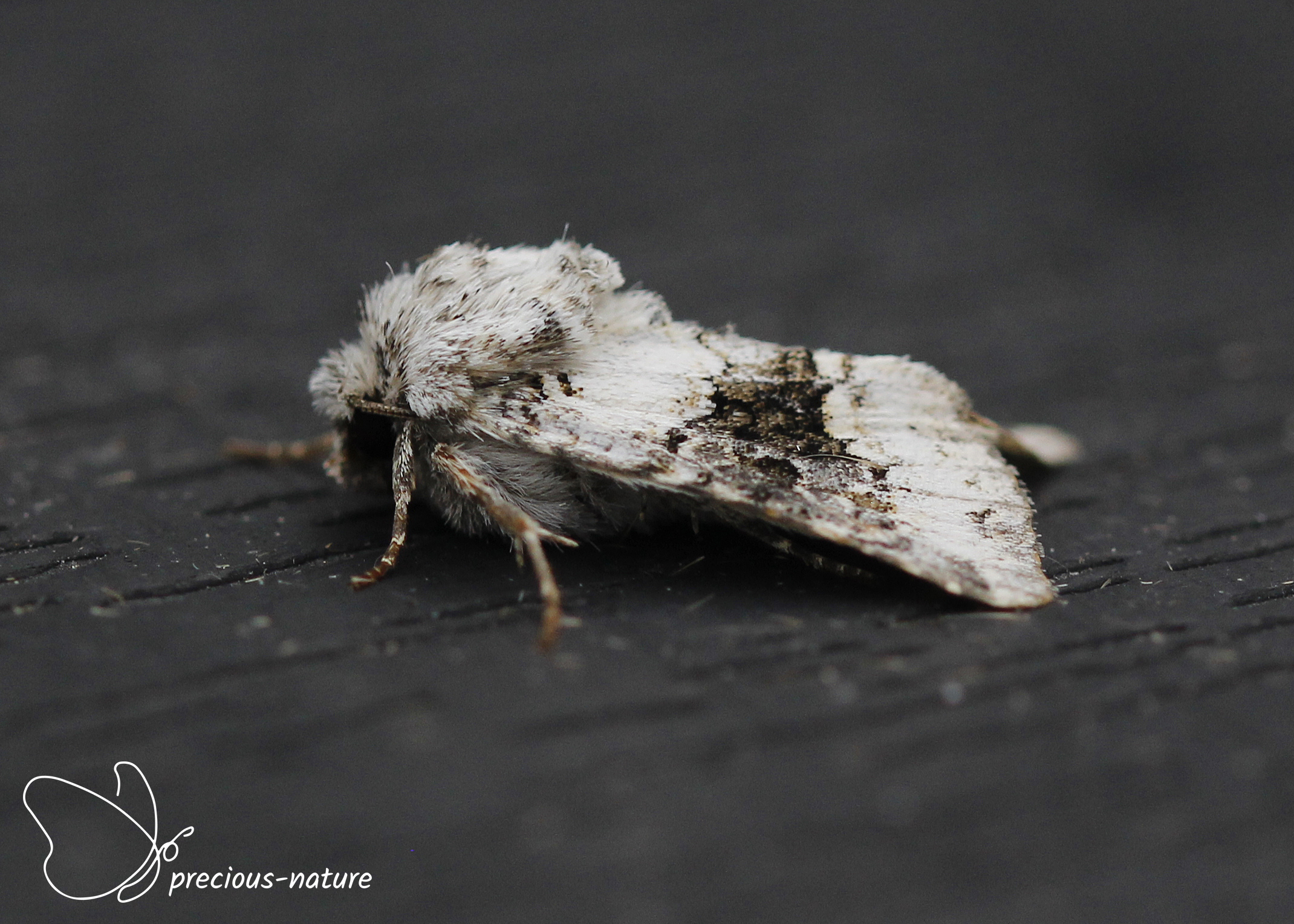
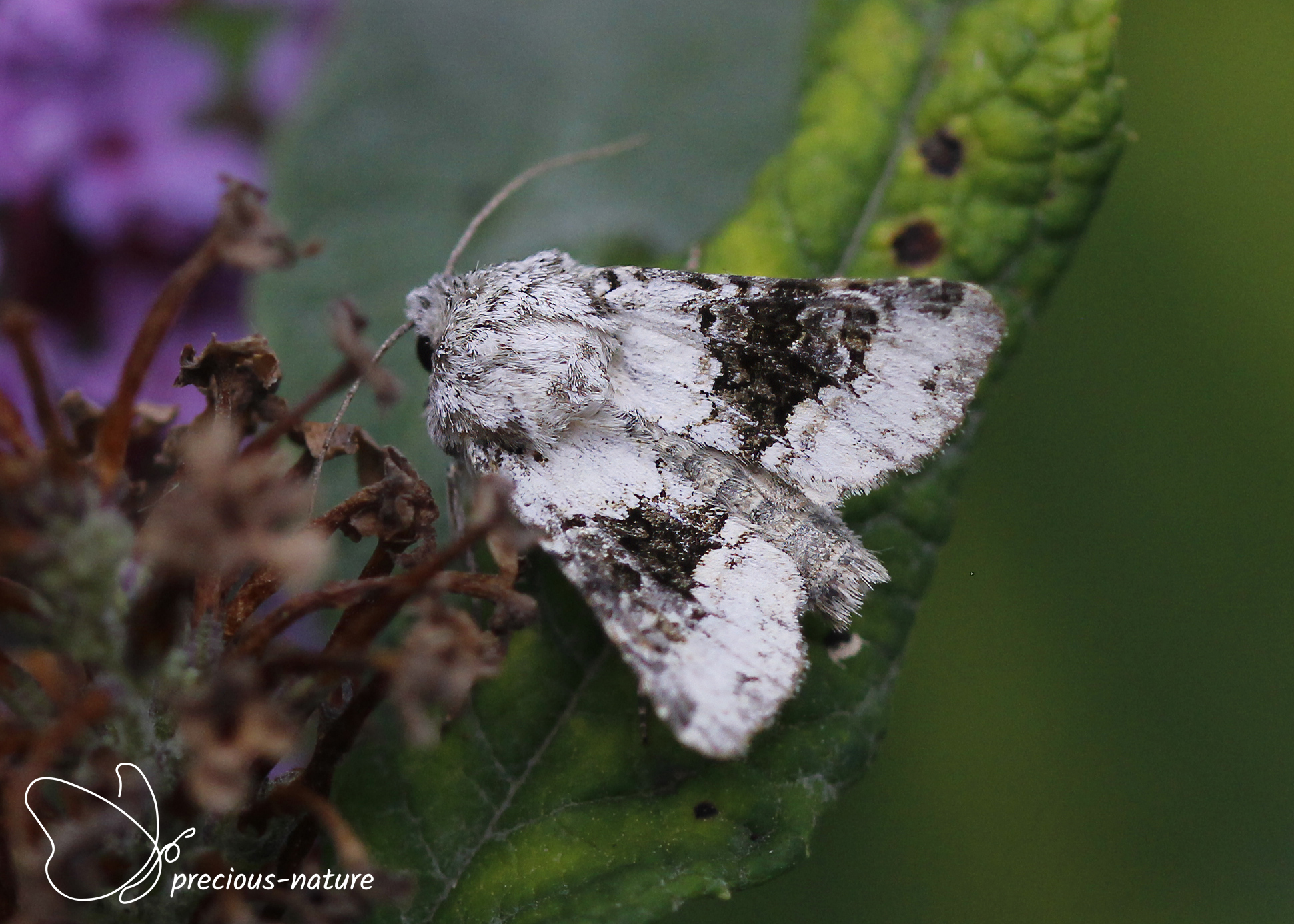
The Broad-barred White (Hecatera bicolorata) is relatively easy to recognise. The dark grey or blackish central part of the wing, containing the light colored oval and kidney mark, stands out clearly against the rest of the white wing. In rare cases, the ground colour of the forewing is grey, making the central part of the wing less distinct. The forewing has a white leading edge. The flight period spans one or two generations from late May to mid-September, and the wingspan is 30-34 mm. Host plant(s): Hawkweed, Hawk ‘s-beard, Milk Thistle. Dutch name: Tweekleurige uil. Frisian name: –
Flying period:

Genus: Lacanobia
Bright-line Brown-eye – 2018 (NL)
(NCBI-index: 79499)
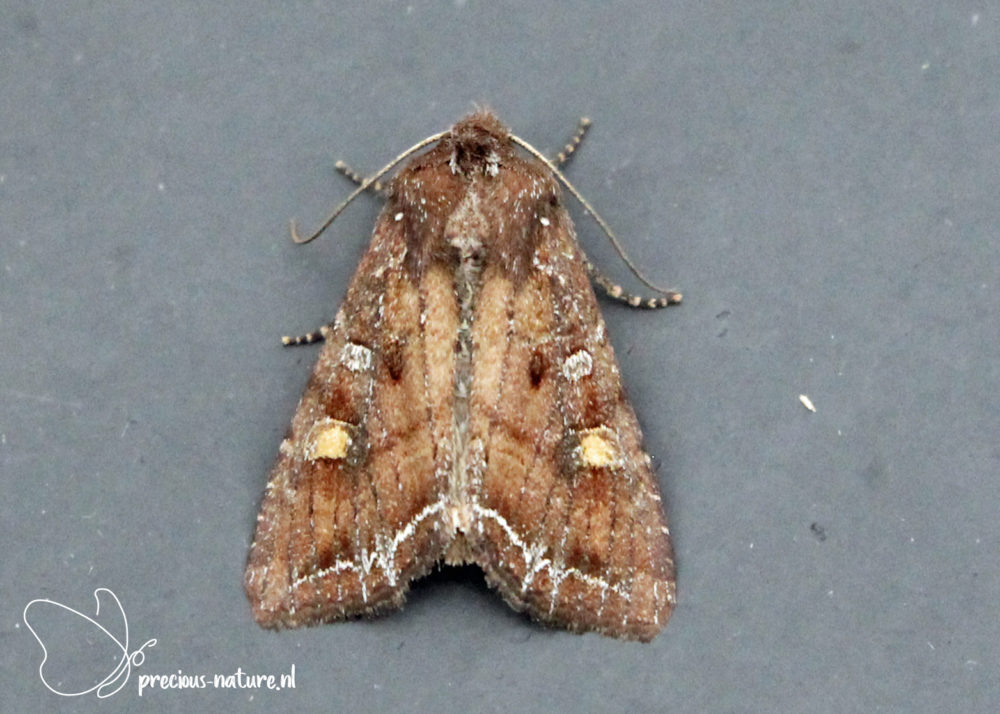
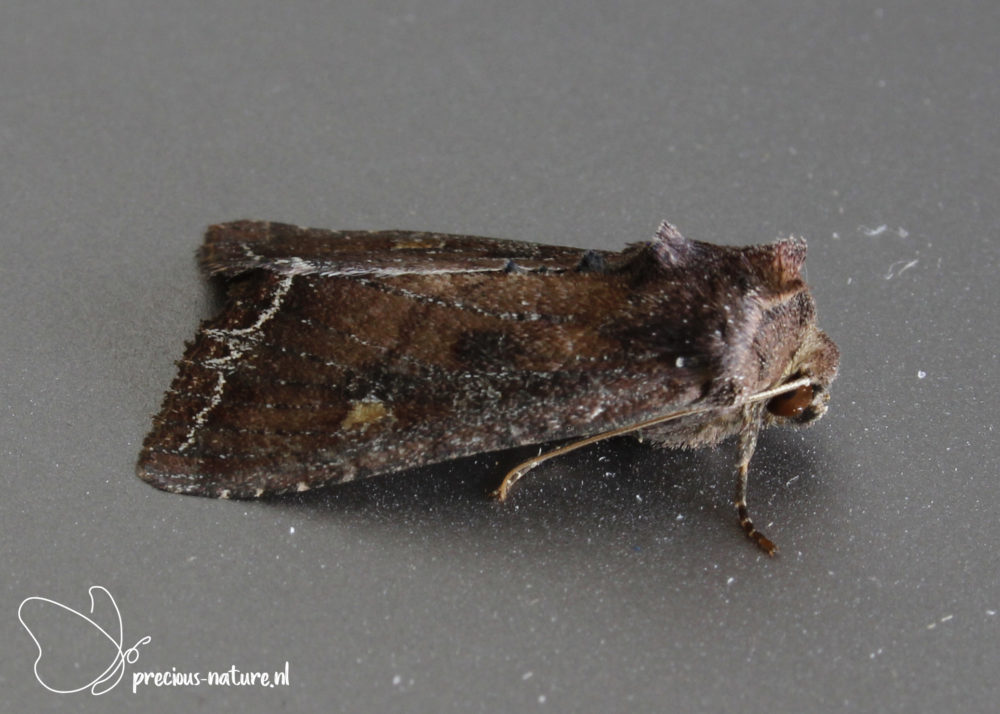
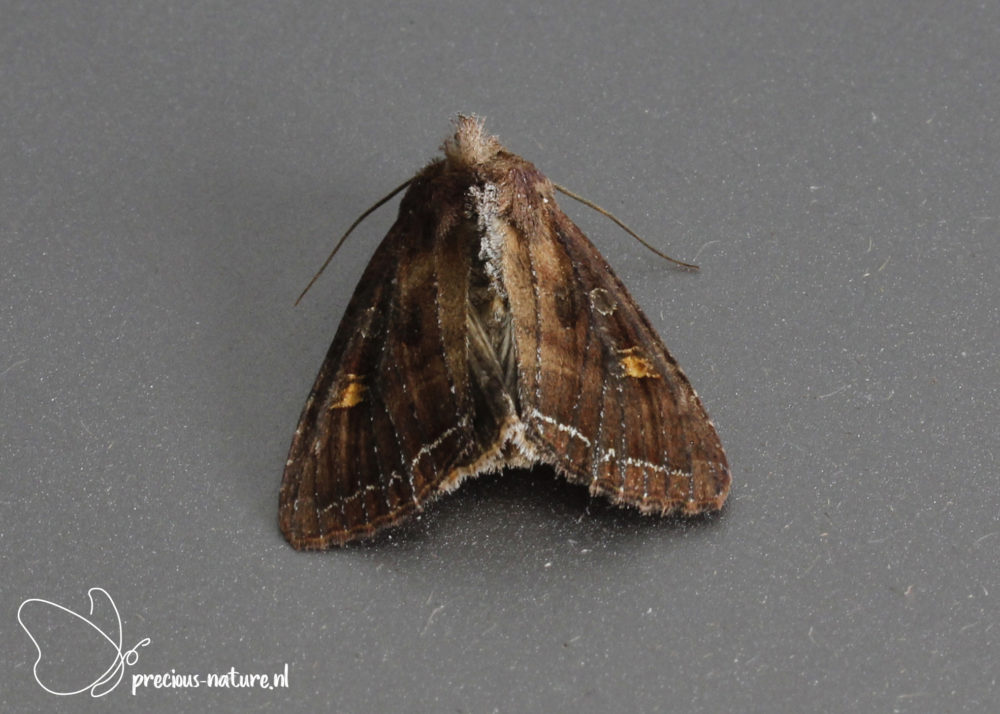
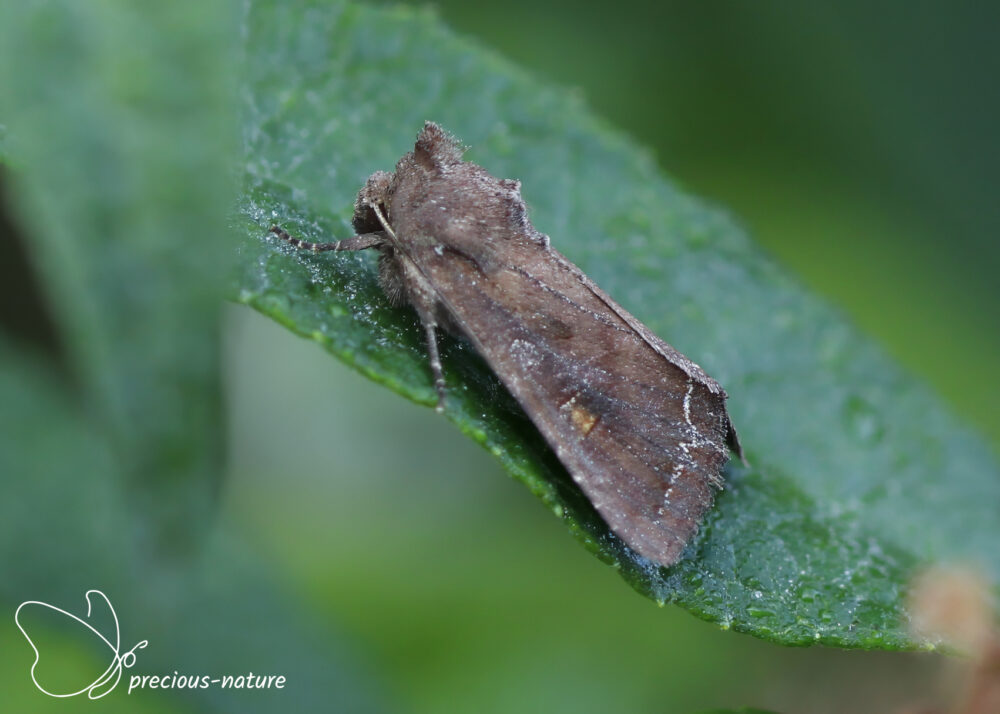
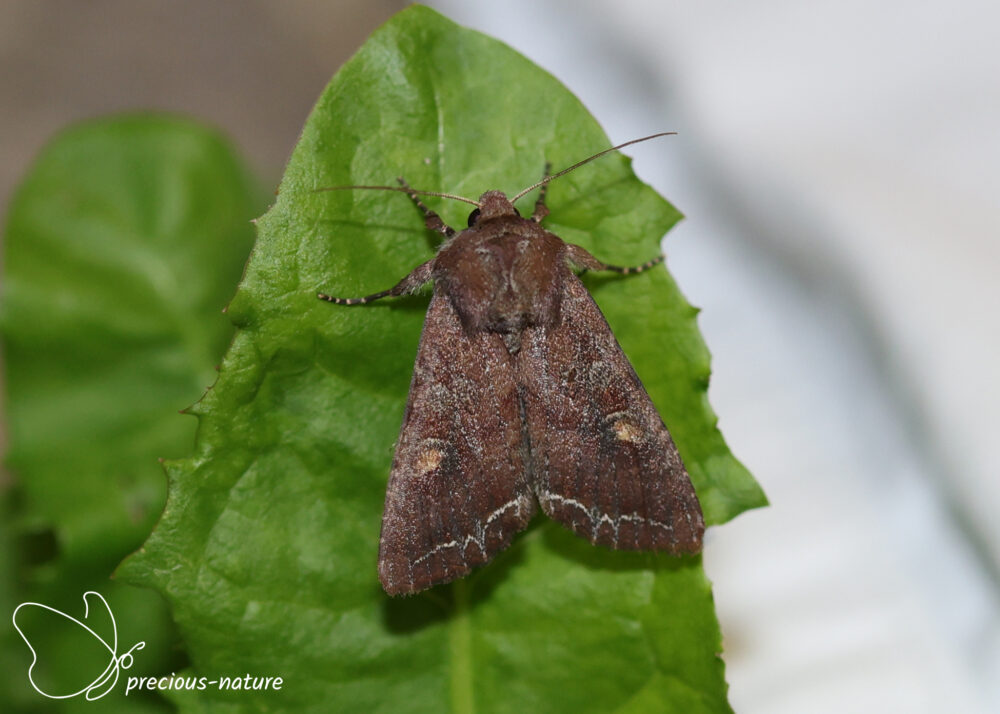
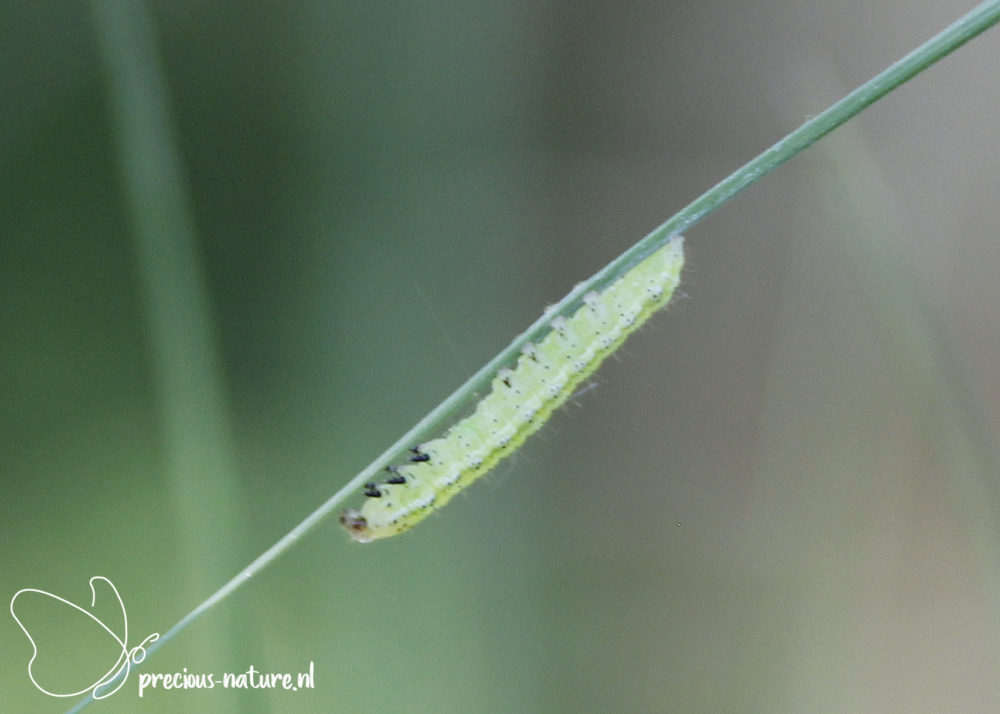
An owlet moth I come across more often on insect control websites is the Bright-line Brown-eye (Lacanobia oleracea). This concerns laying eggs on crops grown in greenhouses. This rusty brown owlet moth has a ringed white spot and an orange-yellow spot in the dark kidney mark (the brown-eye). Characteristic is the clear white wavy line with the ‘W’ in it (bright line). The flight period is from April to October in two or sometimes three generations, and the wingspan is 28-38 mm. Host plant(s): Common Nettle, St. John’s wort, Hazel, Willow, hops. Dutch name: Groente-uil. Frisian name: Grienteûltsje.
Flying period:
Genus: Lacanobia
Dog’s Tooth – 2021 (NL)
(NCBI-index: 987966)
The most noticeable feature on the front wing of the Dog’s Tooth (Lacanobia suasa) is the blackish-filled short dart mark, which stands out as a massive dark spot. The inner part of the kidney spot and the surrounding midfield are often dark. The Dog’s Tooth comes in two colour variations: greyish-brown with sand-colored pollination and an even greyish dark brown showing only the dart mark, the whitish W in the wavy line at the termen and the black stripe in the basal area. The flight period spans two generations, from April to October, and the wingspan ranges from 32 to 37 mm. Host plant(s): Dock, Plantain, herbaceous plants. Dutch name: Variabele w-uil. Frisian name: –
Flying period:
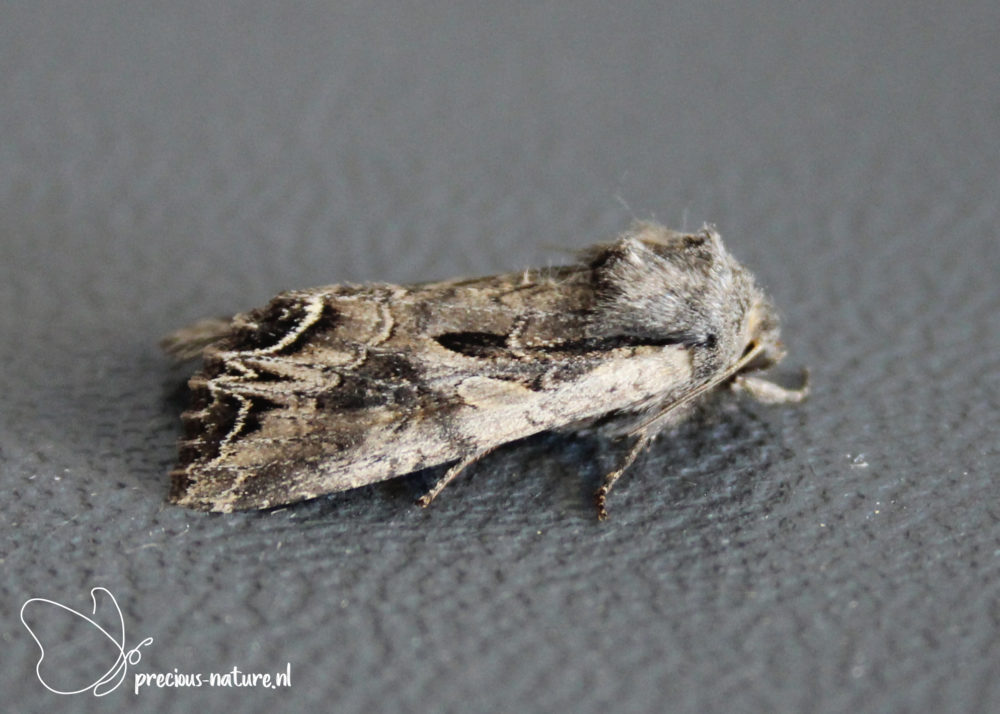
Genus: Lacanobia
Pale-shouldered Brocade – 2025 (IT)
(NCBI-index: 987967)
The forewing of the Pale-shouldered Brocade (Lacanobia thalassina) is relatively broad and has a slightly curved leading edge. The upperside is warm reddish brown, often with fine light brown to whitish speckles. As with several Lacanobia species, a light spot appears in the basal area. In some females, which are sometimes considerably darker, this spot is less conspicuous. In the central field, the inner edge of the elongated dart mark is usually visible as a broad black bar connecting the inner and outer transverse lines. The outer edge of the dart mark often appears as a narrower branch of this black bar. In the marginal area, the light outer transverse line forms a characteristic ‘W’ shape. The flight period is two generations from late May to early September, and the wingspan is 36-38 mm. Host plant(s): Oak, Birch, Hawthorn. Dutch name: W-uil. Frisian name: W-ûltsje.
Flying period:
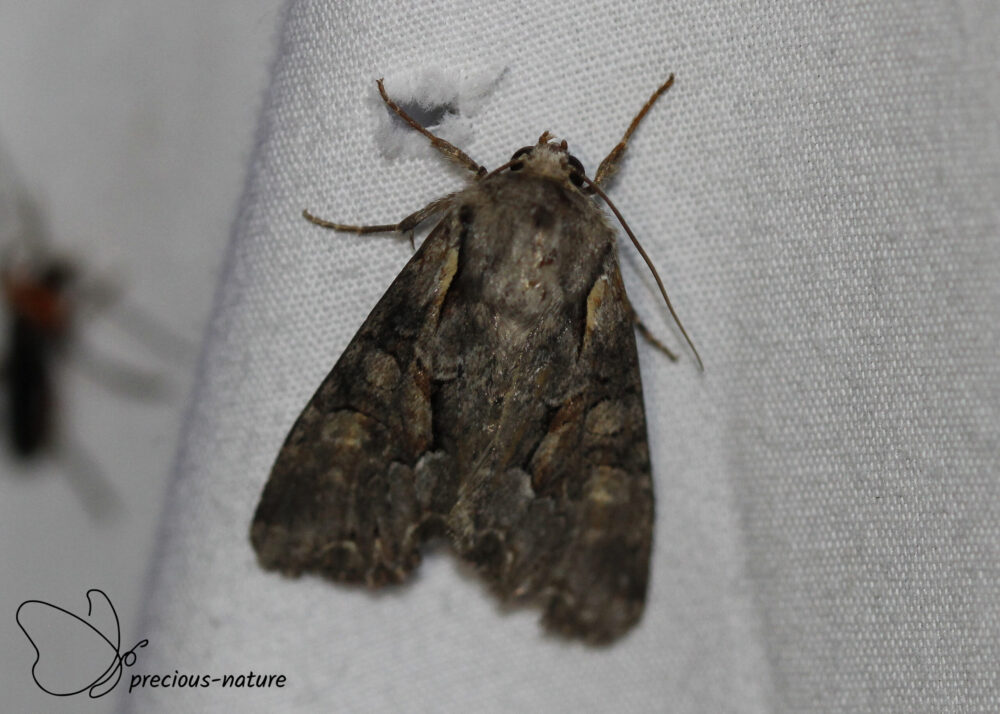
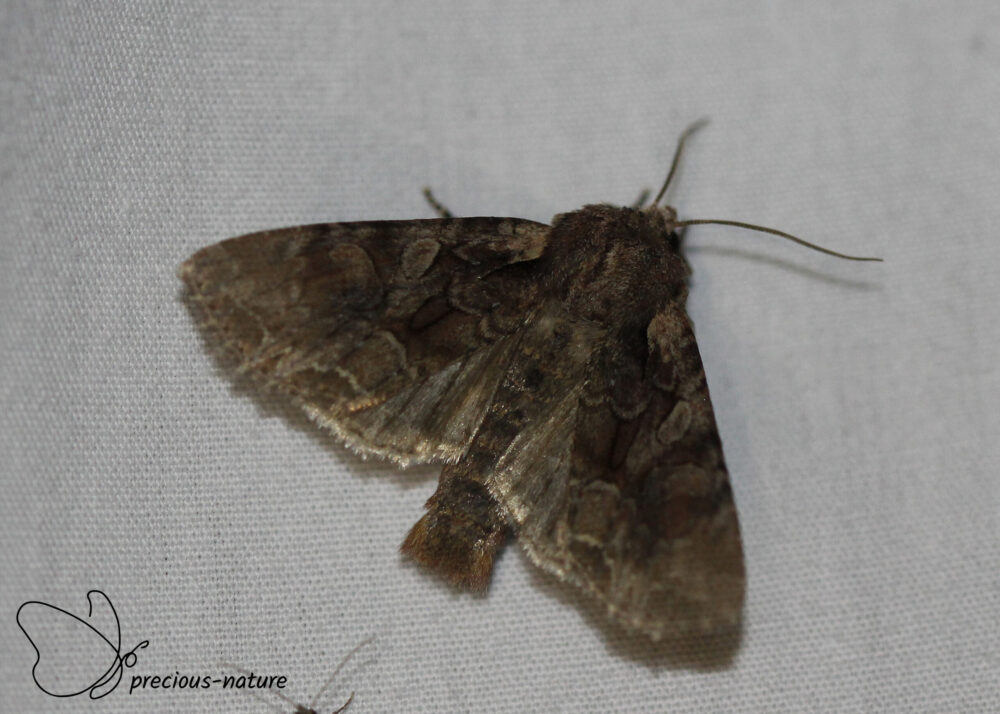
Genus: Lacanobia
Light Brocade – 2025 (IT)
(NCBI-index: 987426)
This moth is easily distinguished from other Lacanobia species. The broad-leaved moth (Lacanobia w-latinum) is not only larger in size, but also characterised by the sharply defined markings on the forewing and the coarsely scalloped outer transverse line. A uniform light grey zone lies between the kidney spot and the wavy line. Colour and markings vary slightly, but some specimens have a purplish tinge. The flight period is one generation from late April to late July, and the wingspan is 38-40 mm. Host plant(s): Broom, Sorrel, Blackberry. Dutch name: Brede w-uil. Frisian name: –
Flying period:
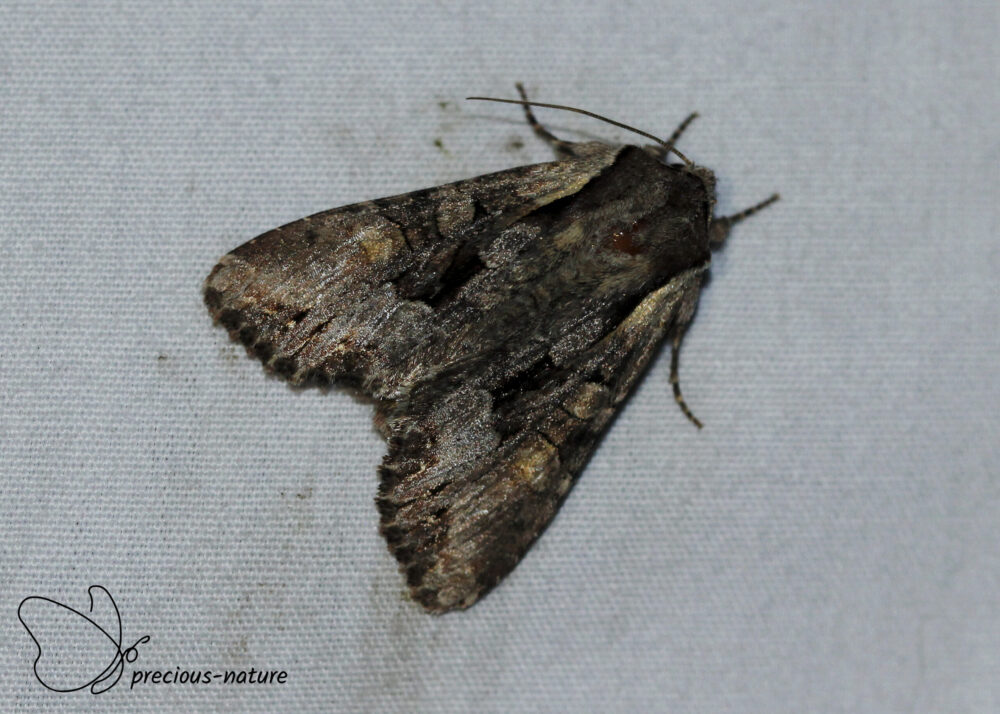
Genus: Leucania
Shoulder-striped Wainscot – 2019 (NL)
(NCBI-index: 987968)
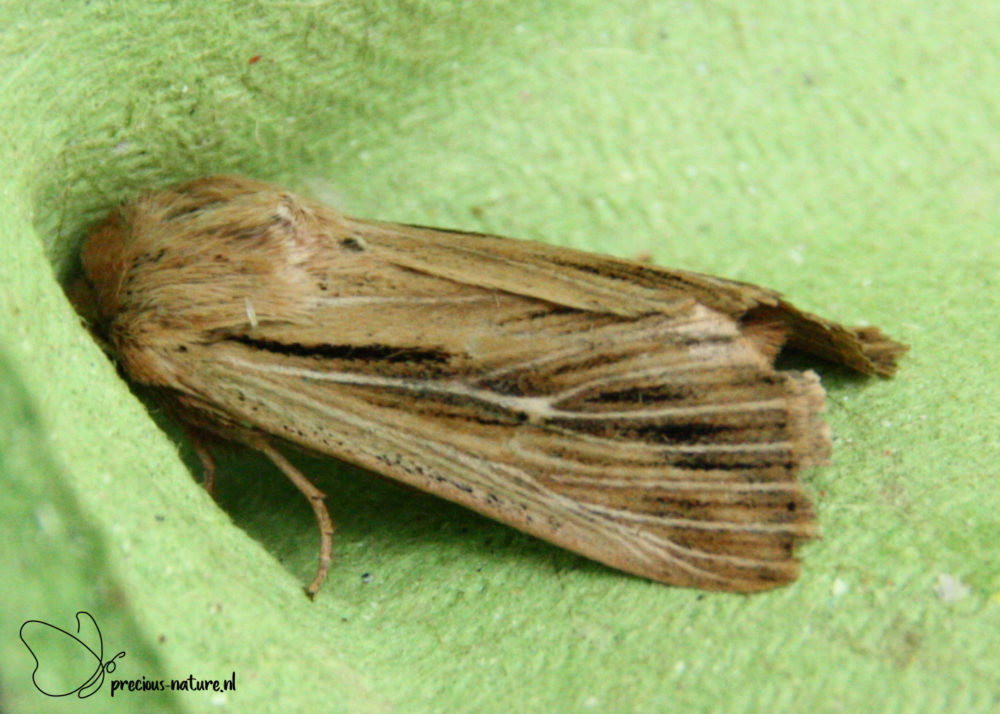
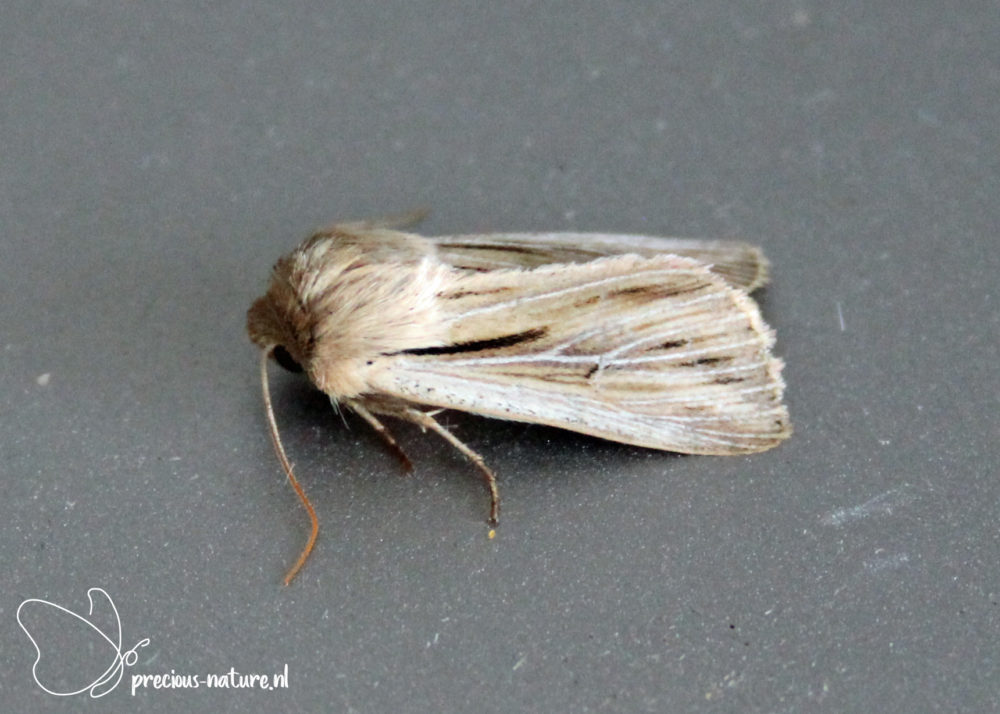
A solidly built owlet moth with a greyish-brown or dull straw-colored front wing with white veins is the Shoulder-striped Wainscot (Leucania comma). The white central vein ends in the centre of the forewing in a bulge that is roughly comma-shaped. Striking is the deep black shoulder stripe that runs from the base along the white central vein to the mid-field. The various blackish stripes in the costal area and the light streak along the costa are also striking. Colour and markings vary slightly. The hindwing is brown. The flight period spans one generation from mid-May to late July, and occasionally a second generation from mid-September to mid-October. The wingspan is 32-37 mm. Host plant(s): various grasses, especially Cock’s-foot. Dutch name: Komma-uil. Frisian name: Kommaûltsje.
Flying period:


Genus: Mamestra
Cabbage Moth – 2014 (NL)
(NCBI-index: 55057)
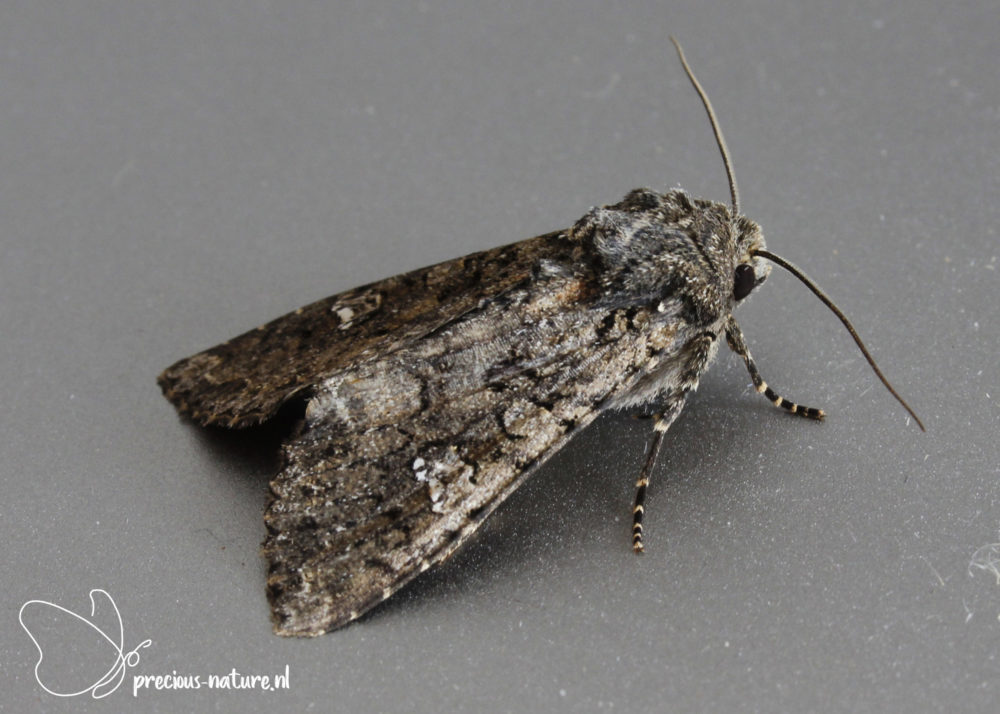
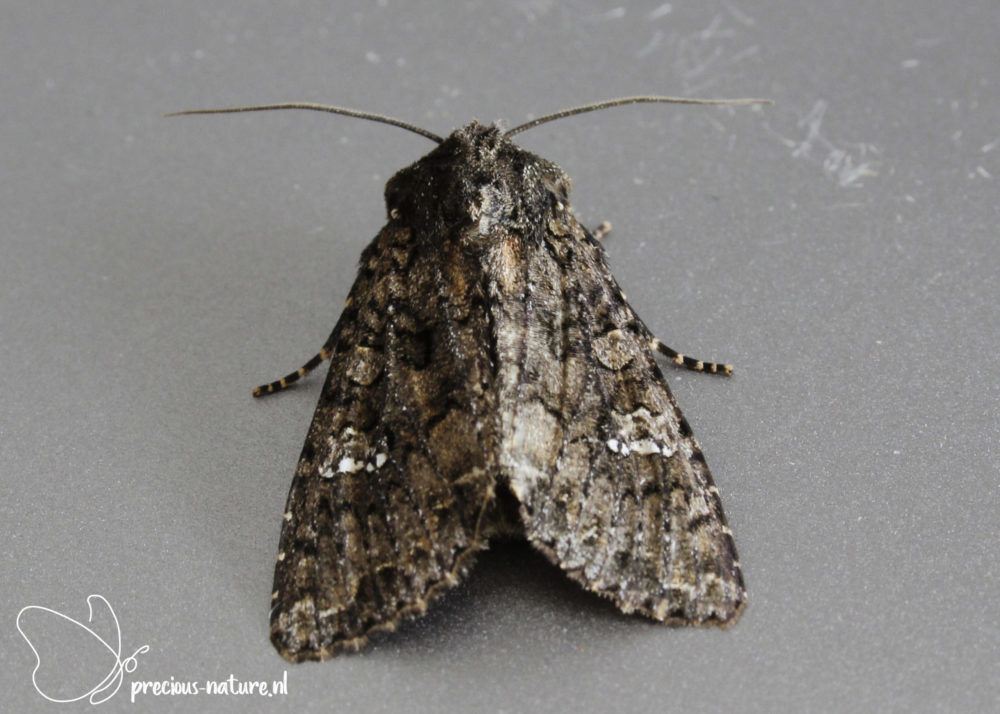
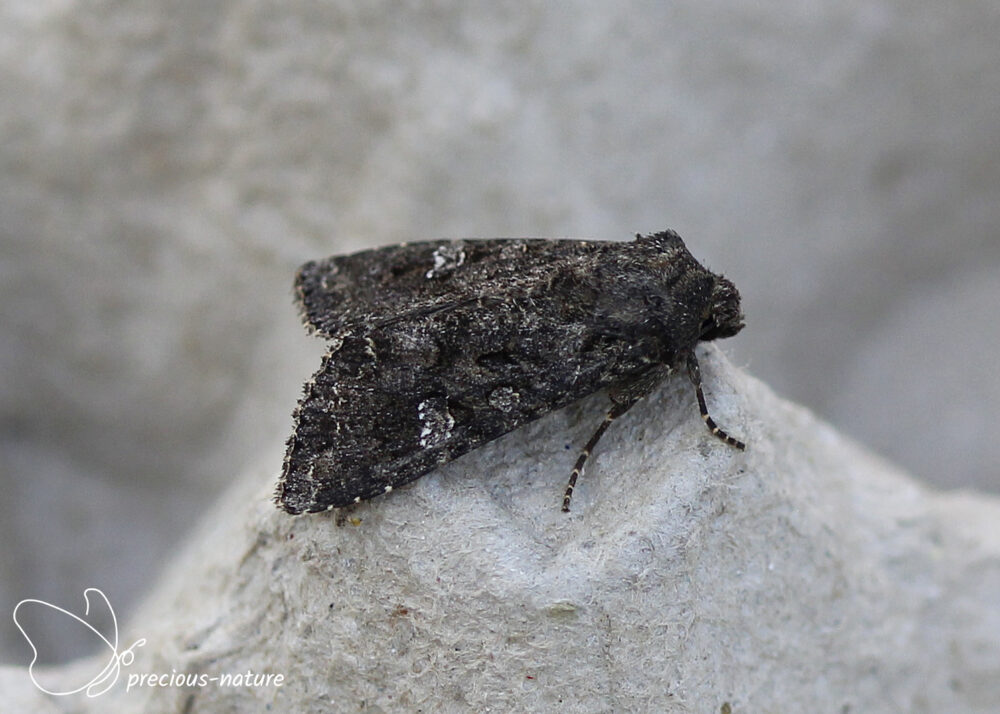
The Cabbage Moth (Mamestra brassicae) has a striking white outline of the kidney mark. The outer transverse line is corrugated, and the inner edge is also white. The ground colour of the top of the forewing is otherwise dark grey-brown. It flies in two generations from April to October, and the wingspan is 37-45 mm. Host plant(s): Cabbage, Willow, Oak. Dutch name: Kooluil. Frisian name: Koalûltsje.
Flying period:
Genus: Melanchra
Dot – 2017 (NL)
(NCBI-index: 987979)
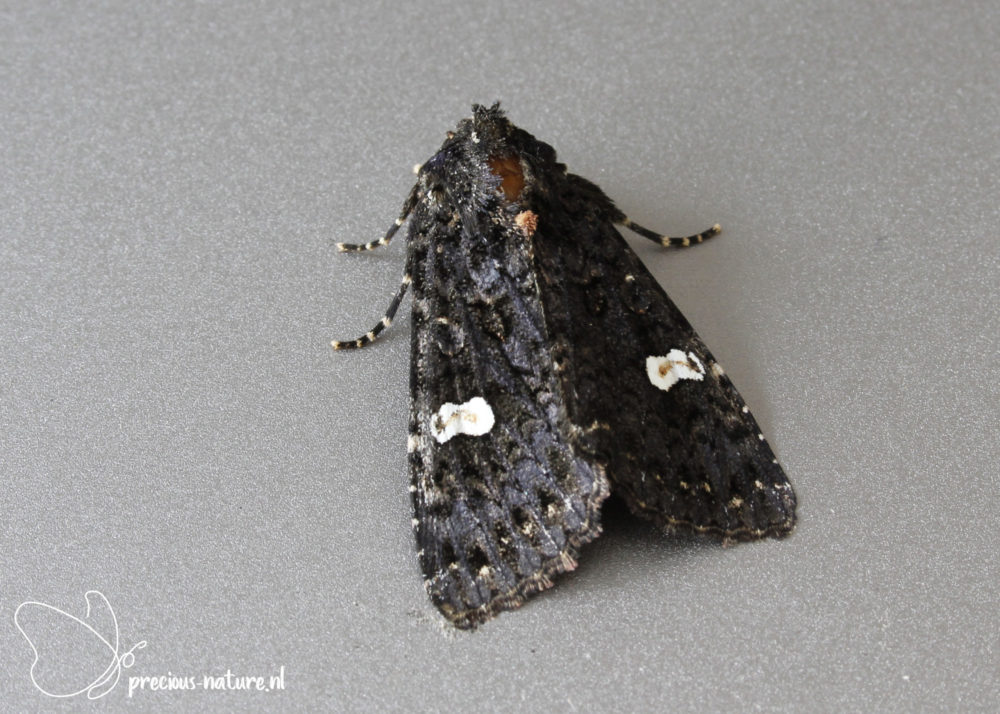
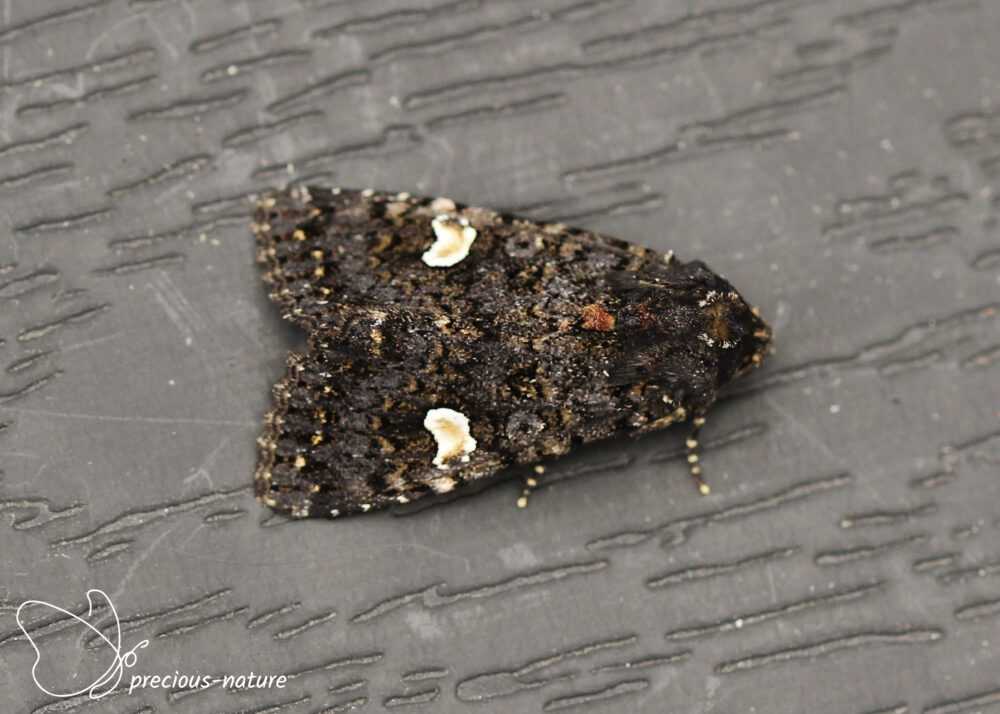
The Dot (Melanchra persicariae) has a black forewing with a striking white kidney mark. A grey half moon can be seen in the kidney mark. Along the costa, a white, wavy line and some white spots are often present. The chestpiece often shows a small bunch of reddish-brown hairs. This owlet moth flies in one generation from May to September, and its wingspan is 32-42 mm. Host plant(s): Common Nettle, Hop, Field Bindweed, Hazel, Elder. Dutch name: Perzikkruiduil. Frisian name: Bultrûpûltsje.
Flying period:
Genus: Mythimna
Southern Wainscot – 2017 (NL)
(NCBI-index: 987989)
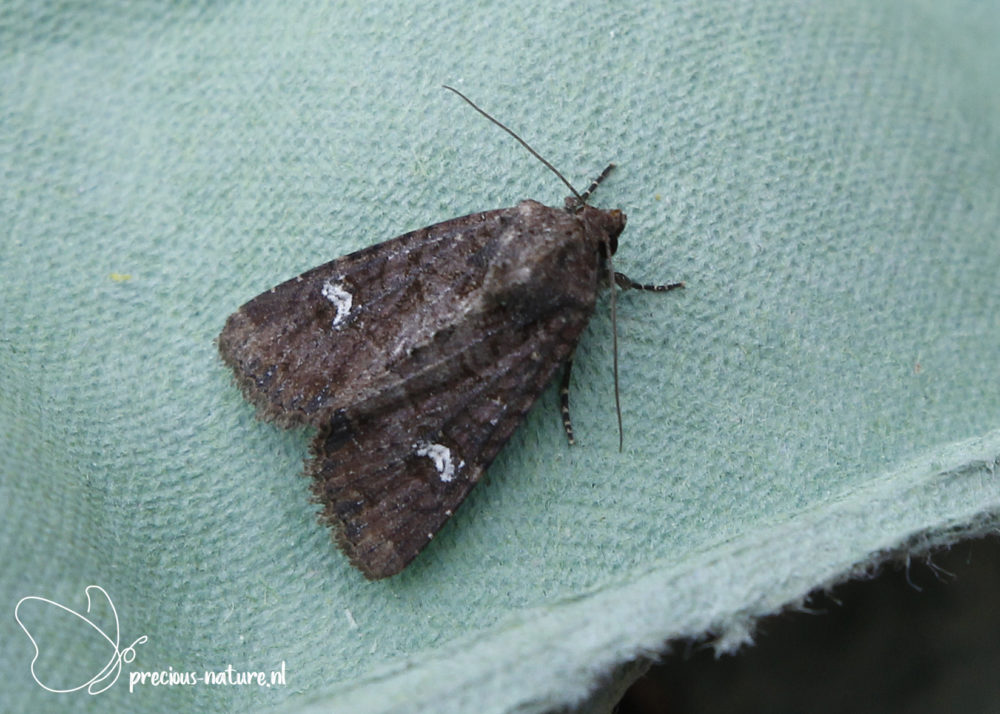
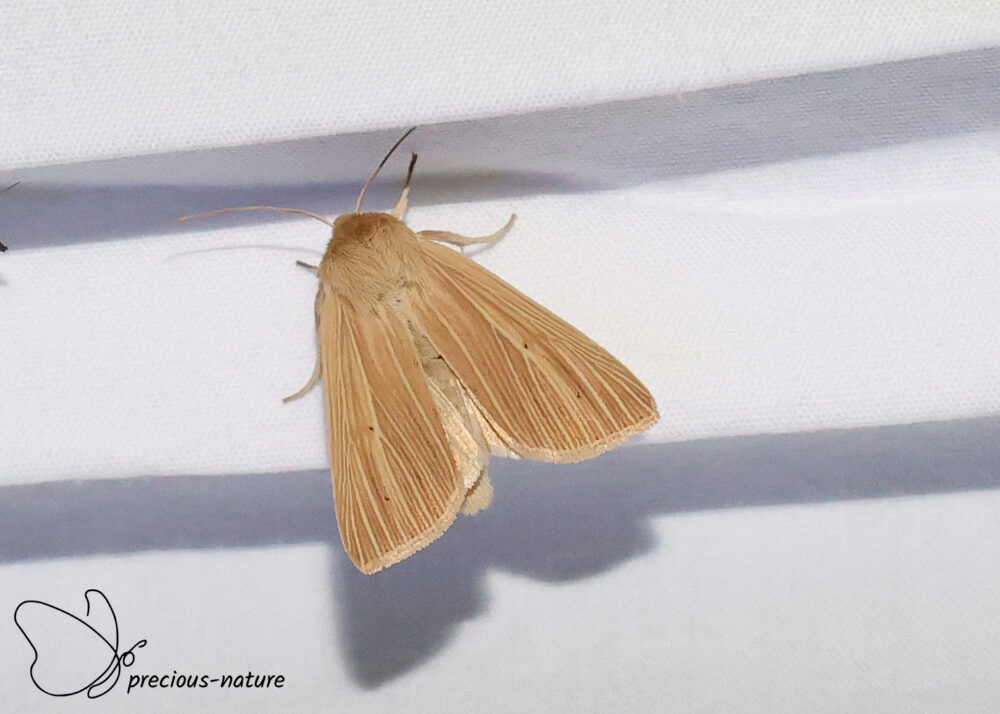
The Southern Wainscot (Mythimna straminea) has a straight costa on the forewing, unlike its relatives. The top of the forewing is light yellowish-white with a slightly pinkish hue. A brown streak runs along the pale central vein. The hindwing is white with dark veins and grey speckles. The similar Smoky Wainscot (Mythimna impura) has more rounded forewings and lacks the grey line over the collar, as seen in the front view, which is unique to the Southern Wainscot. It flies in one generation from June to September, and its wingspan is 32-40 mm. Host plant(s): Reed, Canary-grass. Dutch name: Spitsvleugelgrasuil. Frisian name: Skerpwjukgersûltsje.
Flying period:

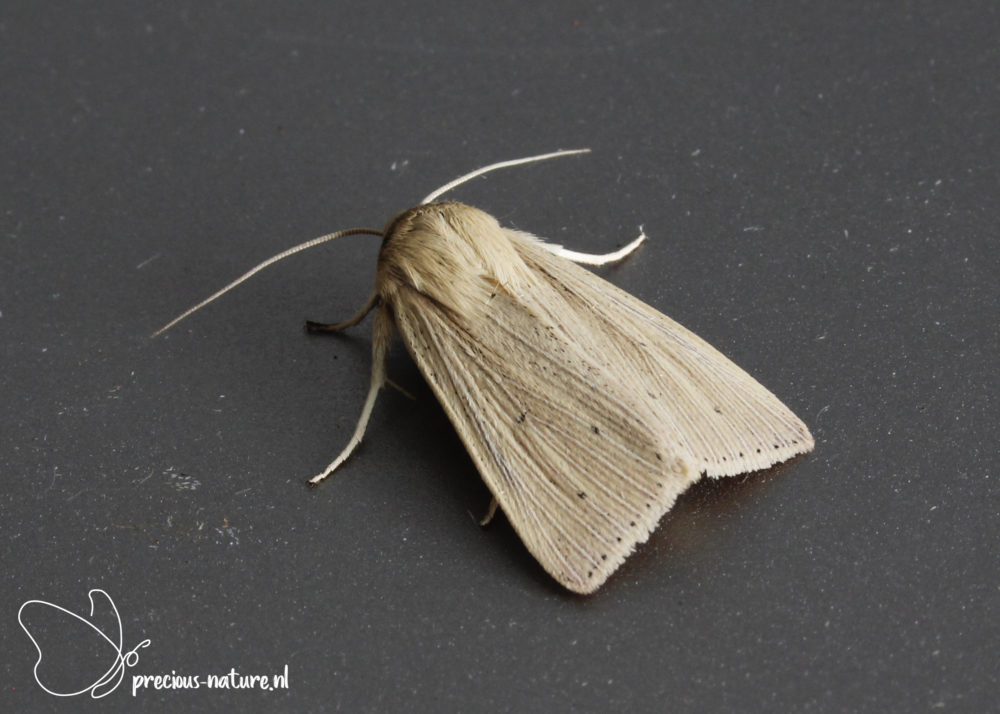
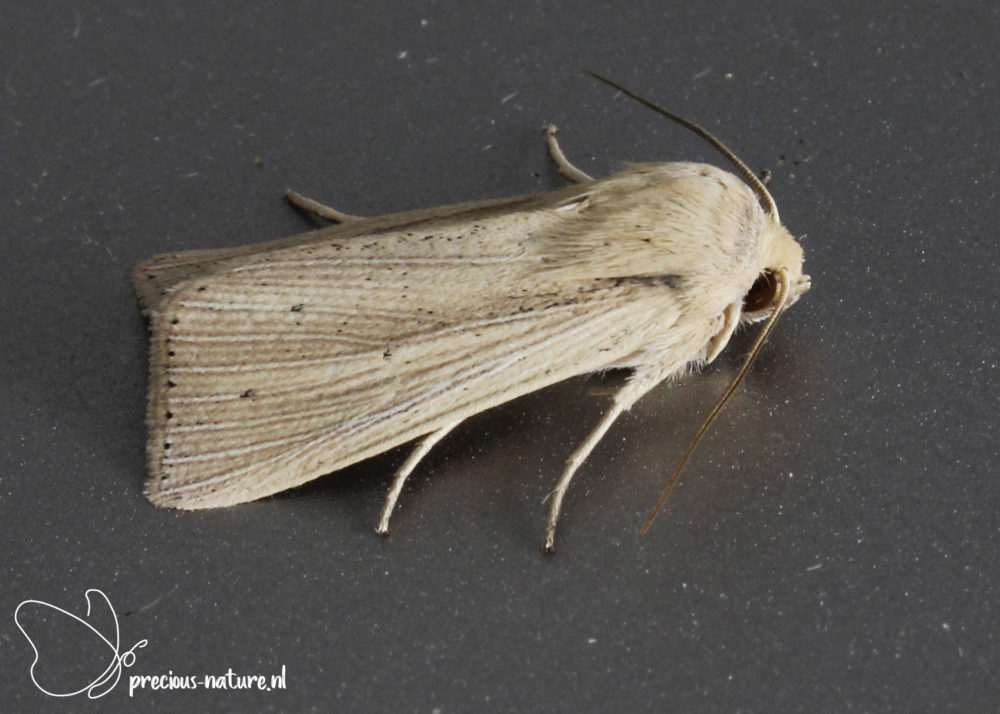
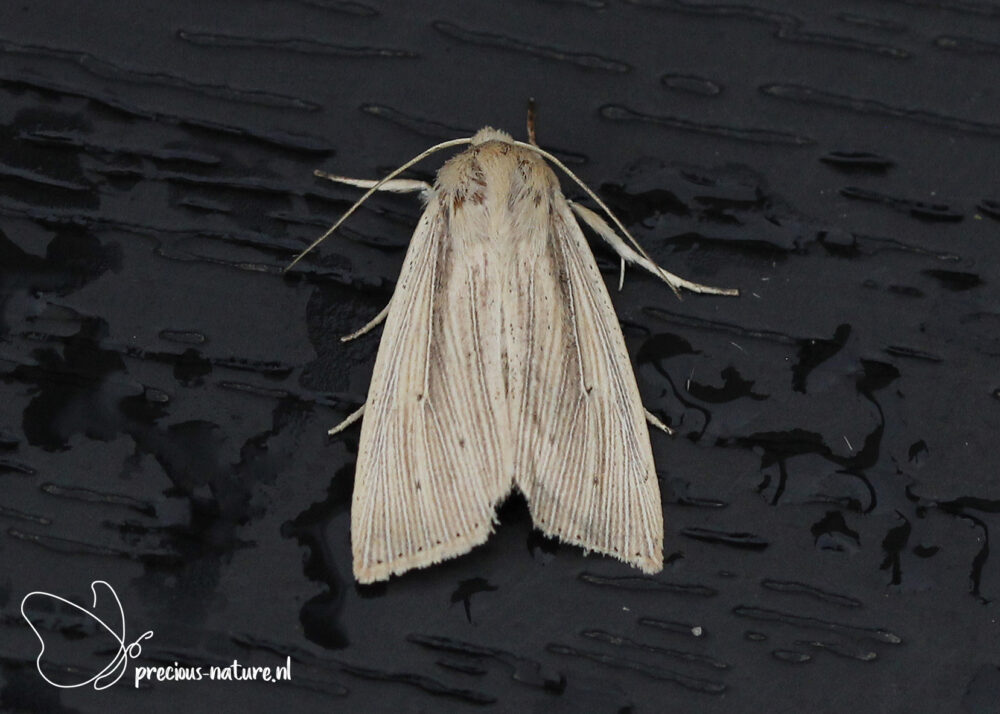
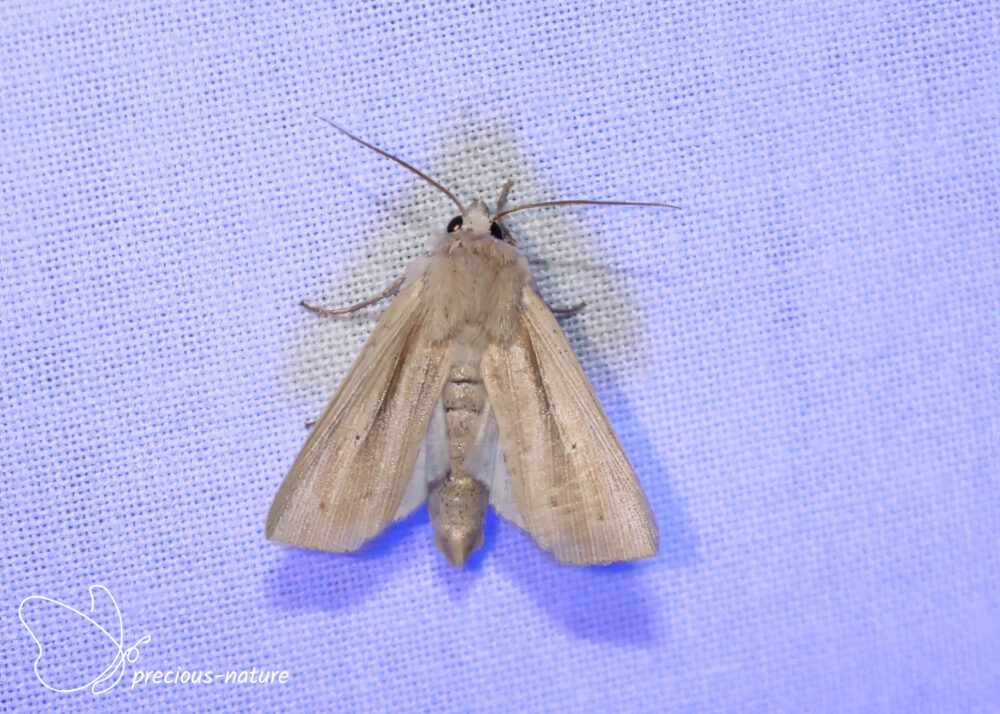
Genus: Mythimna
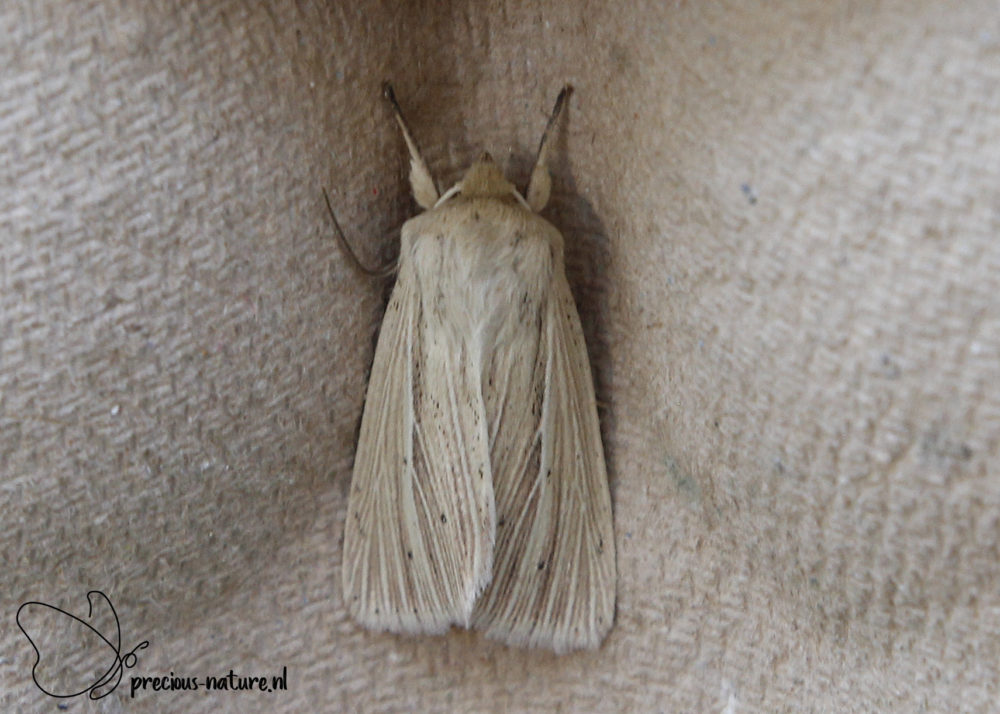
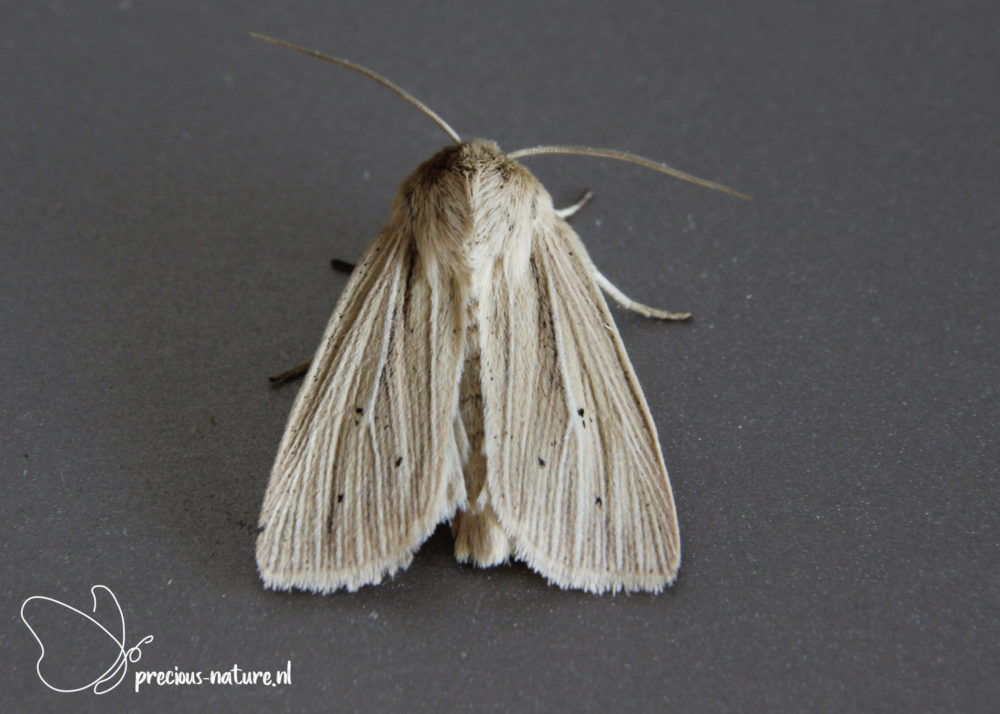
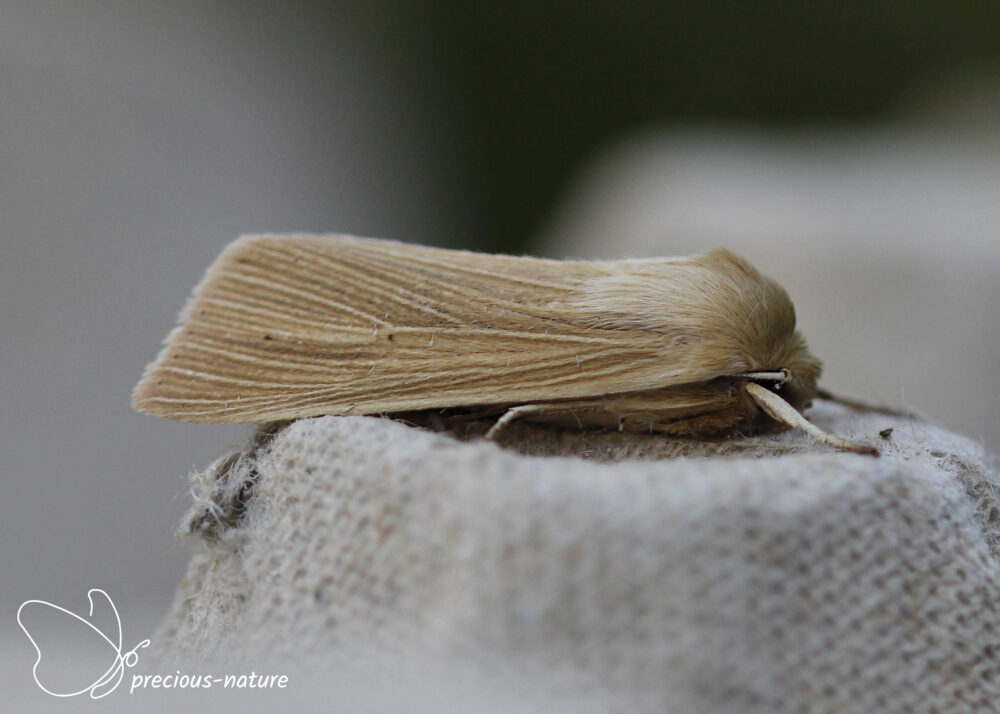
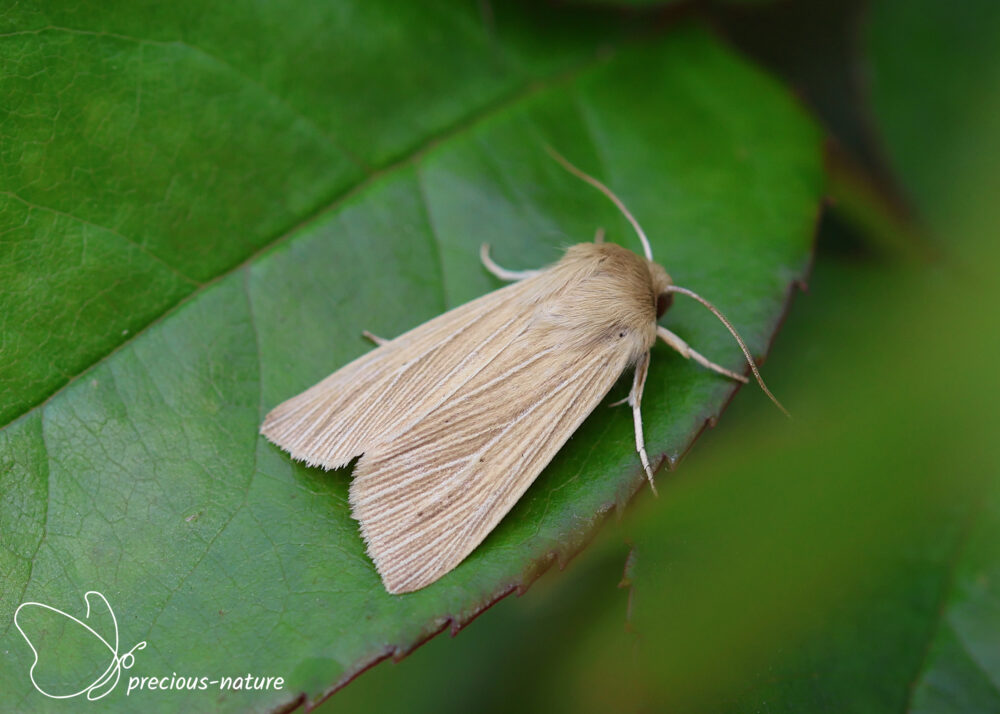
Common Wainscot – 2017 (NL)
(NCBI-index: 987986)
The Common Wainscot (Mythimna pallens) has a forewing with a light yellow to brownish top. Sometimes brown streaks are visible. It has no clear markings other than the white veins. The top of the hindwing is white. The resembling Smoky Wainscot (Mythimna impura) is darker and has a dark grey hindwing. This owlet moth flies in two generations from May to October and has a wingspan of 30-35 mm. Despite being a moth, you will also encounter them during the day while they are resting in the long grass. Host plant(s): various grasses. Dutch name: Bleke grasuil. Frisian name: Bleek gersûltsje.
Flying period:
Genus: Mythimna
White-point – 2018 (NL)
(NCBI-index: 987983)
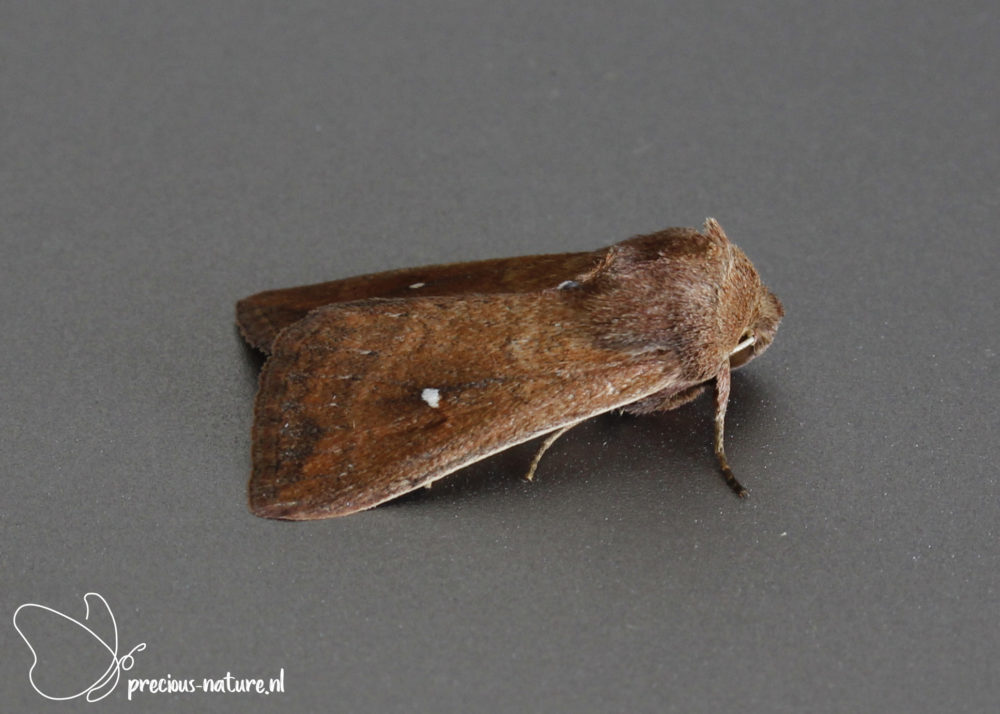
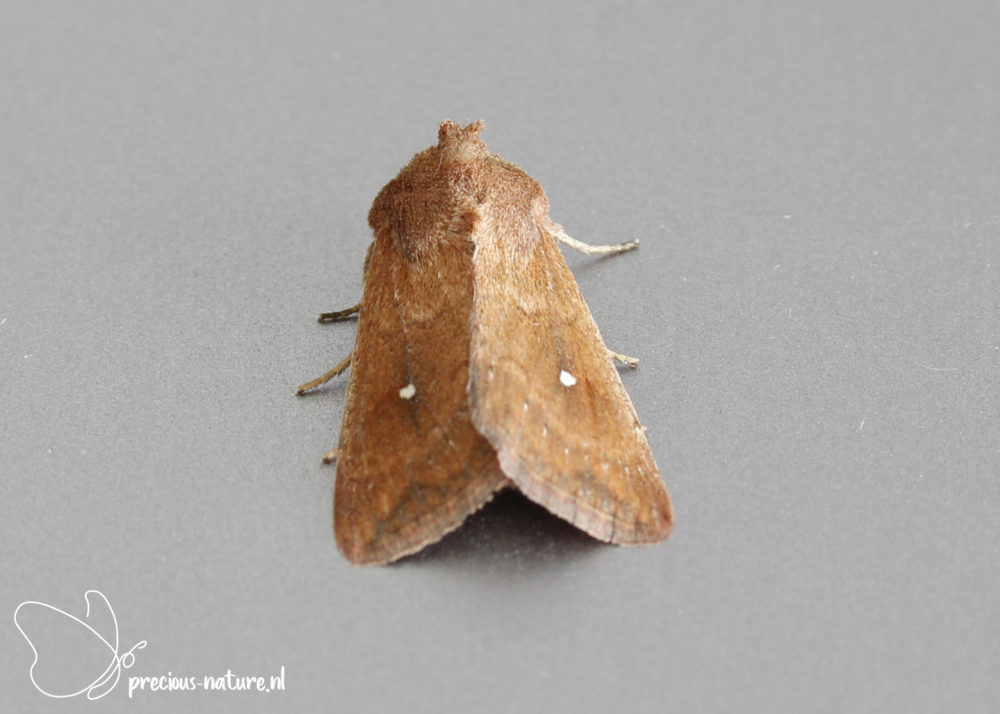
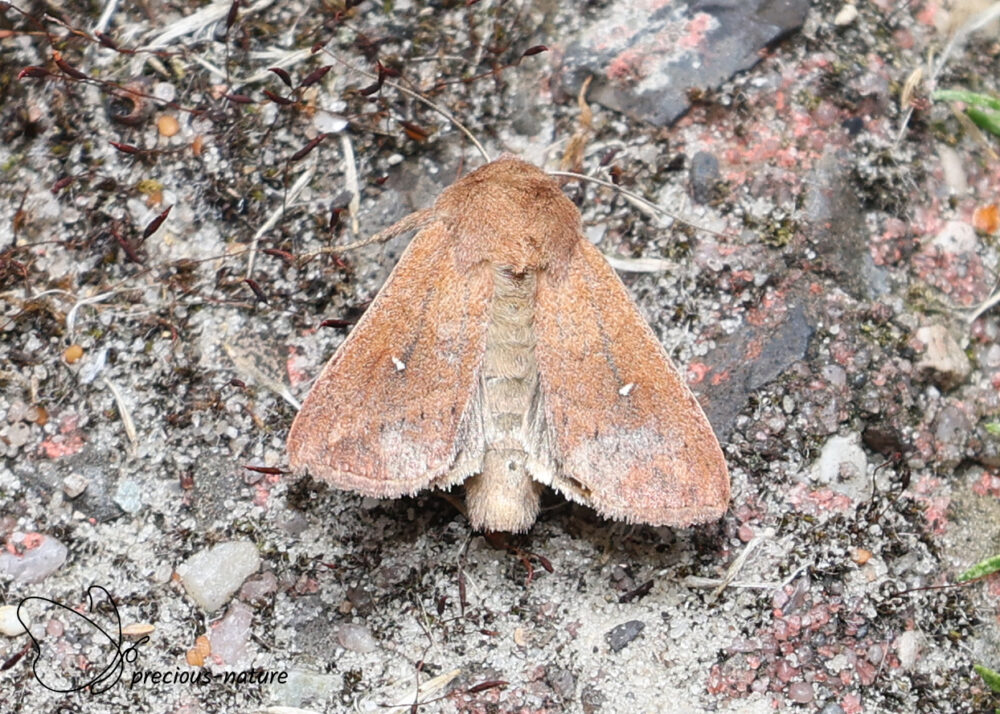
At the beginning of autumn, some new species were recorded. One of them was the White-point (Mythimna albipuncta). This is an owlet moth with a warm orange-brown ground colour with a sharp white round spot that forms part of the otherwise not or hardly visible kidney mark. The hindwing is smoky grey, and the male has a black band at the base of the underside of the abdomen. The flight period is from April to early November in two, sometimes three generations, and its wingspan is 30-35 mm. Host plant(s): various grasses. Dutch name: Witstipgrasuil. Frisian name: –
Flying period:

Genus: Mythimna
Smoky Wainscot – 2020 (NL)
(NCBI-index: 987985)
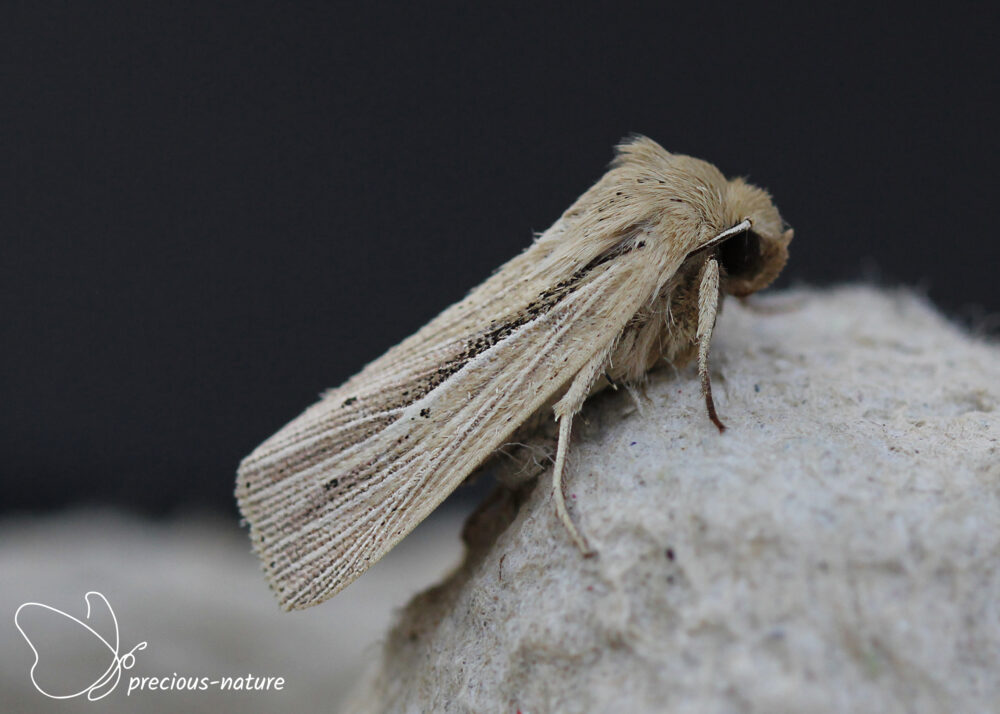
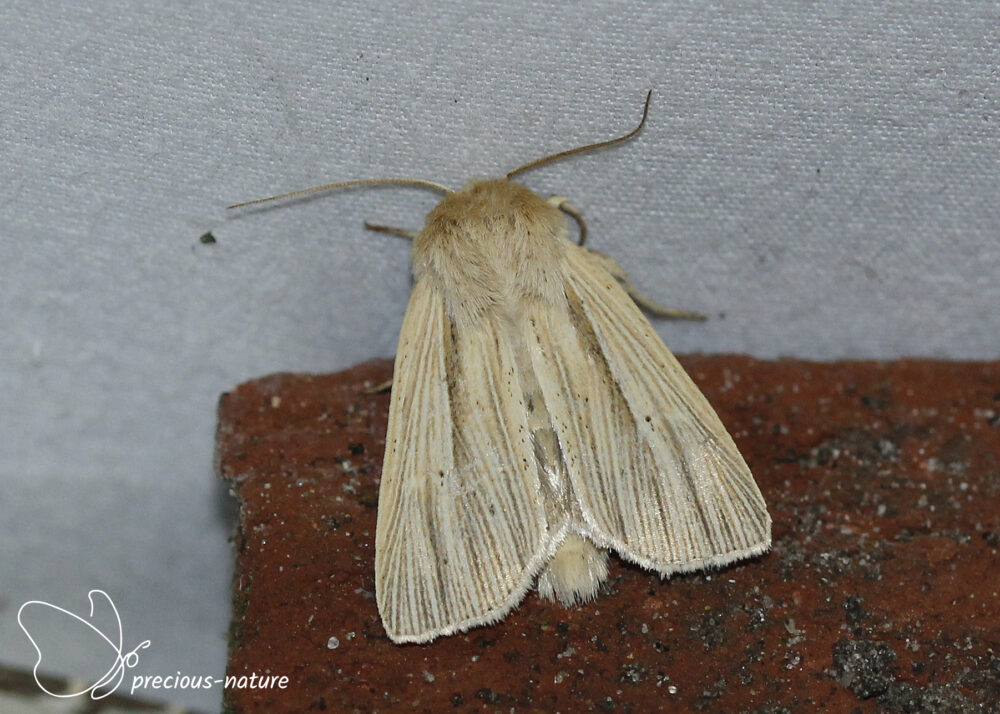
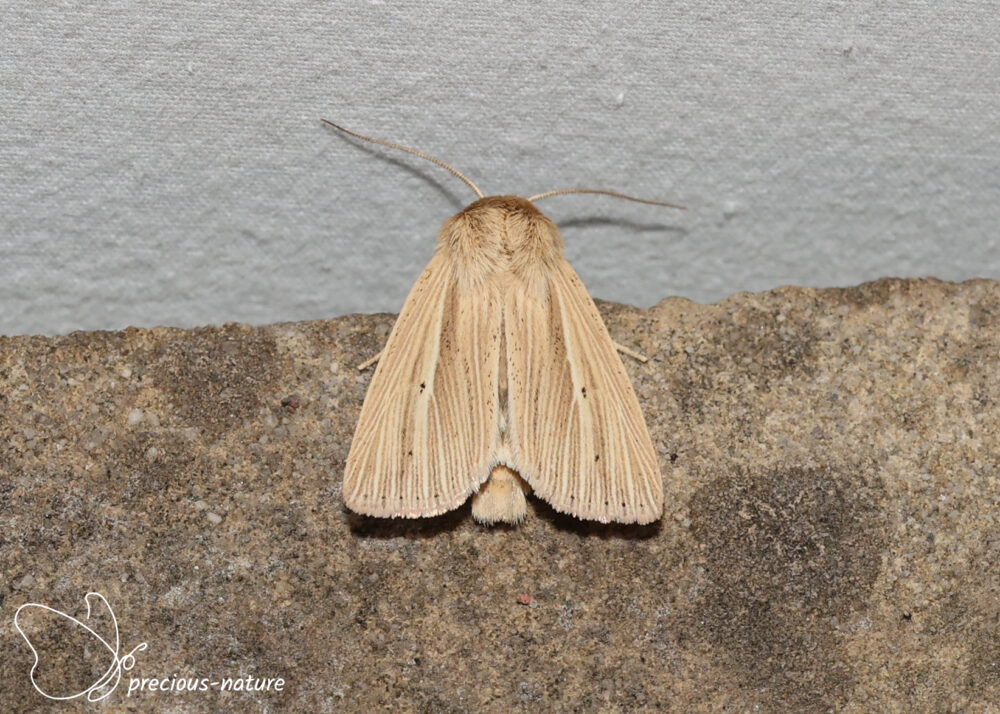
A wainscot that is difficult to identify is the Smoky Wainscot (Mythimna impura). Unlike its family members, the forewing is fairly rounded. Characteristic is the distinctive brown or black stripe along the whitish main vein on the forewing that is yellowish. Two black dots appear along that main vein, which, together with the black dot at the termen, form a triangle. The striped bottom of the forewing is speckled in black, and the top of the hindwing is often dark grey. The similar Common Wainscot (Mythimna pallens) is often lighter in colour and has a white hindwing. The similar Southern Wainscot (Mythimna straminea) has a forewing with a straight costa that bends slightly outward just before the apex. This wainscot also has a narrow grey line over the collar, visible in the front view. The wingspan is 31-38 mm, and the flight period is from May to September in one generation. Host plant(s): grasses, reeds. Dutch name: Stompvleugelgrasuil. Frisian name: Stompwjukgersûltsje.
Flying period:
Genus: Mythimna
The Clay – 2020 (NL)
(NCBI-index: 997540)
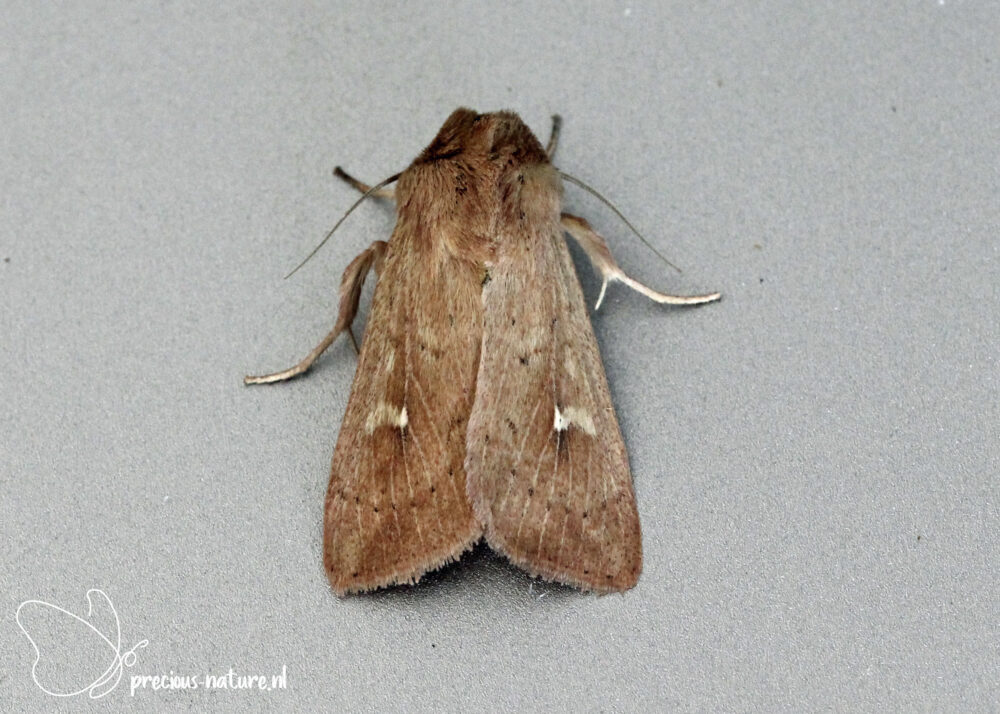
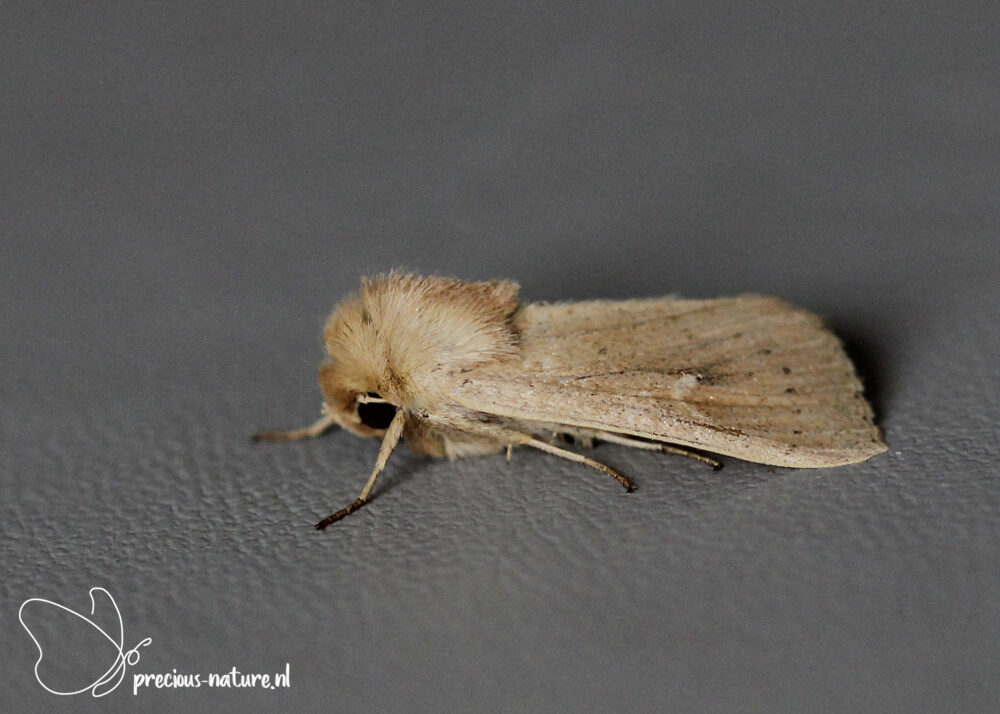
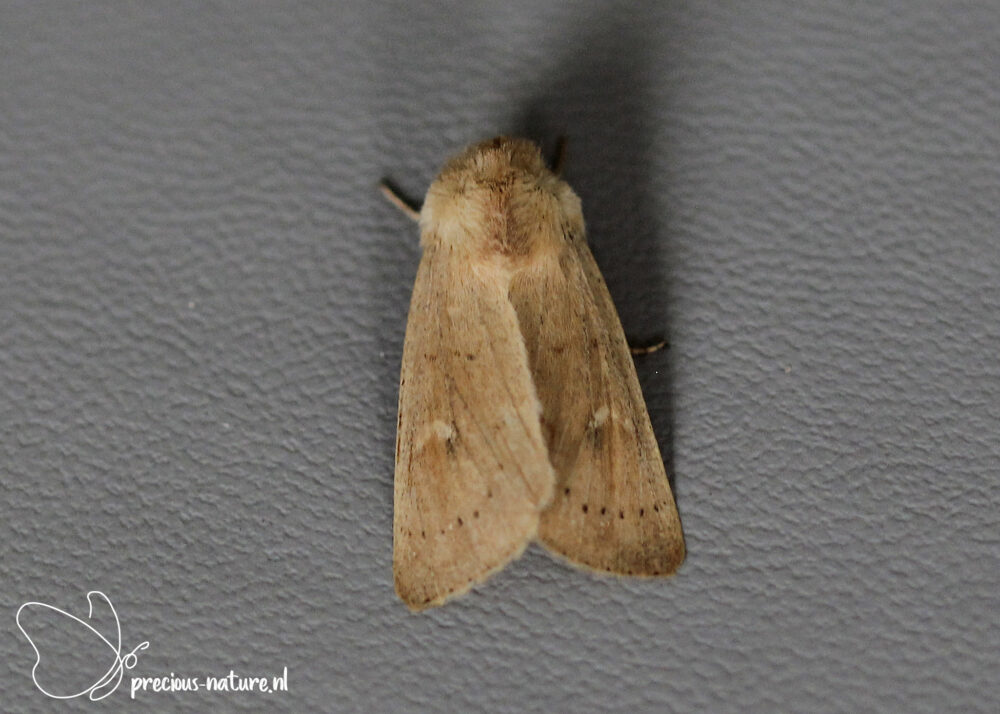
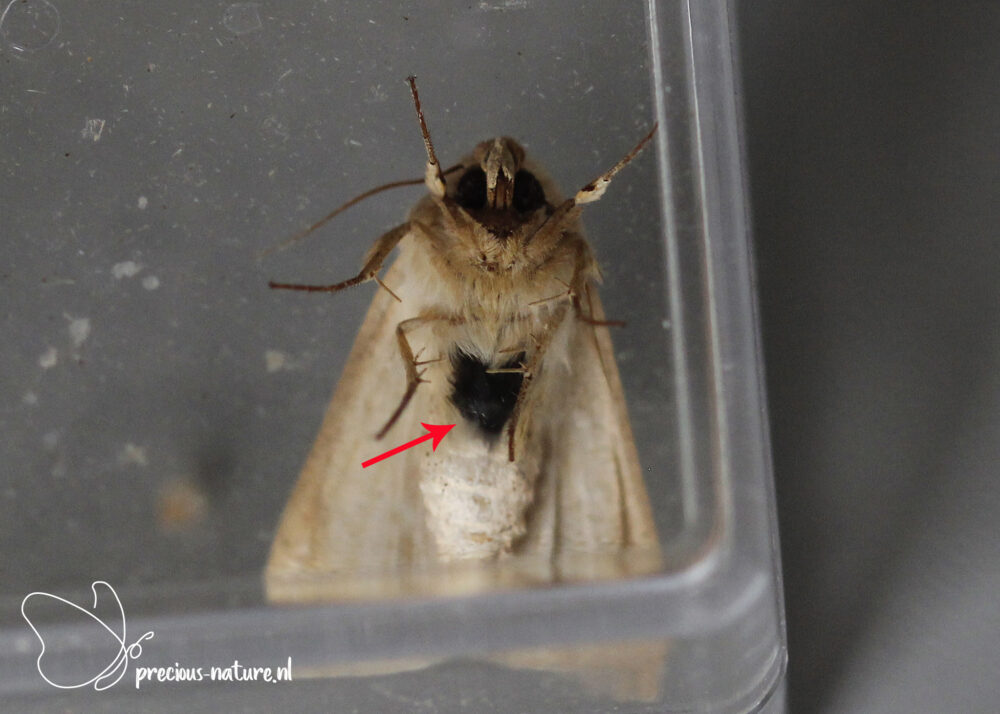
The Clay (Mythimna ferrago) has a striking white spot in the kidney mark. This pale white spot is teardrop-shaped, distinguishing the Clay from the White-point (Mythimna albipuncta). With the White-point, this spot is much whiter and round in shape. The Clay is also larger than the White-point and has a wider forewing. The top of the forewing is yellow-brown to slightly reddish-brown, and the curved post-median line can be seen as a row of black dots. With the White-point, this is more of a light band. The hindwing is dark grey. The males have a black triangle or chevron on the underside of the abdomen (see red arrow). The wingspan is 35-40 mm, and the flight period runs from June to September in one generation. Host plant(s): various grasses, Dandelion, and Chickweed. Dutch name: Gekraagde grasuil. Frisian name: –
Flying period:
Genus: Panolis
Pine Beauty – 2019 (NL)
(NCBI-index: 988141)
It will be cold for a long time in 2019 and will last well into April before the first moths appear, attracted to the canvas. The first new species in 2019 was the Pine Beauty (Panolis flammea). This owlet moth can be recognised by the strikingly light, sharply defined, and characteristic kidney mark. The kidney mark is elongated, curved, and extends towards the wingtip. The pointed forewing has an orange-brown, reddish-brown, or brick-red colour. Some specimens are more greenish-grey. In the resting position, this owlet moth keeps its wings like a roof above the abdomen. The flight period is from March to early June in one generation, and the wingspan is 30-33 mm. Host plant(s): Scots pine. Dutch name: Dennenuil. Frisian name: Dinneûltsje.
Flying period:



Genus: Phlogophora
Angle Shades – 2016 (NL)
(NCBI-index: 875884)
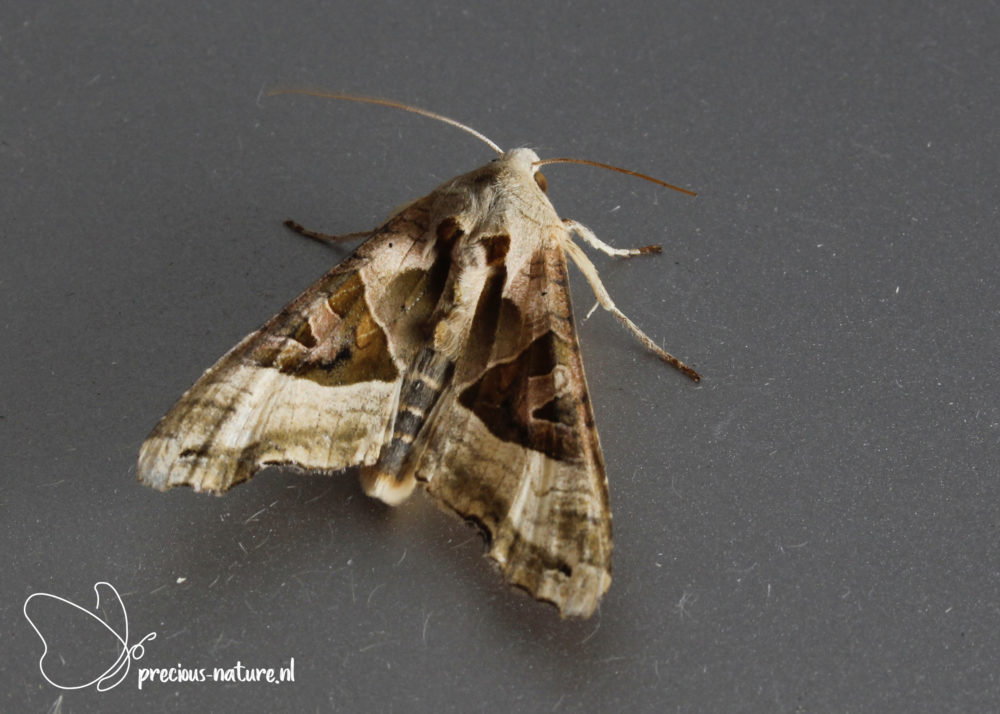
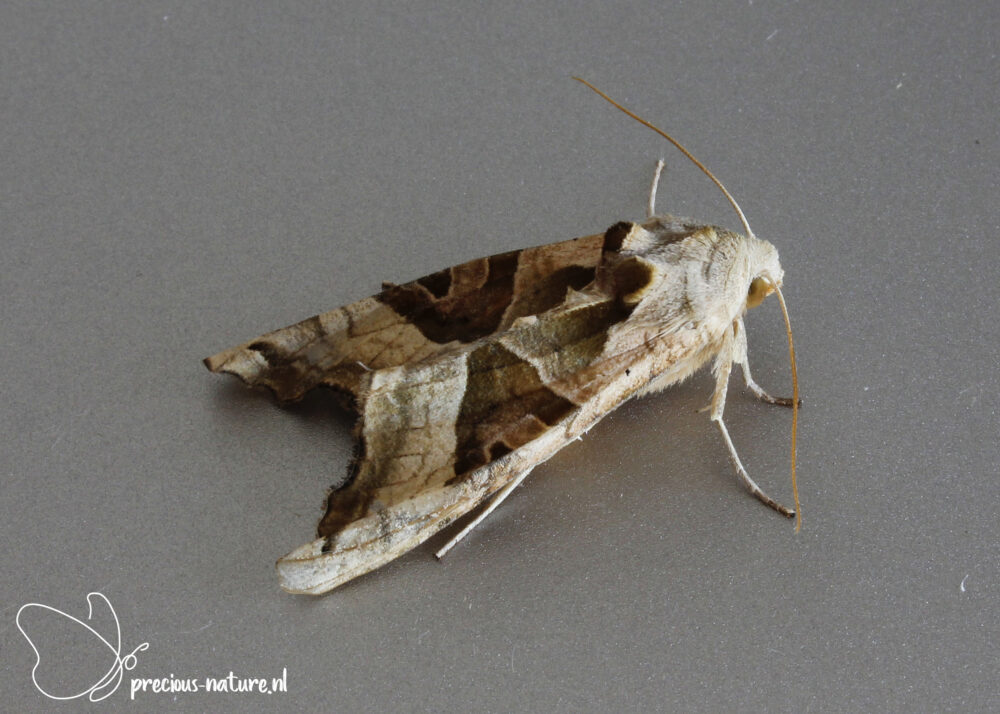
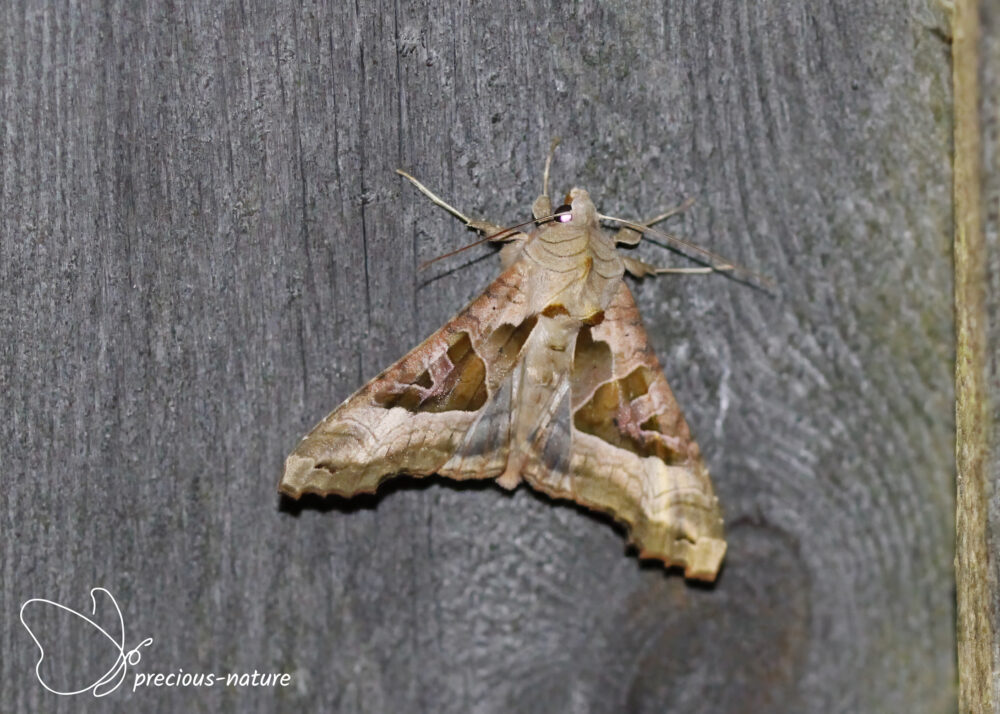
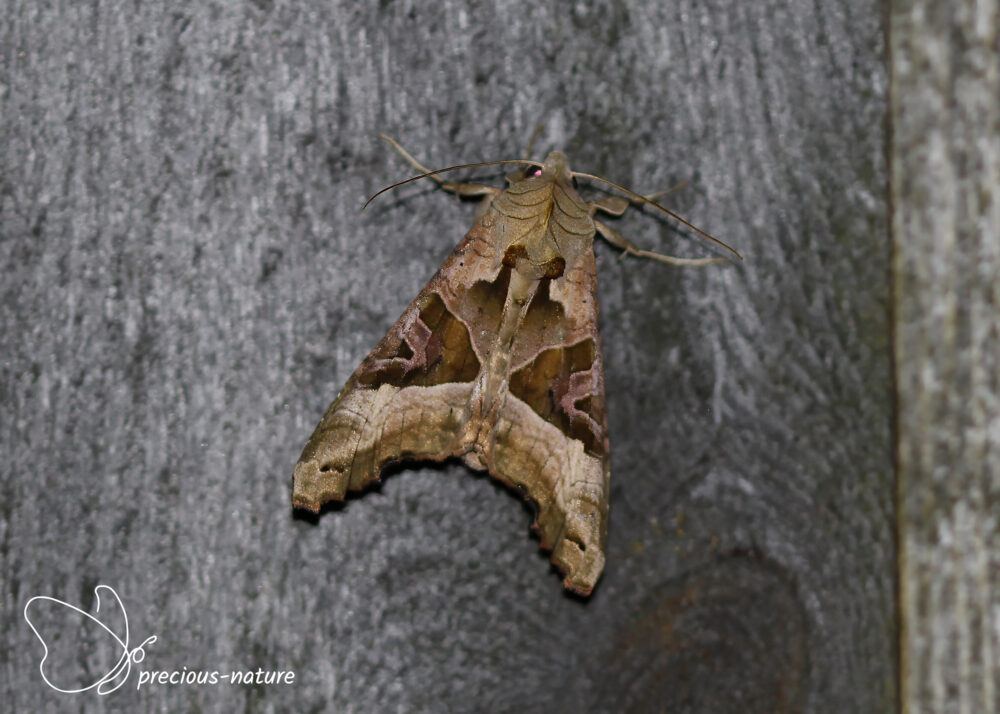
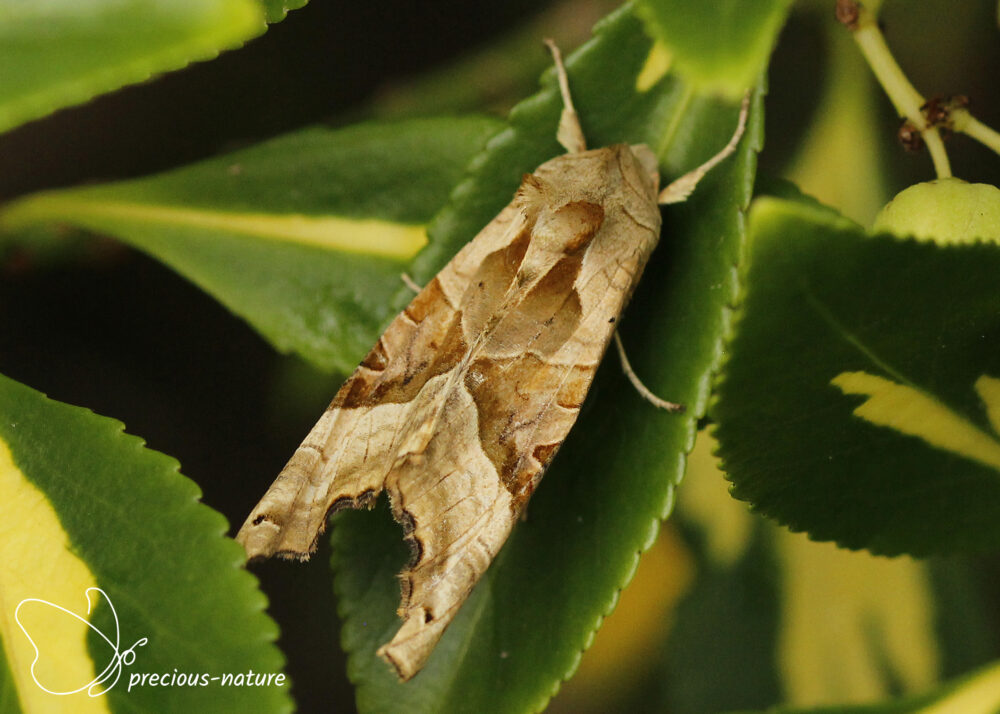
The Angle Shades (Phlogophora meticulosa) rests on walls or posts during the day. The specimen I spotted pulled up on our table when we had a cup of coffee on a terrace in the morning. Fresh butterflies have an olive-green colour, and the wings are strongly folded in a resting position, with the costa bent backwards. This gives the impression of a withered autumn leaf. On the forewings, three contiguous, V-shaped, colored zones can be recognised when resting. It flies in two generations from May to October, and the wingspan is 42-50 mm. Host plant(s): Common Nettle, Hop, Red Valerian, Broad-leaved Dock, Bramble, Hazel, birches, oaks. Dutch name: Agaatvlinder. Frisian name: Agaatflinter.
Flying period:

Genus: Polia
Grey Arches – 2025 (IT)
(NCBI-index: 988024)
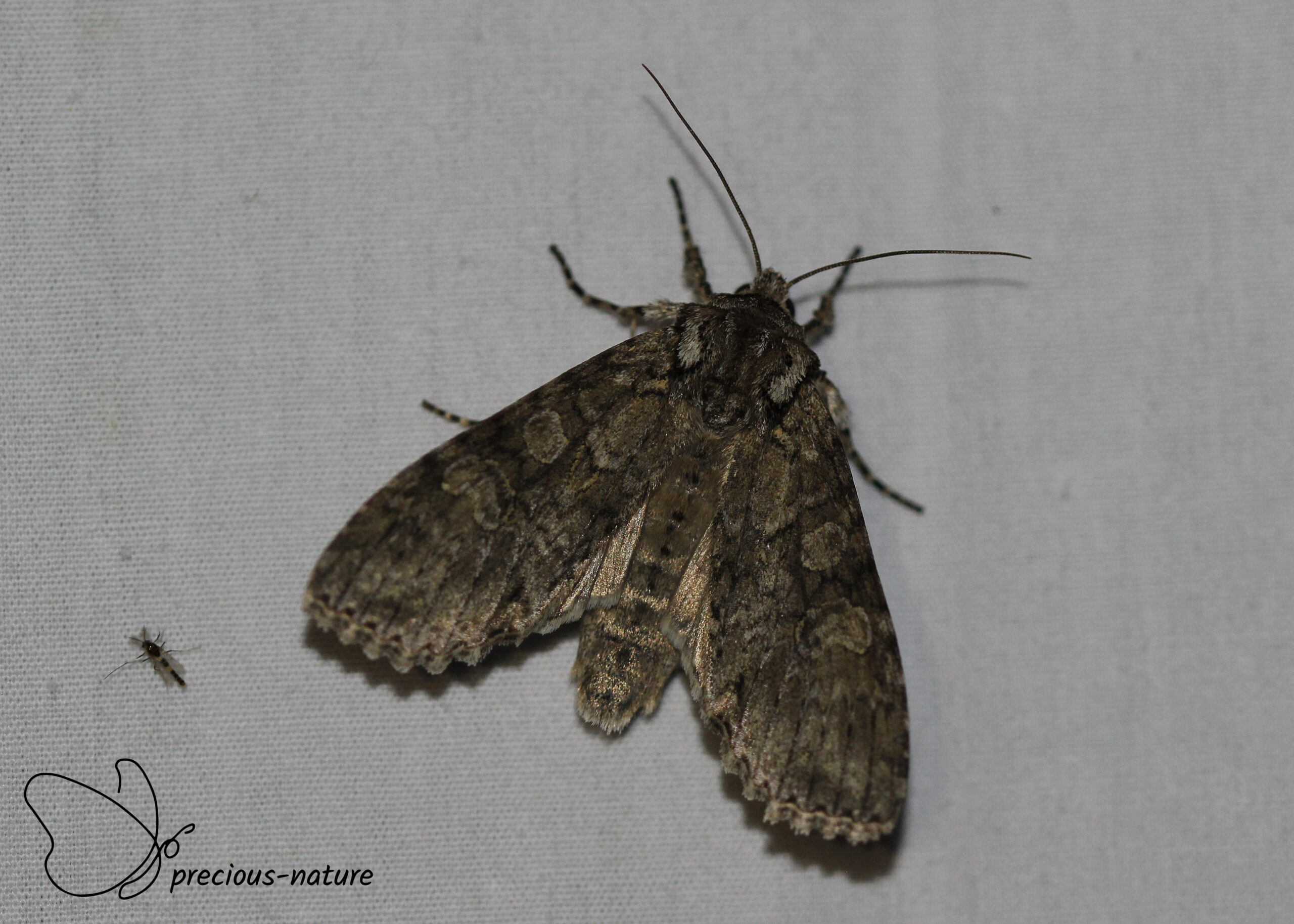
In the Netherlands, the Grey Arches (Polia nebulosa) is relatively rare. I first saw this moth during my trip to the Maritime Alps. The forewing of this light-to-dark grey species is notable for its strongly curved leading edge at the wingtip. The oval and kidney marks are large, light in colour, and clearly outlined in dark, while the rounded dart mark is often slightly darker. Black arrowhead spots can be seen along the inner edge of the wavy line: the second-largest is located halfway down the wing, and the largest is near the inner edge. The flight period is one generation from mid-May to mid-August, and the wingspan is 46-52 mm. Host plant(s): Sorrel, Blackberry, Honeysuckle. Dutch name: Marmeruil. Frisian name: Moarmerûltsje.
Flying period:
Genus: Tholera
Feathered Gothic – 2018 (NL)
(NCBI-index: 988041)
When checking the moth trap, I was very excited to find the Feathered Gothic (Tholera decimalis). The beautiful markings of yellowish-white veins on the forewing show how beautiful moths actually can be. There are black arrow spots on the inside of the light-colored wave line. The crosslines are dark and inconspicuous. The male is solidly built and has a wide forewing with a straight costa. The female has an even broader forewing, with a straight or slightly curved costa. The flight period is in one generation from the beginning of August to the end of September, and the wingspan is 32-45 mm. Host plant(s): hard-bladed grasses, including Mat-grass and Sheep’s Fescue. Dutch name: Gelijnde grasuil. Frisian name: –
Flying period: