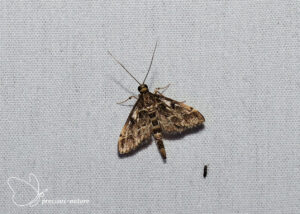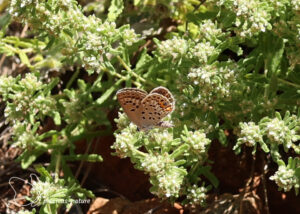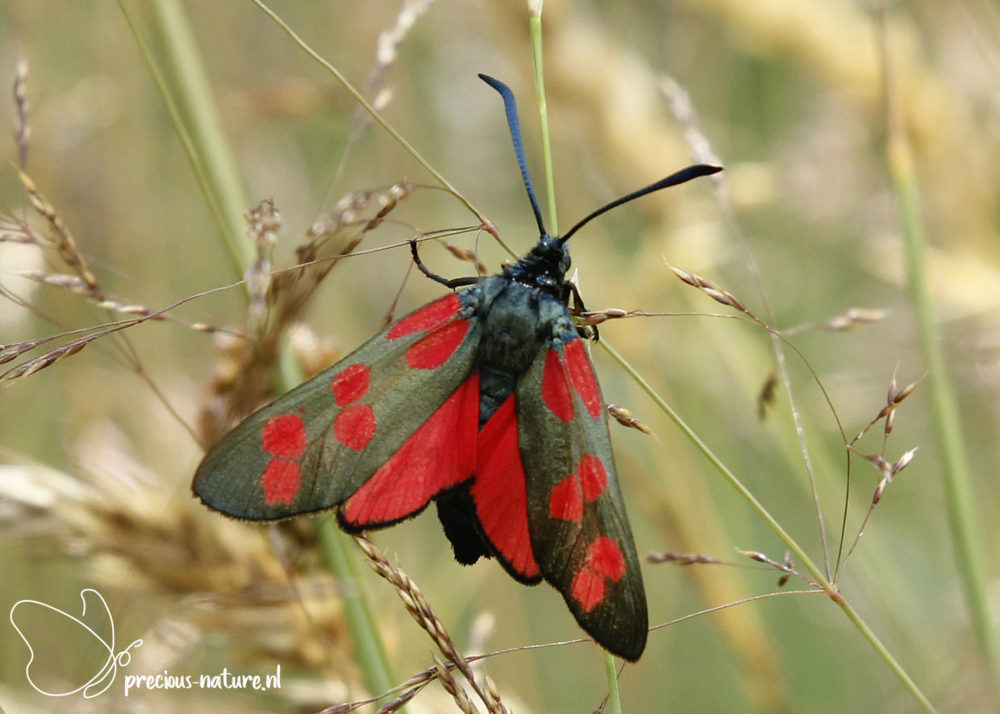
The Diamondback Moth family (Plutellidae) is a relatively small family within the micro-moth group. Adult moths rest their wings at a fairly steep angle, like a rooftop. The filamentous antennas are typically extended forward. The wings are narrow and elongated.
Genus: Acrolepiopsis
Leek Moth – 2025 (NL)
(NCBI-index: 57686)
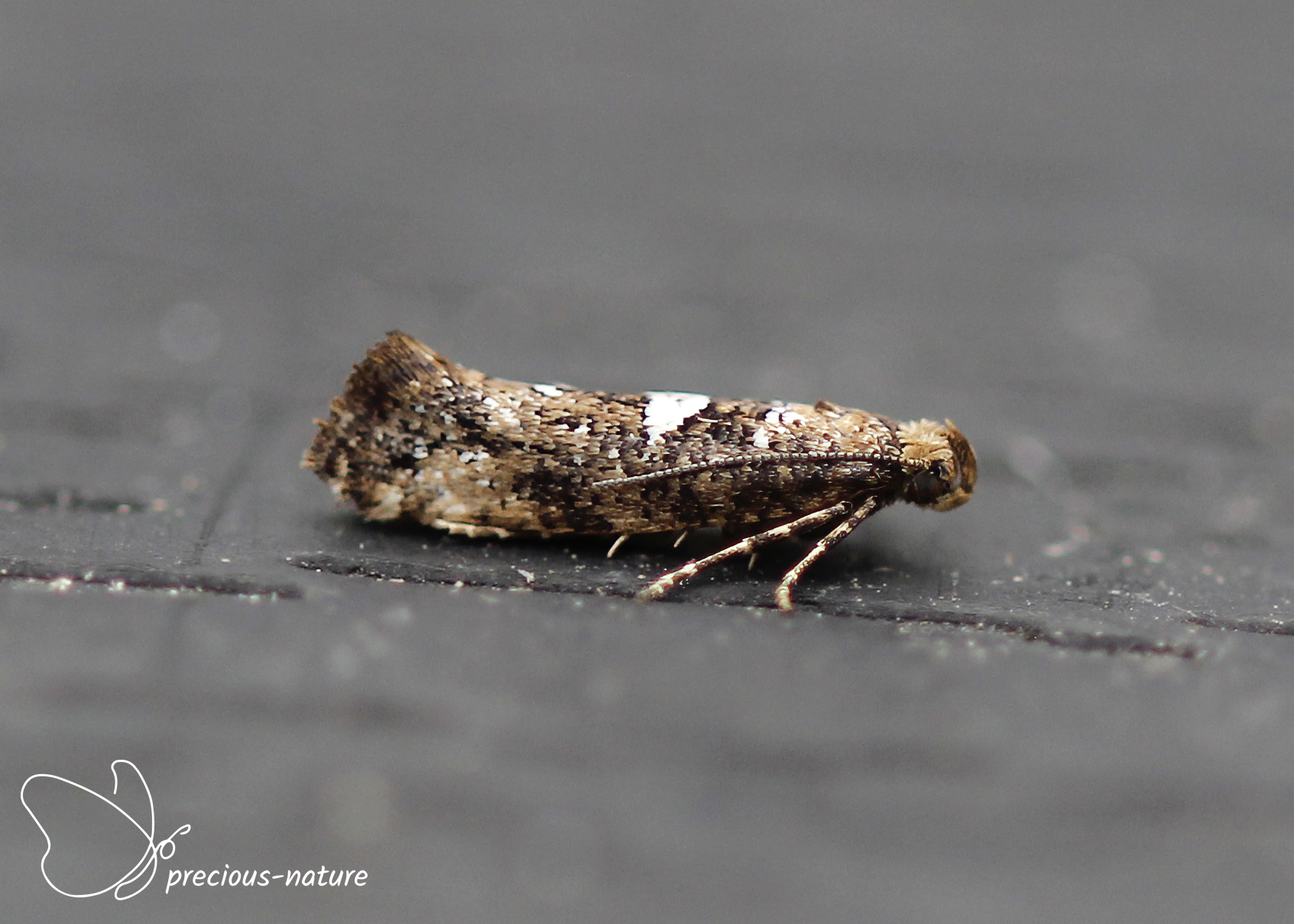
The forewing of the leek moth (Acrolepiopsis assectella) is greyish-brown with dark brown and white scales scattered across the entire wing. The white spots are more numerous at the terminal part of the wing. A striking feature is the bright white triangular spot near the inner edge, halfway down the wing. This white spot sometimes contains a thin brown line or a few brown scales. Occasionally, a small white spot is visible at the base of the wing and one or two small white spots at the tornus. The flight period spans two generations throughout the year, but is most prevalent in the summer and autumn. The wingspan is approximately 12 mm. Host plant: onion, leek, garlic. Dutch name: Preimot. Frisian name: –
Flying period:

Genus: Plutella
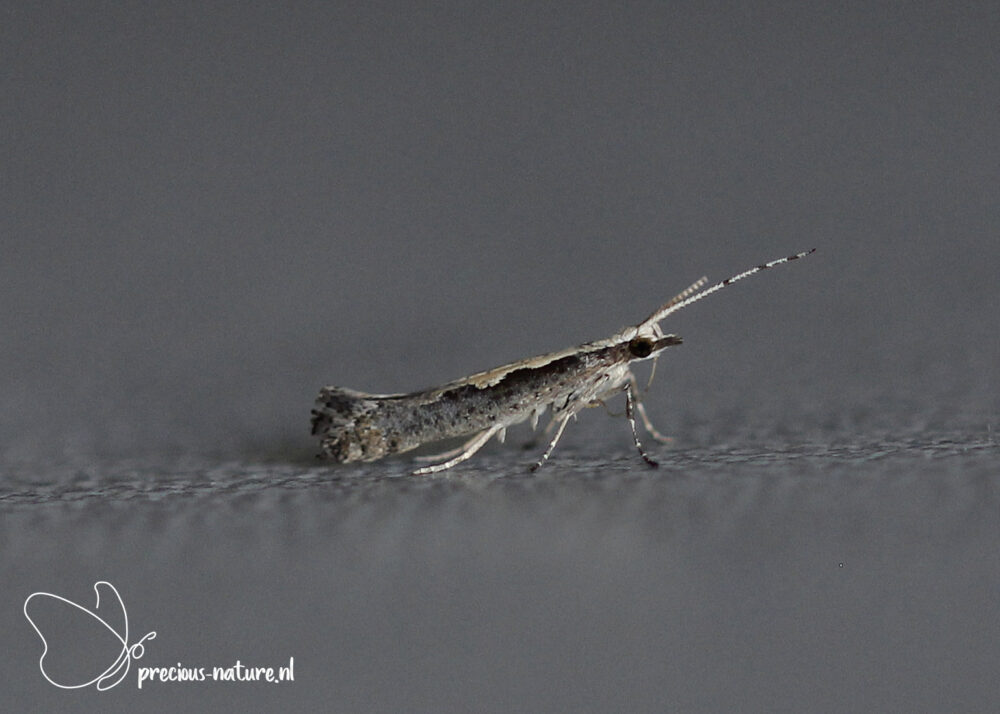
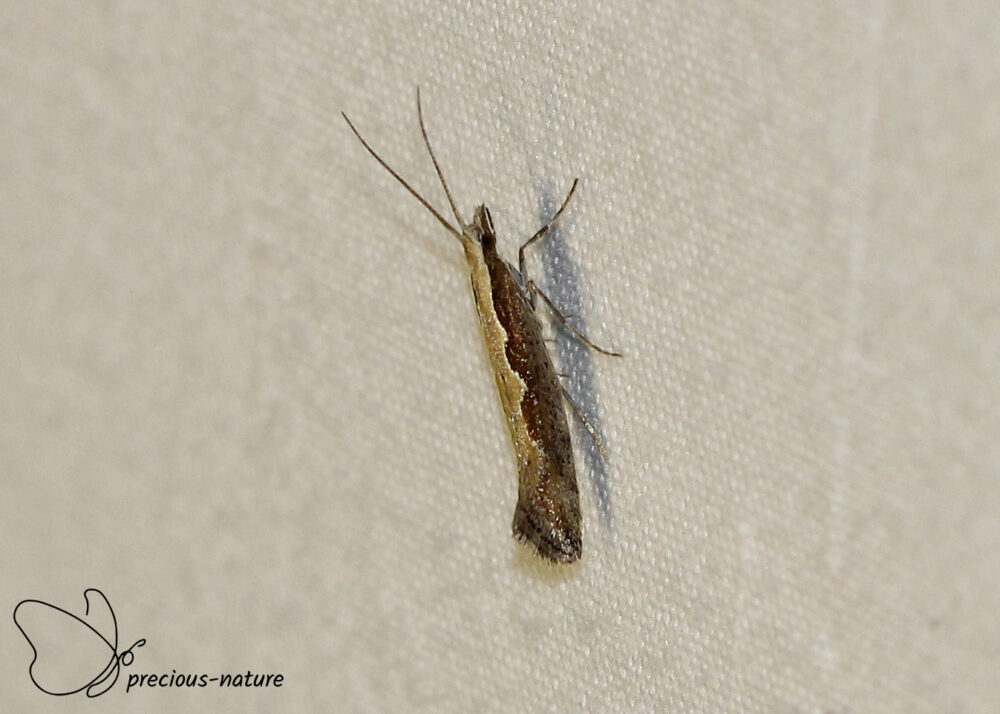
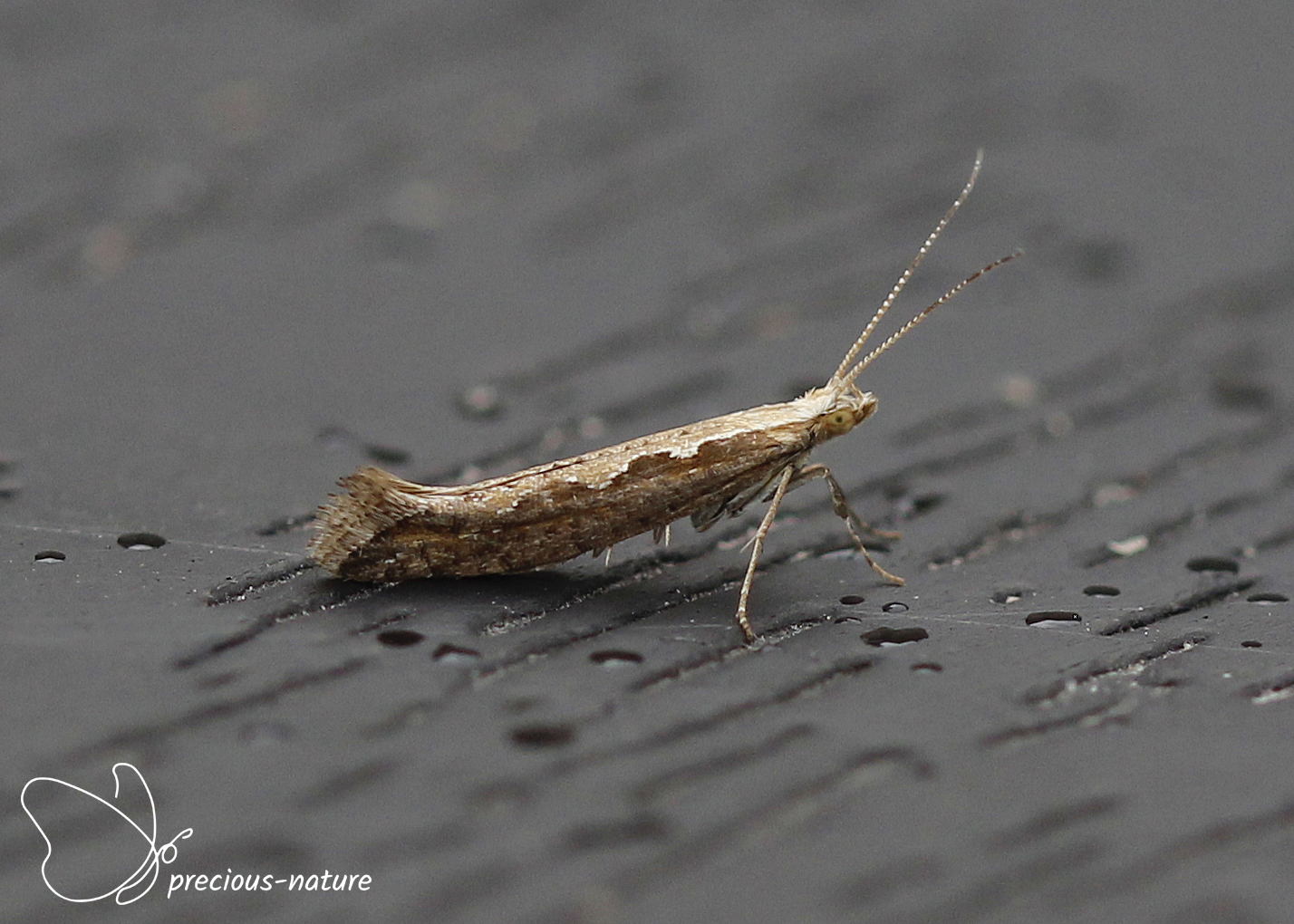
Diamondback Moth – 2019 (NL)
(NCBI-index: 51655)
In the summer, you can often sit outside after dinner and are sometimes lucky that something special flies by. This also applies to the Diamond-back Moth (Plutella xylostella). The head and thorax are white, and the forewing is greyish brown, sometimes darker, with a whitish band along the dorsum. The separation from the dark outer band is wavy in the shape of a sinusoid. The flying period spans several generations throughout the year, with the majority occurring in summer, and the wingspan ranges from 12 to 17 mm. Host plant: Broccoli, Brussels Sprouts, Cabbage. Dutch name: Koolmot. Frisian name: –
Flying period: