Lasiocampid Moths (Lasiocampidae) are medium to large butterflies with hairy bodies. In resting position, these moths have their broad, rounded wings like a roof over their body. It is striking that the hindwing protrudes just below the forewing. As soon as these large moths are attracted to light, you can hear them arriving at the last moment. Due to the rapid wing beat, they make a sound like a “spinner”.
Subfamily: Lasiocampinae
Genus: Dendrolimus
Pine-tree Lappet – 2023 (BE)
(NCBI-index: 151304)
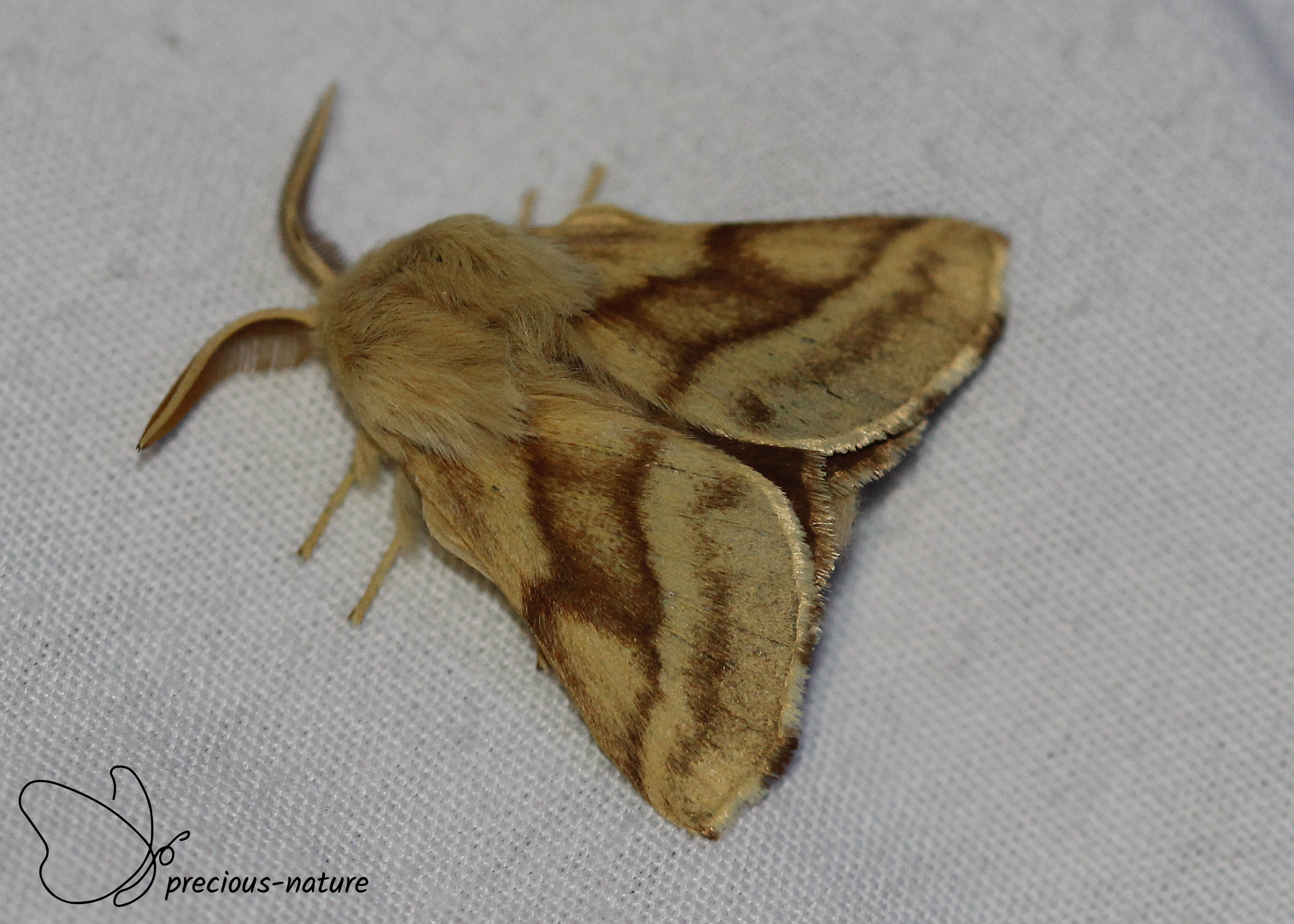
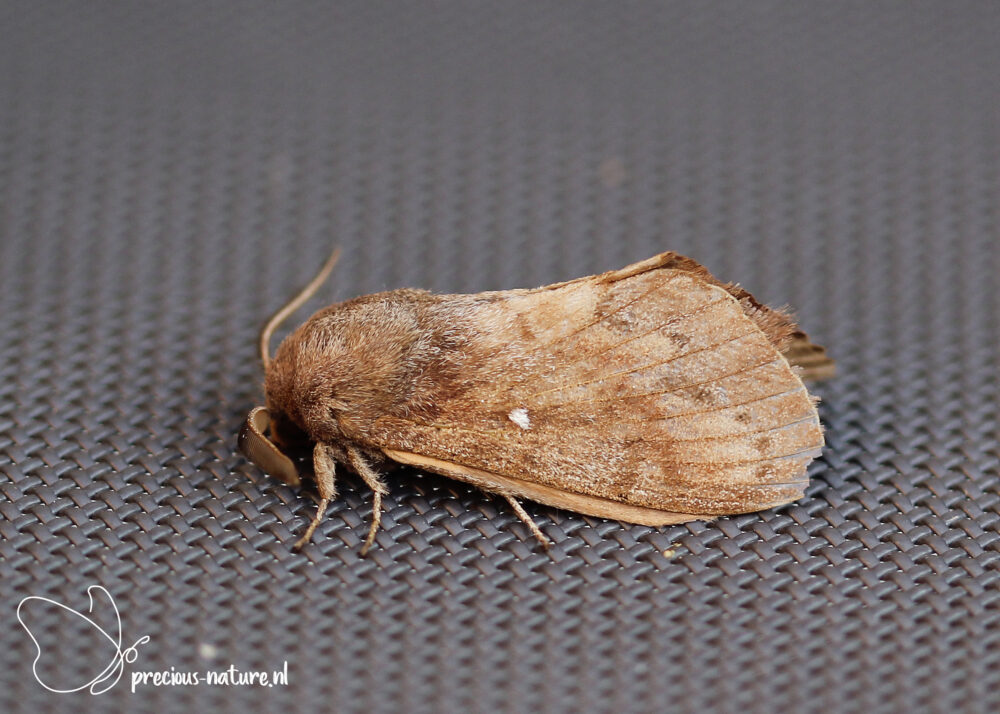
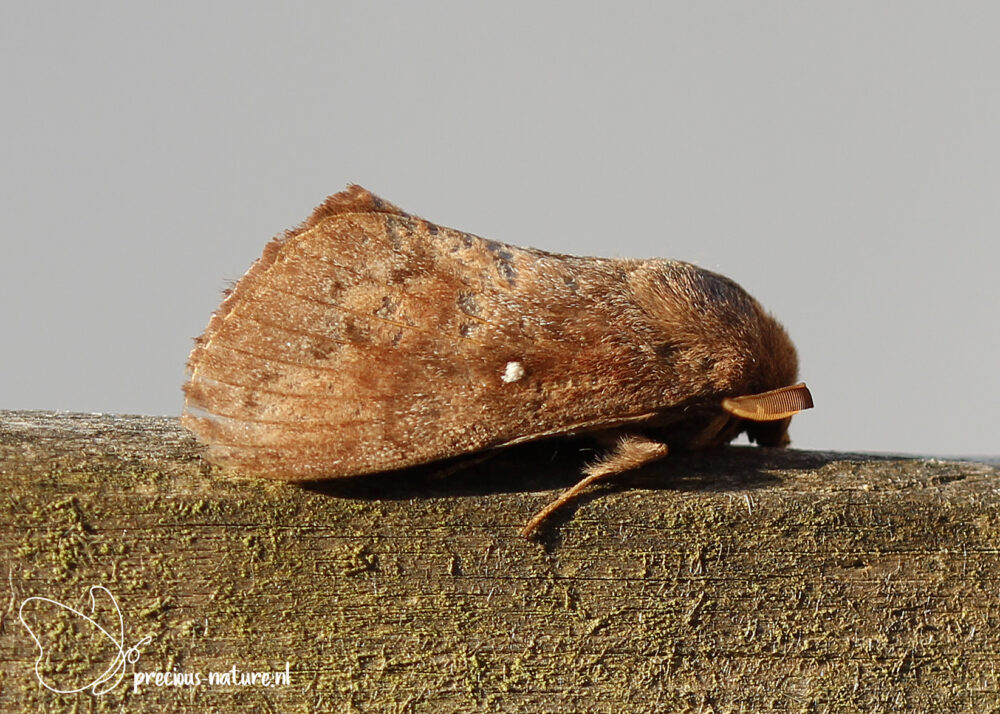
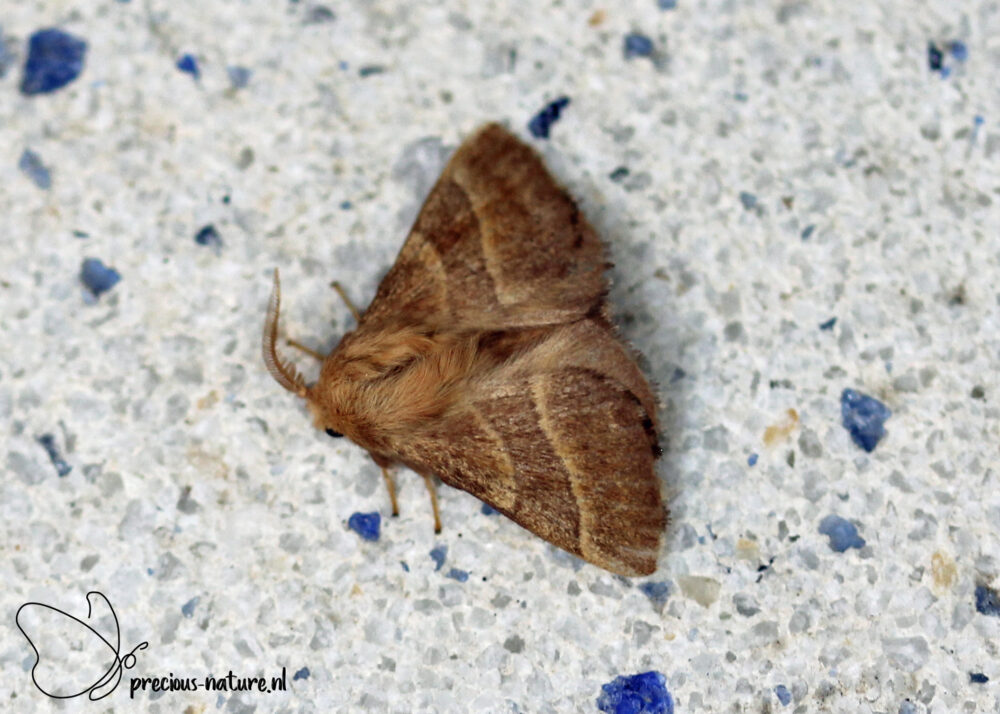
The advantage of taking the moth trap with you when you go to the Belgian Ardennes is that you catch species that are quite rare in the Netherlands and are quite common there. This also applies to the Pine-tree Lappet (Dendrolimus pini). This is a variable lasiocampid moth, especially the males, which is nevertheless easily recognisable. However, for the specimen that flew off and was caught in my moth trap, I had to look carefully to confirm the correct identification. An important identification point is the striking white centre spot on the otherwise brown-tinted forewing. The forewing includes an irregular, scalloped, wavy line and a characteristic pattern of reddish brown and grey bands. The Pine-tree Lappet larva can be fatal for pine trees. The larva feeds on the needles, as well as shoots and buds, causing extensive defoliation. Severe or repeated defoliation can lead to the death of a tree. The flight period spans from mid-May to mid-August, encompassing one generation, and the wingspan ranges from 45 to 70 mm. Host plant: Scots pine. Dutch name: Dennenspinner. Frisian name: Dinnespinder.
Flying period:

Subfamily: Lasiocampinae
Genus: Euthrix
Drinker Moth – 2017 (NL)
(NCBI-index: 624169)
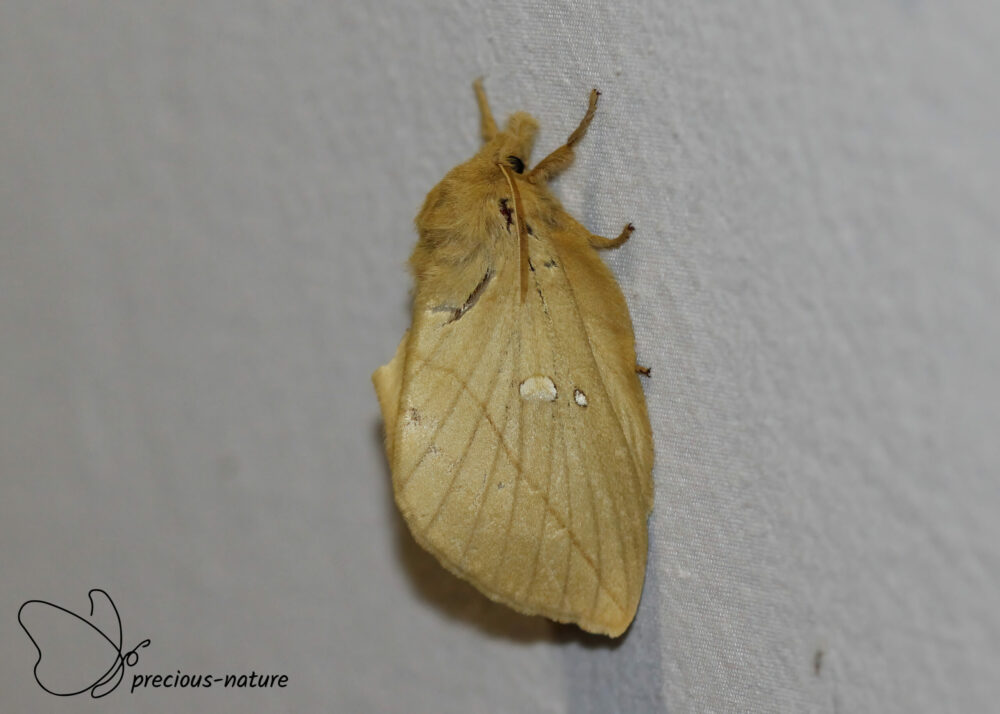
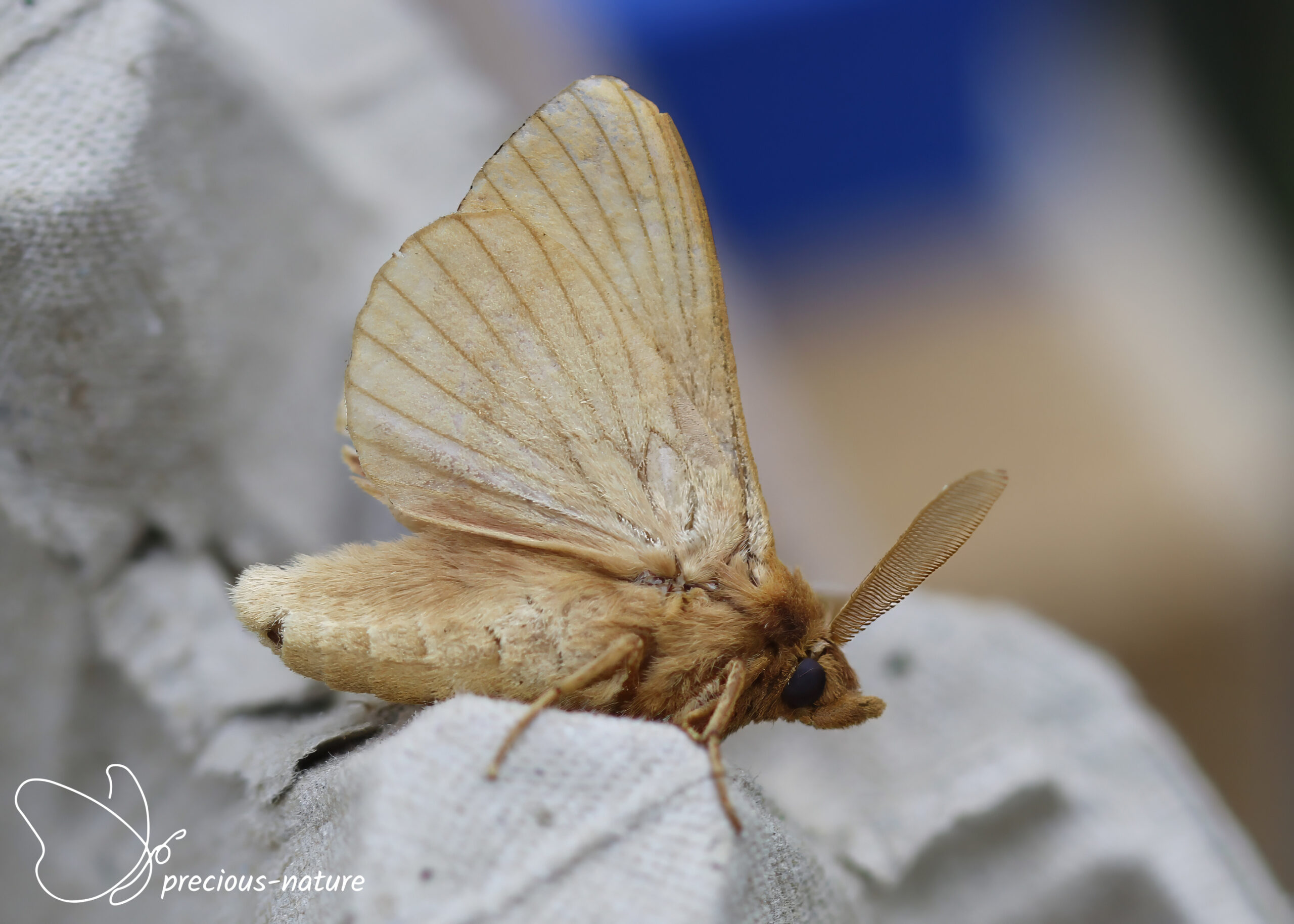
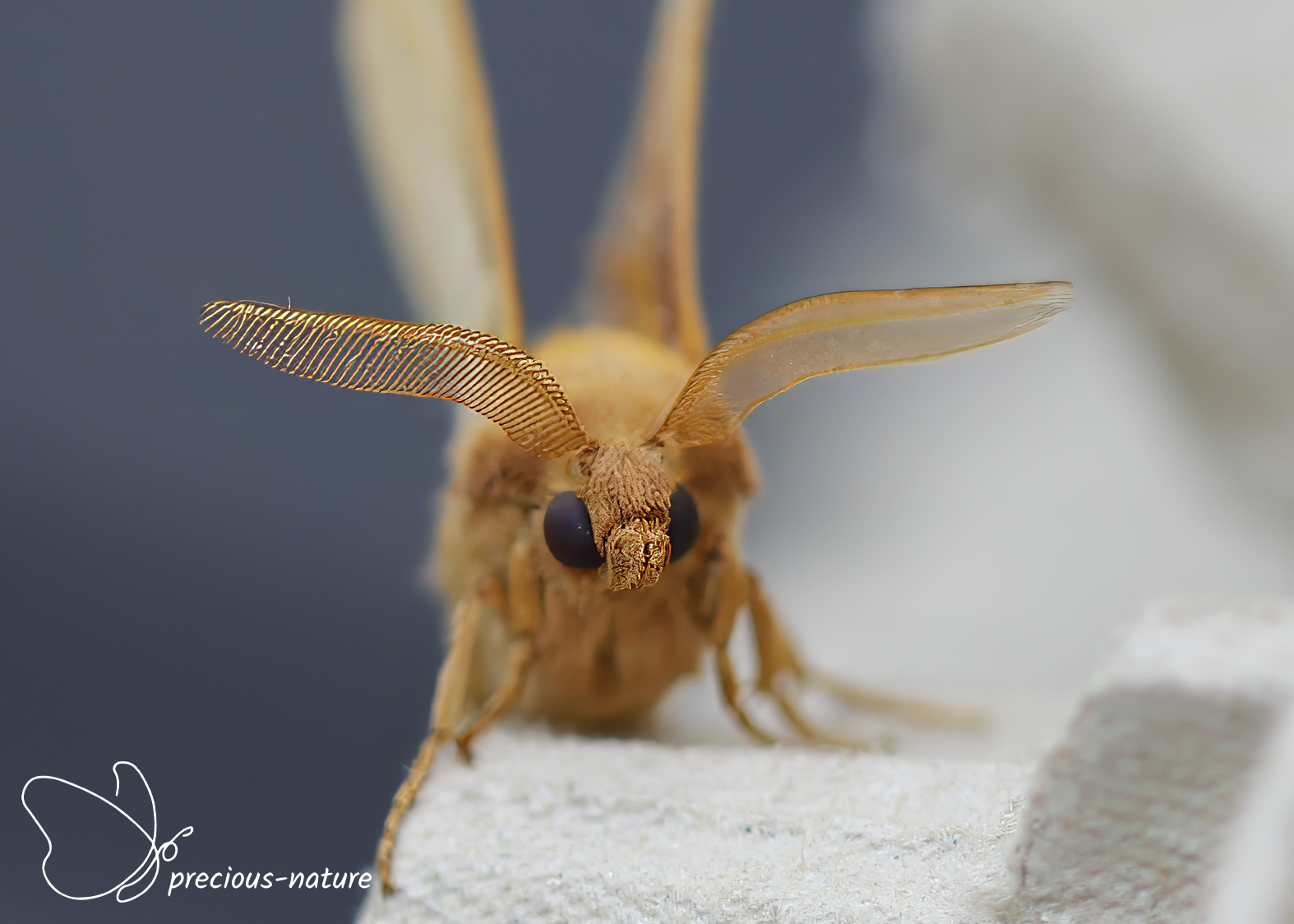
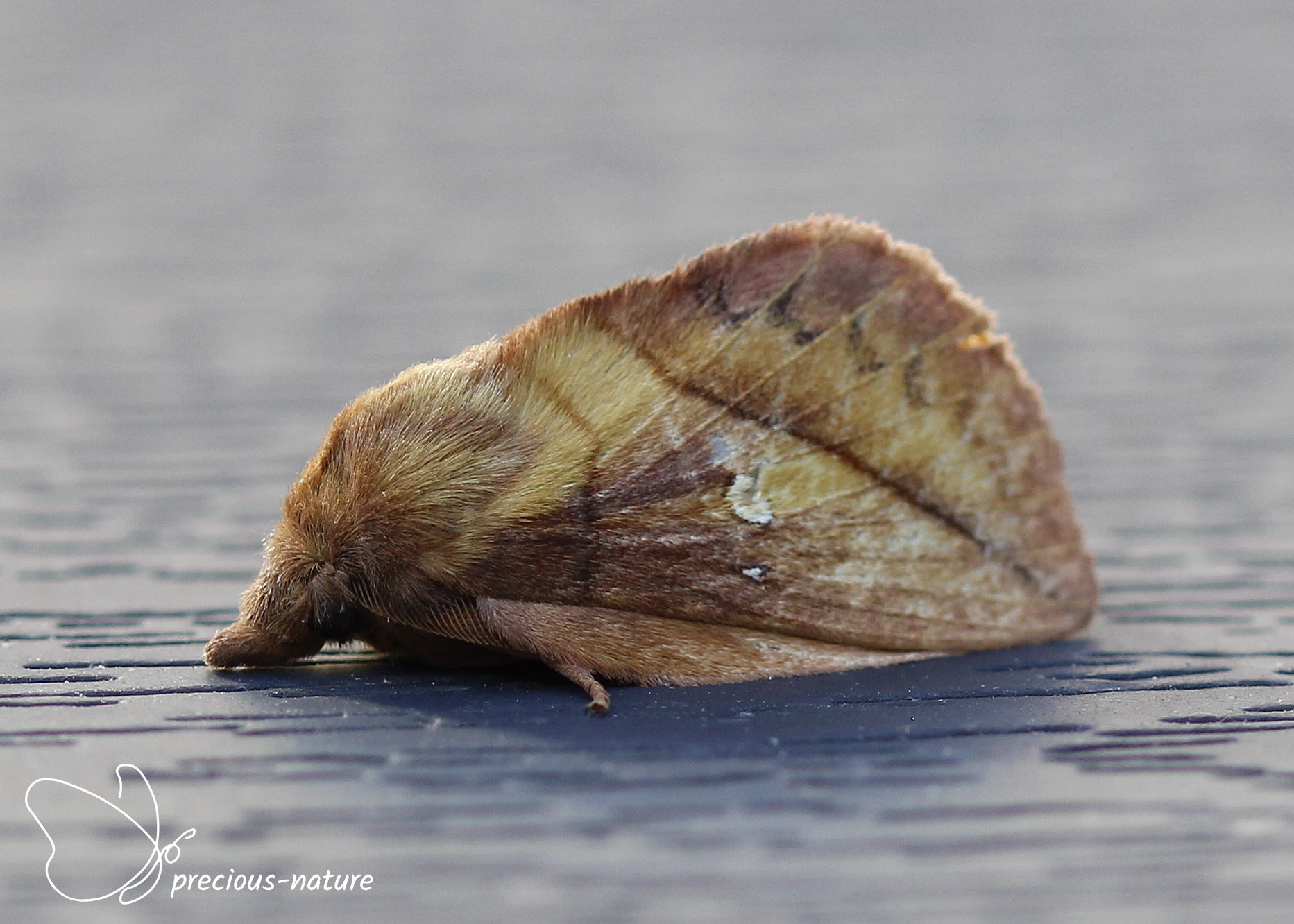
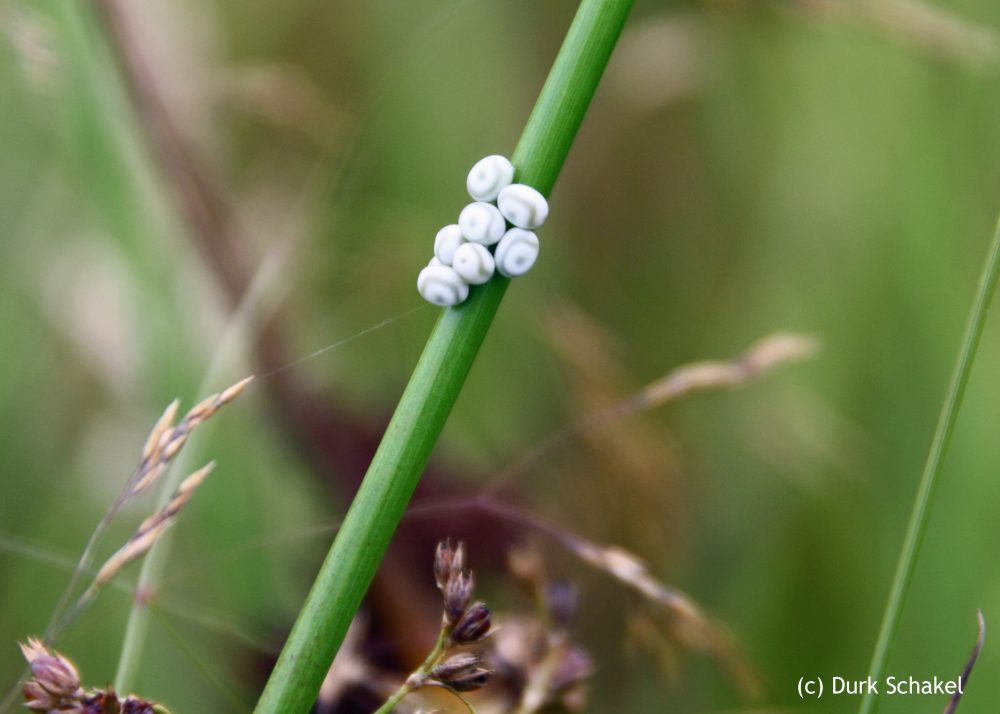
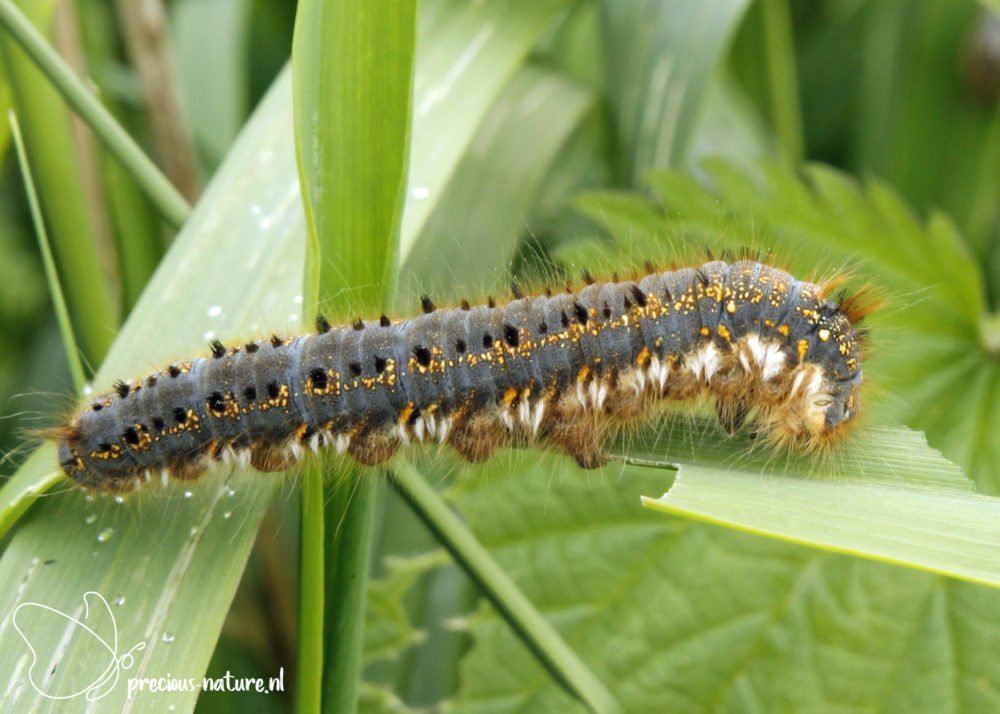
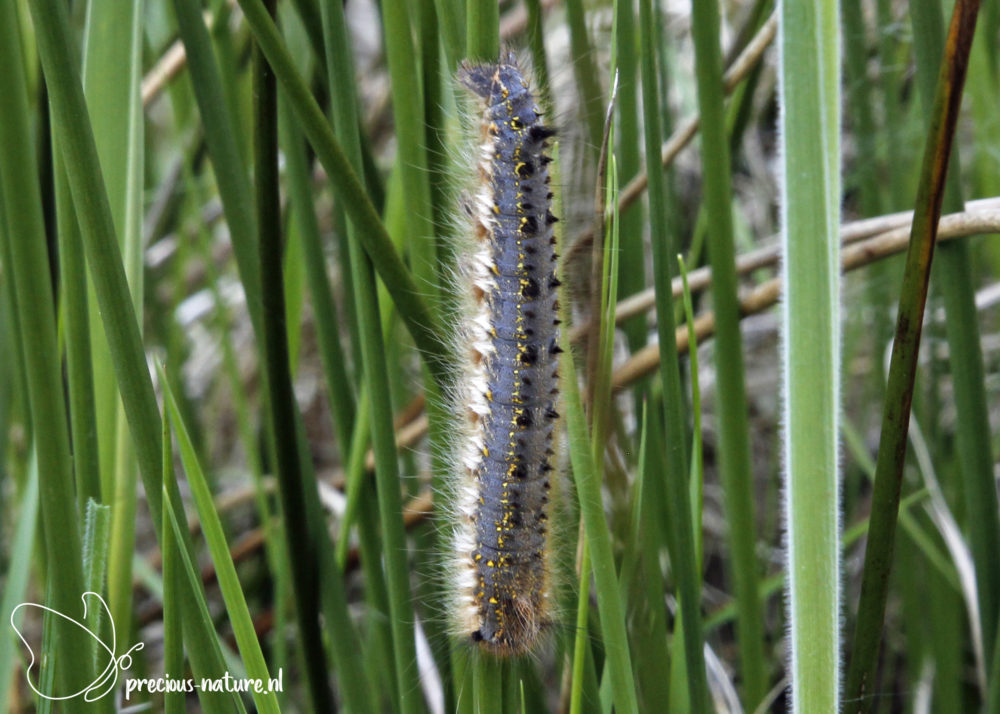
The Drinker Moth (Euthrix potatoria) is not the moth that I expected in my garden, as there are few reed collars in the immediate area. Males come to light more often than females. They have a remarkable snout due to their strongly hairy palps. Furthermore, the Drinker Moth has on the yellow-brown forewing, next to the white median spot, an extra small white spot. A wavy line can be seen in the marginal area just before a brown cross line running towards the apex. The females are larger and can vary in colour from deep yellow to very pale buff, whitish, or a darker reddish-brown similar to the males. The flight period spans from June to August in one generation, and the wingspan ranges from 42 to 70 mm. Host plant: Cock’s-foot, couches, Common Reed, Reed Canary-grass, Wood Small-reed. Dutch name: Rietvink. Frisian name: Reidspinner.
Flying period:

Subfamily: Lasiocampinae
Genus: Malacosoma
Lackey Moth – 2023 (BE)
(NCBI-index: 7098)
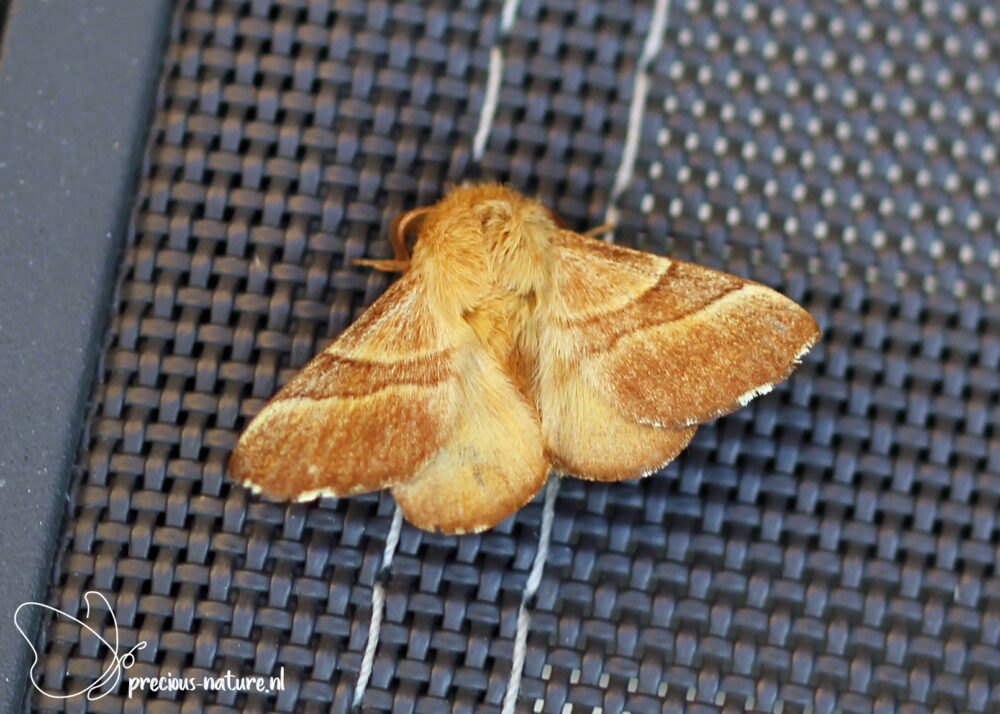
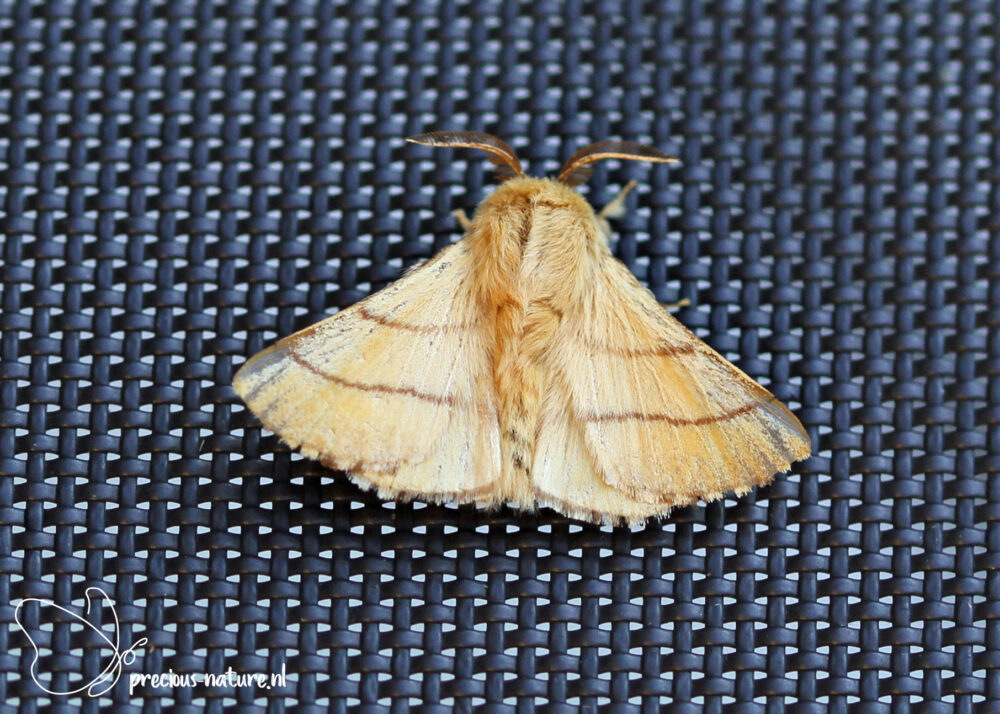
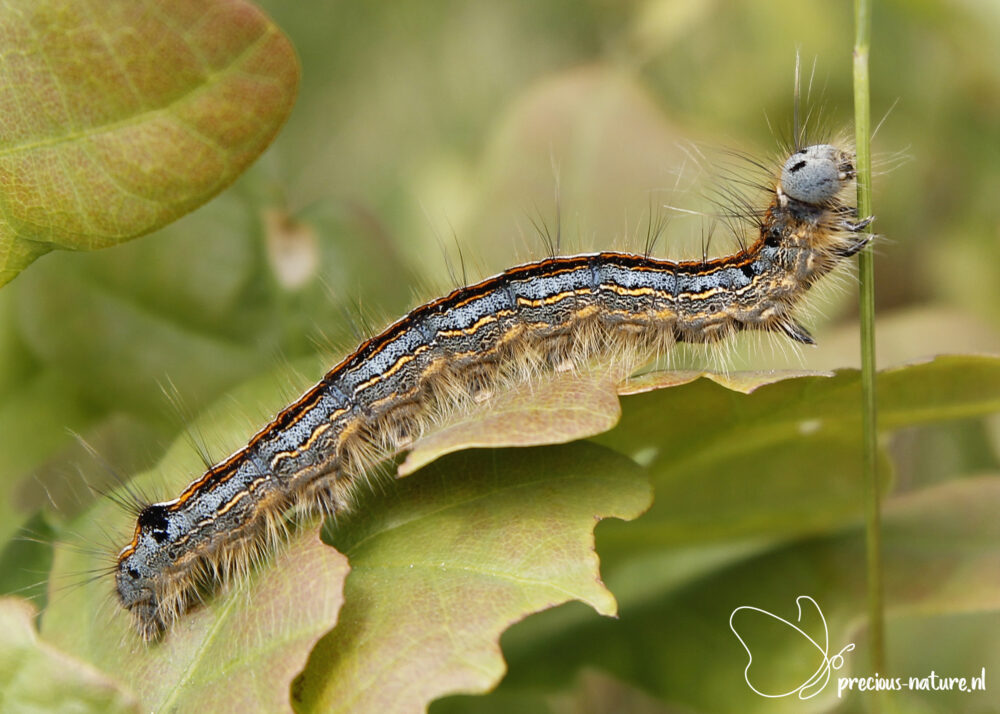
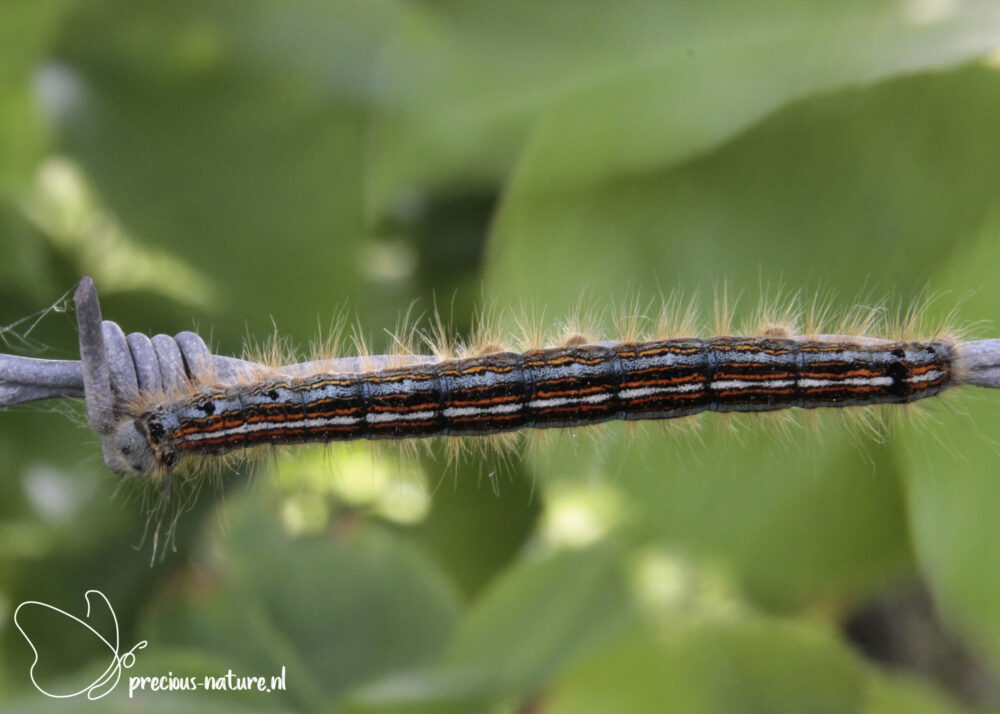
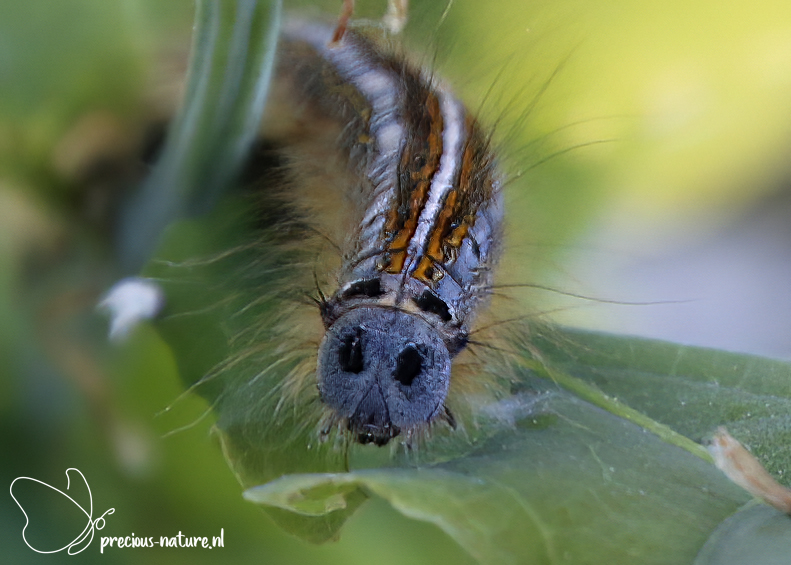
I had often seen the colourful caterpillar in large numbers, but eventually, I got to see the adult of the Lackey Moth (Malacosoma neustria) for the first time in Belgium. The goal was to spend a few days walking around the Ardennes in search of butterflies, but I also brought a moth trap with me. The colour of the wings varies from straw yellow to reddish brown and is often warmer in colour in the male and somewhat paler in the female. Characteristics are the parallel inner and outer dark transverse lines on the forewing. The midfield can be darker than the rest of the wing, and the seam field sometimes too. The fringes are brown and white checkered, with two striking “reflective” extra-large white blocks on the forewing. The hind wing has the same colour as the fore wing. The flight period spans one generation, from mid-June to early September, and the wingspan ranges from 25 to 32 mm for males and 38 to 42 mm for females. Host plant: Blackthorn, Hawthorn, Oak. Dutch name: Ringelrups. Frisian name: Rinkjeflinter.
Flying period:

Subfamily: Lasciocampinae
Genus: Malacosoma
Mountain Lackey – 2025 (FR)
(NCBI-index: 1.660657)
The first time I saw the Mountain Lackey (Malacosoma alpicola) was mid-afternoon. Despite being a moth, it was sitting beautifully on a dead plant, braving the wind. The female is usually completely reddish brown, but sometimes you can see a very faint, slightly darker transverse band halfway down the wing. She is also larger than the male. The male is conspicuous with its creamy white outer transverse band. The male’s wings are also darker brown than the female’s. Both have a considerable amount of hair on their heads. The males are a light brown, while the females are reddish-brown. The flight period is from June to early September, and the wingspan is 18-32 mm. Host plant: Lady’s Mantle. Dutch name: Alpenringelrups. Frisian name: –
Flying period:

Subfamily: Lasiocampinae
Genus: Malacosoma
Ground Lackey – 2025 (IT)
(NCBI-index: 3.112338)
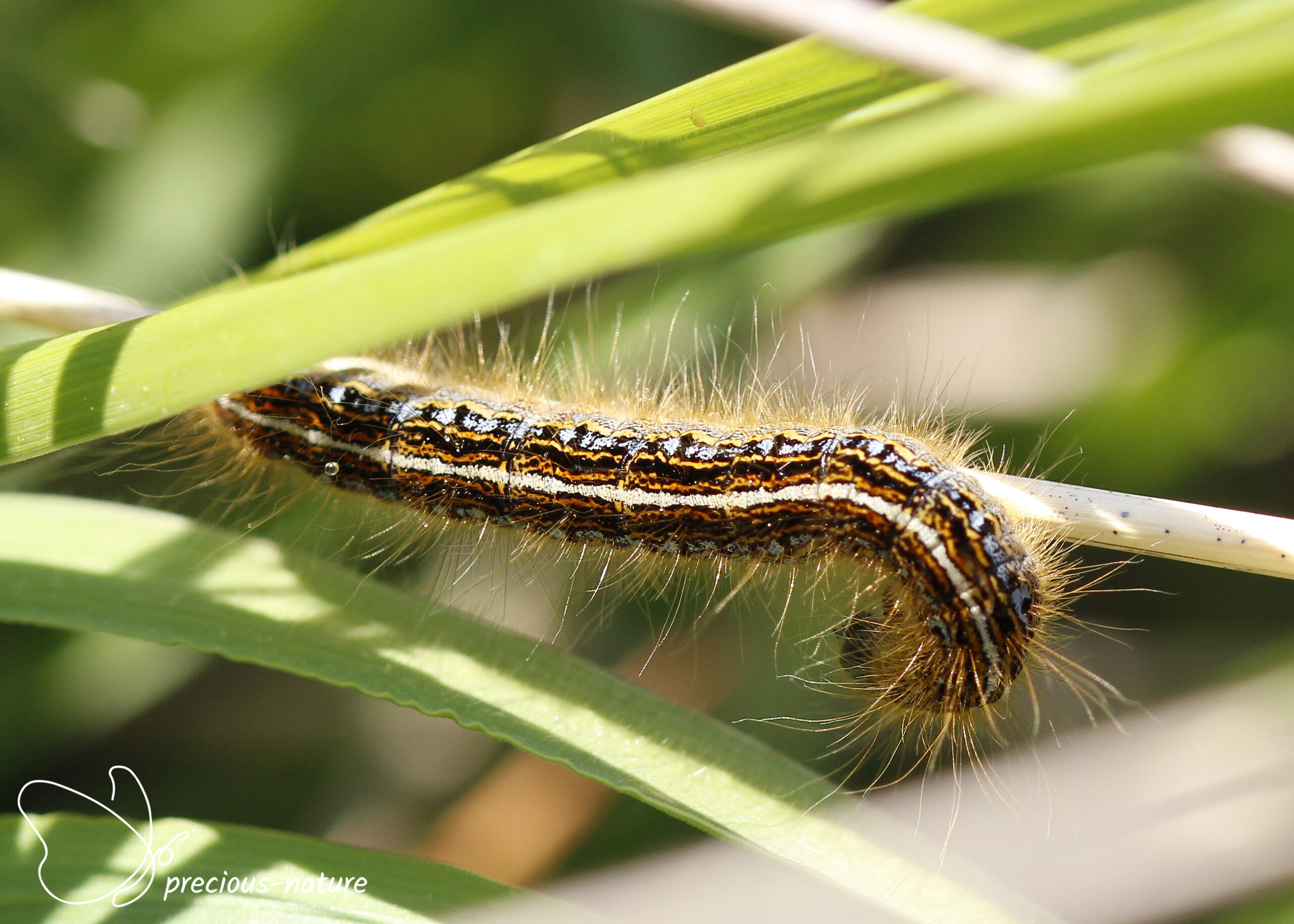
In the Netherlands, the Ground Lackey (Malacosoma castrensis) is quite rare. You might encounter it in heathland areas in the east of the country and possibly on the Wadden Islands. The male is easily recognisable by its ochre-yellow to creamy-white ground colour and the light to dark brown transverse lines. Usually, the central field is entirely or partially filled with the same brown colour. This gives the appearance of a broad, dark central band. The inner and outer transverse lines bend towards each other in a kink, which distinguishes it from the Lackey Moth (Malacosoma neustria). The female is larger and has a dark brown ground colour with light brown to ochre-yellow transverse lines. The fringe is a mix of brown and pale yellow, checkered. The flight period spans one generation, from late June to August, and the wingspan measures 32-36 mm (male) and 40-48 mm (female). Host plant: Heather, Bird’s-foot Trefoil, Cypress Spurge. Dutch name: Heideringelrups. Frisian name: –
Flying period: