The Grass Miner Moths (Elachistidae) are a family of small moths, the majority of which, in the caterpillar stage, have a leafminer lifestyle. These moths are mainly inventoried by looking for mines in the leaf. These moths are small and inconspicuous, often cryptic in both their appearance and lifestyle. The species can usually be recognised by their smooth head, long curved palps, and lanceolate forewings that are frequently white, grey, or black with white spots. The wingspan is 6-11 mm.
The Flat-bodies (Depressariinae) were previously described as a subfamily under the Twirler Moths (Gelechiidea), were elevated to the family Drepressariidae, and are now a subfamily of the Grass Miner Moths. The caterpillars mainly live in a cocoon made of leaves, flowers, seeds, and silk. The caterpillars of a few species are leaf miners or burrow into a stem.
Subfamily: Agonoxeninae
Genus: Blastodacna
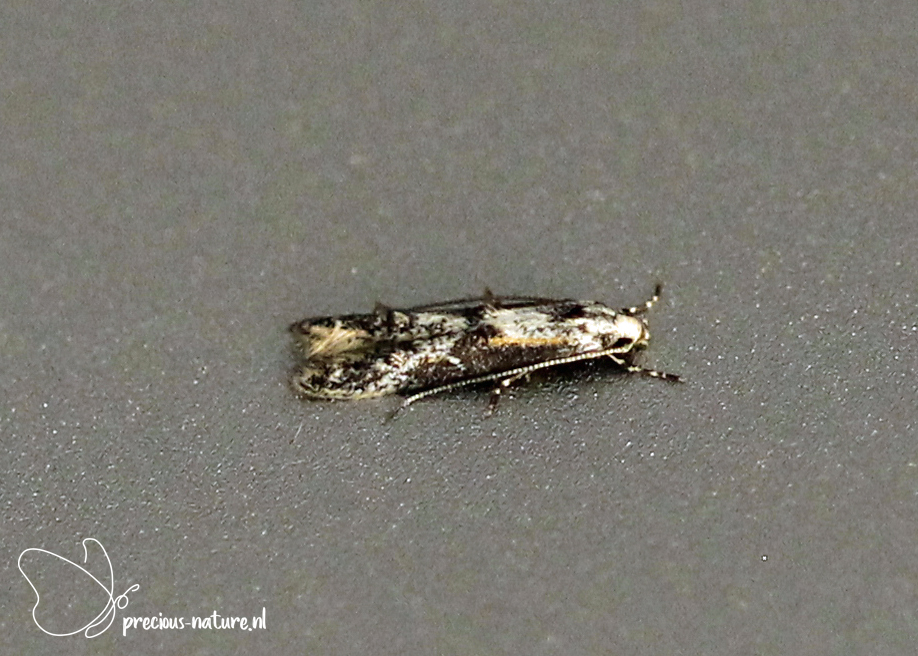
Hawthorn Cosmet – 2023 (NL)
(NCBI-index: 1.073604)
The Hawthorn Cosmet (Blastodacna hellerella) is very similar to the Apple Pith Moth (Blastodacna atra), but is smaller, lighter colored, and does not have a yellow-brown colour towards the base of the wing. The forewing is dark or black-brown with a white streak from the wing root towards the inner edge corner. At 1/3, the white streak becomes slightly narrower, and an elongated black spot becomes visible. At 2/3, you can see a bright white, black-lined spot with a black spot towards the wing tip. Both the legs and the backwards-facing long antennae are alternately black-and-white striped. The flight period spans one generation, from May to August, and the wingspan is 11 mm. Host plant(s): Hawthorn. Dutch name: Meidoornkwastmot. Frisian name: –
Flying period:

Subfamily: Depressariinae
Genus: Agonopterix
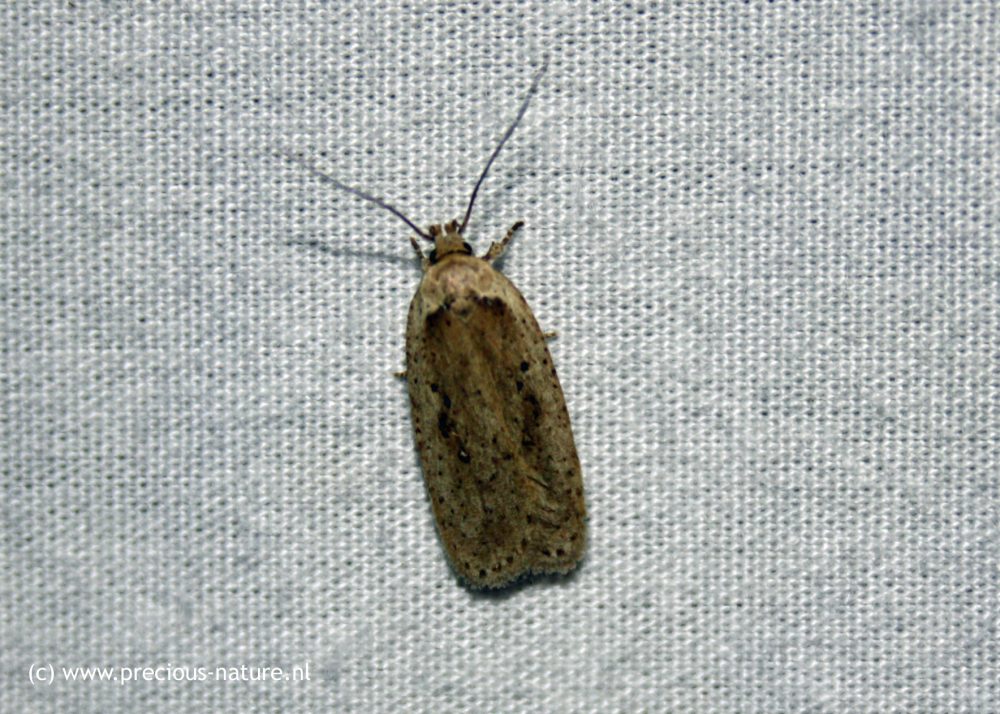
Large Carrot Flat-body – 2018 (NL)
(NCBI-index: 1.666438)
The most common species within the Flat-bodies is the Large Carrot Flat-body (Agonopterix ciliella). This moth is very similar to the Common Flat-body (Agonopterix heracliana). The difference is best seen in the wing fringes. In the Common Flat-body, there are only one or two dark bands, while in the Large Carrot Flat-body, there are two bands on the inside and outside, with five lighter bands in between. The legs also differ. The last segments of the Large Carrot Flat-body are dark-coloured, while those of the Common Flat-body are light-coloured. The flying period is from August to May, and the wingspan is 19-24 mm. Host plant(s): Wild Angelica, Wild Parsnip, Hogweed. Dutch name: Bonte kaartmot. Frisian name: –
Flying period:

Subfamily: Depressariinae
Genus: Agonopterix
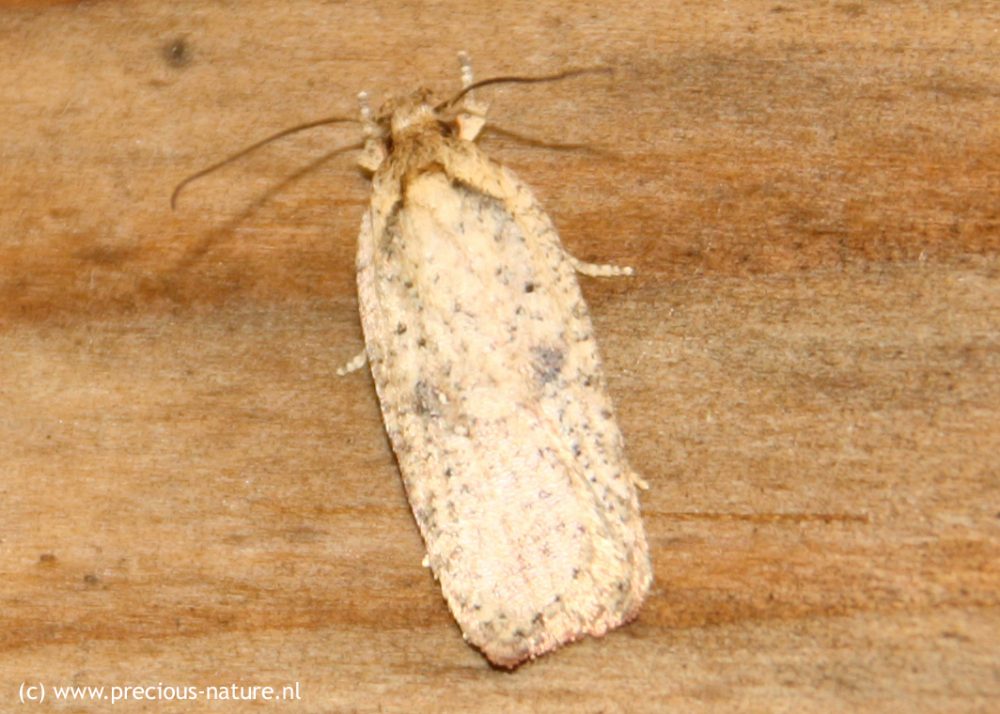
Broom Flat-body – 2018 (FR)
(NCBI-index: 596664)
The Broom Flat-body (Agonopterix scopariella) is rarely seen in the Netherlands. This Flat-body is tied to sunny places with many broom bushes. On my holiday in the Vendée, it was over 30 °C, so the conditions were ideal. The top of the wing is bright yellow-brown to cream-coloured with many dark speckles. The wing has a black spot with a white spot right next to it, the edge of which is reddish-brown. In addition, a second white spot is visible. The two white spots serve as a distinguishing marker for this species, differentiating it from the Ruddy Flat-body (Agonopterix subpropinquella). Near the more significant black mark, towards the base, are two slightly clearer black dots. The flying period is from August to April, and the wingspan is 13-16 mm. Host plant(s): Gorse. Dutch name: Vale bremkaartmot. Frisian name: –
Flying period:

Subfamily: Depressariinae
Genus: Agonopterix
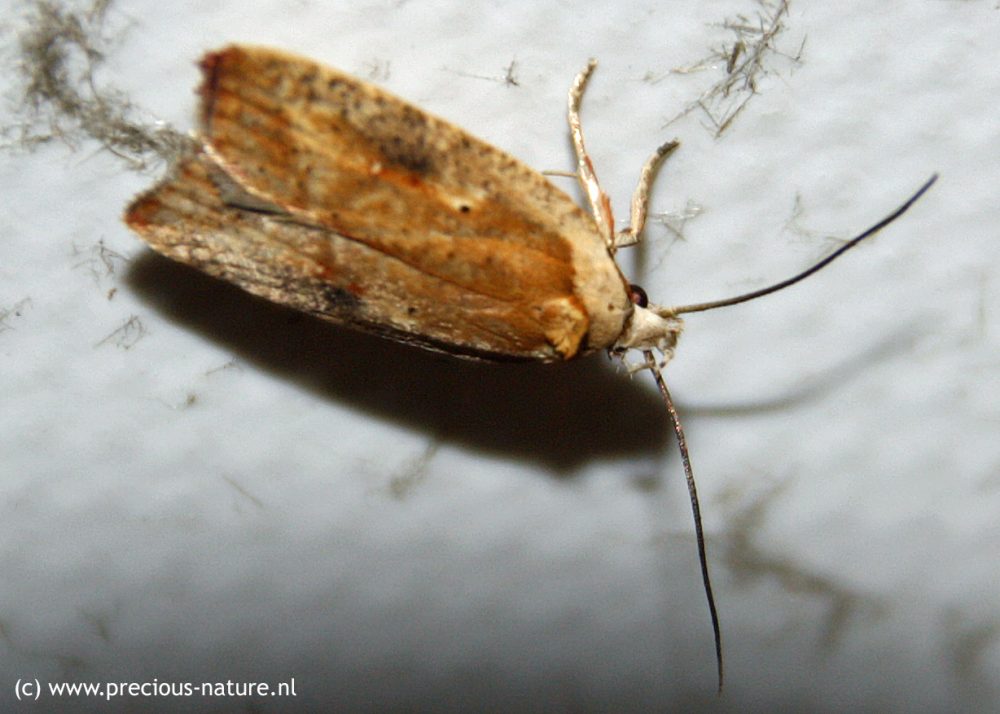
Dark-fringed Flat-body – 2018 (FR)
(NCBI-index: 1.666440)
A Flat-body that is not very often seen in the Netherlands is the Gorse Tip Moth (Agonopterix nervosa). The top of the forewing is soft brown to slightly yellowish with a streak along the costa, which is noticeably lighter in colour. In the centre of the wing is a light, elongated spot. The oval mark closest to the base is black, and the other is white with a reddish-brown border. Near the white oval mark is a reddish-brown, elongated spot. The wing fringes are much darker than the wing itself, and the apex is quite pointed. The flying period in one generation is from June to September, and the wingspan is 16-22 mm. Host plant(s): Gorse, Broom, Dyer’s Greenwood. Dutch name: Spitse kaartmot. Frisian name: –
Flying period:

Subfamily: Depressariinae
Genus: Agonopterix
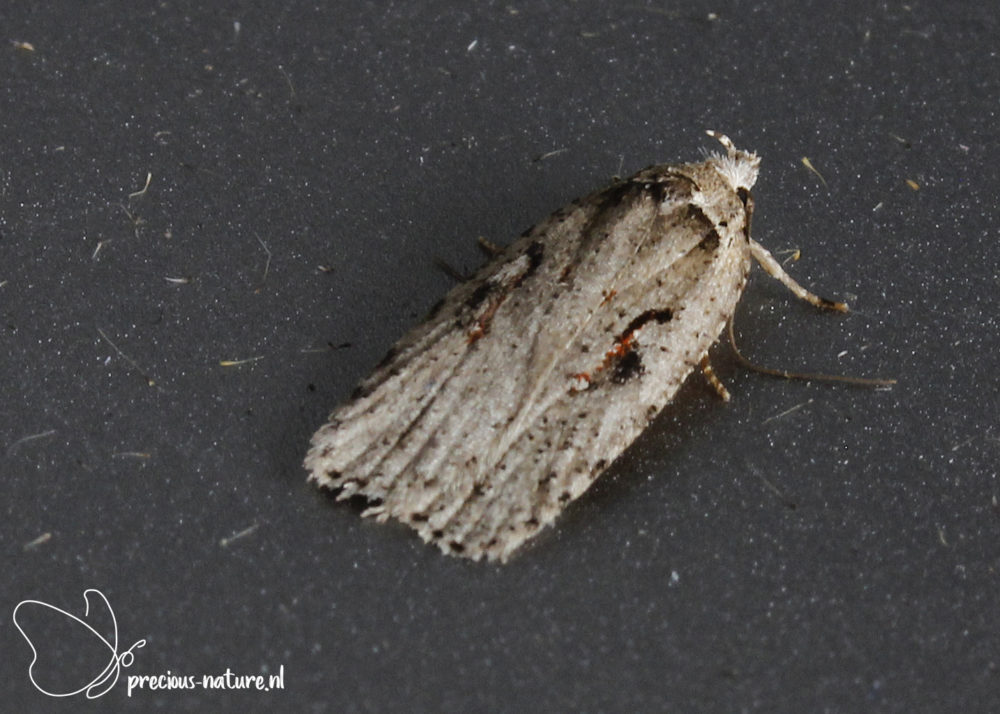
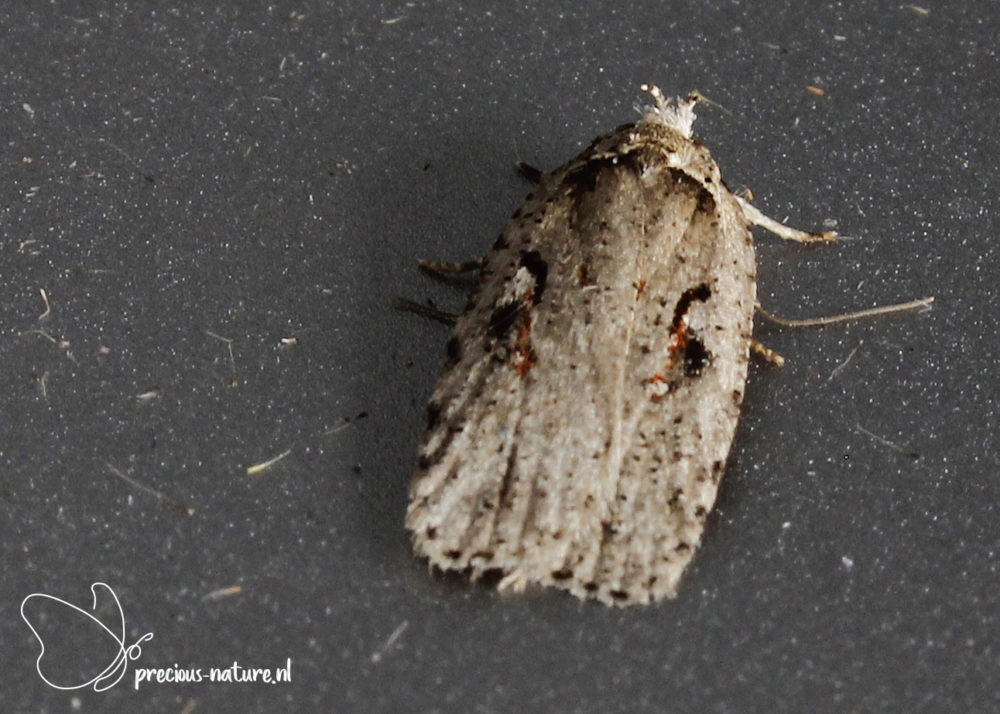
Red-letter Flat-body – 2019 (NL)
(NCBI-index: 1.594225)
The Red-letter Flat-body (Agonopterix ocellana) gets its name from the red, grey-brown spot in the middle of the wing. There is also a reddish short streak and a red-circled white dot on 3/5 of the wing. Furthermore, the wing is pale sandy brown with black speckles. The flying period spans one generation year-round, and the wingspan is 19-23 mm. Host plant(s): Willow. Dutch name: Rodevlekkaartmot. Frisian name: –
Flying period:

Subfamily: Depressariinae
Genus: Agonopterix
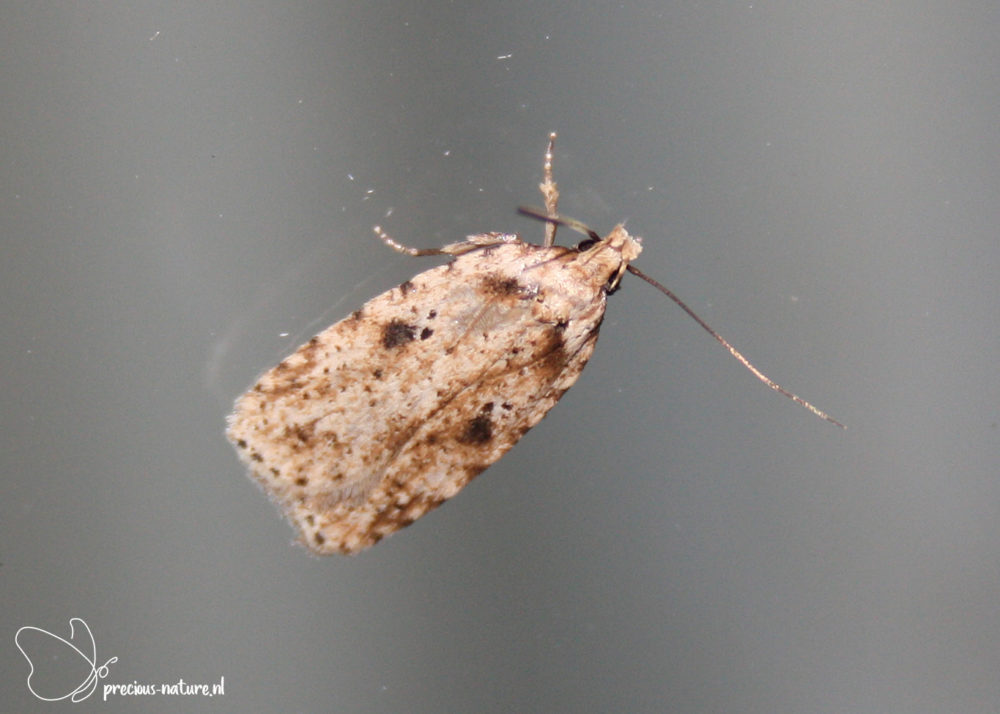
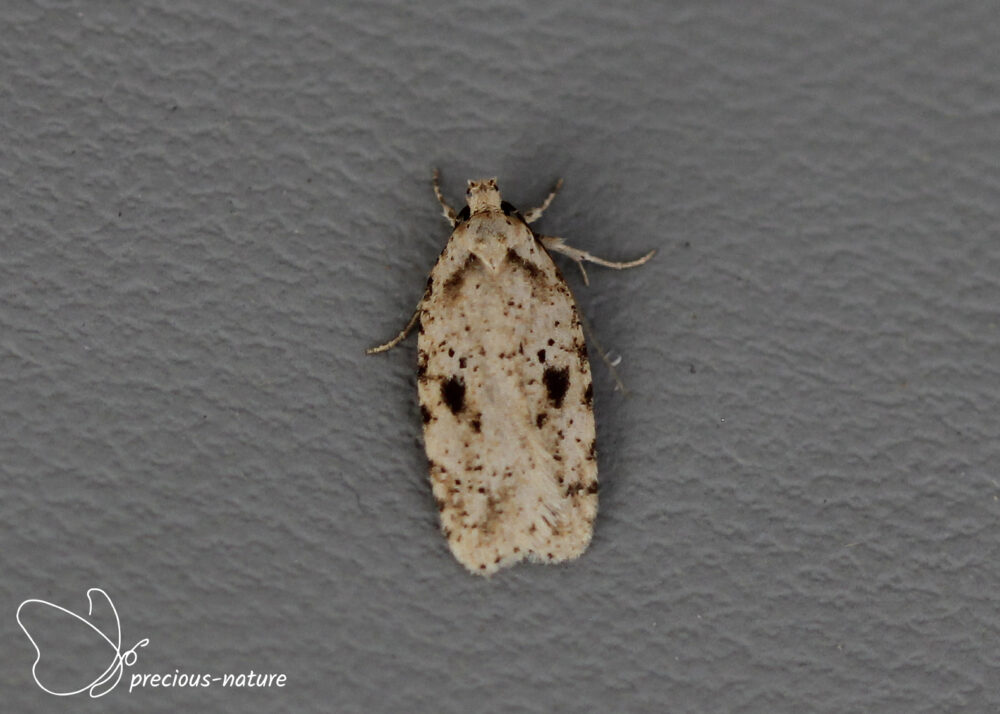
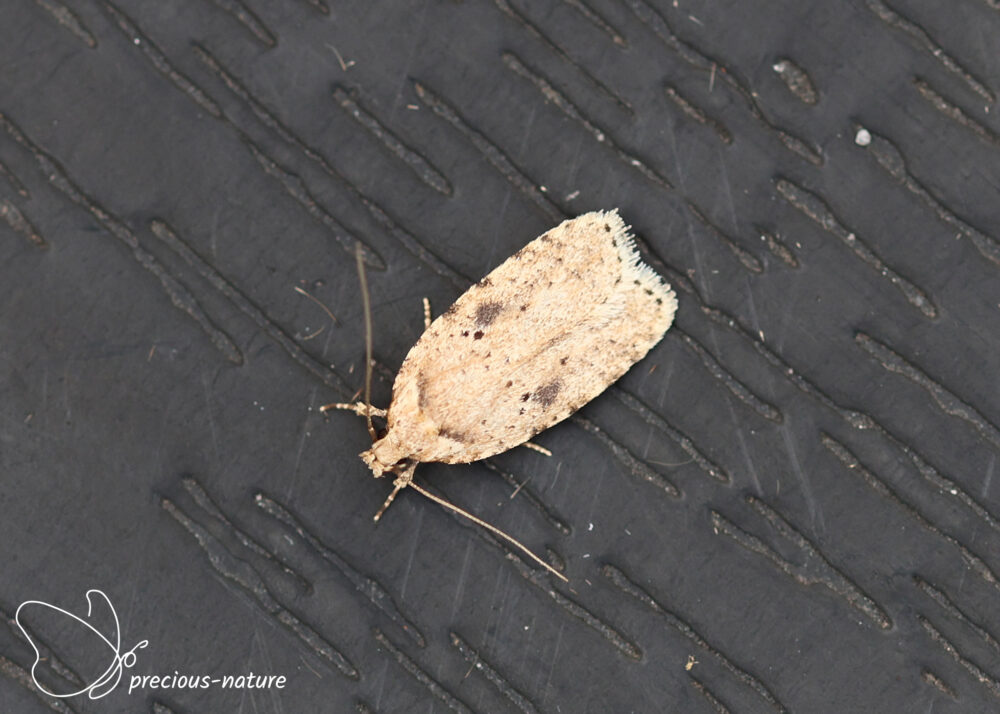
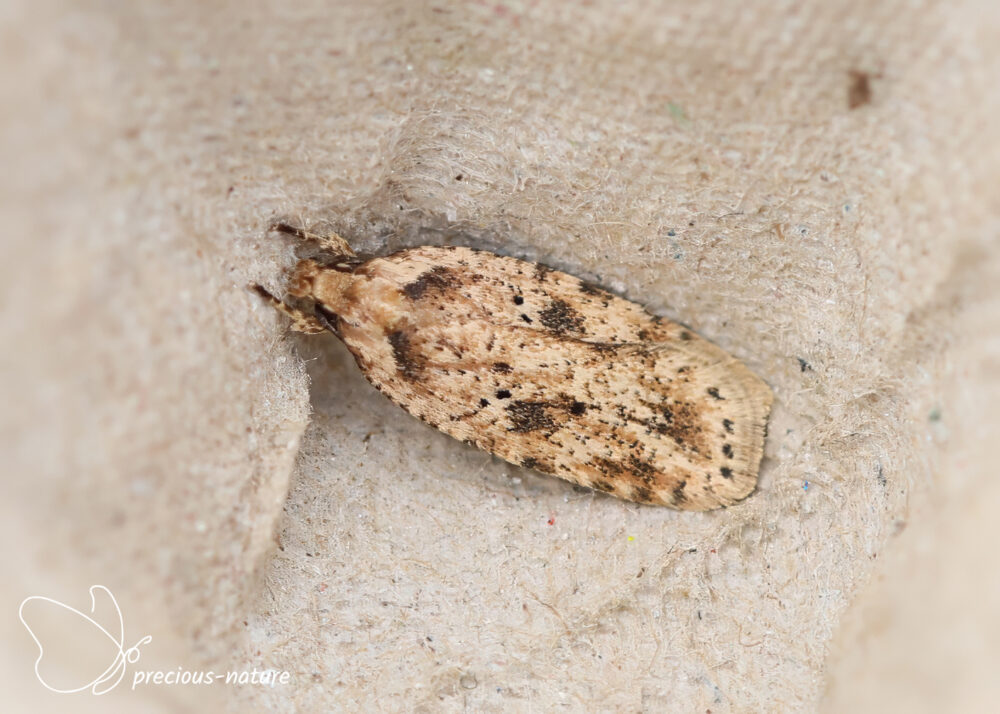
Brindled Flat-body – 2019 (NL)
(NCBI-index: 1.594222)
The forewing of the Brindled Flat-body (Agonopterix arenella) is pale sandy brown and sometimes mottled reddish-brown with a fine black speckle. On 1/3 of the wing are two oblique black dots and a black dot in the middle of the wing. Dark grey spots and several grey markings along the costa are between the black dots. Several black dots are visible along the termen. The flying period spans one generation throughout the year, and the wingspan ranges from 16 to 22 mm. Host plant(s): Thistles. Dutch name: Bleke kaartmot. Frisian name: –
Flying period:
Subfamily: Depressariinae
Genus: Agonopterix
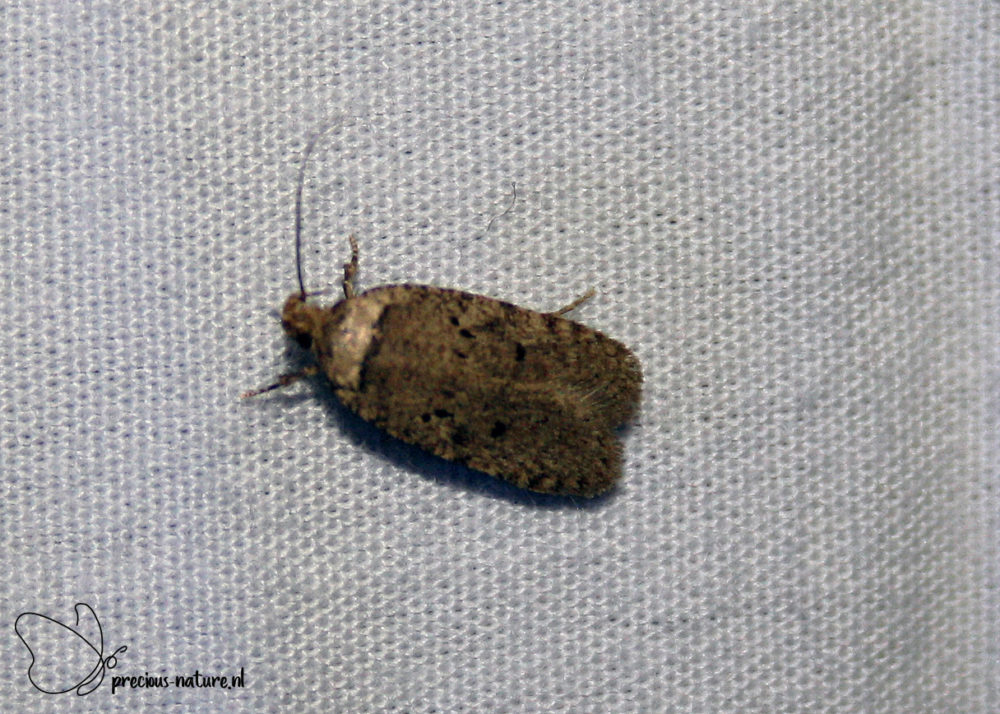
Powdered Flat-body – 2019 (NL)
(NCBI-index: 1.857955)
The month of April, nevertheless, yielded several new species in the flat-bodied family. Since it was reported on several websites that the Powdered Flat-body (Agonopterix curvipunctosa) was rare, I had long doubted the correct identification of this specimen. Consultation with experts confirmed my suspicion. The forewing is grey-brown, dotted with black scales. The black spots are so close together that they look like a moon. The flying period spans August to May in a single generation, and the wingspan is approximately 16 mm. Host plant: Cow Parsley, Chervil. Dutch name: Waddenkaartmot. Frisian name: –
Flying period:
Subfamily: Depressariinae
Genus: Agonopterix
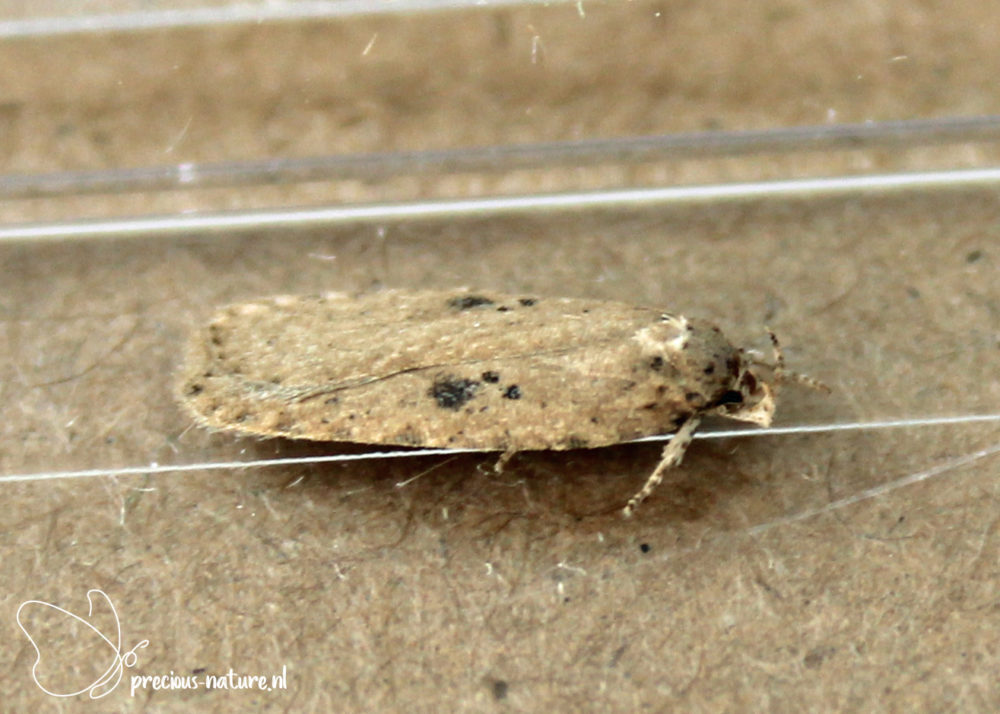
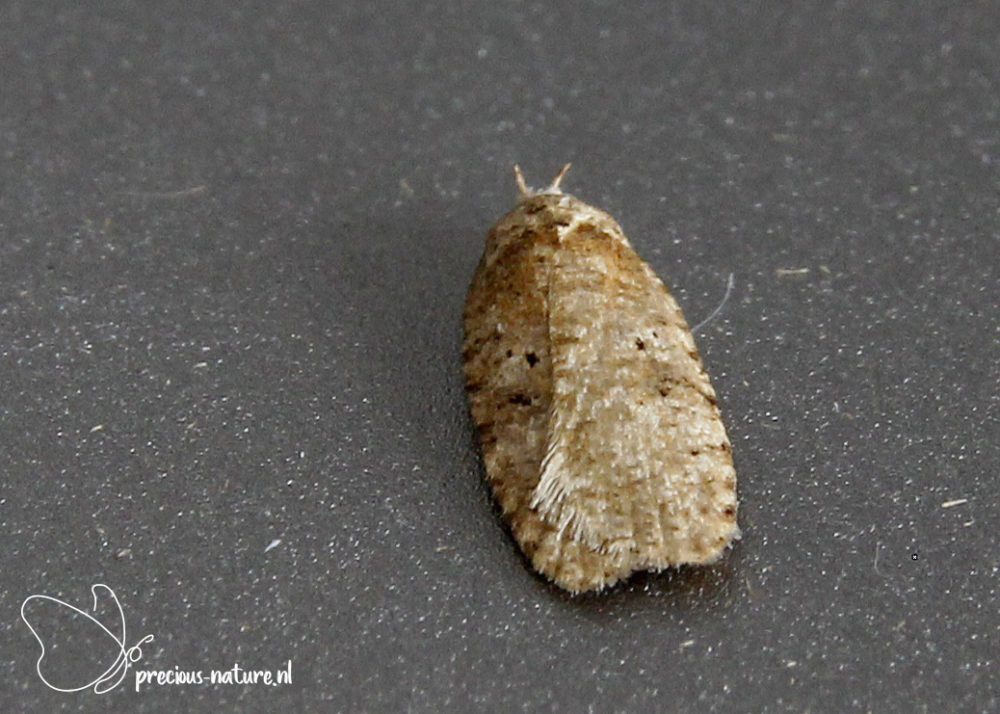
Coastal Flat-body – 2019 (NL)
(NCBI-index: 1.857959)
The wings of the Coastal Flat-body (Agonopterix yeatiana) are grey-brown to brown-white and light in colour. The stigma is surrounded by a dark red area, often with a dark spot above it. Both oval marks are small and black. The fringes are checkered in black, and faint black lines run from the fringes towards the stigma. A row of black dots can be seen along the termen. The flying period spans one generation throughout the year, and the wingspan ranges from 18 to 22 mm. Host plant(s): Wild Carrot, Hemlock. Dutch name: Peenkaartmot. Frisian name: –
Flying period:
Subfamily: Depressariinae
Genus: Agonopterix
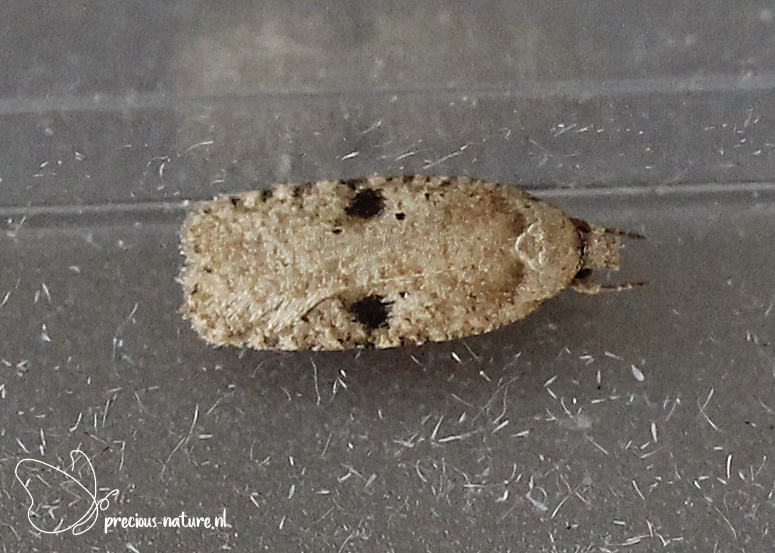
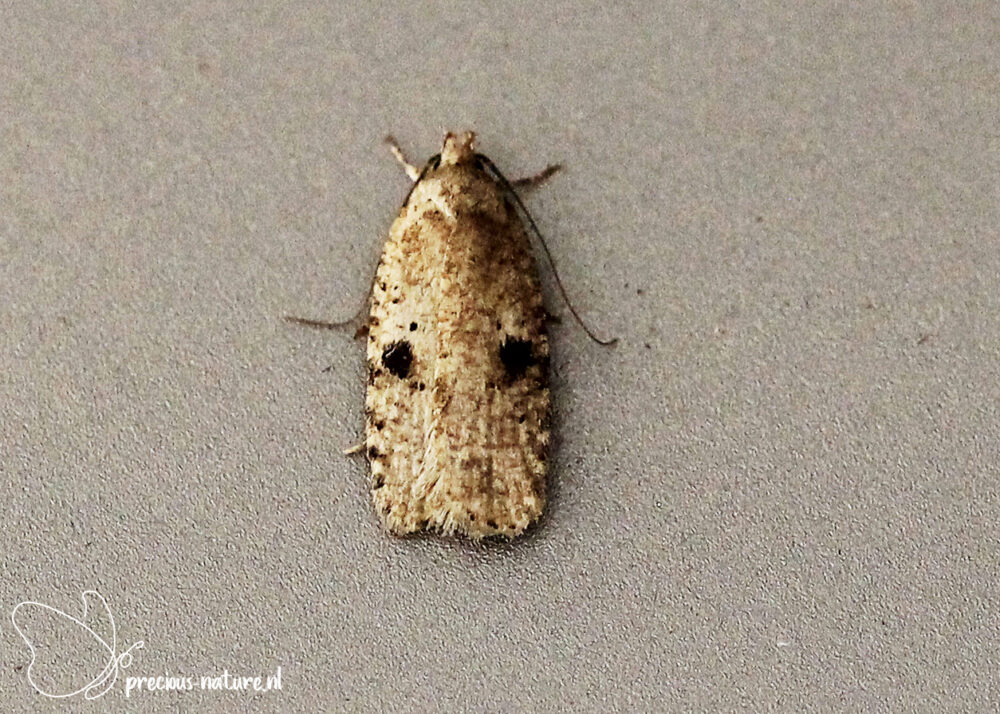
Black-spot Flat-body – 2023 (NL)
(NCBI-index: 1.430472)
The Black-spot Flat-body (Agonopterix propinquella) can be confused with the Ruddy Flat-body (Agonopterix subpropinquella). However, the Black-spot Flat-body has a pale grey or brown ground colour, with a darkly outlined cream-brown spot at the wing root. The Ruddy Flat-body is often reddish brown, and the two conspicuous black spots are smaller than those of the Black-spot Flat-body. In addition, the Black-spot Flat-body has some dark spots along the leading edge of the forewing. The flight period spans the year in one generation, and the wingspan is 16-19 mm. Host plant(s): Spear Thistle, Creeping Thistle. Dutch name: Zwartvlekkaartmot. Frisian name: –
Flying period:
Subfamily: Depressariinae
Genus: Depressaria
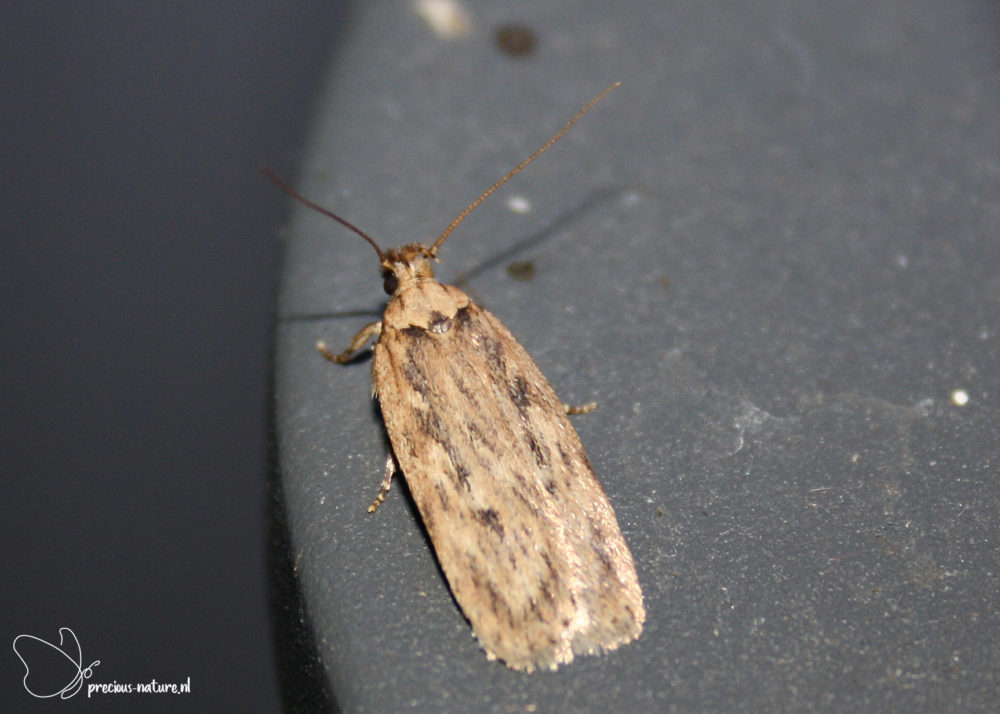
Parsnip Moth – 2019 (NL)
(NCBI-index: 1.594273)
The Parsnip Moth (Depressaria radiella) is similar to the Dingy Flat-body (Depressaria daucella) but is usually larger and has a series of black dots on the forewing along the dorsum. The forewing is otherwise pale grey-brown, sand-coloured, and speckled, with a series of blackish longitudinal stripes halfway down. At 3/4 is a cross-band that is slightly faded. The flight time is from August to May in one generation, and the wingspan is 19-27 mm. Host plant(s): Hogweed, Wild Parsnip. Dutch name: Pastinaakplatlijfje. Frisian name: –
Flying period:
Subfamily: Elachistinae
Genus: Elachista
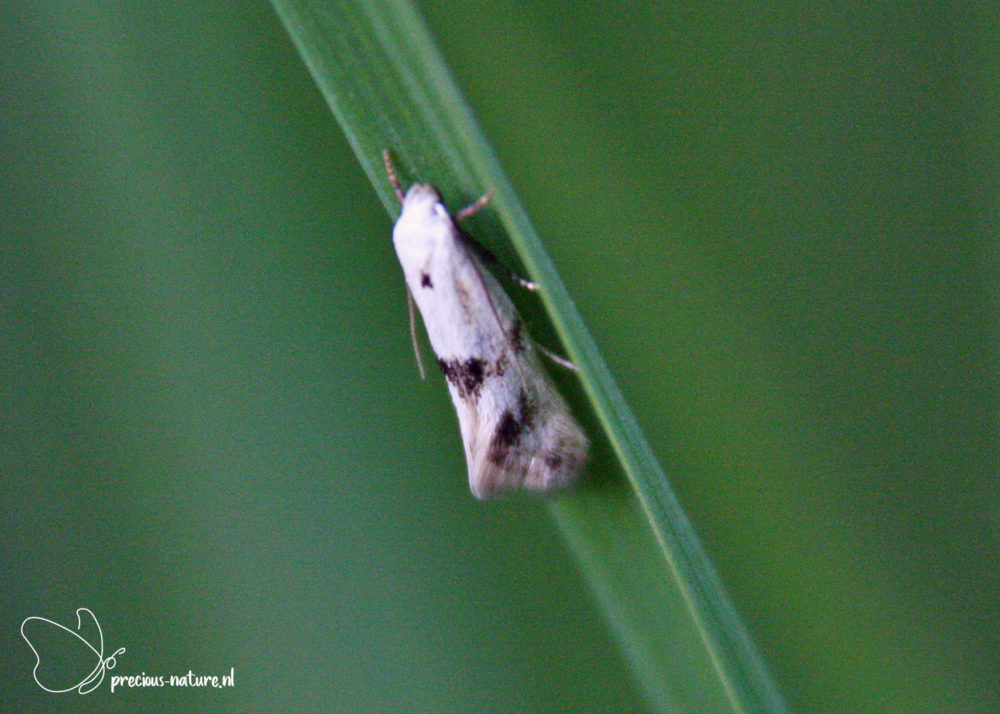
Triple-spot Dwarf – 2019 (NL)
(NCBI-index: 1.442294)
A few times in the evening, in the same nature reserve with abundant vegetation along the water, new species were discovered. This also applies to the Triple-spot Dwarf (Elachista maculicerusella). This grass miner is usually found in moist areas, such as near pools, ditches, and lakes where reeds grow. The forewing is white, sometimes light greyish brown, with an irregular dark brown cross band halfway and a light spot at 2/3. The hindwing is light ocher yellow in the female and somewhat darker and browner in the male. The flying period in one generation is from April to August, and the wingspan is 10-12 mm. Host plant(s): Common Reed and Reed Canary-grass. Dutch name: Grijsgevlekte grasmineermot. Frisian name: –
Flying period:

Subfamily: Ethmiinae
Genus: Ethmia
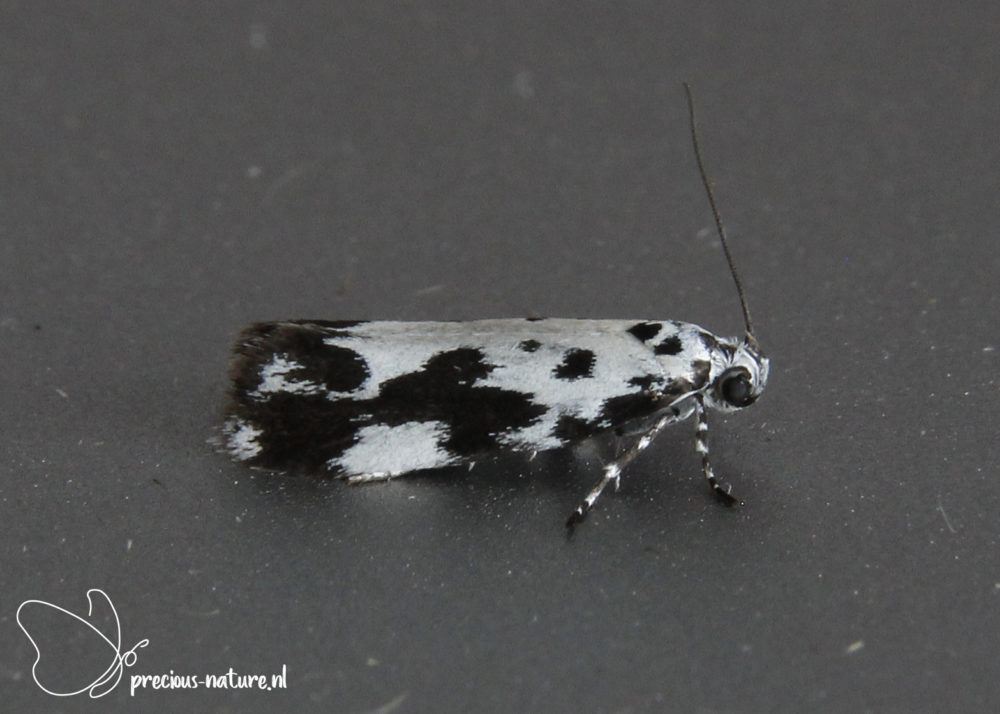
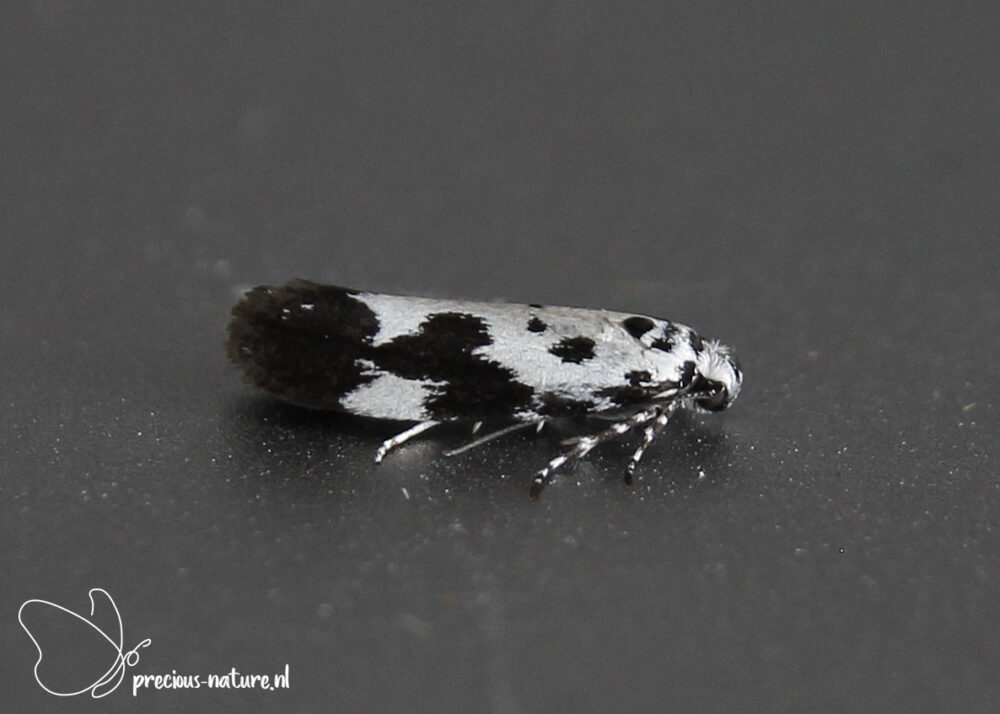
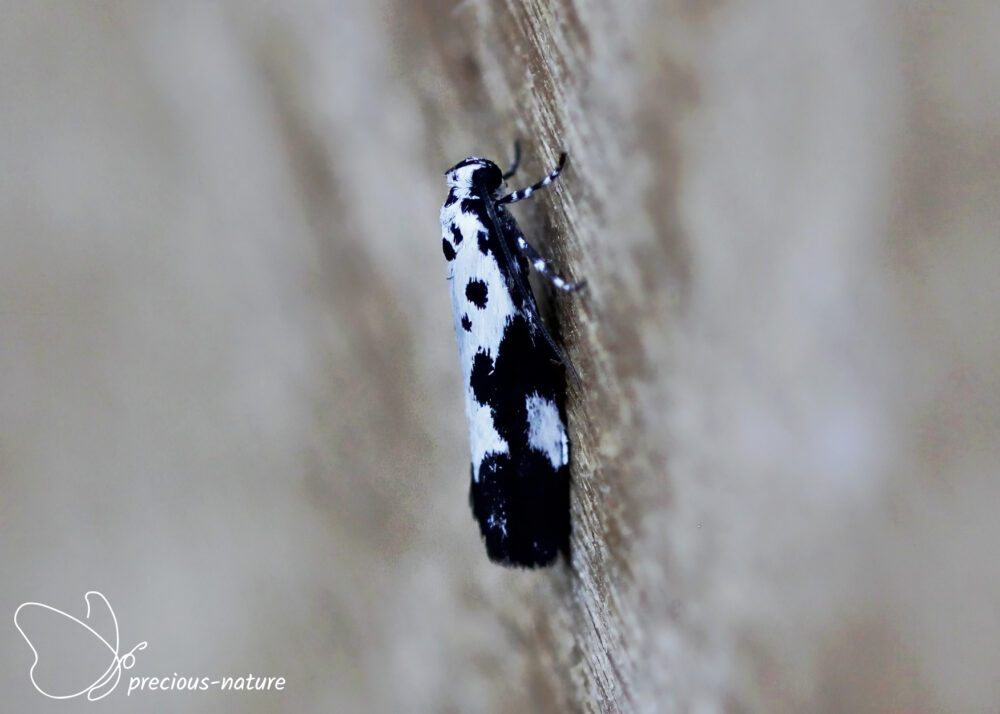
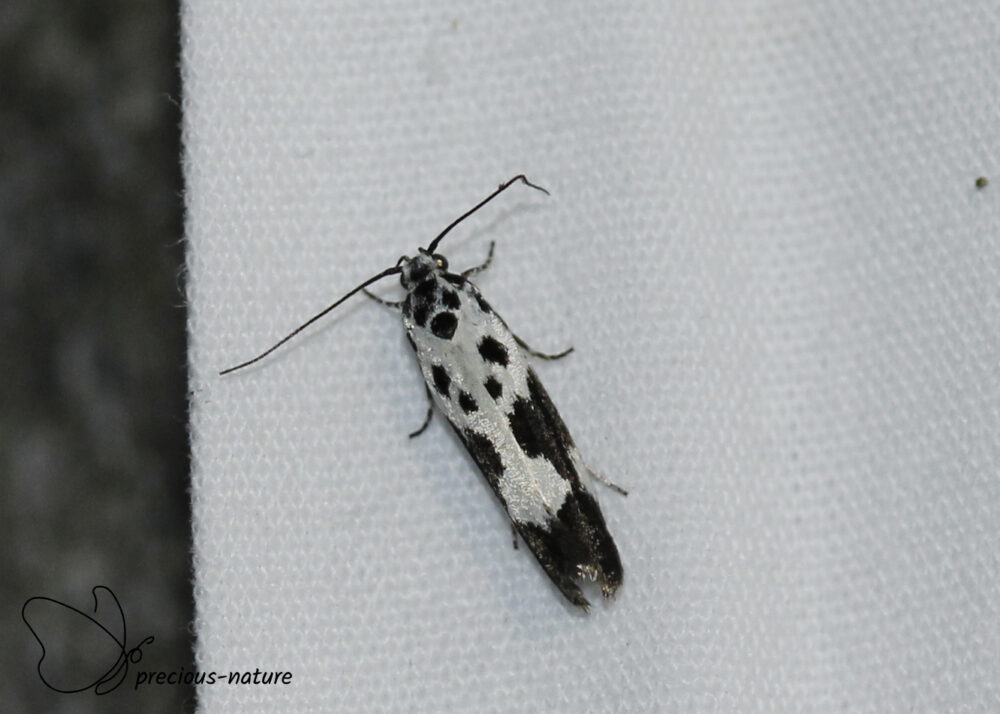
Comfrey Ermel – 2018 (NL)
(NCBI-index: 1.869869)
The first time I spotted the Comfrey Ermel (Ethmia quadrillella) was by accident after photographing a geometer moth that had landed on the canvas during a moth session. When checking the photo a few days later, it turned out that there was still a small striking micro-moth sitting close to the geometer moth. The forewing has a pattern of white and black patches. The apex is black with another black streak running from the costa to the centre of the wing. Closer to the dorsum are two black dots. The flying period spans May to August in a single generation, and the wingspan ranges from 15 to 19 mm. Host plant(s): Common Comfrey. Dutch name: Kleine zwartwitmot. Frisian name: –
Flying period: